X-Men: Days Of Future Past - 11 Awesome Moments That Have Been Wiped Out

Ret-conning a timeline is all well and good, but what about all the awesome moments that just stopped existing?

Bryan Singer's X-Men: Days Of Future Past has now been in cinemas for a couple of weeks - long enough to pick up an impressive box office return, and a largely positive critical response - and though it hasn't quite answered all of the questions some fans were looking to be answered, it did achieve precisely what Bryan Singer wanted, wiping out the worst bits of the franchise he started, and giving his original cast the farewell they deserved. But that nostalgic full-stop on the "future X-Men" timeline did come at a cost. According to the new time-line, by the time we re-meet the old cast in the nostalgic epilogue, very little in X-Men: The Last Stand - if anything - has actually happened, which likewise means The Wolverine has been wiped out, and the logical assumption from the conclusion of the 1970s timeline means that Gavin Hood's wayward X-Men Origins has also been removed from the timeline. Additionally, the end of X2 cannot have happened, which means a considerable number of excellent franchise moments basically didn't happen. Strictly speaking, it's conceivable that none of the franchise actually happened, but as the film was very keen to state, sometimes changing the path of the river only serves in delaying the inevitable, or cutting a different path to the same place, and you have to suspect that that philosophy was included as a means to preserve the first two X-Men movies without having to acknowledge anything else. And that suggestion means that all of the good bits from the timeline that has now been wiped out have also been dumped on the growing pile of movie events that have been ret-conned out of existence. And when you think about it, some of the moments deserve better...

11. The Future Sentinel Battles - Days Of Future Past

Singer's dystopian future timeline is as good a place to start as any for this article, since it's very clear from the epilogue that the grim, murderous future that opens the film is no more, and all of the mutants who have been killed along the way to Sentinel domination have been given a reprieve, which is undoubtedly a good thing. Unfortunately, it also means that the timeline has wiped out the best bits of that alternate future - the battle sequences between Xavier's band of survivors and the evolved Sentinels who typically emerge victorious, only for Kitty Pryde to save the day by teleporting Bishop's mind back into the past. Those battles actually gave the younger mutants something to do while Xavier and Magneto oversaw Wolverine's own transition to the past, and the sight of Blink in particular using her portal powers to dodge Sentinel attacks and turn their attacks against themselves was a brilliantly choreographed moment that now doesn't strictly exist. Of course these battles still exist in the alternate branches of the timelines, but the defeat of Trask and his subsequent imprisonment fundamentally suggests that we won't get to see this version of the Sentinels reappearing, and no opportunity to see their adaptability in full force against spirited, but ultimately inferior opponents.

10. Wolverine Vs Victor Creed - X-Men Origins: Wolverine

Though Origins is a mess, and there are a lot of problems that easily make it the worst of all the X-Men movies (so bad that it derailed the potentially awesome Origins run of films altogether), the biggest redeeming factor is the inclusion of Liev Schreiber's Victor Creed, a reimagined version of Sabretooth who had been unsatisfactorily portrayed by wrestler Tyler Mane in X-Men. In the hands of an actual actor, this Creed was more than simply a blunt object to be thrown in the path of Wolverine's unstoppable force, and the sibling rivalry elements of the storyline added an intriguing element that is one of the most frustrating casualties of the timeline sweep. That familial clash added a whole new side to Wolverine's character, and though it wasn't written as well as it could have been, it was far more engaging to think of there not only being another like Wolverine out there, but also that they shared genetics, rather than Sabretooth simply being another henchman. If Creed/Sabretooth reappears, its unlikely the actor will return, which is a major shame as Schreiber and Jackman shared an uneasy chemistry on screen that offered some redemption for Gareth Hooks' otherwise poor effort.

9. The Danger Room - X-Men: The Last Stand
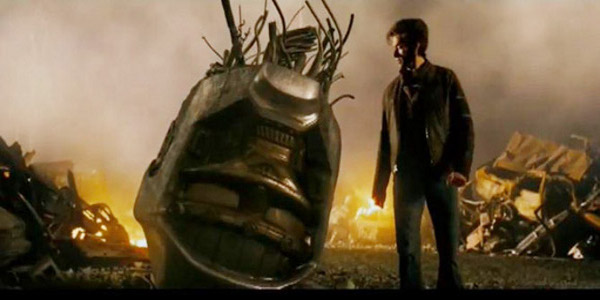
X-Men: The Last Stand doesn't get the credit it deserves for attempting to be brave. Yes, Brett Ratner was not the right man to take over the reigns from Bryan Singer - but then, who was really? Singer should simply have stayed in charge of the franchise and built his trilogy ender into the grand-scale battle epic that Ratner attempted in his absence, and we would have been spared the disappointment. But, regardless of the critical reception of the film, which traditionally positions it as the second worst in the X-Men franchise, The Last Stand did some things well, with the emotionally loaded scenes working the best, and Ratner's eye for spectacle just about shining through in places. One such example is the opening sequence, which includes the fan-baiting first appearance of the Sentinels, in a glorified cameo within Xavier's Danger Room that sees Colussus and Wolverine team up for a tactical manoeuvre they would later revisit in the climactic sequence. The moment offered more of an insight into the dynamic between the older heads in the group and the younger new recruits like Kitty Pryde and Colossus, which was notably absent in the first two films as the younger members were still classed as children. The sequence, which in itself is a well choreographed scene plugged the narrative hole that explained why Xavier was so happy to just allow kids into his crew (especially when they were as mostly useless as Rogue) and it's a shame it's now been ret-conned out existence.

8. Goodbye Cyclops - X-Men: The Last Stand

The various deaths involved in X-Men: The Last Stand might be a significant point of contention for fans - especially in terms of Cyclops, since he's rather unfairly swept under the carpet - but the moment itself when Phoenix turned on her former love and made his face as vascular as Hugh Jackman's chest before exploding him into nothingness remains a poignant moment. In that rejection of Cyclops - rather than her subsequent evils - Jean Grey rejects her humanity and takes on the Phoenix form most definitively, and as an additional bonus, the X-Men are left rudderless before the biggest battle of their lives, which completely changes the dynamic of the group (and somewhat unfortunately gives Halle Berry more to do as Storm. And the actual moment when Cyclops dies is a short, sharp shock that announced that The Last Stand meant business (before it threw it all away). The moment actually landed better because Cyclops was basically turned into something of a petulant douche - and that's before his beloved was even killed. Singer's iteration of the characters clearly wanted Wolverine to be the leader after the first film, and the only way to make that a possibility was to turn Cyclops into the annoying jock who got the girl and was frustratingly straight-laced.

7. Weapon X - X-Men Origins: Wolverine

There are a lot of things wrong with Origins' imagining of the Weapon X (and beyond) programme: it horribly undermines Deadpool as a character, it confusingly introduces characters at impossible ages (like Cyclops and Emma Frost) and it turned Brian Cox's brilliantly malignant Stryker into a diluted, less menacing version in Danny Huston's hands. But as X-Men story arcs go, the story of how Wolverine got his adamantium skeleton is as fundamentally an important story as anything reimagining the civil rights struggle, or the perpetual puberty allegories. The mystery of his being was one of Singer's strongest threads, and one of the reasons why he was promoted from interesting side character to franchise leader, and though solving any mystery inevitably takes away some of the magic, that part of the origin story needed to be told. And surprisingly, Hood captured the actual sequence well, balancing Wolverine's exposed nerve emotion with Stryker's veiled megalomaniac desire to make his pet project work, and there was enough brutality in there to sell the scene. The problem for the Days Of Future Past timeline is confusing, since it now seems to suggest that Wolverine will not get his adamantium skeleton in the same way - since Mystique is now masquerading as Stryker - so we might not even get to see another more accomplished director take on the same sequence, unless Singer intends to retread that ground.

6. Gambit's First Appearance - X-Men Origins: Wolverine
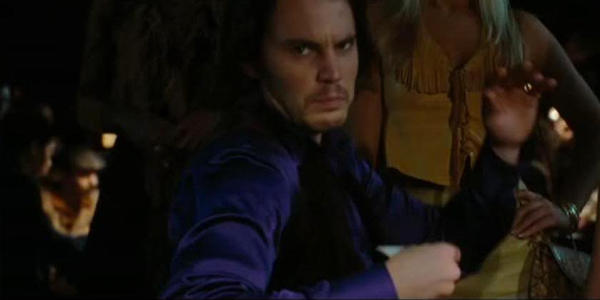
Taylor Kitsch was screwed by his association with the X-Men franchise: he was well cast as the Ragin' Cajun, despite the looming shadow of Josh Holloway, who remains a fan favourite for the role even now that Channing Tatum has been cast, and he would have worked well had he actually been given something to do that didn't degenerate into just being the least helpful guide in movie history. He had the look, the drawling, arrogant attitude and the cock-sure spark in his eye that made his first appearance in Origins a genuinely appealing moment for fans, even if everything else that surrounded it was laughably poor. When John Wraith helps Wolverine track down the bo-wielding mutant to a card game (where else) it's a genuinely great moment, on the back of hype that had seen the character rise as the most wanted mutant yet to appear in the X-Men timeline. And though the scene quickly goes sour when Gambit is completely undermined by the coincidental appearance of Victor Creed, up to and including the reveal of his powers is as smart a bit of introductory story-telling as the franchise managed.

5. Jean Grey's Heroic Sacrifice - X2

Yes it is somewhat undermined by the glaring question of why she didn't just prevent the wall of water destroying the X-Jet from within the safe, dry walls of the plane itself, when her powers were clearly capable of doing it (especially given that Magneto - a lesser powered mutant - was able to move a bridge while riding aboard it), but the moment when Jean Grey stepped outside for a moment to save the rest of the X-Men is still a loaded moment that deserves to be considered one of the finest in the franchise. Grey is the matriarchal figure in the first two films, so it makes sense that she would lay down her life for the rest of the mutants, and the moment of course opened up the possibility of one of the most engaging X-Men story arcs in the Dark Phoenix thread. Obviously, the subsequent trajectory of the franchise meant that that potential excitement was never quite fully realised, but as the dust settled on Jean's death and the vision of the Phoenix appeared above Alkali Lake, for a brief moment fans were treated to the tease of what should have been a brilliant next chapter.

4. Wolverine Loses His Claws - The Wolverine

It was always somewhat confusing as to how the second stand-alone Wolverine movie would fit into the main X-Men franchise, it was clearly set after The Last Stand - hence the ghost of Jean Grey - but featured a Professor X who wasn't as dead as he definitely should have been, and it was precisely this sort of contradiction that Singer's timeline fixer sought to eradicate. It's just a shame that all of the events of the film are now pretty much wiped out, since there were some genuinely thrilling moments that went a long way to healing the wounds left by X-Men Origins. The idea of the Silver Samurai was a little out there, and the good work setting up the Viper was destabilised badly when she shed her skin, but together they at least formed a threat for the invulnerable Wolverine, whose diminished powers helped ramp up the thrill count further, and the symbolic de-clawing of the berserker was the perfect culmination of that threat. The moment he has his claws sliced off, followed by the skin-crawlingly visceral sight of his bones being drilled for their marrow is one of the most enduringly awful images in the franchise, and it's a shame that this rare sight of a villain getting the better of Wolverine on such a scale has now been wiped out.

3. Wolverine At War - X-Men Origins: Wolverine

For all of its flaws - and they are manifold - X-Men Origins started mostly well. The historical prologue that established how Logan discovered his powers was a great move, given the agenda of the film, and then the montage that hurtled through the formative years of his life, and his relationship with partner in crime Victor was easily the most visually arresting portion of the film, and one of the best in the franchise. We watch as the brothers fight back to back through major wars, gleefully taking out enemies of the free world in a way that makes you wish that director Gavin Hood had spent more time on that element of the story, with the finale being the Weapon X programme, rather than the direction he actually chose to take. Imagine a film looking at Logan in WWII, or even more alluringly in the Vietnam War when he balks at the new nature of war (as he actually does in Origins but not in as overtly a political manner) - that would be an incredible spectacle. That montage suggested a brilliantly engaging Wolverine arc that we won't ever get to see now, since Days Of Future Past took Wolverine away from that involvement in Vietnam and reimagined him as an enforcer for hire slumming around the US.

2. Wolverine Kills Phoenix - X-Men: The Last Stand

Though the ultimate battle at the end of the Last Stand misses its mark thanks to the imbalanced decision to send in an army of pawns who really don't matter at all, and holding back the genuinely threatening mutant villains until the end (despite the fact that Phoenix could basically blink and wipe out the X-Men), the full-stop on the end of it is one of the best moments of the franchise. Newly convinced of his duty to kill Phoenix at all costs, Wolverine is forced not only to wrestle with his own emotions but also with the apocalyptic tornado of mutant evil that the object of his attention attempts to rain down on him as he approaches her. And for all the franchise's attempts to make Rogue's attempt to be able to love Bobby Drake in a very physical manner the emotional heart of the story arc, it is in Wolverine's struggle in this moment that that heart is realised. The sight of Phoenix attempting to flay Wolverine's flesh away from his body is an enduring one, and though the whole sequence opens a lot of questions (how does Wolverine heal that fast? Why doesn't Phoenix simply manipulate her own atoms to make being stabbed non-fatal?), it's a great conclusion to the otherwise mishandled Dark Phoenix arc.

1. Professor X RIP - X-Men: The Last Stand
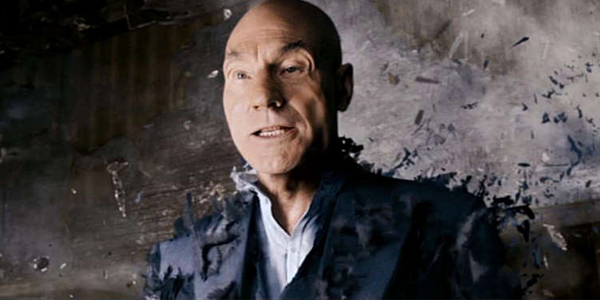
It's an odd revelation that one of the greatest moments - or at least the most affecting - of the entire X-Men franchise comes in the film typically deemed one of the first, but there is something primally entertaining about the moment in Last Stand when Phoenix snaps at Magneto's immediately regretted goading and turns her former mentor into a cloud of dust. That moment, which turns protegee against master, friend against friend, is the most damning moment in Jean Grey's meta-morposis into the evil Phoenix. We had already seen in her killing of Scott that she was no longer governed by typical human laws (though it's never quite established why she kills Cyclops, since she has no motivation as she does for Xavier) but it is the manner of her execution of Xavier that is the most affecting. There is something almost messianic about his death - and particularly in his ultimate acceptance of it, with a creepy smile - and though the moment was all but wiped out by the reprehensible attempt to explain it away using an identical twin in a perpetual vegetative state, it is still regrettable that the spectacle of the moment no longer matters in this timeline. Which are your favourite moments in the X-Men movie franchise that have now been wiped out by

Contributor
Contributor

WhatCulture's former COO, veteran writer and editor.