X-Men: Every Movie Ranked From Worst To Best

What's best? First Class? Original Cast? Deadpool?!
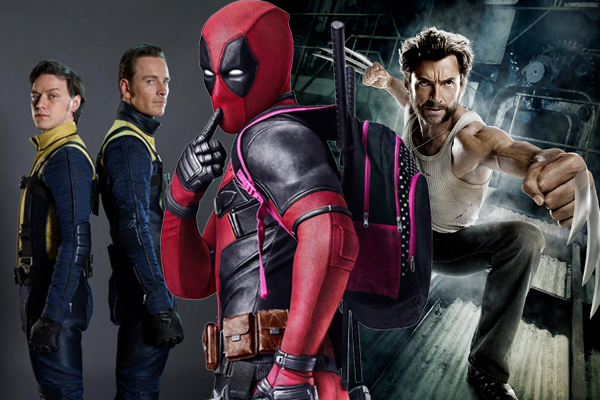
Marvel may be dominating the box office and DC rolling out their long-gestating Extended Universe, but they ain't got nothing on the X-Men. Running continuously for sixteen years within the same continuity (give or take a time-travel reboot), it's testament to perseverance. We've traced Marvel's merry mutants from the not-too distant future to the past and back again several times, and while it's not always been plain sailing, that things can still move forward shows that, at some points, Fox have got it right. It's obviously something of a sticking point for fans of the franchise that the X-Men are currently unable to join the ranks of the MCU and team-up/clash with The Avengers, but when the future of the franchise is as exciting as it is it's hard to complain too much. And they're really amping it up, with this year seeing two movies released in the continuity and several more lurching into production (we'll get that Gambit movie eventually, right?). With Deadpool, the first of the 2016 films, hitting cinemas and taking the franchise in a totally new and exciting direction, let's take a look back at the eight movies so far - which are the next step in the evolution of superhero cinema and which are as useless as Halle Berry's Storm?

8. X-Men Origins: Wolverine

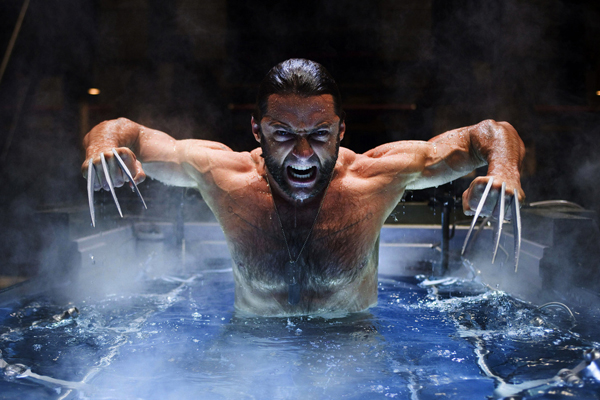
Out of all the prequel opportunities raised in the original X-Men trilogy - Professor X and Magneto's friendship, the formation of Xavier's school (and, don't worry, we eventually got all of those) - Fox chose to first go with the one key bit of backstory that had already been extensively covered. Wolverine was, as in the comics, the breakout star of the franchise and thus the obvious candidate for the inaugural standalone origin story (the plan was for the Origins banner to be a series in its own right), but that posed a big problem; wasn't that was what X-Men 2 was all about? To their credit, the solution wasn't just "do it again", with so many story elements Wolverine's backstory expanded, although sadly to the point where they feel stretched; in-between growing up in 1800s, becoming a part of a merc team and becoming a science experiment there's endless running and hiding that fails to give weight to the character (especially as it's all undone at the end with an amnesia bullet). There's even an entire subplot with Cyclops and a bunch of the early X-Men. And that's exactly the problem - there's so much unnecessary elements stuffed in here to pad out the movie and avoid repetition that it has absolutely no focus. So yeah, Origins was already working at a disadvantage before you get to the oft stated issues of the shoddy CGI (of both the claw and Patrick Stewart variety), lazy plot devices (the moment you introduce memory-removing bullets the shark is well behind you) and complete aberration that was supposed to be Deadpool. What a mess.

7. X-Men: The Last Stand

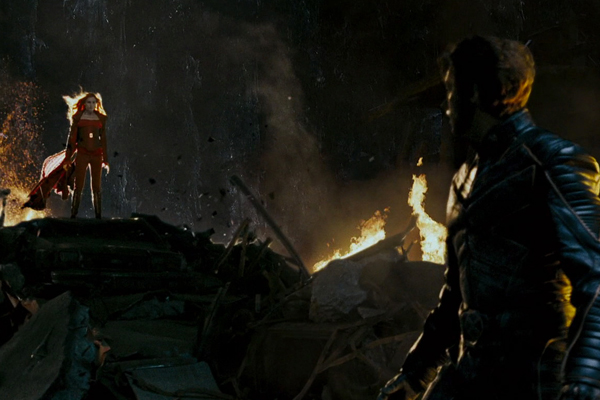
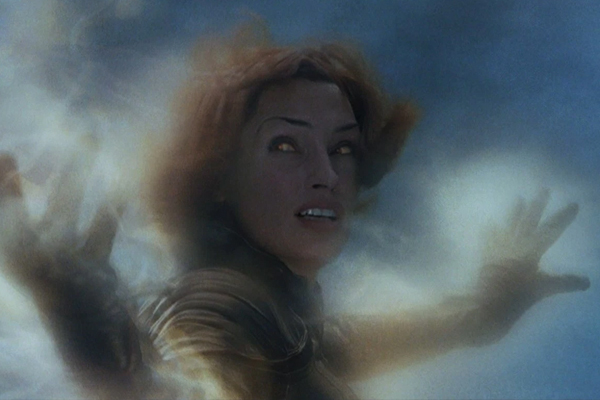
The Last Stand may not be as bad as Origins: Wolverine, but it still burns strongly thanks to the sheer amount of wasted potential. After two great entries in the series, Bryan Singer left to fulfil his real superhero dream of directing Superman, leaving Brett Ratner to pick up the pieces of pre-production under a wave of cresting hype. Knowing he was up against extreme expectations, Ratner tried to live up to them the only way he knew how; shock factor. Cyclops dies. Professor X dies. Rogue is cured. Magneto is cured. Jean dies. Magneto is uncured. Professor X didn't die. The narrative is a run of fan-baiting moments that carry shock when you write them down, but have no emotive impact and barely effect the story (evidenced by how two of the biggest shifts are undone in the final five minutes), all intercut with a rotating roster of obscure one-trick mutants from the comics. And, with all the faffing on condescendingly pleasing geeks, the story proper was butchered; the Pheonix Saga, which Singer had spent two movies lightly seeding, was reduced to a glorified subplot in lieu of a handling of the mutant cure story that got rid of any semblance of subtext. On a side note, while Ratner is an embarrassment to the directing profession, he's not solely to blame for The Last Stand's problems - before he jumped on board Matthew Vaughn was in the director's chair and many of the questionable decisions (including Vinnie Jones as Juggernaut) were his. This movie was doomed no matter what.

6. The Wolverine

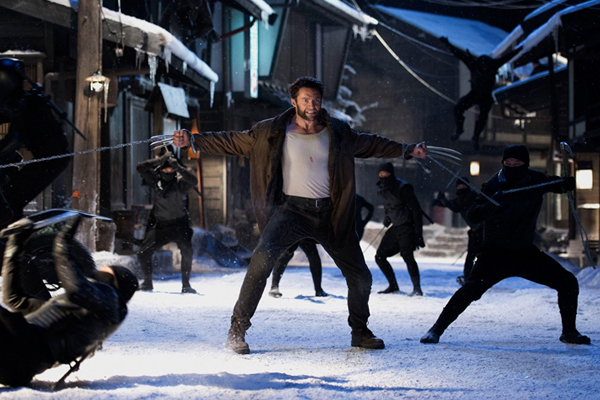
The Wolverine overcomes a lot of adversity - it exists in the shadow of Origins: Wolverine and is a direct follow-on from The Last Stand, but doesn't let that bog it down - yet it never really rises as high as a movie following Logan in Japan should. This is an essential arc from the comics, finally giving Hugh Jackman the opportunity to be Wolverine outside of the X-Men, with a mortality story to boot, but the finished product is, above anything else, wildly forgettable. There's the fight sequence on top of a train, which is cool if you can get over the poor CGI, and there's a bit where he takes on loads of ninjas that was great in concept, and wasn't Silver Samurai cool before the reveal he was that old guy? Boy, that film just wasn't there, was it? It was a fine throwaway adventure, but like the weaker MCU movies is really only remembered for its cool post-credits scene, which neatly (if canonically confusingly) sets up Days Of Future Past. Hugh Jackman is currently gearing up for the third standalone Wolverine movie, which promises to be his last appearance as the character. Here's hoping that this icon of superhero cinema finally gets the movie he deserves.

5. X-Men: First Class

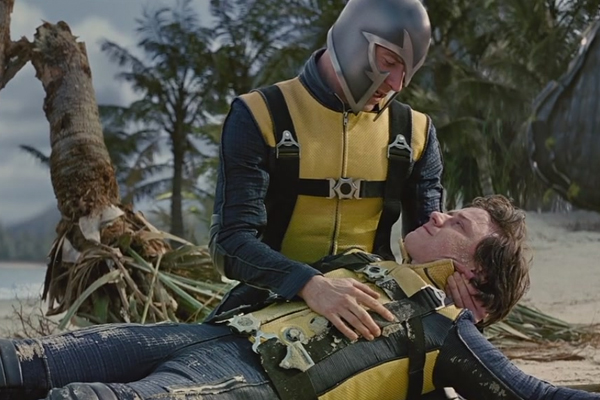
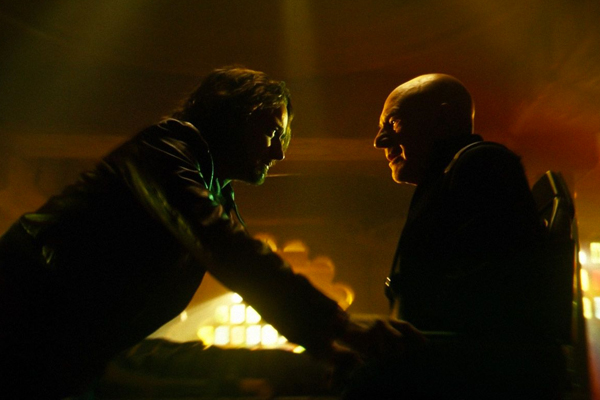
X-Men: First Class is OK. Not great, not the best X-Men ever; OK. Coming after the franchise double-tap of The Last Stand and Wolverine though, that was something of a miracle. Dispensing the extraneous numbers of auxiliary mutants (something that likewise happened in the comics after House Of M) and getting rid of the current narrative thread (which wasn't convoluted per se, just rather bland), Matthew Vaughn returned the franchise to its roots. We were in 1963, the same year the mutants first debuted and seeing the older generation all meet for the first time. What makes the film work is the genius recasting of the two central characters; Michael Fassbender is astounding as a man so driven by revenge that he winds up in increasingly dark places and James MacAvoy has hints of Prof. X without losing his sense of young, smartly biding his time rather than going full-Stewart. It was Jennifer Lawrence's casting that was the real coup though - an unexpected star, she gave a human side to the mutant-and-proud Mystique and totally realigned the series' focus going forward. More of those three, looking at their development together and as a trio, unencumbered by outside forces, would have been great. But instead we have to work in the Cuba Missile Crisis and an evil plot by Sebastian Shaw and a bunch of other characters that mean the "friendship" that so dominated Professor X and Magneto's discussions in the original movies amounts to little more than an extended vacation together.

4. Deadpool

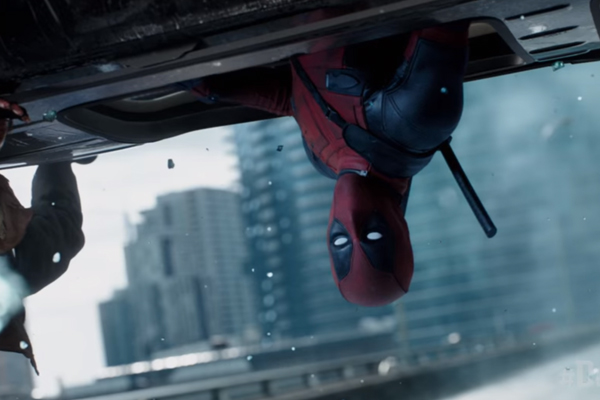
Deadpool is probably the best an R-rated Fox Deadpool movie could be, and that's meant as both overwhelming praise for the latest film in the X-Men canon and with a slice of lament that it doesn't ever really escape the rigid superhero formula the genre's studio staple status necessitates. Ryan Reynolds atones for Origins: Wolverine and then-some, bringing the fourth-wall breaking and irreverence that made the character iconic in the first place completely to the big screen and there's an edge here that few other superheroes have, thanks in no small part to that adult-oriented rating. But here's the kicker - the R didn't mean Tim Miller and Reynolds had complete freedom, more that they could follow the studio rulebook with a bit of gore. Deadpool places severe restrictions on itself due to being a big superhero blockbuster that cuts out the typical kid target audience and, while it'd be ridiculous to say the film should have dialled back all the violence (that was the highlight), in doing so for Fox the film is forced to reign itself in, not given the budget for a bigger scope and thus forced to pad out the Merc with a Mouth's antics with a generic origin-cum-damsel-in-distress plot. It's good fun, but not as ground-breaking as it wants to be.

3. X-Men

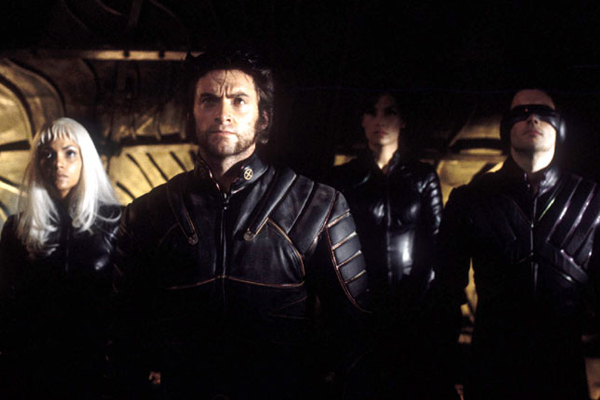
X-Men is one of the most important blockbusters ever made. Although the explosion of superhero movies in the early 2000s was all but inevitable after Marvel declared bankruptcy and wholesaled off their movie rights, it was Bryan Singer's mutant ensemble piece that showed they could be done right. Let's not forget that previously the genre had become a garish joke, with recent year's seeing the likes of Batman & Robin and Steel stinking up cinemas. The only solid entry in the genre in almost a decade had been Blade, and as an R-rated film that didn't feel like a superhero flick, that barely counts. So it's rather odd that, despite being the film that changed everything, there's something remarkably old fashioned about X-Men. Maybe it's just watching it from a modern perspective, where an actor's won an Oscar for playing the Joker and we're currently awaiting the thirteenth entry in a massive shared universe franchise, but what was once the deft combining of comic lore and movie sensibilities now feels a tad clumsy, particularly those leather jumpsuits (although that's something Singer's still running with today). And yet there's an extreme confidence in handling things with a maturity here that means coming from a period that was the low-point of big budget cinema doesn't actually hurt the film. The world is fully fleshed out and if the recasting in First Class was good, the base choices here are inspired; unknown Hugh Jackman as Wolverine dominates (even if he'd never have got the part in the more comic-faithful modern day) and having stage vets as the older generation add a touch of class.

2. X-Men: Days Of Future Past

Days Of Future Past was a time-travel epic, an adaptation of the much loved comic and the bringing together of a cast even bigger than The Avengers. But what it was most of all was a tricksy, borderline genius flick of the reboot switch. The X-Men continuity had always been a bit of a mess, but between all the flashbacks, prequels and soft reboots it had become an unweidly mess. So what Bryan Singer really did with his return to the franchise was wipe out the universally revived entries (few movies can say they're so bad they were subsequently rendered non-canon) and reset everything to the status quo he left the series with in 2003 (give or take a few changes - Jean's alive and Kelsey Grammar's Beast). That he did this on the sly, hidden within what was already a pretty entertaining sci-fi story, is exactly what made the series so exciting in the first place. All this makes Days Of Future Past an absolutely excellent X-Men film, giving fans exactly what they want in a way that is neither pandering or flippant. As a film in general there are the standard blockbuster issues, with a lot of spinning plates not all getting enough attention (leading to the movie's own share of plot holes) and some odd moments (Magneto lifting the stadium is spectacle for spectacle's sake), but as, like Singer's earlier films, it deals with its geekier sides of the property with such confidence those problems hardly matter.

1. X-Men 2

If X-Men showed that superhero movies could be done properly, X-Men 2 showed that they could be great. For the longest time it, along with Spider-Man 2, were regarded as a pillars of the genre, sequels to movies that ditched any remnants of the 90s camp and forged forward with serious, character-driven stories. Of course, we now have the Nolan Batman films and the top tier Marvel Cinematic Universe to contest with them, although, even so, Singer's mutant sequel is still on the high-end. Unlike its predecessor, X2 holds up completely, both thematically and in terms of technically whizzery. The opening assault on the White House with Nightcrawler still looks incredible, the handling of Wolverine's origin fits wonderfully in the contemporary plot and the deftly executed coming out allegory worked alongside the original's holocaust metaphor brings the subtext of the series from simple social commentary to grand exploration of innate human prejudices. Indeed, the fact that the main villain is a human, not just an ideologically opposed mutant, adds an extra layer of complexity, showing a fear of those who are different that stems from more than just inferiority. The ending beat, with Xavier telling the President both species must work together, is a particular exciting one (one that, along with the Dark Phoenix tease, was wasted). It's telling that most subsequent movies have used X-Men 2 as the centre of the universe (Origins: Wolverine dug back into the Stryker's past, The Wolverine hinged on Logan's love for Jean and Days Of Future Past was all about getting us back to the status quo it set up); it really is the leap forward. What's your favourite X-Men film? Share your ranking down in the comments.

Contributor
Contributor

Film Editor (2014-2016). Loves The Usual Suspects. Hates Transformers 2. Everything else lies somewhere in the middle. Once met the Chuckle Brothers.