10 Beautiful Looking Games (That Play Terribly)
Don't be deceived by these beauties. These gorgeous games are pure trash.
Even though Pokemon and Minecraft utilise a simplistic visual design, their accessibility and precision has allowed them to remain outrageously successful for years, proving that photorealistic graphics aren't everything.
However, although players should prioritise quality over everything else, it's easy to be captivated by a game's jaw-dropping art. After all, if the developers put a painstaking amount of effort into how their work looks, it's safe to assume they put just as much care in every other aspect.
On the contrary, some studios pump in so many hours to make a certain title visually striking, they neglect the fundamentals, like level design or story.
Though consumers should know better by browsing the reviews, it's easy to get suckered by solid promotions. After all, a stunning trailer can easily hide appalling gameplay, woeful AI, and terrible controls. Even if a game plays well in demos and presentations, it can be let down by technical problems, micro-transactions, or a lack of content.
If you're tempted to purchase these duds based on their dazzling aesthetics, it's best to remain wary. Despite how magnificent these ten entries appear, they're all style no substance.
10. Shadow Of The Beast (2016)

Although 1989's Shadow of the Beast had its problems, the side-scrolling platformer received consistent praise for its visuals, especially the parallax scrolling. When a reboot was announced for 2016, long-time fans were hoping the graphics would once again be a standout feature.
Sure enough, 2016's Shadow of the Beast was undeniably striking, boasting slo-mo finishers, cinematic attacks, and deep parallax scrolling to add depth to the 2.5D environments.
However, it feels like the developers put so much effort in making Shadow of the Beast look glamorous, they forgot about the gameplay. The combat, which should be the centerpiece of a side-scrolling action title, quickly devolves into repetitive button-mashing. There’s a combo system in place, but it feels stiff and awkward, never rewarding skill or timing in a meaningful way.
The levels are linear and uninspired, often blending into one another with little to differentiate them. Despite its short runtime, the gameplay wears thin halfway through, especially when it starts to rely on backtracking.
2016's Shadow of the Beast may look the part of a brooding, brutal action game, but it plays like a dated tech demo.
9. Need For Speed: The Run

Although Need for Speed always looked sharp, its graphics were never on par with racers like Gran Turismo or Forza Motorsport.
But all that changed with Need for Speed: The Run. Being the first entry to take place in real-life locations, the developers decided to show off the visuals by utilising the Frostbite 2 engine, which was originally designed for first-person shooters. It took a year to repurpose the engine for this style of gaming, but it seemed like the right move since NFS: The Run boasted dynamic lighting, particle effects, and detailed environments.
Which is why it's a shame The Run is among the weakest in the franchise (which is impressive, considering there are over two dozen instalments). The quick-time events were cinematic, but the poor execution detracted from the racing. The AI rubber-bands to a preposterous level, making it nearly impossible to win on the harder difficulties. The gameplay felt regressive, since it provided no open-world exploration, unlike NFS: Hot Pursuit or Most Wanted.
Need for Speed: The Run should've been a victory lap for the franchise, so it was sad to see it crash and burn.
8. Rise Of The Robots

Street Fighter II and Mortal Kombat were considered the quintessential fighting franchises during the early 1990s. But when Rise of the Robots was advertised, it seemed like its competition's days were numbered.
It may be dated by today's standards but Rise of the Robots was revolutionary, at least aesthetically. Mirage's fighting title was heavily marketed prior to its release, with emphasis on the pre-rendered 3D graphics and the advanced AI opponents. The company seemed so confident in the project, they had Rise of the Robots released on eight consoles.
Sadly, it wasn't the showstopper that was promised. Despite looking remarkable, Rise of the Robots was a bitter disappointment, due to the ear-shredding music, unresponsive controls, and simplistic gameplay. It provided no challenge, since players could defeat opponents by spamming moves, even on the hardest difficulty setting.
Only one character was playable in the single-player mode, which massively diminished replayability. The multiplayer allowed access to other characters, but their shallow move sets and poor animation didn’t add much.
As awful as Rise of the Robots was, it taught a whole generation of gamers never to judge a book by its cover.
7. The Callisto Protocol

Developed by Dead Space creator, Glen Schofield, The Callisto Protocol was viewed as a spiritual successor to the franchise. Both properties are set in space, focus on atmospheric horror, and have our heroes doing their darnedest not to have their face eaten by mutated creatures.
However, The Callisto Protocol's graphics were in a whole other league. Every tooth, hair follicle, and bead of sweat can be seen on the characters, to the point where it's borderline indistinguishable from reality. Although graphics aren't everything, the hyperrealism accentuated the survival horror elements, especially while watching the protagonist being torn asunder.
Unfortunately, The Callisto Protocol feels like a prettier but worse version of its predecessor. The minimal exploration and repetitive combat turns most of the gameplay into a laborious chore. The story and characters lack depth, so it's hard to get invested. The main campaign is short and there's little incentive to play again. And if you had the misfortune of purchasing the PC port, good luck running the damned thing.
Anyone who's keen on playing a horror set in space should give this clunker a miss and stick with Dead Space.
6. The Deer God
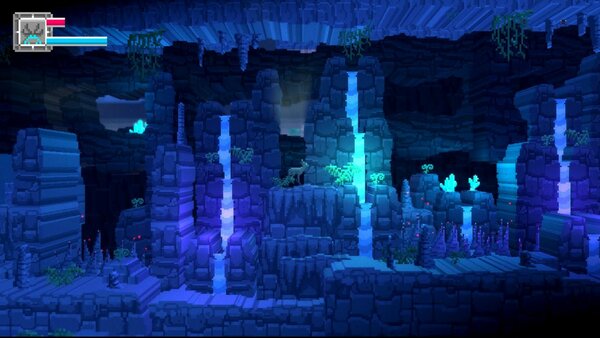
The Deer God proves that lavish visuals don't necessarily have to be realistic. Although the platformer's blockiness initially resembles Minecraft, it's obvious Crescent Moon Studios went above and beyond to maintain stimulating imagery.
The Deer God blends 2D graphics with 3D depth and lightning, making every cubic object and character pop on screen. The backgrounds feature layered parallax scrolling, giving the illusion of depth while traversing across the ethereal world. The environments shift dynamically from day to night, with changing weather patterns and lightning effects that enhance the immersion. Rather than trying to look realistic, the art is deliberately dreamlike, perfectly matching the otherworldly themes and story.
But with the limited enemy variety and simplistic mechanics, The Deer God gets tiring real fast. The jumping and moving is so insultingly imprecise, you have to wonder why the creators were so keen on crafting a platformer in the first place. Due to the constant frame-rate issues, avalanche of bugs, and constant crashes, there are times where the retro title is almost unplayable.
The Deer God is beautiful to behold, but playing it is sure to offer little joy.
5. Marvel's Avengers

Considering how badly the final product turned out, it's easy to forget how much buzz surrounded Marvel's Avengers pre-launch. The project was published by Square Enix and developed by CrystalDynamics, who successfully rebooted Tomb Raider in 2013. The superhero title was also being released while the Marvel Cinematic Universe was in its prime, so interest was through the stratosphere.
And for the cherry on top, the game was a visual spectacle. There had never been an Avengers title where Iron Man, Hulk, and Captain America looked this good. (Heck, M.O.D.O.K. was a hundred times more intimidating here than in the movies.) With players able to take control of dozens of Earth's mightiest heroes, Marvel's Avengers sounded like a dream come true.
Too bad it played like total garbage. With over a thousand glitches, bland level design, and a repetitive multiplayer, not even the incredible graphics could salvage this. Although the patch should've fixed these issues, it made things worse, adding in unreasonable micro-transactions and lame cosmetics.
Due to the negative reception and poor sales, Marvel's Avengers was disassembled a mere three years after its release.
4. Godfall

Released as a launch title for the PlayStation 5, Godfall demonstrated what Sony's new hardware was capable of. Harnessing the power of the Unreal Engine 4, the looter shooter is a feast for the eyes from beginning to end.
Combat is loaded with vibrant particle effects, with each sword slash and magical burst shimmering hypnotically. The cut-scenes are rendered in-engine and feature the same high-quality models as the gameplay, with seamless transitions between the two. Ray tracing was absent at launch but was inserted via a patch shortly after, making this already beautiful title look even better. Most importantly, the game has no trouble running at a smooth 60fps.
But besides gorgeous graphics, Godfall had little else to keep players enthralled. Despite emphasising that loot plays an integral role, nothing about the looting system makes a major impression. Many missions and objectives feel recycled, leading to grind-heavy progression. Due to the repetitive combat and simplistic character progression, playing Godfall is anything but fulfilling.
Despite the fact Godfall was meant to showcase the PlayStation 5's power, it reinforced the argument that gameplay trumps graphics every time.
3. BodyCam

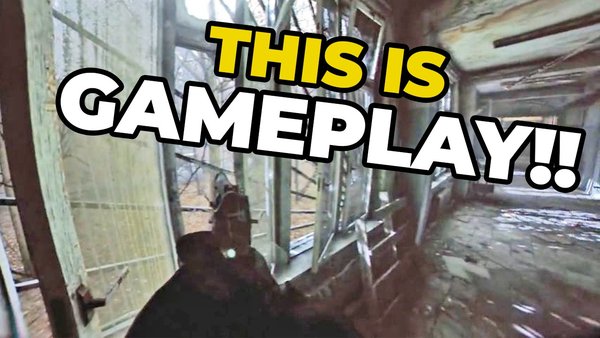
The graphics of BodyCam are so authentic, it's easy to mistake it for real footage. Even when you realise it's a video game, you'd swear this tactical shooter was using real-life imagery, since every brick, leaf, and blade of grass seems like the real deal.
But that isn't the case. For BodyCam, Reissad Studio used the Unreal Engine 5 to simulate photorealistic environments, character animations, and lighting. The gameplay accurately mimics bodycam footage by utilising motion blur, shakiness, and lens distortion.
Which is why it's a shame to learn the developers neglected everything else. There's minimal content, to the point where BodyCam feels like a demo. The gunplay is awkward, thanks to the input lag and sporadic aim. With the persistent bugs and glitchy animations, even the simplest mission quickly grow tiresome.
Although the March 2025 patch should've remedied these issues, the update made the gameplay feel like a Call of Duty clone, stripping away what made BodyCam stand out in the first place.
Though the game is still in early access, hype for BodyCam has plummeted since there's no indication that its persistent problems will be fixed any time soon.
2. Agony

Set in the bowels of Hell, Agony was set to be a truly soul-stirring title. The dark fantasy refuses to tone down the haunting imagery, forcing players to watch eye-gouging, dismemberments, and decapitations in minute detail. The graphics are frighteningly realistic, so the nightmare-inducing visuals should be challenging to stomach.
Even though Agony is fittingly disgusting, the real hell is playing the flipping thing. Basic objectives are often unclear, leaving players disoriented and confused. Enemy AI is either laughably broken or inexplicably overpowered. The stealth system is so flawed, it's hard to understand why the creators implemented it.
The grotesque visuals wear thin fast, since the blood and gore rarely have any narrative purpose nor do they build atmosphere. Instead, the mangled bodies and tortured souls are shoved in your face, in a desperate attempt to shock you.
To make matters worse, this dumpster fire launched with an agonising amount of technical issues. Even after a series of patches, Agony still suffers from long load times and game-breaking glitches. As a result, the whole gaming experience felt like hell on Earth, but not in the way the developers intended.
1. MindsEye
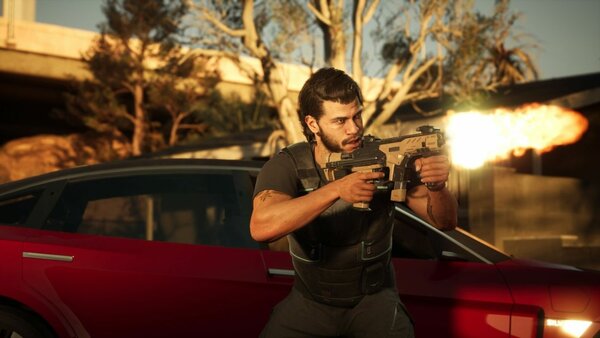
Build A Boy's sci-fi adventure's biggest selling point was a toolkit that allows players to devise their own content. By creating assets, triggers, and environments, players could assemble their own gameplay sequences and craft elaborate levels. And with the top-of-the-line graphics, it was a joy to admire your perfectly rendered creations.
At least in theory. But as soon as MindsEye is booted up, it feels like a beta rushed out the door. The controls are clunky, turning the most basic task into a jittery nightmare. The cognitive combat system is neither fun nor intuitive, often devolving into trial-and-error button mashing.
Despite promising a vast open world to roam, you spend a lot of time locked into driving missions where you're course-corrected any time you slightly veer off-course.
Having said that, there's little reason to explore, thanks to the texture pop-ins, frame rate drops, and a litany of technical issues. While certain environments look sublime, there are others that appear copy-pasted and empty.
Most importantly, MindsEye is impressively boring. Though the marketing promised bombastic action, an invigorating storyline, and fun in general, this trainwreck of a game offers anything but.