10 Ingeniously Clever Video Games That Will Mess With Your Mind
Don't you hate it when games are smarter than you?

As video games are such a young medium, they have the biggest point to prove when it comes to showing they can be more than a brainless way to kill time, and can in fact be thought-provoking, mind-bending, and clever enough to leave your brain in a knot - before you untangle them and come out the other side enlightened.
In the past, cerebral games have tended to hang out in the background of the games industry, a bit like the brainiest kid in class who was too shy and unpopular to ever be counted.
Sad simile, I know, but don't worry, the figurative brainy kid is doing great. Mentally stimulating games have come to the fore of the industry since it was discovered that players aren't just mindless zombies, but instead sentient beings who love a good intellectual, psychological and logical challenge.
Here are 10 erudite games that will leave you thoughtfully scratching your chin - that's if they don't blow your mind past the point of no recovery in the process...
10. Spec Ops: The Line

Spec Ops starts off just like any of a number of modern/near-future war shooters that were so ubiquitous a few years ago. You could barely take a couple of steps on the gaming scene without having a gun thrust into your hands and laying waste to scores of Russians, Chinese, Asians, or other non-western folk.
But power through this game's generic early stages, and you start to see that there's more at work here. The deeper you go, the more the story starts resembling Apocalypse Now or Heart of Darkness (from which it overtly takes inspiration), as you're forced into disturbingly plausible military situations that leave you with no choice but to do what you already identify is The Wrong Thing.
The further the game goes, the more delirious and hallucinatory things become, causing you to feel confused about your entire role in the mission, and wondering whether the mentally deteriorating protagonist even has a grip on reality whatsoever.
9. Antichamber
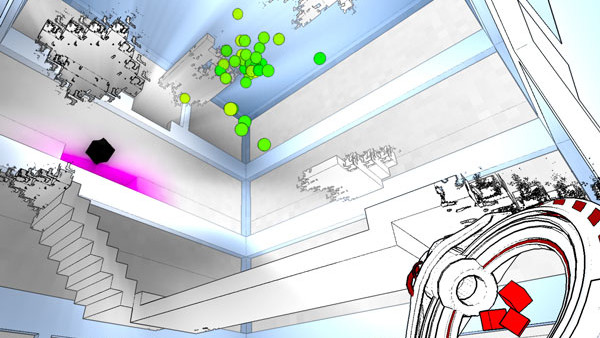
Nothing ever works quite as you expect it to in the beautifully minimal puzzle-maze that is Antichamber. Starting off in a big black antechamber with a wall showing you a cryptic map that reveals each location as you visit it, the 90-minute countdown timer starts ticking as you head into the maze. 'What does that timer even mean?!?', you wonder...
Each puzzle in Antichamber is prefaced with a drawing and a simple sentence encouraging you to get into the right mindset for whichever puzzle you're solving, but that makes them only mildly less cryptic.
There is almost no repetition or pattern to the puzzles, and many of them mess around with our measly Euclidean ideas about space, as new rooms get revealed simply by looking looking at an object from another perspective, or spaces can come into existence simply by you walking a certain way.
You'll spend hours stumped by Antichamber, all the while being mesmerised by its awesome aesthetic.
8. The Stanley Parable

How much autonomy do we really have when we play games? Say you play a seemingly linear game with a narrator, what would you do if you could defy that narrator, and if you do defy that narrator, are you really liberating yourself from the story?
These kinds of closed-loop questions are ones you'll keep asking yourself when you play Stanley Parable, which can best be described as a meta-game commenting on the nature of gaming itself. It entails you wandering around a deserted office as the titular character, listening to an omniscient narrator who tells you which way 'Stanley' goes at each juncture, but then deciding for yourself whether you want to go the way he says or not.
There are countless endings which range from the mundane to the charming, to the strange and surreal - as varied as venturing into the worlds of Minecraft and Portal, or Stanley committing suicide.
Is there are right or a wrong choice? Who the hell even knows anymore...
7. Bioshock Infinite

Marginally less lauded than the original game, Bioshock Infinite is nevertheless a masterclass of video game storytelling, and the medium's abilities to tell powerful stories about human history, politics, and unthinkable astrophysics theories.
Set in a skybound version of prosperous America at the turn of the 20th Century, Infinite combines a commentary about the country's relationships with religion and just how bloody highly it thinks of itself (i.e. exceptionalism), with a time-travelling romp based on the multiverse physics theory. This being the idea that infinite universes exist out there, based on every possible combination of things that happened in all of time. Got it?
As you follow the godly-powerful Elizabeth - who you're ostensibly supposed to be saving - through tears in the space-time continuum, it's easy to lose track just in which of the game's many universes you are at any given moment, what are these 'constants' and 'variables' that you're supposed to look out for, and what's with those Lutece twins popping up all the time with their synchronised rambles?
It all comes together beautifully in the 'Sea of Doors' scene at the end though, as you travel through various junctures in Booker's life, leading eventually to an ending that poignantly loops around right to the beginning - before it all started. Still don't get it? Then play this game immediately!
6. BioShock
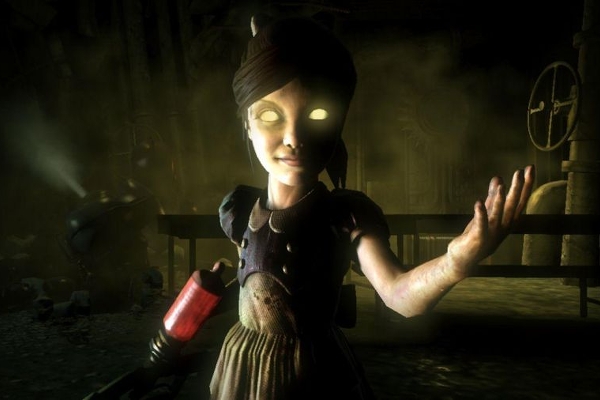
Most people will single out the first Bioshock as the most mind-bending game in the series, thanks largely to that infamous revelation late in the game that all along you've just been a puppet for ruthless revolutionary Frank Fontaine, robotically following orders to the trigger phrase of 'Would you kindly'.
It's one of the biggest, most brilliant twists in video game history, and a total subversion of your typical shooter power fantasy. There you are, endowing yourself with all kinds of superpowers and becoming more lethal than the formidable Big Daddies, only to find out that all of it is ultimately so that you can unwittingly assassinate your own father.
While that's the moment that frazzled most of our brains back in 2007, Bioshock's ingenuity extends to political philosophy, as the entire city of Rapture is a critique of Ayn Rand's objectivism - the idea that society should be completely unregulated by government, so that people are truly free to pursue their individualistic dreams.
Evidently, Bioshock mastermind Ken Levine clearly didn't think such a society was a great idea...
5. This War Of Mine

Anyone who identifies as a gamer will at some point have played a game casting them in the role of a soldier in some fictional or historical conflict.
But what if you're playing a game set in the middle of a conflict, but are a civilian instead of a soldier, and you need to keep you and your family alive by any means necessary? This War of Mine is a beautifully subdued 2D survival game that asks that very question.
It confronts you with the kind of moral dilemmas rarely explored in games. If your family is hungry, are you prepared to steal the remaining food from a frail elderly couple to feed them? Will you approach strangers as people also looking to survive, or as potential adversaries who need to be killed for your own safety?
These kinds of calls are a daily occurrence in This War of Mine, leaving you feeling mentally and morally exhausted at the end of one of its permadeath runs.
4. The Witness

Jonathan Blow's long overdue opus has for the most part been received with acclaim for its challenging puzzle design. While at a glance every puzzle looks like little more than a mundane squiggly-line grid, playing the game makes you realise there's much more to it than that.
Each of the distinctly themed zones on The Witness' vibrant island contains some variation of the squiggly-grid puzzle, but even within these zones, the logic required to solve the puzzle may suddenly shift. You'll often need to look outside of the puzzles themselves for solutions, scanning the environment for clues that may come in the form of fruits hanging off nearby trees, shadows, or even just a new visual perspective on a given puzzle.
Despite being probably the most sedentary game of 2016 (you can literally spend half an hour staring at the screen in intense focus as you try to work out how to draw a damn line to the end of the grid), it's an absolute mental marathon.
3. Braid

The second Jonathan Blow game to make this list follows a stumpy man called Tim across six 2D platformer worlds as he tries to track down a princess.
Despite its classic-platformer veneer, Braid is much more a puzzler, relying on time-bending mechanics to defeat enemies, find keys, and progress through the game. Each world makes you bend time in a different way, whether it's by time moving only when you do, or by using your 'shadow' from your previous run to help you progress. True to Blow's style, you're regularly forced to re-evaluate the rules you need to follow.
While not everyone loved the overarching story about saving the princess, it's in fact awesomely subversive, as in the end (SPOILERS INCOMING) it gets revealed that she didn't even want you to save her in the first place (because Tim, as we suspected, was a bit of a douche).
And there we all were thinking this was just another Damsel in Distress tale...
2. Fez

Say what you will about outspoken indie developer Phil Fish, but there's definitely method behind the maddening dickishness. It takes a pretty high level of intellect to create a puzzle-platformer of Fez's complexity, which appears to be a 2D game at first, but soon reveals itself to be 3D thanks to a nifty rotating camera trick that gave it a perspective we'd never seen in games before.
Beneath its charming pixel looks and innocuous characters, Fez is actually one of the toughest puzzlers out there, and is best played with a pen and paper so you can scribble down symbols, map out locations you visit so you can return to them later, and try to decode the strange language of the game - yep, Fez has its own language!
Fez is a veritable Indiana Jones-style tomb of easter eggs, secrets, and moments of ingenuity uncover, and only the sharpest, most obsessive minds will ever get to see all it has to offer (unless you just go on YouTube).
1. Eternal Darkness

Not nearly enough credit is given to this fourth-wall-breaking survival horror on the GameCube, which might have something to do with the fact that it existed solely on Nintendo's overlooked console.
With a story about pre-human deities going by names like Chattur'gha and Ulyoath, the game has strong overtones of Lovecraftian horror. As a woman called Alexandra, you wander around a mansion investigating the death of your father, but the gameplay jumps between several different characters and time periods, dating back as far as Roman times.
The real mind games of Eternal Darkness come through its depiction of Alexandra's deteriorating sanity, which effectively reach out of the screen and make you feel like you're going insane by pretending to delete your save files, turn the volume down on your TV, and even reset the console.
Top that off with subtle spooky effects like paintings becoming disfigured and statues turning their heads to look at you, and Eternal Darkness is one of the best games at making you feel mentally unstable.