10 Landmark Video Games That Were The First Of Their Kind

They weren't necessarily the biggest or the best, but these pioneering titles were certainly the first.
For every genre staple we have today, there was a game that did it first. Even mechanics that are now taken for granted, such as jumping or a moving camera, were the results of a hard-working, pioneering developer. Certain games throughout history just weren't content with merely offering a fun experience, or making money safely. While creating a good game is an achievement in itself, it's truly impressive when the title managed to bring something new to the table in an increasingly saturated market. It's these titles that are responsible for the industry that now exists, and the conventions that we've come to expect from modern releases. While many of these games have gone down as classics, just as many have been all but forgotten. Just because a title managed to do something first, doesn't mean that the actual game was commercially successful, or even any good. This list takes a look at 10 landmark games that did at least one now-common feature before anyone else, and almost all deserve more credit than they've since been given. From revolutionary visuals to gameplay mechanics that shaped entire genres, almost every video game released today can owe its existence to at least one of the games featured here.

10. Alone In The Dark

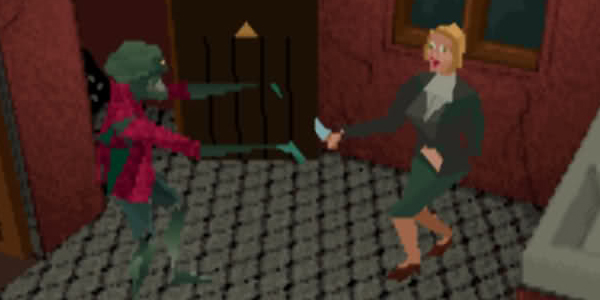
Platform: PC Pioneered: 3D Survival horror When people talk about the origins of the survival horror genre, Resident Evil is probably the most discussed title. The PlayStation classic introduced many gamers to the delights and terrors of interactive horror, and featured a number of chilling moments that have since been burned into the memories gamers everywhere. It was Alone in the Dark that started it all though. The first ever 3D survival horror game, Alone in the Dark put players in the shoes of Edward Carnby, as he fought his way out of a haunted mansion. The game included a number of features that have since been seen in almost every other in the genre since, including tense chase sequences and stressful puzzles. Alone in the Dark may not have been the seminal 3D survival horror game, but it was the first.

9. Spaceship Warlock

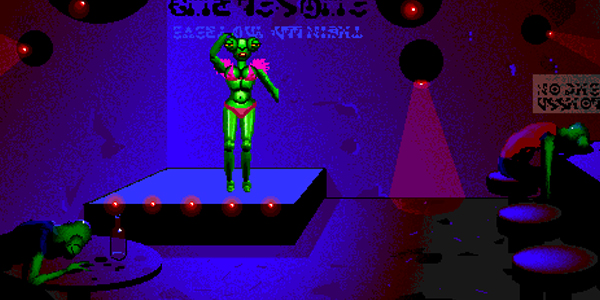
Platform: Mac Pioneered: Beautiful, cinematic narrative These days, video games often resemble high-budget movies with their beautiful aesthetics and epic, orchestral soundtracks. Spaceship Warlock was one of the very first games to blend a compelling story, music, memorable characters and high quality graphics in order to create a cinematic, narrative-driven experience. By today's standards, Spaceship Warlock is pretty naff. The writing is cheesy, and the plot doesn't really hold up in comparison to later adventure titles. It was popular at the time though, and many contemporary gamers rushed out to buy CD-ROM players just so that they could experience Spaceship Warlock's richly detailed world. Uncharted it wasn't, but Spaceship Warlock proved to everyone that video games had the potential to offer gripping stories equal to anything out of Hollywood.

8. Half-Life

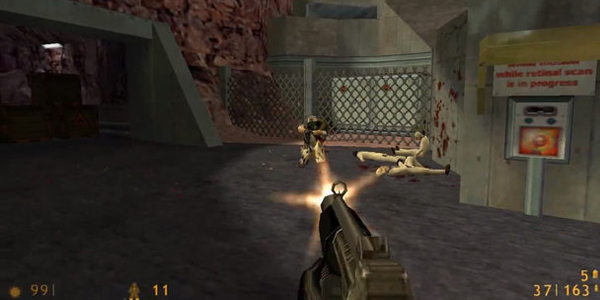
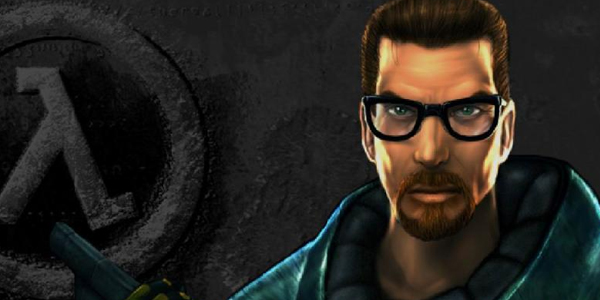
Platform: PC Pioneered: Intelligent Enemy AI Enemy artificial intelligence had been utilised in many first-person shooters before Valve's epic sci-fi series came along, but Half-Life was the first to do it well. The AI seen in Half-Life was like nothing before it, introducing greater challenge and a world that felt far more alive because of it. The commandos of Half-Life were the game's best example of enemy intelligence. They were capable of flanking the player, using a wide range of weaponry when appropriate, and not just stay in one place behind cover. Most impressively, enemies were able to communicate with each other, genuinely working as part of a team in order to take down the player. Rather than gunning down static models in a shooting gallery, it really felt like you were fighting against an intelligent, formidable force.

7. Prince Of Persia

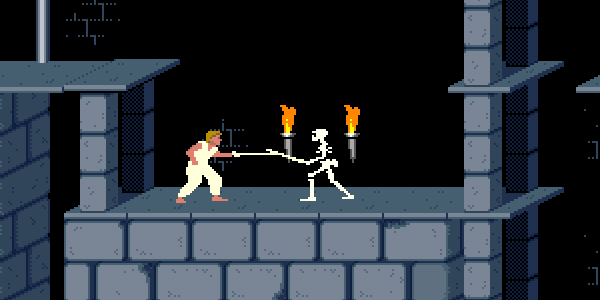
Platform: Apple II Pioneered: Smooth animation Prince of Persia wasn't always a 3D action adventure series. The first title in the franchise was a side-on platformer, in which the prince had to navigate across a series of deadly dungeons and catacombs. In order to do this, the player had to master a series of difficult jumps. The jumping system would not have worked properly with any other contemporary game at the time, as it relied on subtle visual cues that just weren't possible with basic visuals. Fortunately, it was in this that Prince of Persia excelled. The game was the first to use motion capture as part of the development process, utilising rotoscoping to create extremely smooth animations. The result was a game that featured realistic character motion, unlike anything gamers had seen before.

6. Maze War

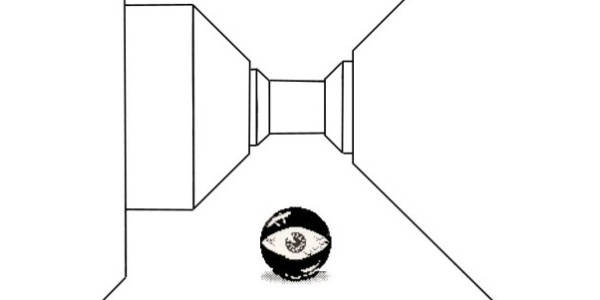
Platform: Imlac PDS-1 Pioneered: First-person view It's almost impossible to imagine that there was once no such thing as a first-person view in video games. However, this was exactly the case until Maze War came along and introduced concepts that would go on to be used in tens of thousands of games after it. Maze War is the first example of a first-person shooter, albeit a very loose interpretation of the term. Players navigated a maze using basic movement that only allowed the player to move in 90-degree increments. Amazingly, it was also the first multiplayer first-person shooter, with other players acting as the enemies. Players gained points for shooting a foe, and lost them for being shot themselves. It might not look like much today, but few titles can boast a level of influence anywhere near to what Maze War later achieved.

5. Super Mario Bros.

Platform: NES Pioneered: Intuitive, responsive controls Super Mario Bros. has the rare honour of being a video game that's not only hugely influential and respected, but also extremely enjoyable even now. One of the greatest releases of all time, Super Mario Bros. is responsible for a number of innovations that have had a far-reaching impact on the industry. For starters, Super Mario Bros. was the first ever platforming game that would smoothly scroll from left to right depending on the player position, rather than taking place on a singular static screen. It was also the first to include multiple levels that were aesthetically and thematically distinct. Most importantly, Super Mario Bros. introduced controls that gave an unprecedented level of control over the playable character, allowing the player to adjust movement speed, jump height and jump length. This blend of great controls and in-game physics made Super Mario Bros. very easy to pick up and play, but difficult to master.

4. Street Fighter II

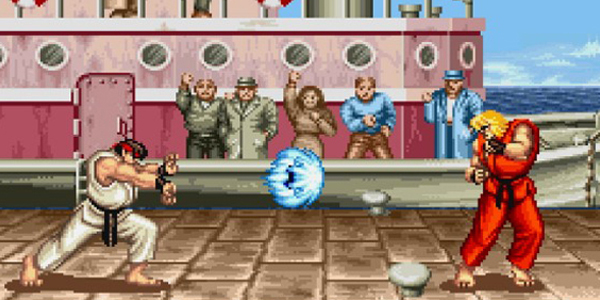
Platform: Arcade Pioneered: Almost every fighting genre staple The first Street Fighter game would be totally unremarkable, were it not the first entry in an otherwise legendary series. Featuring a character roster of just one fighter and a very basic control system, the original Street Fighter barely warranted a sequel. It's a good job Capcom did decide to continue the series though, because Street Fighter II invented an incredible number of concepts that are still seen in almost every fighting game today. Best-of-three matches, combo systems, health bars at the top of the screen and special attacks were all popularised by Street Fighter II, and there's no way the genre would be as prolific as it is today without Capcom's offering. The fact that Super Street Fighter II Turbo tournaments are still popular today attests to just how brilliant a game it truly is.

3. Ultima I: The First Age Of Darkness
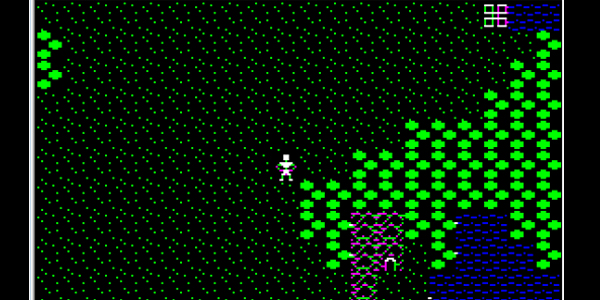
Platform: Apple II Pioneered: Many RPG genre staples There were many role-playing games created before Ultima, generally in the form of text-based games based on the Dungeons & Dragons system. However, it wasn't until Richard Garriott's Ultima I: The First Age of Darkness that anything resembling a modern RPG was released. Ultima was the first commercial RPG to include essential mechanics such as attributes, a choice of races, and hit points. The game also featured a world that would later become typical of the genre. For example, there was an overworld, filled with dungeons, towns and cities, which was traversable in a top down view. The dungeons themselves were explored in first-person. Other features that transitioned into popular tropes included randomly generated enemies, purchasable items and a questing system, were just the icing on the cake for this remarkably influential title.

2. Geograph Seal / Jumping Flash!

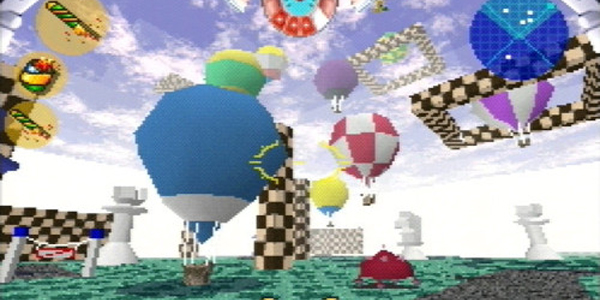
Platform: Sharp X68000 / PlayStation Pioneered: 3D Platforming If you were to ask most people what the first 3D platformer was, the most common answer would probably be Super Mario 64. It's not a bad answer, and Nintendo's classic was certainly the title that most significantly popularised the style of game more than any other release. The earliest games to feature platforming in a fully 3D environment was Geograph Seal and Jumping Flash! The two games were by the same developer and almost identical, but Jumping Flash! is by far the best known. Jumping Flash! follows a robotic rabbit named Robbit, in his attempt to find a number of objects scattered around the world. The game was played entirely in first-person, and featured graphics and gameplay that was well ahead of its time. The platforming itself has held up remarkably well, and the game saw players jumping around in 3D over a year before Super Mario 64 graced our televisions.

1. Dune II: The Building Of A Dynasty
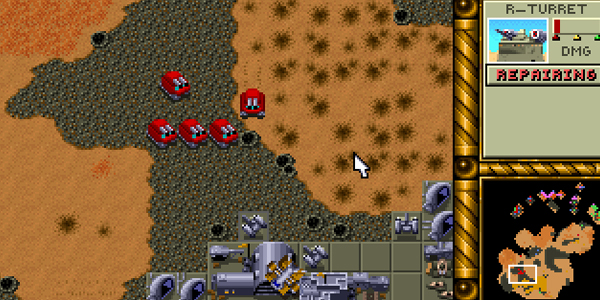
Platform: MS-Dos Pioneered: The 'RTS formula' It wasn't the first real-time strategy, but Dune II: The Building of a Dynasty did invent a multitude of concepts that are still used in almost every RTS today. Prior to Dune II, the genre was very niche, and lacking in great games. From resource collection being required for unit and base building to branching tech trees, Dune II's contributions to the RTS genre are almost too numerous to mention. Remarkably, the game was also the first RTS to allow players to control units with a mouse, as well as a minimap that gave an overview of the battleground. All this, along with distinct factions and a fog of war meant that Dune II single-handedly invented a game type that is still wildly popular today. Later game franchises such as StarCraft and Age of Empires might have added more features and unique units, but they all contained the basic structure that was originally set by Dune II. Were there any games that we missed out from this list? What other games do you know of that pioneered something big in gaming? Let us know in the comments below!

In this post: 
Tekken
 
Posted On: 
Contributor
Contributor

Tom Butler hasn't written a bio just yet, but if they had... it would appear here.