10 Little-Known Decisions That Changed The Course Of Gaming History
6. Andromeda Ignore The Issue Of Rights
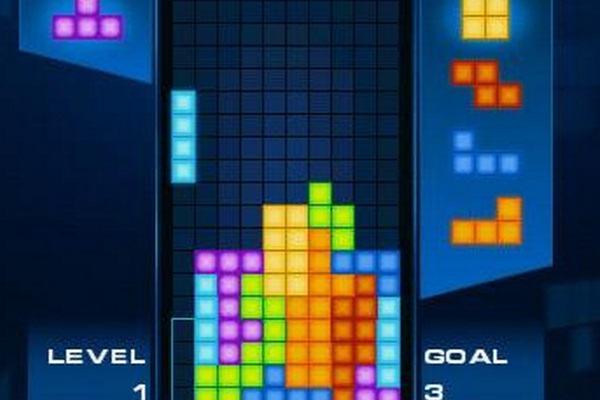
Between 1947 and 1991, the world was embroiled in the Cold War. On one side was the West, capitalist, democratic and led by the United States and her allies, including Britain, Japan and the Western half of Germany. On the other side was the East, a set of communist states overseen by the Soviet Union. Western civilians knew little about life behind the 'iron curtain', as the physical and ideological borders between the two was once christened by Winston Churchill. Both sides competed vigorously from a militaristic and technological standpoint, and although gaming consoles and computers were rare in the Soviet Union as a result of their lack of focus on civilian technologies, the odd game was developed. One such game was Tetris, the brainchild of Alexey Pajitnov. In 1986, Tetris found its way to Budapest, Hungary, one of many Soviet satellite states that were becoming more accessible as Moscow's sphere of influence began to crumble. Here it was discovered by a British company, Andromeda, who made the decision to sell development 'rights' to Spectrum Holobyte despite failing to obtain the license to do so from Pajitnov, who instead sold his creation to the Soviet government for a period of ten years. Spectrum's version of Tetris was first released for IBM PCs in 1987. It was followed by a slew of imitators, with seemingly nobody knowing exactly who had the legal rights to produce the game on what medium. Nintendo eventually picked them up, bundling the game into every copy of their original handheld console, the Game Boy. Buoyed by the public's thirst for Tetris, the Game Boy excelled and made handheld gaming a lynchpin of the industry. The medium remains incredibly strong to this day, particularly on smartphone devices, and everything from Candy Crush to Clash of Clans owes its origins to an innovative creation randomly discovered behind a hostile border - not only because of Tetris' Game Boy success but also as the first game to ever be included on a mobile phone, 1994's Danish Hagenuk MT-2000.