10 More Video Game Villains Who Were Right All Along
It's all a matter of perspective.

A great scholar once wrote that art is a reflection of society, and by that, we take it to have meant that every great video game villain is in some way built around mankind - and really, who can disagree with that?
There are those big bads out there responsible for some of the most tortured moments of our video game careers, but are they all that bad?
Some villains may seem rotten to the core, but their motives can actually become a lot more relatable when we look from a different angle.
Spoiler alert: If you don’t want to have the character plots and stories of numerous titles wrecked for you over the next XX minutes, you’ve been warned.
--
Honourable Mention: Rubicante (Final Fantasy IV)
The early Final Fantasy games were responsible for some of the worst and best-designed villains of the entire series, including the likes of Garland from the original and everyone’s favourite would-be clown emperor, Kefka, of Final Fantasy VI.
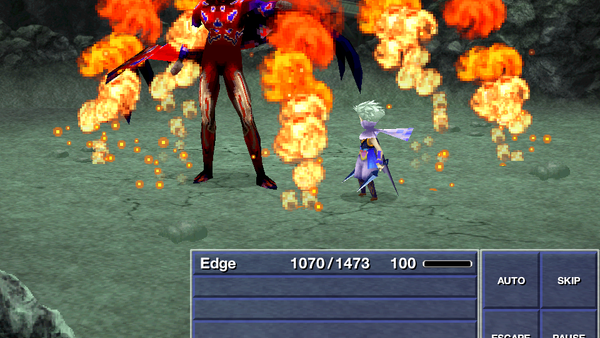
Rubicante may not have been the main antagonist of Final Fantasy IV, but he was a prominent member of the team opposing our rabble of lovable rogues and leader of Golbez’s elemental archfiends. The fire elemental, to be precise.
But unlike most big bads, evil clearly wasn’t the only prerogative for Rubicante, who displayed honour when fighting and was even kind enough to heal your party before every boss encounter with him. Some guys are just too nice.
Rubicante is accused of turning Edge’s parents into abominable chimaeras, but when it’s revealed to him this was actually Lugae’s doing, he even goes so far as to curse Lugae on the party’s behalf.
He can’t make our list because he genuinely did some pretty terrible stuff and just showed shades of being a nice guy at times, but an honourable mention seems fair.
10. Seymour (Final Fantasy X)

As a Maester in the temple of Yevon, Seymour was adored by the masses and super-powerful to boot, boasting arguably one of the coolest summons in FF history, Anima.
To put Seymour’s good-guy-gone-bad twist into context, imagine if the Dalai Lama were to all of a sudden decide he was the man singlehandedly tasked with ridding the world of evil, and in order to do so, he had to become evil.
I mean sure, I can see where you’re coming from, but it's also not cool - or is it?!
Anyway, Seymour’s exile from his own race as a child, coupled with the death of his mother and a sense of crippling solitude eventually convinced him that becoming Sin was the best way forward and a way to finally release all of Spira from its cycle of dread.
Think about it, every now and then, this monstrous entity rears its ugly head and plunges the world into peril, with the races of Spira just praying that generation’s summoner champion is strong enough to defeat it. Imagine a world where Donald Trump is re-elected every three terms - it just wouldn’t work.
Maybe Seymour had it all figured out.
9. Lord Emon (Shadow Of The Colossus)
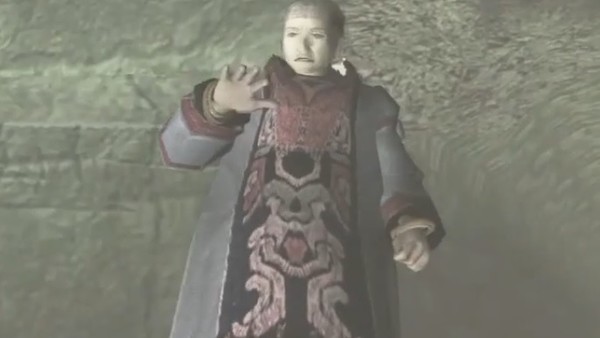
Shadow of the Colossus will be remembered as one of the most beautiful games ever released on the Playstation 2 and a visual masterpiece, but behind the obvious spectacle of what decorated our screens lay a metaphor for the big twist therein.
For behind the massive Colossi sat a massive secret - the titanic behemoths our main protagonist Wander was tasked with slaying weren’t actually bad guys at all.
But that much is apparent when playing the game. The player kind of understands they’re merely guardians of the temples mindlessly fulfilling their duties as keepers of the gate, if you will, whereas Lord Emon and his men are the figures actively opposing us from reaching the damsel in distress, Mono.
That is if you can call being dead a state of distress. Wander is simply trying to revive the apple of his eye, and Emon’s the man standing in the way.
It’s revealed near the end of the game that mysterious string-puller and voice-in-the-background Dormin has been leading us astray this whole time, attempting to piece back together the pieces of his fragmented spirit.
In any case….EMON WAS RIGHT.
8. The Helghast (Killzone)
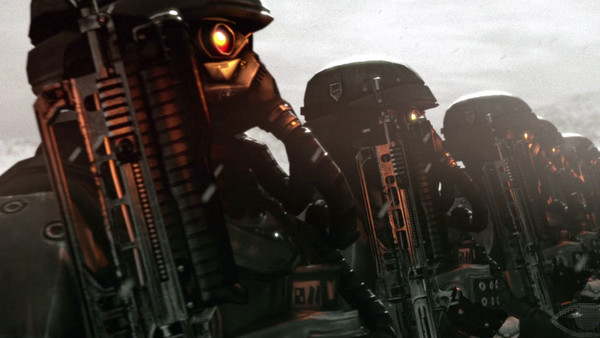
When you hear the words "space Nazis", it’s nobody’s first reaction to think “Hey now, let’s hear these guys out,” but guys, lets hear these guys out.
Killzone’s Helghast were wonderfully designed villains: Terrifying to look at with a backstory that blended classic science fiction with actual historic events - albeit a very touchy topic, but nothing good ever came without taking risks, eh!?
The games touched upon some very relevant real-life topics, and one could certainly afford to feel some sympathy toward the Helghast, a race descended from humans who began to establish a monopoly over the world’s most valuable resources through little other than their own ingenuity.
As a result, Earth’s governing body, the UCN, imposed high taxes upon the Helghan Empire in a bid to quell their dominion over business before it could get out of hand, but one could argue it wasn’t until they did so that the Helghast were even a threat.
Pre-emptive strikes don’t always end well, and we can chalk humanity’s war against the Helghast as one for the loss column in hindsight.
7. Big Boss (Metal Gear Solid)

Although Big Boss of Metal Gear Solid infamy is on the whole portrayed to be an evil-doer with questionable direction, it’s somewhat easy to see what he was going for.
Like our own reality, the MGS world was tainted by world governments fighting wars with their own militaries, propping up borders to protect their own peoples’ interests, many without an expansive view of the bigger picture at hand.
Big Boss had no such trouble seeing the world for what it was, one could argue.
While his army were dubbed “terrorists” by some, there’s cause to reason that only without flags and national bias can we get anything worthwhile done as a planet. Sure, he was responsible for murdering a few dozen thousand people along the way and even tried to take our precious Snake away from us, but perhaps that can be forgiven if his heart was in the right place, right guys?
... Guys?
6. Illusive Man (Mass Effect)

Alongside his appearance and the fact we only get to see him at certain times, the Illusive Man's very motives are debatable to the end. Heck, here we are debating them seven years after his first appearance in Mass Effect 2.
Stunted by an unfortunate history and a series of unfortunate events in his lifetime, the man once known as Jack Harper becomes so obsessed with the preservation of mankind that he is willing to go to truly dastardly means in order to keep it alive.
Perhaps “alive” isn’t the correct term, but more “in a state of superiority over all other races through control of the evil super-mega-race, the Reapers.”
This notion may harbour a hint of right-ness as Illusive Man's actions are symbolised by the fact our main character, Shepherd, displays some sympathy with his views for much of their time working together and even after they become enemies.
Plus, he was voiced by Martin Sheen, and Martin Sheen is never wrong.
5. Pagan Min (Far Cry 4)
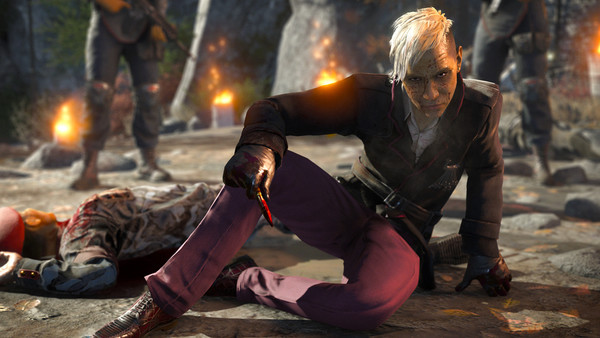
Pagan Min was the ninth king of the Konbaung dynasty of Burma, and nobody can take that away from him, but he was also deep down a pretty alright dude.
The main villain of Far Cry 4 rules over Kyrat and, for the majority of the game we’re led to believe he does so with an iron fist, which is in some part true, but it becomes apparent later on that we perhaps didn’t pick the right side.
Instead, it’s the Golden Path and their two most prominent leaders, Amita and Sabal, whom one could interpret to be even worse than the supposed “dictator” in the end, ultimately learning of their tolerance in other diabolical means such as child marriage and pushing youngsters into the rebel army.
Let’s get one thing straight, Kyrat is one big, debatable grey blur in Far Cry 4, filled with murder and all things unfortunate, but in the context of this game and story, Pagan Min might be the lesser of two evils.
Perhaps by a fraction, but a fraction nonetheless .
4. Andrew Ryan (Bioshock)

“We all make choices. But in the end, our choices make us.” Those were the words of Rapture founder and City Council chairman Andrew Ryan, the main antagonist of most of the Bioshock series.
Having watched his Belarusian family fall victim to the Russian revolution in the early 20th century, Ryan said “Screw you guys” and created an underwater Atlantis of his own, Rapture, which is where we come to wake up in the series opener.
Now, was Ryan a serial megalomaniac obsessed with his own vision? Yes.
Did he go about creating his idea of a Utopian society in a very debatable manner? Yes.
Did he have one of the best bits of facial fuzz we’re ever likely to see in a video game villain? You bet your bottom dollar he did.
But here’s the thing - it was HIS Utopia. Protagonist Jack was merely brought into the hair-brained world of Rapture through no choice of Ryan, who was wages in a war with Atlas—or Fontaine, as he eventually becomes known to the player - and accepts his death with dignity. All he ever wanted was to get away from the rat race, and who among us doesn’t seek the same?
“A man chooses. A slave obeys.”
3. N (Pokémon Black & White)
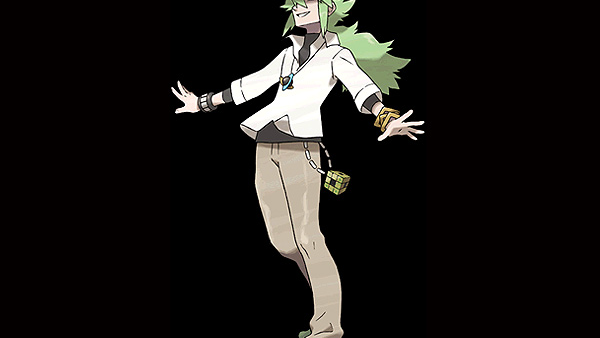
As I’ve gotten older, it’s become more and more apparent that the concept of Pokemon is pretty messed up. Nintendo and Gamefreak did a fine job of making us buy into the belief that pitting pocket monsters against one another in battle was a positive thing and a choice of their own volition, but is that really the case?
Not for N, the antagonist of Pokemon Black and White, who believes all Pokemon should be allowed to run free and live their days without little brats like Ash Ketchum capturing just about every little thing he sees run or scurry or fly or float.
“Gotcha Catch ‘Em All” right, Ash? WRONG. You don’t have to catch them all, and in fact you haven’t GOTTA catch any,
If ever there was any surefire evidence needed that N’s motives are true and fair to the animal species with whom he sympathises, consider this: HE CAN SPEAK TO POKEMON.
Can Ash speak to Pokemon? I mean, kind of, but only through a general grasp of what “Pika” and “Chu” generally translate to in different tones.
N is the real MVP.
2. Handsome Jack (Borderlands)

As impressive as the first Borderlands was, it wasn’t until the game brought out a sequel and main villain Handsome Jack that we had a real purpose to play, a real story to complete, a real itch to scratch, owing to the fact he is arguably one of the most complex and intriguing antagonists in modern video gaming.
The fictional world of Pandora is chaotic and beautiful at the same time, much like Handsome Jack, the omniscient overseer constantly tracking our motions and communicating to us throughout the game, which steadily builds a kind of animosity slash rapport, all the while drip-feeding us information about the tragic events that led him to become the self-imposed ruler of the planet.
Stemming from the abusive relationship he suffered at the hands of his grandmother, Jack was driven to the decision to in some way, shape or form “get rid” of his daughter Angel, who we’re led to believe somehow disappeared his first wife - Angel’s mother- likely as a result of her awesome powers as a Siren.
Lynchwood and Opportunity, two of the only locations on Pandora that have the most semblance of normal civilisation, were started by Handsome Jack, everywhere else on the planet being run without much rule or regulation.
Make no mistake, the voice in your head is still no hero, but he does appear to have much of the population’s best interests at heart, and it’s fair to say he’s been through the wringer, even if he can be a narcissistic a-hole at times.
“Everyone thinks they're the hero of their own story”
1. Saturos & Menardi (Golden Sun)
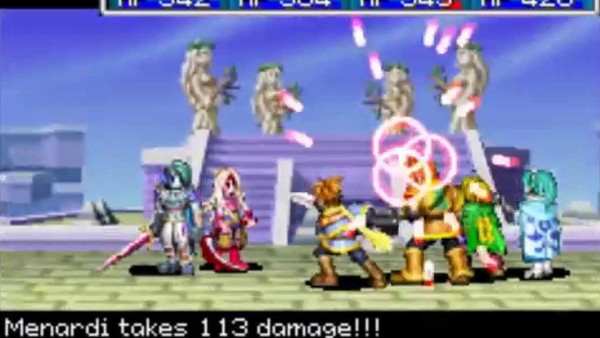
There is undoubtedly no greater example of a villain being right all along in video game storytelling than Saturos and Menardi. No, not the delivery boys from that giro place, the primary antagonists of the original Golden Sun!
In this most celebrated role-playing title, we’re led to believe that stopping this pair from breaking the seal of alchemy by releasing Elemental Stars into their respective Elemental Lighthouses is the righteous thing. Oh, how wrong we were.
Isaac and his team, it turns out, were poorly directed from the beginning and were in simple terms actually the bad guys all along (we told you there were spoilers). That’s right, instead of allowing the world to embrace alchemy once again and evolve to a higher plane, the player was inhibiting the world of Weyard, a truth that’s only revealed to us at the conclusion of the first game.
And so, one of the greatest twists on RPG perspective came to be, and Golden Sun as a result holds its place as one of the greatest games ever released on Game Boy Advance. Alright, fine, it’s the best.