Tomodachi Life: Living the Dream REVIEW
Tomodachi Life: Living the Dream is a voyeuristic paradise
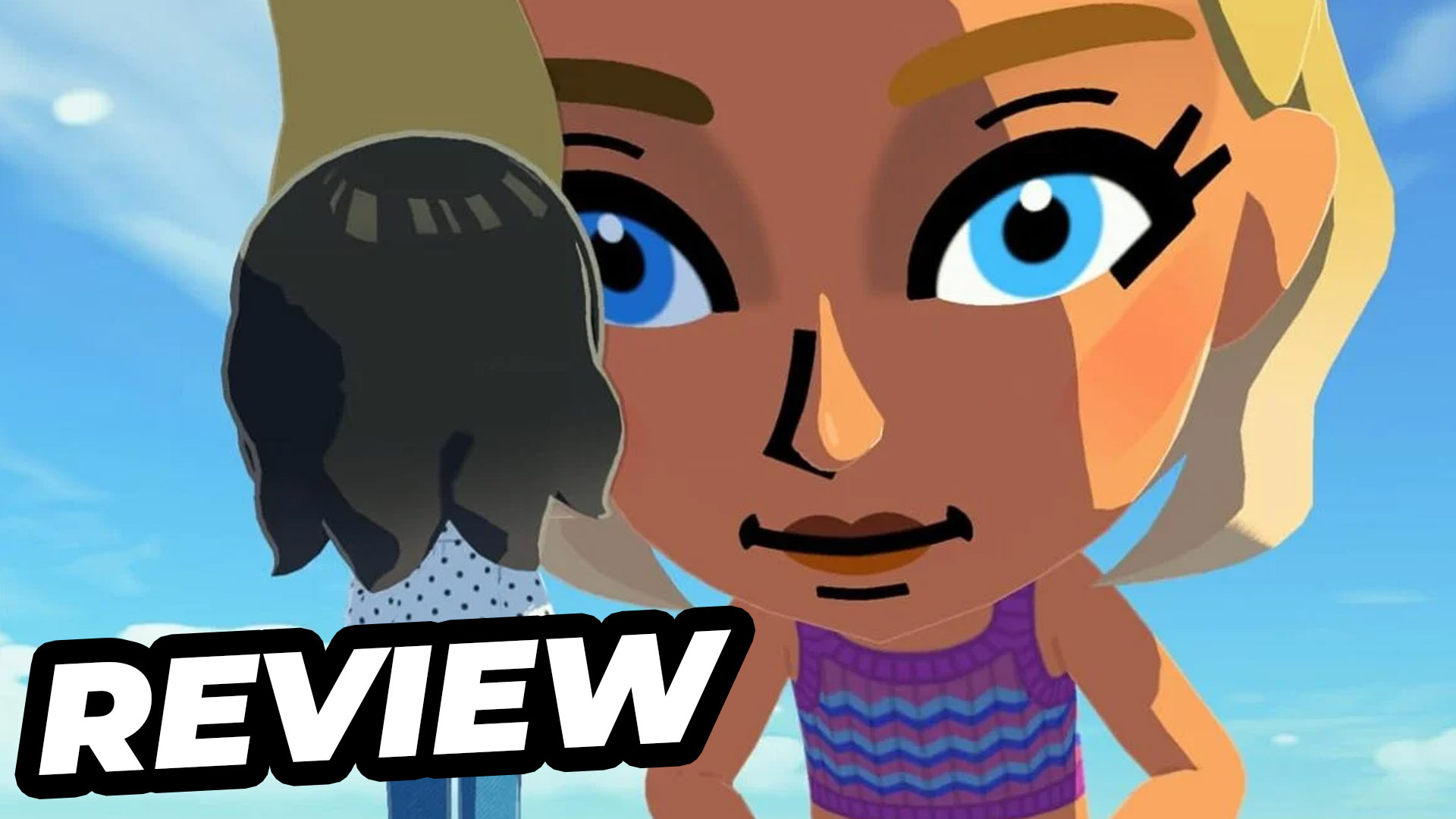
Tomodachi Life: Living the Dream is a voyeuristic paradise. Though it’s not likely to dethrone similar titles like Animal Crossing: New Horizons or even Pokopia, it also does things those games can’t, the most standout of which is letting you be completely, utterly unhinged when it comes to your Miis. It's not a game to be binged, and it can get repetitive on occasion, but the way it revels in its wackiness generally makes up for it, especially for fans of the 2014 Tomodachi Life for the 3DS.
Mii customization is more detailed than it’s ever been, especially with the addition of full face painting, which allows for absurd amounts of detail I’m sure players more artistically-talented than me will have a field day with. Even with my limited abilities, though, I was still able to make reasonable facsimiles of a myriad of celebrities and fictional characters to populate my island with. My only gripe with the system is the lack of mouse controls, which feels like a severely missed opportunity, but perhaps we’ll see a Nintendo Switch 2 update somewhere down the line that adds them.
There’s now a nonbinary gender option available, and Mii’s pronouns can be chosen separately from their gender identity. Sexuality can be adjusted as well, and one of the biggest— and, arguably, most important — changes between Living the Dream and previous Tomodachi Life titles is the addition of same-sex relationships. Existing relationships can also be set within the character creator, both in terms of familial and romantic ones, eradicating the issue of family members dating seen in previous games.
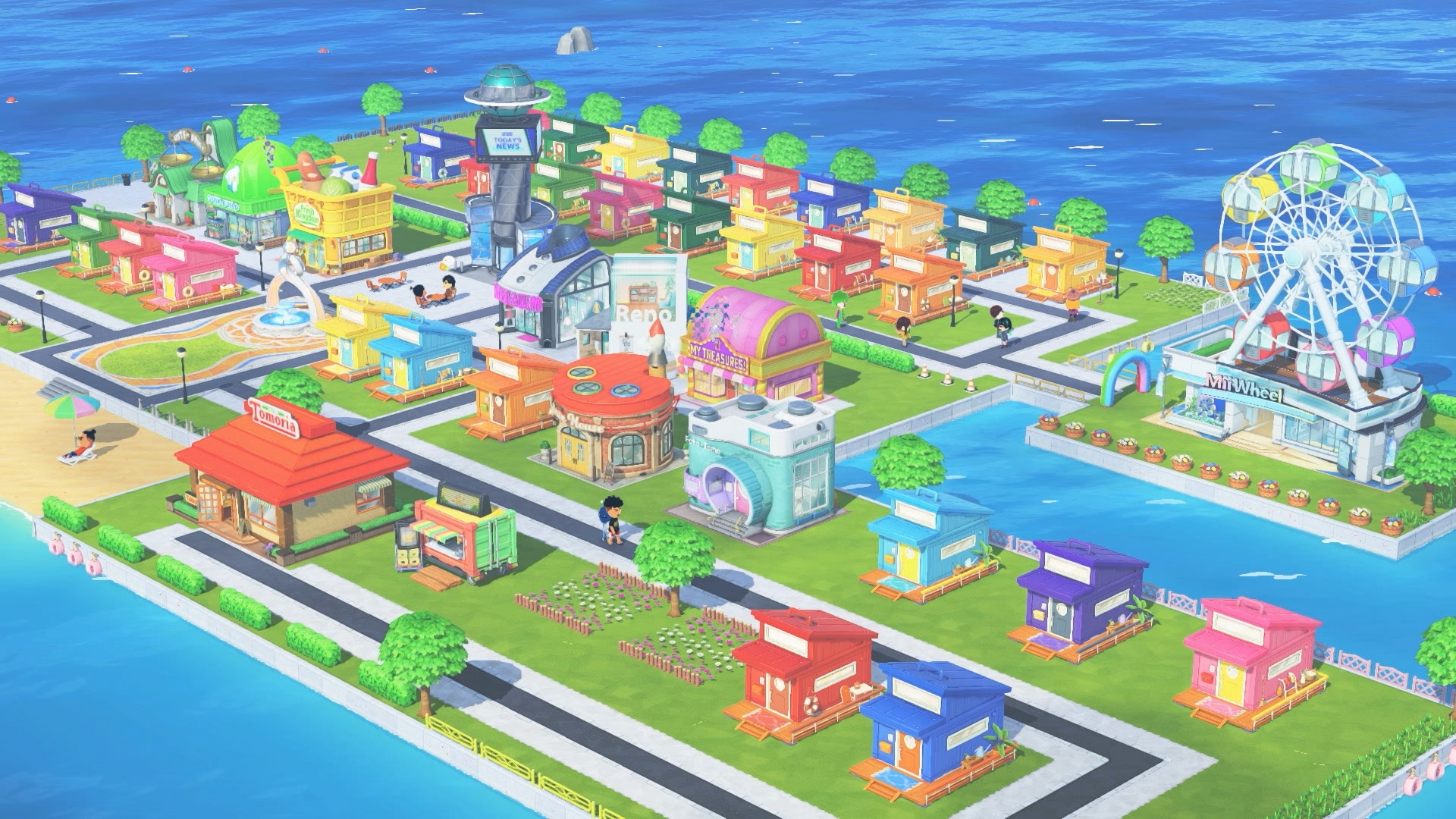
In Living the Dream, you’re basically a god, ensuring the happiness of your lovingly-crafted Miis on an island of your own design. I opted to have my Miis call me Your Majesty, but there are many egomaniacal options to choose from, or you can input your own. Up to 70 Miis can live on one island, and each Nintendo Switch profile can have their own save file.
Miis can be manipulated more so than in Living the Dream’s predecessor. Players can pluck Miis from anywhere in the world and plop them down next to whatever Mii or object they want them to interact with, which is great for fostering relationships or seeing Miis upset with one another being forced to converse. As players continue making residents happy, Miis will level up, and can be gifted usable objects, personality quirks, or phrases when they do. Soon, you’ll have an island full of Miis playing instruments, walking silly, and throwing out quirky sayings.
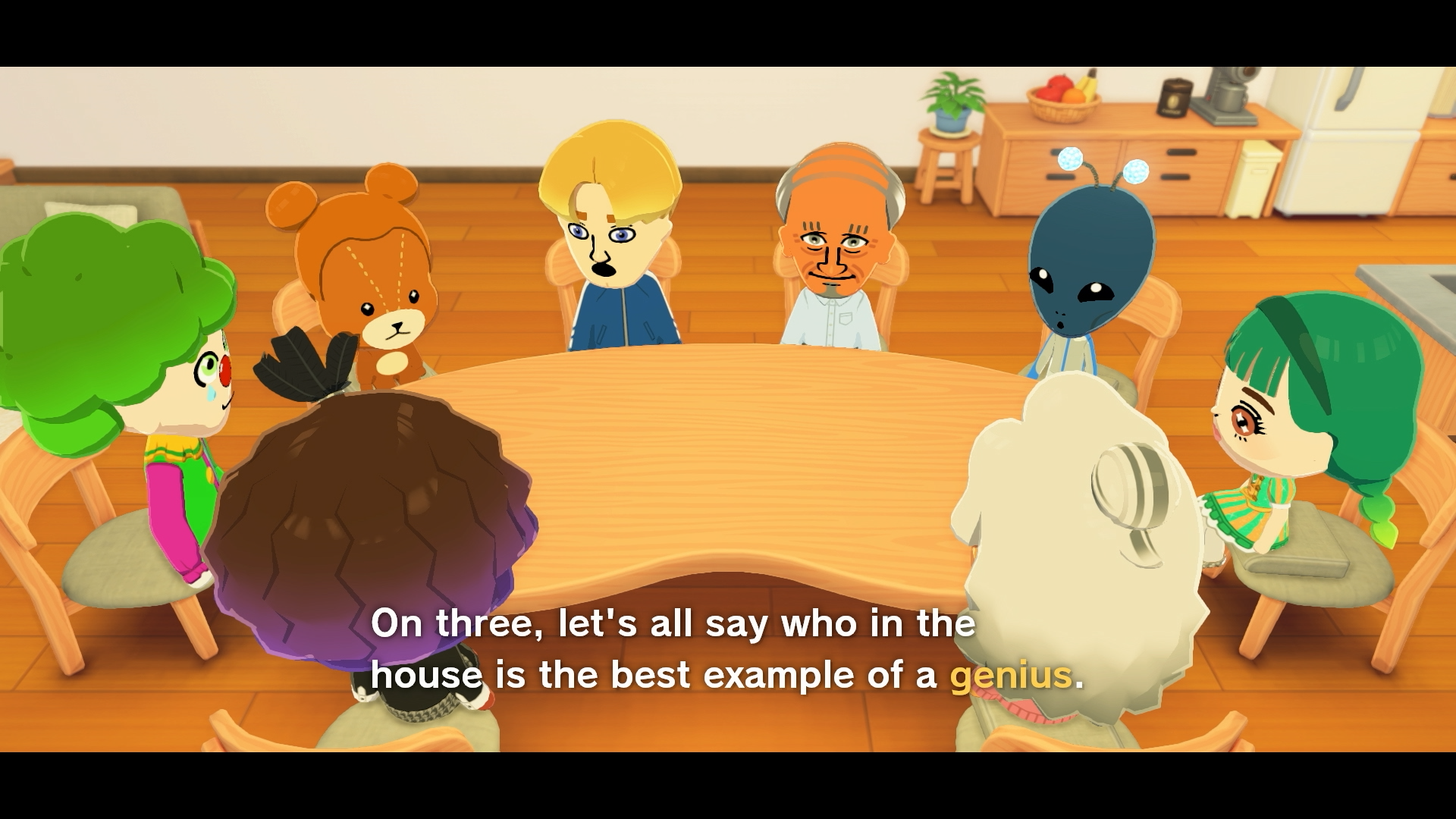
Each day, Miis will present different troubles they’re having — it can be as simple as being hungry, or a bit more complex, like wanting to be friends with another resident, or even a desire to get married. Resolving these issues will earn you Warm Fuzzies, which can be exchanged at the Wishing Well for unlocks, like new town decorations, quirks, or level-up activities. The leveling system feels genuinely rewarding, progressing at a rate that perfectly walks the line between never feeling too easy, yet still giving fairly frequent bursts of serotonin from rewards.
At its core, Living the Dream is about observing the lives of your Miis, which become increasingly unhinged over time as residents form relationships and local lingo gets even more personalized. Once I was several hours deep into the game, my Miis were talking about a myriad of absurd subjects. Once, when I walked up to my self-insert Mii, Conan O’Brien, and Ron Swanson playing with a pet alpaca, the game described the scene as, “They’re over the moon since this alpaca has become OBSESSED with a good set of knockers,” which is one of my favorite sentences I’ve ever seen in a game.
I quickly learned that there is absolutely no filter, and I mean none. You can swear and input otherwise completely vulgar phrases and subjects into the game with zero pushback, and it’s absolutely hilarious. Hearing Miis in their modulated voices bonding over completely inappropriate subjects with the casual cadence one would use when discussing the weather is peak entertainment. Some of the conversations can get a bit repetitive, especially when one Mii is attempting to befriend another, but being able to prime their conversations with nonsense helps lessen the tedium.
Aside from seeing Miis interact, or occasionally sending one to rescue another when they’ve fallen down or have uncontrollable hiccups, Miis will also invite their omnipotent god to participate in different minigames. These keep the same absurdist humor tone as the rest of the game, with options like bowling with Miis as pins, and are nice — albeit brief — changes of pace from island observation.
The island and its residents are always evolving. Relationships can form in the most unexpected of places (on my island, Ron Swanson and Ice Spice are married, and Taylor Swift and Conan O’Brien recently went on a first date), and disintegrate just as quickly. As these changes happen incrementally, and I’ve only had access to the game for a few weeks, I must confess I haven’t seen any earth-shattering shakeups just yet, but I’m sure one’s coming any day now — Ron and Ice Spice have been on the rocks for awhile.
Even without divorce-level drama, it’s very amusing to log on each day and see which Miis have become best friends, and which have decided they’re not vibing with each other anymore. Players can attempt to influence these situations to a point, but Miis also have free will, and may not grow close with another no matter how much you may want them to. Much of the joy of Living the Dream is derived from this sense of voyeuristic randomness, with curveballs coming frequently, and really does make you feel like the island is alive.
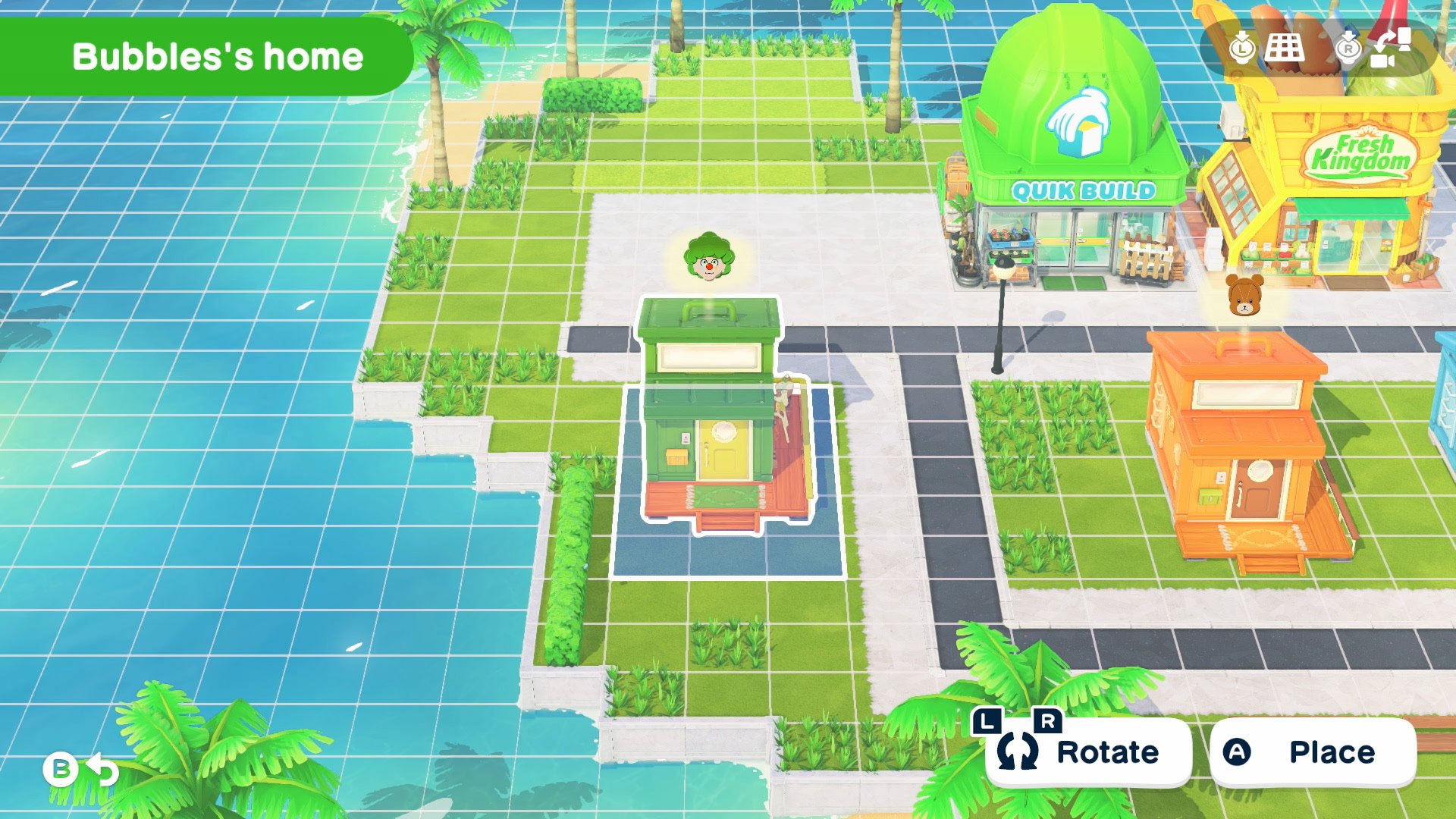
The island itself will also grow and change as players build up a roster of residents. The Island Designer (check name) mode is incredibly intuitive, making everything from the tiniest tweaks to complete terraforming overhauls easy. This in turn inspired more creativity within me — once I discovered I could do things like remove weeds in batches or fill in large areas at a time with different tiles, the island was my oyster.

As players progress, new businesses will open up. Some are places to purchase gifts, like a supermarket and clothing store, while others are places Miis can gather, like a restaurant. The workshop is another place for player creativity (or vulgarity) to shine, allowing the creation of custom-designed food, objects, and more. My Miis won’t stop talking about the custom cigarettes item I made, and it makes me laugh every time.
As entertaining as Miis can be, Tomodachi Life: Living the Dream isn’t a game that’s great for binging. After an hour or so at a time on the island, things to do begin to run dry, and it can feel like you’re watching the same conversations over and over. If you’re looking for a game you can dive into all day long, it won’t scratch that itch, and for me Living the Dream lacked whatever habit-forming je ne sais quoi that made me deeply compelled to revisit games like Animal Crossing: New Horizons every single day.
That’s not to say the game isn’t good in its own right, however. It’s not trying to be Animal Crossing — it’s made to continue on the legacy of the beloved Tomodachi Life franchise, which it does expertly. The increased customization options and overall control players can exert over Miis’ lives are great ways of moving the series forward, while still maintaining the same ridiculousness that made it so iconic to begin with.
Review Score: ★★★★
Game code supplied by publisher for review, played on Nintendo Switch 2.