10 Recent Soulslike Games That Didn't Get Enough Love
You won't find any FromSoftware games here.

For the longest time, video game genres seemed set in stone. But in recent years, lesser-known types of games such as roguelikes, Metroidvanias, and dungeon-crawlers have become noticeably more popular.
But if any genre has dominated the industry in recent years, it's Soulslikes. Over a decade ago, FromSoftware's action RPGs garnered a reputation for their cryptic storytelling, precise mechanics, and unrealistically ruthless difficulty. Not only did these punishing games popularise a whole new way of playing, elements from Soulslikes can be observed in other established IPs, like The Legend of Zelda and Monster Hunter.
Now, there's no doubt the creators behind Dark Souls and Bloodborne still have a foothold on the genre. With that said, several Soulslikes unaffiliated with FromSoftware have taken the world by storm, including Lies of P and Tunic.
However, there are plenty of gems that remain buried, despite busting at the seams with innovation. Though fans of the genre are sure to rush out for the next Elden Ring DLC or the upcoming Duskbloods, here are some lesser-known Souls titles released in recent years that deserve a bit more attention.
10. Asterigos: Curse Of The Stars
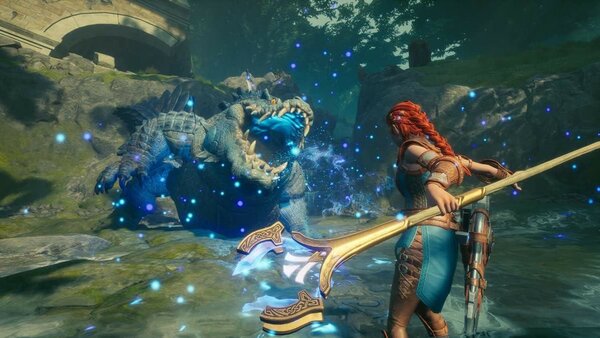
Soulslikes tend to use a gritty aesthetic, which often gels with the eerie music and ominous atmosphere. Though this combo is usually package and parcel with the genre, it can make a lot of Souls titles feel derivative.
Fortunately, Asterigos: Curse of the Stars ditches the angsty-riddled vibe, and instead utilises Pixar and Ancient Greek-inspired art, making everything on the screen pop.
Acme Gamestudio's hack-and-slash offers a huge diversity in combat, since players can choose from six weapon types, and switch between them on the fly. This simple setup allows for dynamic battle strategies and caters to various playstyles.
The environments are subtly interconnected, spurring players to explore. Each biome feels distinct and cohesive, so it's more engaging while venturing from one place to another.
Now, that's not suggesting this colourful RPG is a masterpiece. It has some unpolished gameplay, excessive dialogue, and the choppy lip-syncing gets grating after a while.
However, Asterigos is still worth checking out, especially for newbies since it's nowhere near as hard as other Souls titles. If you want to get into Souls but found the games too challenging, Asterigos: Curse of the Stars is a great place to start.
9. The Last Hero Of Nostalgaia
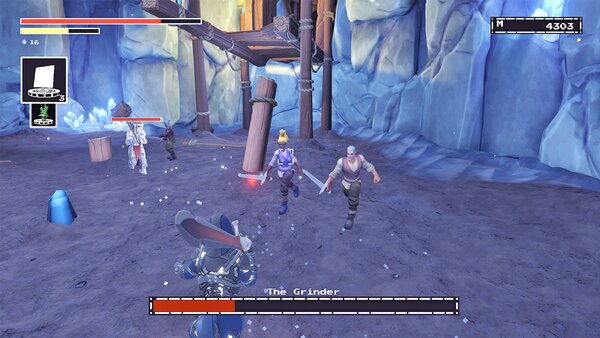
Coatsink's light-hearted role-player successfully blends the punishing gameplay of a Soulslike with a satirical take on video game nostalgia.
As you progress through The Last Hero of Nostalgaia, the narrator butts in with witty and self-deprecating comments, usually delivered with a mix of resentment and reluctant admiration. Not only are these passive-aggressive putdowns hilarious, it helps set the comedic RPG apart from its overly serious peers.
Being a parody, the self-aware title could've missed the mark if it focused too much on the jokes. Fortunately, The Last Hero of Nostalgaia offers responsive combat, terrific gameplay, and a hefty amount of exploration.
Dying repeatedly is a frustrating part of Soulslikes, but it's not as annoying here. The narrator is always eager to berate you so you're kind of looking forward to hearing his snarky comments each time you encounter failure.
Although meshing 3D environments with pixelated characters could be jarring, it ties into the game's emotional story and darker themes about isolation and feeling different.
Even though The Last Hero of Nostalgaia could've been a nostalgia-heavy title that relies on cheap gags, it's surprisingly deep, layered, and imaginative.
8. Mortal Shell

Even though Soulslikes are flourishing like never before, it's tricky for developers craft a game in the genre that doesn't get lost in the shuffle. To leave a lasting impact, the game in question needs to do something different.
And that's exactly what Mortal Shell does. As expected, Cold Symmetry's action-RPG puts an emphasis on atmosphere, deep lore, and precise combat.
But the biggest selling point is the Shell system, which lets players inhabit the bodies of fallen warriors. Each of these fallen heroes have their own distinct playstyles and abilities, allowing players to experiment with multiple strategies.
But that's not all. Instead of blocking, dodging, or parrying, Mortal Shell utilises a Harden mechanic, letting players absorb enemy attacks. Using this defensive manoeuvre at the right time can interrupt the enemies' flow, giving you the perfect opportunity to counter and turn the tide of battle.
The Virtuous Cycle DLC adds a rogue-like mode where players can tinker with different abilities and navigate through randomised paths, offering a huge amount of replayability.
Mortal Shell can be beaten in a few hours, but the creative mechanics should entice players to keep coming back.
7. Eldest Souls
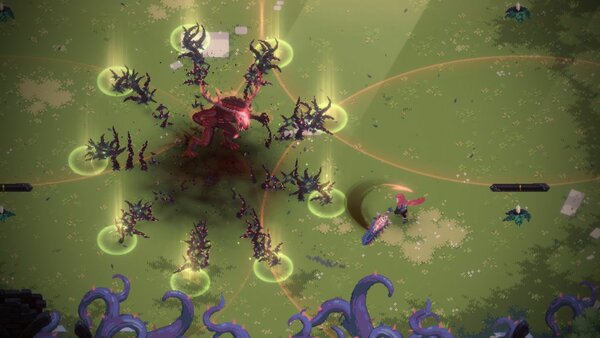
Based on its on-the-nose title, Eldest Souls could be mistaken as a formulaic Souls game.
But nothing could be further from the truth. Once you pick up a greatsword and step into its desolate world, it's clear Eldest Souls is a labor of love. The pixel-art environments and enemy designs are simplistic but atmospheric. Paired with the gloomy soundtracks, the tension is ever-present, even when there are no enemies in sight.
The combat is intense, so players must rely on quick reflexes and be sure to manage their stamina carefully. Due to the minimalist storytelling, players are encouraged to uncover lore through exploration and subtle environmental cues.
The skill tree is vast, but it's easy to manage and tweak to suit the players' needs. Once you get the hang of the myriad of techniques, you'll be able to pull off deadly manoeuvres you never thought possible.
The gameplay is unapologetically difficult, especially when facing the Old Gods bosses. These daunting foes can only be bested with skill, patience, and strategy, so it's deeply rewarding if you emerge triumphant (and that's a big "if").
With the recent release of the boss rush-based DLC, there's nothing stopping Souls purists from giving this underrated treasure a go.
6. The First Berserker: Khazan
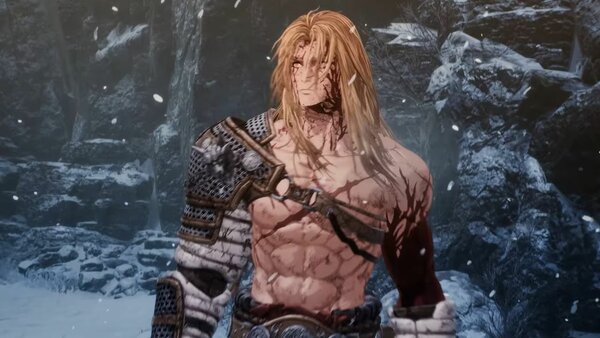
Dungeon Fighter Online is one of the most lucrative video games ever, bringing in over $20 billion. But in 2025, the creators of the side-scrolling hack-and-slasher decided to mix things up by launching a Soulslike spin-off.
It was a bold decision but it was also the right one, based on the positive reception The First Berserker: Khazan has received. Despite the drastic change of direction, the Dungeon Fighter offshoot maintains the spirit of the series. Khazan is a major figure in DFO lore, so it was refreshing to see his past explored in depth. This decision offers a character-driven story, making The First Berserker stand out over similar titles.
Another aspect that should grab anyone's attention is the artwork. The game mixes cel-shaded anime-inspired characters with photorealistic textures, so every battle is a sight to behold.
Speaking of which, the fights get extremely bloody. Though the violence in the original series was tame, the gore here is on par with Game of Thrones or Mortal Kombat, especially while pulling off those cinematic finishers.
Whether you’re a fan of the series or not, there's enough gorgeous visuals, epic brawls, and visceral action here to whet the appetite of any Souls veteran.
5. Lords Of The Fallen (2023 Remake)
Though the original Lords of the Fallen obviously drew inspiration from Dark Souls, the medieval role-player was more forgiving, making it arguably more accessible. It had clever mechanics, including a system where players were rewarded with XP multipliers if they used minimal checkpoints.
But due to the clunky controls, repetitive battles, and poor enemy AI, Lords of the Fallen received mixed reviews. So, when it was announced a remake was in the works, there was hope this new iteration would remedy its precursor's problems.
Sure enough, 2023's Lords of the Fallen boasts vastly improved graphics, a seamless interconnected world, sharper combat, a variety of co-op and online features, and superior customisation.
Rather than just tightening things up, this remake introduced new mechanics, mostly notably the dual world system. At certain points, players must shift into an undead world to solve puzzles, avoid death traps, and explore otherwise inaccessible areas, bringing a new strategic aspect to the gameplay.
The game suffered a few bugs at launch but have been patched out since. And with a sequel announced for 2026, the future is looking bright for the series.
4. Grime
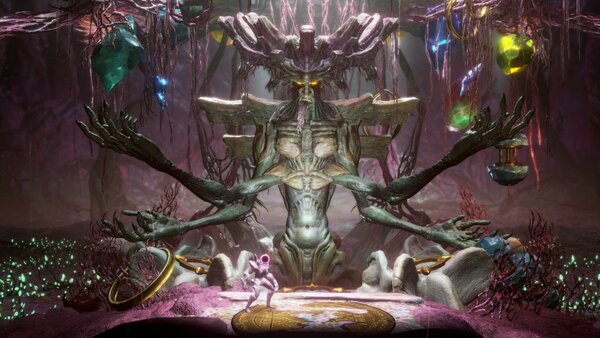
Developed by Clover Bite, Grime carves out a unique identity in a crowded genre with its fluid mechanics, inventive world design, and original combat.
The art direction is stunning, enhanced by a haunting soundtrack that underscores the game’s tone perfectly. The environments are intricately crafted, so each biome is distinct in its own grotesque way. Unlike most Metroidvanias, back-tracking is kept to a minimum, thanks to the phenomenal world structure.
Another aspect that amplifies the atmosphere is the Lovecraftian-inspired enemies. These eldritch abominations are so unsettling, they'd give Stephen King nightmares.
However, it's the combat where Grime truly excels. Rather than relying on traditional healing items, Grime's black-hole headed hero must absorb enemies and their attacks to maintain his health. This mechanic creates a risk-reward dynamic, since you must choose whether to avoid an enemy's assault or absorb it, knowing the latter could result in his doom if mistimed.
On top of that, the upgrade system encourages experimentation with different builds and weapons, allowing players to use whatever combination best suits them.
With the release of two free DLCs recently, now is the perfect time to explore the world of Grime.
3. Blasphemous 2
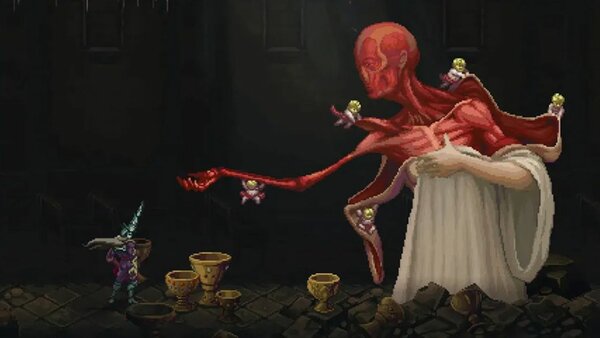
The Game Kitchen released a Metroidvania called Blasphemous back in 2019. Though it was risky for a new development team to release a game of this ilk in an oversaturated genre, the side-scrolling platformer stood out for its visual style, cutting-edge combat, and merciless boss battles.
As its reputation has only grown over the years, fans hoped the sequel would fare better. Even though Blasphemous 2 has done well, it deserves more recognition since it surpassed its predecessor in every way.
This instalment doesn't try to reinvent the wheel but it tightens up every aspect, including platforming, sprite details, music, combos, special moves, and level design. (And, of course, the unnecessarily gory kill animations are back and better than ever.)
The combat is more precise and responsive than the first game, and accommodates all types of playstyles. The smart shortcuts and fast travel make backtracking less infuriating, which means players will be more pressed to explore.
Even if you couldn't get into the original, the follow-up should be worth your time. And if you were a fan of the first Blasphemous, you're gonna love this one.
2. Wo Long: Fallen Dynasty

Though Team Ninja was initially known for Dead or Alive and Ninja Gaiden, they've been leaning into the Souls genre in recent years. Despite the fact the Nioh series has received high praise, another Team Ninja title that deserves love is Wo Long: Fallen Dynasty.
Similar to Sekiro, Wo Long features a more agile and responsive combat system, emphasising deflection, guard-breaking, and redirecting enemy attacks. Battles feel more like a dance, since rhythm and momentum are prioritised over aggressively lashing out.
Each weapon type feels distinct, and players can fuse elemental spells into them, allowing for deep build variety and hybrid playstyles.
Even though certain games allow you to lower the difficulty if you keep dying, Wo Lang does the opposite. The game has a Morale Rank mechanic, affecting the power of you and your enemies. If you die, your Morale drops, making adversaries stronger until you earn it back. This system may sound unfair but it compels players to remain vigilant, knowing their carelessness will cost them dearly.
Considering Wo Long is one of Team Ninja's strongest titles in a long time, it should've received a lot more attention.
1. Death's Door

Playing as a soul-reaping crow, you must traverse between worlds, targeting souls that have been marked by death. As soon as you step into the talons of the avian reaper, you’re immersed in this dark but whimsical adventure.
Like Tunic, Death's Door merges elements from The Legend of Zelda and Dark Souls. Having said that, it carves its own identity due to its fascinating story and style, so it never feels like an imitation of either.
Even if Soulslikes aren't your cup of tea, it's hard not to be won over by Death's Door's satisfying combat, captivating world design, and melancholic tone. Thanks to the creative mechanics, the puzzles and combat feel diverse, despite the limited weapons and magical abilities.
The battles are relentless but it's still accessible for players unfamiliar with the genre. Though you will die (a lot), all enemies telegraph their attacks, so it always seems fair when you bite the dust.
Despite the dark narrative and themes, the isometric action-adventure title is surprisingly funny (especially when The Frog King reveals his title).
The campaign is short but players should find themselves returning to Death's Door again and again, due to its boundless innovation.