10 Things Blizzard Want You To Forget
All big companies have skeletons in their closet. Some more than most.

No company is perfect. From the smallest independent developer to a juggernaut publisher, they're forever run by people. And people, by default, are flawed and will make mistakes.
That is okay, but the bigger you are, the harder it is to erase those faults, and there are not many bigger names in the world of video games than Blizzard.
Throughout their 29 year life, Blizzard has curated some of the industries most beloved IPs. Across generations, from the lofty early days of real-time strategies like Warcraft and Starcraft through to the eSports phenomenons Hearthstone and Overwatch.
Blizzard has had a significant voice in the video games market. It would be naive then to assume that they've played everything straight and never put a foot wrong.
However, some of these missteps are legendary.
These mistakes range from bizarre - if minor - business choices, right through to cataclysmic stumbles that find the company on the news site front pages across the board. One thing is for certain though - Blizzard would like to sweep these controversies under the rug as soon as viably possible.
10. Rebranding Battle.net... And Then Changing Their Minds

Battle.net is an industry icon. Released in the lofty days of dial-up internet in 1996, alongside the release of dungeon crawler epic, Diablo.
The Battle.net name has been synonymous with some of video games greatest accomplishments, and players fondest memories. This made Blizzard's decision to move away from the Battle.net branding to the much blander "Blizzard" in 2016 very confusing.
At the time, Blizzard cited "occasional confusion and inefficiencies related to having two separate identities" as the core reason for the shift away from its iconic brand name. Naturally, hardcore Blizzard fans were outraged. The name Battle.net had been there through the good times and the bad for 20 years, and choosing to change it over "occasional confusion" felt like overkill.
This change didn't stick.
Less than 6 months later, Blizzard advertised that Destiny 2 would be running through their service Battle.net. Fans, and seemingly employees at Blizzard, were confused about what the name of the service was now. It took Blizzard another 4 months to finally clear up confusion, by releasing a statement saying the official name for Blizzard's online client is "Blizzard Battle.net".
It was a messy attempt at re-branding that could have been a lot smoother had the company been transparent from the off.
9. Battle Of Azeroth Makes World Of Warcraft A "Games Of Service"

World Of Warcraft has done what many MMORPGs have failed to do, stay relevant. This is thanks to repeated expansions that pushed the boat out with new content that provided both ample activities for casual players as well as epic raids and end-game activities for the hardcore fans.
Battle Of Azeroth tried to innovate further by implementing a "games of service" style content distribution, as is the current video game zeitgeist. The issue is that World Of Warcraft is an institution, with a player base that has been populating the world for 16 years.
Introducing new game modes, such as Warfront, behind a timed-release didn't appeal to most of WoW's fanbase. Having a key mode only accessible once a month put unnecessary time pressure on casual fans, whilst keeping the daily player twiddling their thumbs until the new loot pool is available to them.
This became even more annoying when paired with the new Azerite Armour system, which inadvertently slowed progression and restricted the types of armour you could wear. These sandbox changes, designed for a totally different type of game, tried to squeeze every inch of content out of this new expansion. All it did instead was frustrate the fans the content was designed for.
8. Real ID Forum Policy

This was a move that was jettisoned almost as soon as it was formulated, but in 2010 Blizzard announced that all forum users and posters would be required to use their real name. No Alias'.
There is a clear logic to Blizzards thinking here.
The internet and especially video game communities can attract unfortunate people that believe it is "funny" to troll people, especially people of colour, women, LGBTQIA+ and SEND people. It would make sense for Blizzard, a company that tries to promote diversity and equality, to want to stamp out this kind of behaviour.
However, it wasn't just the trolls that were angry about this decision.
Though Blizzard was clear on the level of protection users would get with their data, having your real name out there can be dangerous. If an unscrupulous type were to put the time in to find out who you are (even in 2010, it wasn't difficult to track down people on social media) you could find yourself getting grief in real life over that Starcraft game you sweated.
Video games are the ultimate escapism, so for Blizzard to remove that role-playing immersion would have been devastating.
7. Overwatch Popularising Loot Boxes

Overwatch is one of this generation's defining video games. The colourful hero shooter beautifully blends addictive gameplay, tight as a nut controls and an interesting character roster that allows players of all preferences to enjoy playing the game.
Overwatch's character roster also promotes people of all backgrounds, from LGBTQIA+ characters like Tracer and Soldier: 76 through to people on the autistic spectrum like Symmetra, showing them as strong and capable. Overwatch has had many positive influences on the video game landscape.
However, Overwatch was also one of the first AAA titles to include a loot box system.
Now, Overwatch's loot box system is by no means the most offensive example. There are no power upgrades or exclusive game-changing items locked away, just cosmetics. What Overwatch's loot box system does is shows the likes of parent company Activision and EA just how profitable this market is. For example, the last quarter of 2019 showed EA making nearly $1 billion on these types of transactions.
Overwatch's use of a loot box system can be seen as a sign of things to come in retrospect, culminating in 2017 with the great loot box controversies of single-player game Middle Earth: Shadows of War and initially pay-to-win Star Wars: Battlefront 2.
6. Diablo III Real Money Auction House

The launch of Diablo III in 2012 was a mess. Though the game was polished, the servers themselves were not up to the task of facilitating the amount of traffic they were receiving.
With this and Diablo III's requirement of an internet connection, many players were faced with the infamous Error 37 message. This, however, is not the Diablo III blunder that caught the most attention.
Diablo III launched with a real-money auction house in-game. The idea was to create an open marketplace for players to trade items between them, but in implementation, this did not work. Diablo's satisfying loot grind was wiped out. Instead of hunting down the biggest dungeon bosses for elusive gear, players could simply grind enemies for gold or worse just buy these items with real money.
In a recent Polygon article, Diablo IV executive producer Allen Adham was quick to clarify that Diablo IV would not feature a real-money auction house, but the team have "pretty solid ideas on how to make trade viable without letting it disrupt the game." Let's hope this trading system keeps the integrity of Diablo alive and well.
5. Diablo Immortal Botched Announcement

By the time Blizzcon 2018 rolled around, it had been 6 years since Diablo III's previously mentioned botched launch. In that time, Blizzard worked tirelessly to fix these issues and make Diablo III the dungeon crawler people expected and loved. The excitement for a new Diablo title was palpable. Fans went into the event fully prepared to get hype for a Diablo announcement.
They certainly got a Diablo announcement, but not one anyone was expecting. Or wanted.
Blizzard announced Diablo Immortal, a free to play mobile game. The backlash was vicious, culminating in the now-infamous "Is this a late April fool's" comment during the Q&A. The vitriol that Blizzard employees got for this announcement was unwarranted.
At the end of the day, they are people and nobody should be made to feel that way. But Blizzard's handling of this preventable disaster was laughable.
Hype should not have been built for a new Diablo game if it wasn't a mainline game. If Immortal was announced alongside Diablo IV, nobody would have batted an eye-lid. Instead, expectant fans got slapped in the face with false hope.
When fans are disappointed, however, responding "do you guys not have phones" isn't going to win anyone over.
4. Pricing Established ESports Teams Out Of Overwatch League

ESports is big business. The rise of Dota 2, CS: GO and League Of Legends profile and prize pools throughout the last few years is astronomical.
It makes sense then, for Blizzard to target this blossoming eSports market with Overwatch. The creation of a much more traditional league system, emulating more established sports was a masterstroke. When it came to purchasing team slots, however, Blizzard leaned too heavily into traditional sports.
Almost as soon as The Overwatch League was announced, established eSports teams like Red Reserve, Splyce and SoloMid were soon dropping their Overwatch teams, with the latter quoting that the league was "too damn expensive". They were not wrong.
Franchising costs for The Overwatch League were nearly 20 times higher than League Of Legends at an eye-watering $20 million, aiming to attract big business owners like the Kraft Group.
In gunning for the whales, Blizzard priced out established eSports teams that had helped push Overwatch's popularity to the point where there could even be a league. Blizzard chased the money and doing so punished teams that have significantly smaller budgets and other leagues to participate in.
3. Warcraft III: Reforged's Blizzcon 2018 Demo

Ideally, Blizzard would like you to forget the whole of Blizzcon 2018. Not only was the Diablo Immortal announcement a failure, but there other big announcement made promises they couldn't keep.
Warcraft III was an RTS classic, begging for a remaster. What Blizzard was promising was a complete rework graphically as well as fully animated cut-scenes to bring the origin story of World Of Warcraft alive for both new and existing audiences. What players got was the opposite.
The game launched with a whole host of bugs which is not unusual in this video games climate. What was unacceptable was the move away from set promises. Completely reworked cut-scenes were replaced by re-skins of the original dialogue sections.
The game's UI was almost identical and sluggish. Even worse, you couldn't even launch the original game anymore without going through Blizzards online client, thus sacrificing created mods into the hands of Blizzard's copyright rules.
Once again, a lot of this controversy would have been avoided if Blizzard were transparent. It is a mammoth undertaking to re-work and animate cutscenes. If they decided it wasn't worth the effort, they should have made an announcement letting people know what they were buying.
Instead, fans were sold on a lie and let Blizzard know it.
2. Laying Off Staff Despite Best Financial Year

2018 was a record year for Activision Blizzard. They earned a record $7.5 billion in sales, $1.8 billion of that being profit. Going into 2019, the company should have been celebrating their huge success. Maybe greenlight a few alternative, creative projects? Hire more staff to make the dreaded crunch more bearable? Maybe take the staff out for a nice meal? Something kind to thank their incredibly dedicated staff for all their hard work.
Activision Blizzard decided the best way to celebrate was to sack EIGHT HUNDRED staff members.
Video games employment ebb and flows when a project is finished. Staff will typically move onto the next project or company if resources are not available or if it is a linear experience with little online multiplayer. But Activision Blizzard is massive. Their games are typically service games, needing staff to constantly oversee servers and updates. There was no viable excuse for the sacking of EIGHT HUNDRED people other than in the pursuit of more money.
This move is a flagrant abuse of power from the CEO's who pay themselves exorbitant salaries. Though we cannot pin sole responsibility for this move of Blizzard CEO Bobby Kotick, the fact is that he was at the table. He had a voice that could have prevented peoples livelihoods, salaries, health insurance and prospects being ripped from them because they performed so well.
1. Banning Blitzchung For Supporting Hong Kong
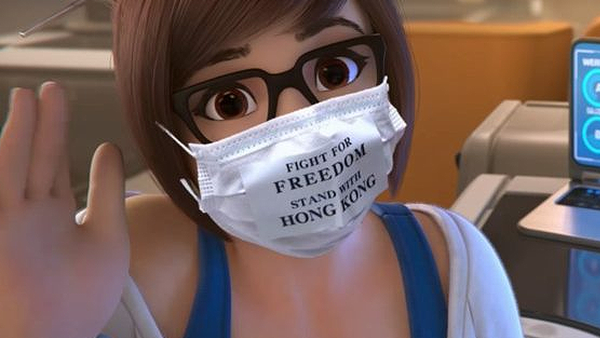
For all the lousy business ethics, botched launches or strange policy decisions, no mistake will ever eclipse the handling of Blitzchung.
Ng “Blitzchung” Wai Chung, in a post Hearthstone interview, called for the liberation of Hong Kong surrounding further political tensions between the region and mainland China.
Blizzard reacted by banning Blitzchung for one year and withholding his prize money from the tournament. In its statement, Blizzard cited a competition rule which states that players aren’t allowed to do anything that “brings [them] into public disrepute, offends a portion or group of the public, or otherwise damages [Blizzard’s] image."
The issue is, Blizzard is an American company. America has a specific constitutional amendment that protects freedom of speech, for better or worse. What Blizzard showed in this incredibly harsh punishment was not only that they care more about their financial assets in China, but that they are willing to bow down to an oppressive regime to keep those assets coming in.
This move sparked outrage not only in the video games sphere but within wider media as a whole. Soon The Washington Post, BBC and a whole host of traditional news outlets were laying bare Blizzard's profit over people policy.
It is worth remembering that, though Blizzard reduced Blitzchungs ban and gave him some of his earned money back, he is still banned. Blizzard is still caving to the pressure of the Chinese market. A dangerous precedent from one of the US's biggest video games publishers.