10 Video Games That Are Best First Time Through

The ones you really want to forget, just so you can play them all over again.
Why do we consume media a second time, a third, and so on? For novels, it's often about reliving the story therein, to get as close as possible to the page-turning captivation that kept hands glued to the spine the first time through. This is essentially true of movies, though another common goal when re-watching a film is to pay closer attention, to learn more about its cinematography, pacing, or characters. So, rediscovering entertainment and bettering our understanding of a work; there are more motives, certainly, but those are the big two. When talking about video games, however, a unique drive comes into the picture: the opportunity to do better. To replay a game is to take the knowledge of a victor and apply it to a familiar challenge. Although the second playthrough may be on a higher difficulty or, for games like Fallout or Dragon Age, from a radically different disposition, it's ultimately the same experience. On the opposite end of the spectrum, something is missing when replaying some games. The still wholly excellent sensation lacks that initial hook, that mystery and its accompanying "Aha!" moments. What's around that corner, what item is in that chest, how hard the next boss is: we can't be surprised anymore. For every moment of satisfaction and validation, there's one of longing, spearheaded by a thought every gamer has mulled over countless times: "I wish I could play this for the first time again."

10. LittleBigPlanet

It's rather timely for LittleBigPlanet 3 to just now be rolling in (at the time of writing), as it will undoubtedly reinforce the point that Media Molecule's adorable, artisan world has a short shelf life. LittleBigPlanet is a series predicated upon complete and total agency for the player. The crocheted world itself will skip to the rhythm of your fingers, and you may snap them as melodically or erratically as you wish. Create, edit, and share your levels, and play through the creations of others just as easily. Multiplayer is the backbone of LBP; without it, a staggering percentage of the franchises' content vanishes. Sackboy lacks longevity in single player. Both LittleBigPlanet 1 and 2 delivered stellar campaigns, replete with impeccable level design, but also stumpy. Here are the locales, these are the mechanics and gizmos, jump on the token bad guy, and you win. Can you play that again? Sure. But you don't get much out of it; you've already found all the bubbles and customised Sackboy to an unrecognisable state. It's just never the same.

9. Phoenix Wright: Ace Attorney

Who would have expected Capcom, a studio best known for its love of fighting and JRPGs, to be the one to discover just how satisfying it is to slick your hair back, strap a suit on, and stomp into a courtroom to accuse people you barely know of lying? The increasingly popular Phoenix Wright series is one of gaming's quirkiest, buried so deeply in its niche that it can't even see the niches it's next to. Animal Crossing, Journey, and even crossover-to-be Professor Layton have nothing on no-holds-barred legal brawling in the Unlikely To Be Fun Olympics. Remarkably though, this 3DS IP is extremely engrossing. In a similar vein as the superb Papers, Please, Phoenix Wright's half-puzzle, half-point-and-click gameplay invites players to not only learn the facts of a case or crime, but also prove their stance. Actually doing so delivers the same admittedly petty but oh-so-sweet satisfaction of winning a debate in real life, and is largely to thank for the runaway success the games have seen. The caveat here is an obvious one: Mysteries are only mysteries before they're solved. If you've already spoken to the witnesses, searched the site, and compiled the evidence, you're probably spending your time in another niche.

8. Limbo

Indie developers have long since perfected the go-to formula for ethereal, coming-of-age narratives. Young, innocent, probably big-headed protagonist? Check. Contrastingly and very deliberately dreary landscape? Check. Highly stylised visuals? Check - and bonus poignancy points for monochrome. Maybe throw in an estranged partner for added effect. Limbo is an over-achiever in this regard, but also easy to lose track of in the wake of Bastion, The Binding of Isaac, Evoland and many, many more (you could even argue ICO). In any case, PlayDead's chromatically challenged tale is an endearing one, a tale of insurmountable challenge, isolation, and maturity. Those three lose their luster after the first attempt. The challenges have been surmounted, the character has matured, and at least one other person entered the otherwise empty room. Next big-headed protagonist, please.

7. Valkyria Chronicles

The surprise but warranted PC release of Valkyria Chronicles introduced a whole new wave of gamers to Sega's once PlayStation 3-only starlet, and made this article a little easier to write. A parody of a certain World War, Valkyria Chronicles brings JRPG flare and an incomparable pencil-hatched aesthetic to the real-time-strategy scene€”to great effect. Its many missions and sieges chronicle one small nation's trying, desperate, and occasionally tear-jerking struggle against Europa's military superpower. It is strategically sound and intellectually demanding, well-written, masterfully scored, and loaded with likable characters more witty than every brown-and-grey Call of Shooty put together. It was a triumph upon release, and with the added horsepower of PC backing it, Valkyria Chronicles is nothing short of exceptional now. And that's it. You can't fault the game for it, but it really is a one-and-done thing. Once beaten, Valkyria Chronicles becomes incredibly easy what with your fully leveled soldiers and weapons, and is also missing the heretofore palpable conflict driving the narrative. If you've seen the climax (good on you, by the way; game's no joke), nothing is driving anything anymore. Is it still fun? Absolutely. Is it worth buying and playing again? You bet. But at the end of it all, you'll always miss not knowing when enemy tanks would appear and when Soldier X would die in the line of duty.

6. Dead Space

Before you, vacant halls creak and moan in disrepair, all the while reminding you how alone you truly are. Why can't they just shut up for a change? Behind you lies a broken streak of crimson a shade brighter than the hideous palette of red that has become the floor. Fresh blood. Some of it is yours, and it doesn't help that most of it isn't. The less fortunate line the streak, mentally and physically in pieces. At least you can't even recognise them at this point; they've all turned. Now they're just pallbearers to this coffin that was once a ship. They tear and scratch through the vents, gnash their teeth from behind grills. Why can't they shut up either? Then you back up three feet, because you know that little explosive goblin-thing is going to jump through the vent for the umpteenth time. There's a bit of a disconnect there, don't you think? That's the sticking point with replaying Dead Space, a survival-horror title built on a system of proximity triggers. You walk here, things jump out there. Once you know that, the magic is lost. You'll still dread rounding that corner, but not nearly as fiercely as you once did.

5. Fire Emblem

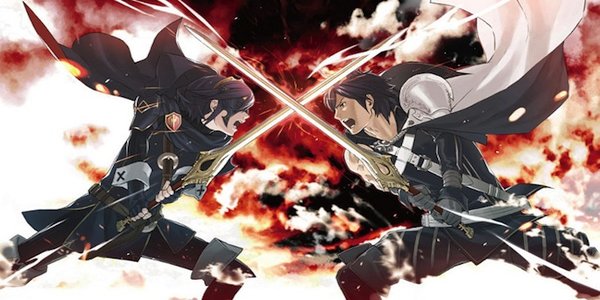
Like the procrastinatory college student running out of hypothetical relatives to kill off to excuse lateness, Fire Emblem has a hard time selling death a second time. As discussed earlier, this problem is also present in Valkyria Chronicles, but not nearly as prominent. With its predominantly character-driven narrative and emphasis on relationships, Fire Emblem turns the attachment dial to 11. Fire Emblem is one of the finest examples of gaming with consequence. It's a truly painful thing to lose a unit in battle. You've learned their upbringing, why they're fighting, who they love. Perhaps more than any other game, your actions mean something: your mistakes mean irrevocable loss (provided you aren't a save-swapping sissy); your victories, celebration. As we've already seen, this usually wears off after a playthrough. The diverse and branching paths that characters take helps lessen the post-playthrough monotony, but you know a random ambush - which, incidentally, has also been robbed of its surprise - will never be as tense again.

4. Portal

If you're looking for "Aha!" moments, you're looking for puzzle games. If you're looking for puzzle games, you're either looking for Portal, or have played Portal. This is science. What began as Valve's pet project has become one of gaming's defining cultural icons. It has also spawned one of the most abused one-liners in history, so it may actually net zero. In any case, Portal is an exceptional puzzler indeed. Its titular mechanic accomplishes in minutes what takes many puzzles hours, or at least a few laborious tutorials: teach the viewer to think differently. Screw Euclidean space, portals are the new age. Blue and orange are the answers to everything. But perhaps even more severely than with horror games, there's no room for imagination once you've cleared Portal. Commendably dark and humorous story aside, getting from point A to point B is the crux of the game. Charting a path, having that path fail horribly, and then trying again is where it's at. Once you know how to get that box through that hole and onto that platform, Portal is just a time trial.

3. Shadow Of The Colossus

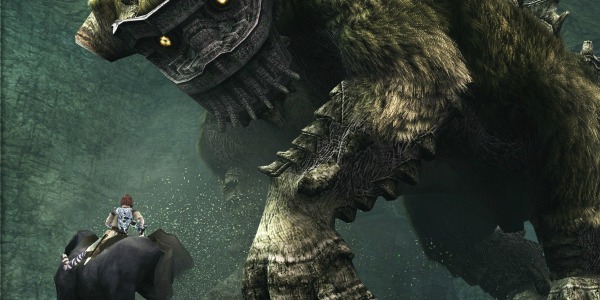
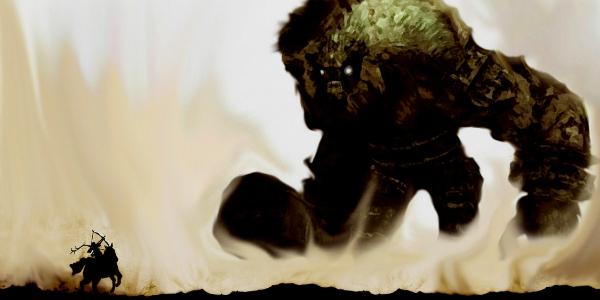
You'll recall how deeply Phoenix Wright has been driven into its niche. Well, Team Ico managed to burst straight through even that with Shadow of the Colossus, a game ostensibly about climbing, stabbing - and invariably falling off - rather large things. What those things are is where the game finds its foothold. Environmental and organic puzzles are one thing, but living, breathing puzzles are another entirely. The Colossi are as intricate as they are commanding. As they stumble over the landscape, sending dirt flying and shockwaves rippling each time their hooves and claws meet the valley, they genuinely feel massive. They're imposing, convincing beasties. The last thing a sane person would want to do is climb these things, much less stab them with what to them must be a toothpick. You're just going to annoy them and wind up as the next thing sent flying over a hill, right? Perhaps that's what makes doing so so damn fun - the climbing and stabbing part, not the flying over the hill. Interestingly though, the issue here isn't strictly knowing how to tackle each Colossi, as there are usually multiple viable approaches. This is a matter of discovery, of no longer asking yourself, still reeling from the adrenaline of clutching the most recent behemoth as it falls defeated, "What on Earth is next?"

2. The Last Of Us

Arguably the pinnacle of the PlayStation 3's long life, Naughty Dog's The Last of Us is one of the most emotionally charged games ever made. Superb voice work compliments stunning, motion-capture-aided visuals perfectly and makes for a gripping portrayal of a world that has truly ended. By and large, game developers throw the apocalypse around like it's painful to hold onto it. Fallout, with its hands now thoroughly burned, passes it to the Steam market which proceeded to immediately release a slew of crafting-based survival games set after the world has met its end. Next up, B-rate shooters, followed closely by Darksiders and God of War. The Last of Us, on the other hand, makes use of a premise that, while a touch fantastic to say the least, is easier to buy into than radioactive zombies ate the color palette (or whatever is ending the world in games nowadays). Better still, it emphasises helplessness and actively discourages confrontation - the far more reasonable approach to survival. Believable characters make for a believable apocalypse, and by the halfway marker you're so invested that you're practically asking for your heartstrings to be tugged. And tugged they are, but so harshly that they can't really be pulled any further by a second run. The game's many pivotal scenes and climaxes retain their importance, sure, but they never cut quite as deeply.

1. BioShock

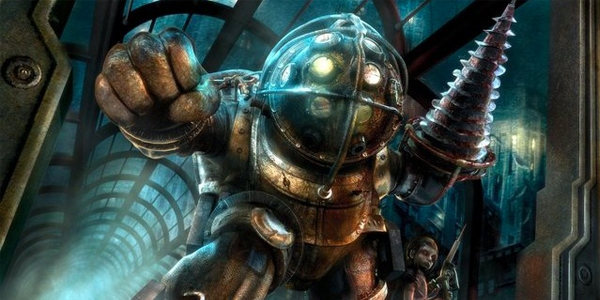
Did you see this one coming? Oh, you did? Darn. Well let's be honest, you can't argue it deserves the top spot. It isn't terribly difficult to figure out what makes BioShock so impactful. Its setting, the decrepit and decaying Rapture, is built on radical idealism and a perception of capitalism that would make Karl Marx combust. Its characters, a downtrodden bunch of misfits all working to make things work, are as varied as they are vulgar. Then there's the elephant in the room, the climactic revelation that remains one of gaming's greatest twists. Every last element has been lovingly crafted and engineered to dazzle, if only through sheer disbelief. Of course, you can only kindly oblige so many times. Have you ever wanted to forget a game just to discover it again? Would you rather hold onto your experiences forever? Do you prefer replaying some of the games seen here?

 
Posted On: 
Contributor
Contributor

A freelance games writer, you say? Typically battling his current RPG addiction and ceaseless perfectionism? A fan of horror but too big a sissy to play for more than a couple of hours? Spends far too much time on JRPGs and gets way too angry with card games? Well that doesn't sound anything like me.