11 Popular Video Games That Totally Divide People
Some say good, some say bad. The only thing we can agree on is that no one can agree.

It's a sensation that all gamers are familiar with.
We all have that one game that we will never be able to enjoy, no matter what anyone says.
It sits deep in your soul, burning away quietly as you brace yourself, ever ready for someone to tell you how incredible it is, knowing that you're completely willing to die on that particular hill.
Whether it's a game that's genuinely good with one huge flaw, or a game that really isn't particularly good that people just refuse to stop playing, we've all got titles that we love and titles that we hate, and we all know that someone out there is just waiting to tell you how very wrong they think you are.
The games on this list have earned their spot by merit of being popular despite having a camp of steadfast detractors, and not because they're bad (or good, if that's what you want to get angry about).
11. No Man's Sky
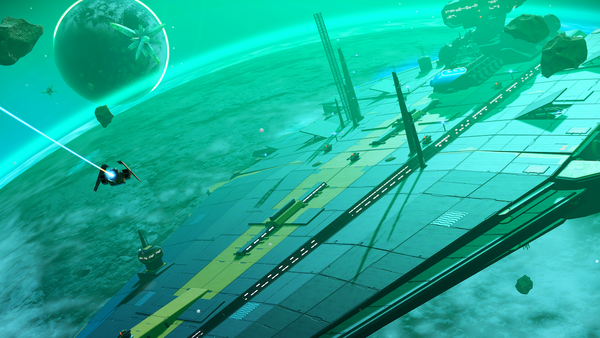
No Man's Sky was released in 2016 to absolute outrage from anyone who had paid actual money for it.
It was a mess, and it wasn't ready, and although it was completely gorgeous, there wasn't really anything much to do in the infinite universe that it boasted.
The outrage was - at time of release, at least - completely justified. Hello Games had made a lot of promises and failed to deliver on the vast majority of them.
Since then, however, they have pumped a ridiculous amount of work into patching the game almost beyond recognition. If you played it then and picked it up again now, you'd barely recognise it.
Unfortunately, in spite of how hard Hello Games have worked to plaster the cracks in their oversold promises, there's an incredibly large amount of people who simply aren't willing to give the game a go.
The criticism is valid, although it's a little unfair when you consider just how much effort has been put in to making the game everything it was supposed to be.
10. Call Of Duty: Infinite Warfare

Call of Duty: Infinite Warfare was released in 2016, and hopes for it were initially high, as Infinity Ward were returning to develop it.
The first trailer divided fans pretty quickly, who thought that it was "too futuristic".
Then, when the game dropped, it proved to be a relative critical success, and was even named Best Shooter at E3 by Game Informer, although many fans still weren't convinced.
Another issue that fans of the series had with Infinite Warfare is incredibly hard to dispute: namely, the decision to release Call of Duty: Modern Warfare Remastered exclusively as part of the Infinite Warfare Special Edition.
It felt like an underhanded way to force people to buy Infinite Warfare, which was a decided departure from the traditional Call of Duty formula. It wasn't until seven months after the released of the remastered classic that it was made available without Infinite Warfare dragging behind it like a sick puppy.
Infinite Warfare wasn't a bad game, which shows in its reasonable reviews. But fans didn't like it, and were put off by the questionable business tactics that forced them into buying it.
9. Saints Row

The Saints Row series sits atop most people's list as the greatest example of the games industry's ability to go so far past the mark that it somehow lands back on it.
It's so over-the-top in its satire of violence that it seems to be an obvious joke, and for the most part, people love the series.
It wasn't always like that, though. The first entry in the series was little more than a GTA clone, and although the titles that followed were more widely enjoyed, they were never quite able to shake the stigma of apparent plagiarism.
Most fans see past this, and enjoy the series for what it is. It's a sandbox shooter with ridiculous stories and set pieces, and it's well loved by many.
By Saints Row IV, the story had taken on more aspects of The Matrix than of the game it is so often likened to.
For some, though, Saints Row will never be anything more than a poor man's GTA, and it's a shame, because they provide some of the most entertaining gameplay imaginable.
After all, who doesn't want their deformed custom character to get hit by a truck while streaking down the street and consuming illegal substances?
8. Dark Souls

Dark Souls is, without a doubt, one of the most influential games of recent times.
It's hard to browse a list of upcoming releases without seeing at least one title that has been inspired by the series, and a lot of people have mixed feelings about the style of completely unforgiving gameplay.
Their argument is that, time was, you could pick up a game and master it within an hour or so, and life was simple and pure.
Then along came Dark Souls.
Its difficult and frustrating from the off, and the story is buried beneath the labyrinthian map and a layer of enemies so strong that they'll rip your face off just for trying to read their name.
There's something so perfect about the games, though, that makes them difficult to hate. There are few things in life more rewarding than completing a Souls playthrough, although many disagree.
Those people, put simply, need to git gud.
7. Final Fantasy VIII

Final Fantasy VIII had an impossible task. It had to follow Final Fantasy VII.
Final Fantasy VII is widely regarded as one of the greatest video games ever made, which is, obviously, quite the accolade. It's easy to see how its sequel would divide people.
On the one hand, if Square Enix had changed nothing at all, they would have been criticised for being lazy and playing it safe. On the other, the things that they did change, namely the battle system and the story being confusing and at times nonsensical, were not taken lightly by fans of the series.
People who love Final Fantasy VIII will spare no time in explaining why, and for the most part, it's perfectly understandable. It delivers exactly what we've always come to expect from Final Fantasy games, but it seems it will always be destined to live in its big brother's shadow.
Its story may have been markedly strange (even for Final Fantasy) but Triple Triad was a masterpiece.
6. Star Wars Battlefront 2
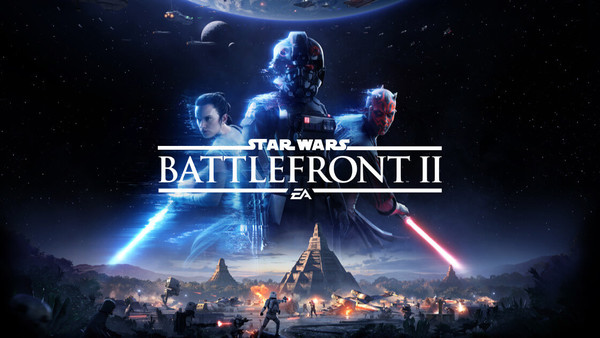
Who could forget the absolute train-wreck that was Battlefront 2's release?
EA, in their infinite wisdom, gave in to the dark side of the force and decided to make an atrocious loot-box system that essentially made the game pay-to-win.
Fans of the series were rightly outraged, and the game was boycotted, causing EA a lot of embarrassment and resulting in the release of a statement of apology as they strove to fix the issues caused by their brazen greed.
Battlefront 2 itself is a solid game, though. Since the patch that fixed the loot-box issue, the multiplayer is exactly what Star Wars fans have always craved, with cinematic beauty that makes it almost as much fun to watch as it is to play.
For a lot of fans, however, EA's initial actions were off-putting enough that the entire game was considered a write-off, and the game's popularity will probably never quite reach the heights it now deserves.
There's a lesson in there somewhere.
5. Elder Scrolls Online

The Elder Scrolls Online was initially released in 2014, three years after Skyrim took the world by storm.
It was met with resistance from fans of the series, mostly down to the tweaked mechanics. It didn't quite capture the same magic that Skyrim fans had grown accustomed to, and ESO limped along hobbled by its single-player counterpart.
The Elder Scrolls Online has since seen several updates and DLCs which expand upon the game world, meaning that die-hard fans get to visit locations that they had never had access to in previous games.
The Elder Scrolls series is particularly rich in lore, and if that's what draws you in, then you're likely to love ESO.
But if you're a fan of the choice-driven story and endless possibilities of Skyrim or Oblivion, you might be a little disheartened at the limitations of The Elder Scrolls Online.
Depending on which camp you fall into, you've probably got a valid opinion one way or the other.
4. Kingdom Hearts

The Kingdom Hearts series has been entertaining us since 2002 with its unique mixture of Disney characters and traditional JRPG elements.
Some of its main attractions have also proved to be some of the main issues people have with Kingdom Hearts; it's vibrantly colourful, inherently wholesome and ridiculously in-depth as far as its story goes.
Fans of Disney or Final Fantasy get to see some of their favourite characters having adventures with Sora and co., learning all about the power of love and friendship in the process.
For some, that's the issue. It's cute and it's child-friendly, and the story behind it is somewhat convoluted, meaning that it has always endured its fair share of criticism.
The problems are simply a matter of personal taste, and even those who aren't fans of Kingdom Hearts don't often try to discredit the games' popularity, because NO ONE should ever go up against the House of Mouse.
If you've ever wanted to see a child using a giant key to fight Disney villains and characters from several Final Fantasy titles, then Kingdom Hearts might just be the series for you.
If that doesn't immediately grab you, then odds are you're not a Kingdom Hearts fan, and that would be a shame, because the series is truly phenomenal.
3. Destiny 2

Destiny 2 is a free-to-play sci-fi shooter released in 2017.
It has a big fanbase, who remain for the most part, pretty happy with the game. It manages to serve as a bridge from past to present, being more than just a little reminiscent of Halo's gameplay way back when.
Its problems are well documented. It has had multiple server issues, and many people believe that it barely improves on its predecessor.
One aspect of Destiny 2 that has been given obvious attention to set it apart from the first game is its story, which seems an odd choice given that the game is online only.
That said, Destiny 2 remains popular with many people, and avoided like the plague by others.
It's free to play, though, so you might as well pick it up and give it a go.
2. Assassin's Creed Franchise

When the first Assassin's Creed title was released, it was huge.
Historical accuracy, conspiracy, genetic memories; all of these made for an exciting and one of a kind experience.
Then along came Assassin's Creed 2, and everything was improved. It was bigger and more exciting, with more features and characters in a whole new setting. Then we got Brotherhood, then Revelations, and the games seemed to go from strength to strength, albeit without displaying much willingness to change the formula.
Assassin's Creed 3 introduced the idea of ships, and a lot of people got very excited. It was an obvious set up for a pirate story, which to many was a far more exciting prospect that the Revolutionary War.
Black Flag was fun, and its exotic setting was just fresh enough to mask the increasingly stale mechanics, which for the most part had barely changed since the second title.
Assassin's Creed Unity was released unfinished, which was followed by Syndicate, which was fun, but again without anything particularly new or exciting. It wasn't until Origins was announced, with new gameplay mechanics and a UI overhaul, that fans began getting excited again. And therein lies the problem.
While the Assassin's Creed games are fun and arguably define an entire generation of consoles, there was a period where they were simply churning out games that were essentially reskinned clones, and that has put a lot of would-be fans off of the series.
1. The Last Of Us

The Last of Us was released in 2013 to almost unanimous critical praise.
Its success was attributed to its interesting story, fresh gameplay and emotional weight, and yet it still found its fair share of criticism.
This is an odd entry, because instead of being a successful game with an acknowledged flaw, its divisiveness lies in the opinion of the consumer.
Some say that The Last of Us' female characters were shallow and overlooked, while others (game critics included) widely believed that they were empowered and strong examples of how women should be represented in games.
What it comes down to, ultimately, is the individual's perception.
There's also the matter of the game's ending, which (spoiler alert!) sees the player sacrificing the world's hope for a vaccine for the infection to save Ellie. The ethical debate that arose was one that tore the playerbase practically down the middle, demonstrating that sometimes dividing people isn't necessarily a bad thing.