20 Great Games That Still Get Unjustified Hate
These games no longer deserve the hate they still get.

As old folk wisdom teaches us, you can spend years building a good reputation, but all it takes is one simple mistake to ruin it. This fact rings true especially in the gaming sphere, where a bad launch or poor marketing can sometimes cost a game studio its entire career.
However, as much as it is easy to hate on games that messed up in one way or another, sometimes this hate is undeserved. There are games that are absolutely worthy of ridicule, of course, but among them, there are also titles that have had a horrible reputation for years, despite the fact that they are actually decent or even great games.
Not every game that is criticized these days deserves the hate. Although they might have had a terrible launch or been the subject of a controversy, these days they are fun experiences that need to be recognized.
The following titles are secretly amazing, even though the popular opinion would suggest otherwise. If you just ignore the common prejudice against them, you’ll realize why they’re accumulating new fans against all odds.
20. Star Wars Outlaws

Star Wars Outlaws has suffered the same ridicule as many modern Ubisoft titles, and there are good reasons for it. Aside from people’s fatigue with the generic and repetitive open-world formula that Ubisoft has been peddling for the past decade or so, the game had plenty of issues at launch, and the gameplay loop felt pretty underwhelming.
This said, Star Wars Outlaws differs from other Ubisoft flops in that its creators have actually been putting a lot of effort into addressing the issues the fans have had with the game. Since its release, Outlaws has had its combat and stealth sections completely redesigned. The stealth sections are no longer forced on the player, the combat is more tactical thanks to the addition of enemy weak spots and improved aiming mechanics, and the game feels more immersive thanks to new animations that make NPCs and protagonist Kay move around more, instead of standing still with emotionless expressions.
The creators seem to genuinely listen to community feedback, and while the game may still not be a masterpiece, it’s definitely a lot more enjoyable now and deserves to get a second chance.
19. Call of Duty: Infinite Warfare

A lot of people complain about Call of Duty titles being mostly generic, same-looking first-person shooters. Then Call of Duty: Infinite Warfare came out, offering a brand new sci-fi setting to the franchise, and, well, people only hated it more.
The game was absolutely ridiculed for being too futuristic before it even came out, and when it launched, the criticism only got worse due to its abysmal multiplayer servers that were slow and unresponsive and featured an awful progression system with ridiculous level requirements for new weapons.
This said, the game’s campaign is actually the game’s saving grace. The somewhat dull villain and Kit Harrington’s underwhelming acting as the character aside, the story does an excellent job of immersive world-building, and it features a ton of amazing new concepts, such as the ability to fly spaceships or engage in zero-g combat, that you simply won’t see in other CoD games.
To top it off, the game features one of the best Zombies modes in the series, and these days, the multiplayer for the game is actually a lot better than it used to be.
The complaints people used to have about the game just don’t feel justified anymore.
18. Lethal Company
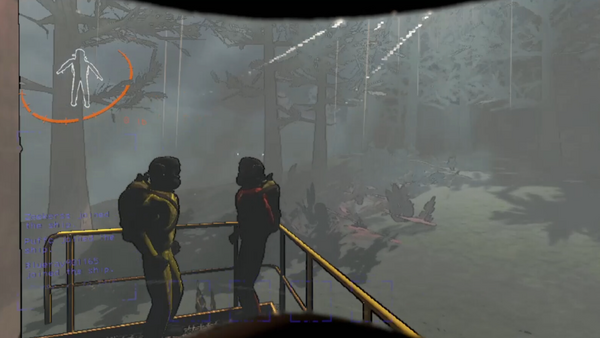
The term "friendslop" has been circulating around the internet for a few years now. It's a somewhat pejorative word for cheap co-op games that you can easily buy and play with your buddies for a one-time session, equating them with shovelware.
The phenomenon of "friendslop" is largely associated with Lethal Company, with most people beginning to use the term shortly after its release. However, the game is actually so much more than a quick and forgettable experience.
Like other "friendslop" titles, Lethal Company is a low-budget indie game that puts you and your friend in charge of extracting artifacts from a bizarre moon colony.
The game has a strong surrealist feel to it, and while most of its gameplay elements are simple (grab stuff, communicate, run away from monsters), there are so many creative and engaging design choices intertwined with the core idea that make the game interesting and highly addictive.
Each monster in the game has its own unique gimmick, such as moving only when the player isn't looking or luring you with sounds.
Learning these tricks and coming up with ways of dealing with them can be a great deal of fun for you and your friends, and it shows that there was a lot more thought put into the game than people give it credit for.
17. Dragon Age: The Veilguard
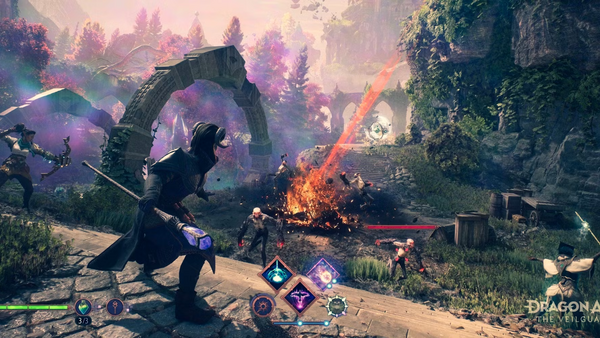
The Dragon Age series is a beloved BioWare franchise right next to the studio’s sci-fi classic, Mass Effect. The games have always been praised for their quality writing and immersive dark world, and although Dragon Age: Inquisition began leaning more towards the high fantasy genre, the love for the setting was still there.
But then the public opinion on the game soured severely with the release of Dragon Age: The Veilguard, mostly due to the game’s radical change in stylistic direction and its rather lackluster writing when compared to the earlier installments.
The criticism of the game feels mostly reasonable when you compare Veilguard with older Dragon Age games. The interactions with the companions feel bland and limited, and the writing can be painfully repetitive, with everyone reminding you what is happening in the plot every few minutes.
However, where Veilguard shines, even beyond the other games, is its combat. Unlike in older Dragon Ages, the combat in Veilguard feels incredibly smooth and fluid, and each class comes with a wide variety of creative abilities that make them satisfying to level up.
The story might feel a bit lacking, but it’s not terrible, and since the game is mostly made up of combat sections anyway, most of the time you'll just be having a blast testing out your skills on new enemies.
16. Final Fantasy XIII
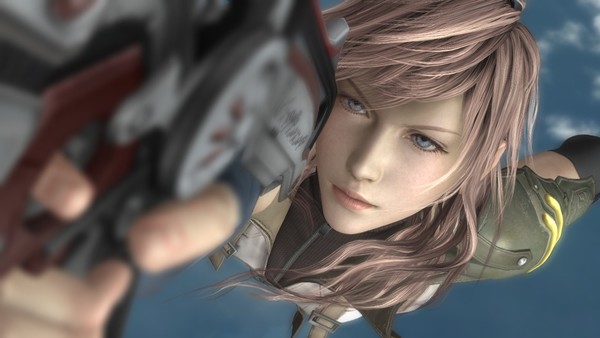
In 2009, Final Fantasy XIII made everyone marvel at its cutting-edge graphics… and then immediately caused an uproar of hate comments and criticism for having a dull, nonsensical plot and a linear level design that spit on the expansive open worlds of its predecessors.
The thing was, Final Fantasy XIII was simply unlike any other Final Fantasy before it. And when you judge it not as a successor to the older titles, but as a new direction for the series, you realize that the linearity is actually its strongest point.
Final Fantasy XIII was among one of the first 3D Final Fantasy titles that prioritized linearity as opposed to a JRPG open world. This allowed it not only to flesh out its story but also to make the combat more dynamic by focusing on individual stages instead of overarching locations with random mobs, which in turn made the game’s boss battles some of the best encounters in the series.
The game also features the Paradigm System that allows you to create custom roles for your party, instead of pre-selected jobs, which to this day is one of the most in-depth and satisfying party creators in the series.
The plot might feel convoluted at times (as does any other Final Fantasy plot, really), but combat-wise, it’s a great addition to the series.
15. Borderlands 3
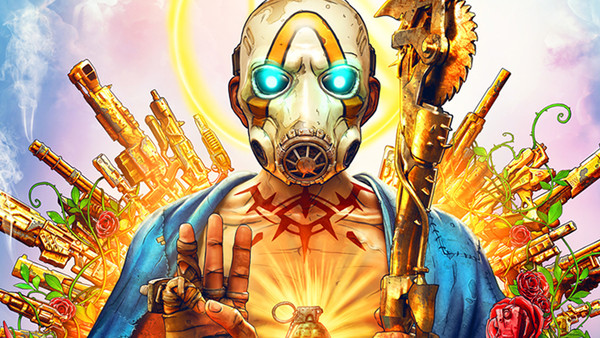
The general opinion regarding the Borderlands franchise these days is that the games have completely fallen off after the second game. The Pre-Sequel is perhaps in the gray zone between bad and good for some, but the internet has almost unanimously decided that Borderlands 3 is the death of the franchise.
However, if you ever bothered to play the game, you would realize that the third installment is actually the pinnacle of this legendary looter shooter's gameplay.
The main criticism people throw at Borderlands 3 is its writing, and while the story and characters in the game are definitely its weakest part (who would've thought making quippy influencers the main bad guys would be a bad idea?), this has completely blindsided people to how genuinely amazing the gameplay is.
In terms of gunplay, skill creativity, and open-world design, Borderlands 3 offers the biggest and most polished experience to date. The beloved gameplay of the franchise truly shines here, so much so that if you go back to the first Borderlands, the game will feel kind of small and linear in comparison.
Don't let the underwhelming main story game take away from the fun shooting sections that actually make up the majority of the game.
14. Marvel Spider-Man 2

Insomniac's Spider-Man was a highly entertaining and groundbreaking production at the time of its release. It not only delivered an incredible rendition of Marvel's friendly neighborhood hero, but it also established several innovative gameplay ideas, such as its fluid combat system, that have become the standard for their other action releases since.
Compare the scope of these accomplishments with the sequel, Spider-Man 2, which mostly borrowed from its predecessor and didn't do much else, and you realize why a lot of people decided to hate on the game.
Even though, on its own, Spider-Man 2 is still an incredible experience.
The problem with being a sequel to a masterpiece is that the second game will always live in the original's shadow. Peter Parker and Miles Morales' next adventure is by all means a fun and narratively immersive experience, and it even fixes some of the issues that fans of the original title complained about (e.g., making the MJ stealth sections more exciting), but because it didn't innovate as much as the first game, most people don't really acknowledge its greatness.
Yes, the game doesn't feel nearly as groundbreaking as Spider-Man 1, but it's still all the things you loved about the original, and more.
13. Assassin's Creed Unity

The Assassin’s Creed series is generally considered to be on a steady decline these days, or at the very least, people think that the newer games don’t amount to the same quality as the classics. This decline is usually attributed to Assassin’s Creed Unity and its infamously catastrophic launch.
However, as awful as the game was at its release, these days it hardly deserves the ridicule that still accompanies its name.
Back in 2014, Unity was released in a largely buggy, unoptimized state. The constant gameplay issues and the popular graphical glitches, such as the legendary ghost face that used to circulate around the internet, made people reasonably upset.
However, since then Unity has been subjected to a ton of patches and fixes, and in the year 2026 it’s actually a visually stunning and highly immersive experience.
The combat is still clunky, but other than this, the game is gorgeous to look at, and it features arguably the best parkour mechanics in the entire series, making it perfect for running around the revolution-period Paris and admiring its beautiful architecture.
If you gave up on the game at launch, coming back to it now will actually get you hooked.
12. Fallout 4

Fallout fans are one of the most divided communities in all of gaming. The game's forums and related threads are filled with heated debates between Fallout: New Vegas fans, Fallout 3 fans, and the old-school original fans, all trying to convince the rest that their beloved title is the best.
The only one thing all of these groups can agree on is that Fallout 4 and Fallout 76 suck. Which is pretty unfair in both cases.
Fans of the classic Fallouts are quick to point out how Fallout 4's writing is painfully inferior to its predecessors. This is very much true, with the game's somewhat ham-fisted kidnapping storyline and its linear roleplaying that has been restricted to a four-directional dialogue wheel, but the story is only one side of the game. And where Fallout 4 excels is exploration, settlement building, and the ridiculousness of the world that is part of the charm of the Fallout universe.
Exploring the game's massive map, building your own bases along the way, and marvelling at the amount of crazy monsters, events, and post-apocalyptic makeovers of Boston's iconic landmarks can easily keep you entertained for hours.
Sure, plotwise Fallout 4 is no Shakespeare, but sometimes a goofy sandbox experience is just the thing your brain craves for entertainment.
11. No Man's Sky

The reputation of No Man’s Sky, the infamous open-world survival game, has been steadily increasing over the years, but there are still people who live with the hate that the game suffered during its catastrophic 2016 launch.
For those somehow not in the loop, No Man’s Sky was last decade’s most disastrous launch (really makes you feel old, doesn’t it?). After years of the internet getting hyped for all of the groundbreaking features that the game would add to make its space exploration feel virtually limitless, the game came out with poor procedurally generated planets and next to nothing to do on them.
For years, the mass disappointment stuck to No Man’s Sky, but the studio behind it kept working on the game, and these days, it’s actually beginning to live up to the past expectations.
The worlds feel more vibrant and have civilized outposts on them, making them a lot more fun to explore, and the game features an excellent multiplayer mode with playable races and an in-depth economy, making it perfect for traversing the galaxy with your friends.
It’s the kind of glow-up that will make even the biggest hater want to sink hours into the game.
10. Fallout 76

As we established before, Fallout 76 suffers the same bad rap as Fallout 4 within the franchise's community, but the difference is that even people outside of Fallout circles would agree that the game deserves to be hated due to how buggy, underwhelming, and falsely advertised it was.
If there's a game that could act as living proof that Todd Howard loves to tell "sweet little lies," it would probably be Fallout 76. What Bethesda promised was the first multiplayer Fallout game that would allow you to explore and civilize a vast wasteland filled with immersive quests and an ever-evolving environment. What people got instead was an empty and tiny map with no human NPCs aside from generic raiders and predatory mechanics that forced people to pay money for items that would disappear from their inventory due to bugs.
However, this is the state of old Fallout 76. These days, the game has been steadily improving, with Bethesda expanding the world, fixing the bugs, adding actual human NPCs, and most importantly, toning down its pay-to-win elements.
What truly makes this game great, though, is its community that is helpful towards new players and develops West Virginia with beautifully detailed bases that make the map totally worth exploring.
9. Mafia III

Mafia III is the third installment in the iconic gangster series, but ask your average Mafia fan about it, and they will tell you that it’s actually not a Mafia game at all.
At the time of Mafia III’s release, a lot of people criticized it for straying away from the classic Italian mob storyline, but it also didn’t help that the game was riddled with bugs upon its release.
However, these days, the bugs have been mostly patched out, and when you look at Mafia III not as another tale of the rise of Italian mobsters in America but as a separate, broader depiction of the various crime syndicates during the 1960s, the game becomes a much more compelling and interesting narrative experience.
The protagonist, Lincoln Clay, is a genuinely interesting and complex character, and the game shows the many pitfalls of his work for the criminal underworld perfectly.
The repetition in the open world formula that everyone complained about in 2016 is sadly still there, but even then, at a heavily discounted price and with this good of a setting and story, that doesn't sting anywhere near as much as it did a decade ago.
8. Halo Infinite

Halo is the most iconic gaming franchise out there, but with that said, not every instalment is treated the same way. While people might spend days praising Combat Evolved or Halo 3 on every related forum out there, Halo Infinite is still seen as a stain on the series' reputation.
Even though it is no longer as bad as people think.
Even before Halo Infinite was released, people were clowning on it for its seemingly underwhelming graphics and some questionable multiplayer mechanics that made it seem like another cash grab live service game. Then when the game came out, even those that had high hopes for the title quickly turned away from it due to its underwhelming content and very slow updates.
However, the game these days is fully fleshed out. The years of updates have finally taken their full effect, and the game’s multiplayer experience has been vastly improved, turning it into one of the best Halo online experiences out there.
The game’s community is also very much alive these days, so if you had your doubts about trying it out, you will be positively surprised by what Infinite has to offer.
7. Gotham Knights
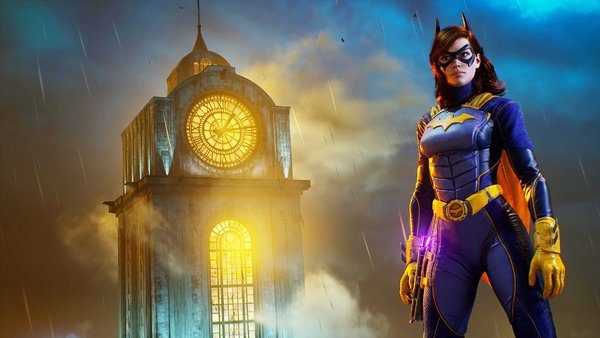
Gotham Knights might be one of the most misunderstood games on this list. To this day it receives hate from people who incorrectly assume it's a terrible Arkham game, when in reality, it's an awesome title in a league of its own.
When Gotham Knights came out, the Batman Arkham games were still at the peak of their popularity, so when WB Games announced a new title based on Batman's gallery of sidekicks, people assumed it would be another Arkham-like experience.
In reality, Gotham Knights is nothing like the Arkham games. It's not about stealth and beat 'em up sections, but is actually an open-world action RPG where you control multiple different characters, each possessing their own unique talents that you have to learn how to use.
From the gameplay perspective, Gotham Knights is more about organizing your heroes and growing their powers, as opposed to following a storyline, as you do in Batman Arkham games. And when you look at it from that perspective, you realize it's actually a very well-polished and fun experience.
6. Dark Souls 2

Dark Souls is FromSoftware’s most beloved and iconic franchise, but like most gaming series, the Souls family has its own black sheep: Dark Souls II. A lot of people consider it to be the weakest of the Dark Souls games, which is usually the result of the wave of criticism that came about with its release.
Back in 2014, the hype for a Dark Souls sequel was through the roof. However, what most fans assumed was that Dark Souls II would be just Dark Souls I with a few graphical and gameplay improvements, whereas the final product added a lot more new stuff into the game, transforming it and leading to people’s disappointment.
To this day the game is summarized as Dark Souls with plate armor galore and egregious level design, driving away potential new fans. However, in reality, Dark Souls II is still a Dark Souls game with all the series’ beloved mechanics, but also with new and unique ones that help it separate itself from other entries in the series.
Even if Dark Souls II is “the worst Dark Souls,” it’s still a quality game. And when you recognize its abundance of unique features, it can even feel like a nice break from your typical Dark Souls experience.
5. Death Stranding
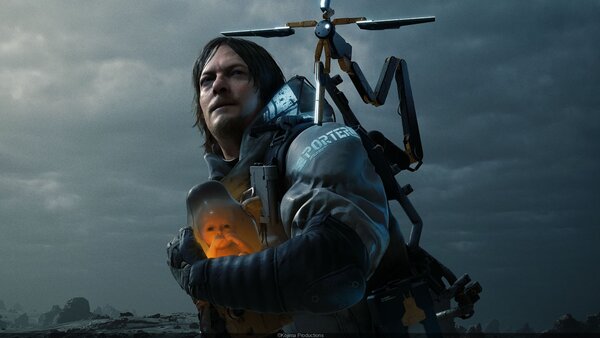
When Death Stranding came out, the game was almost immediately the subject of critique due to its convoluted and pretentious writing, tedious gameplay, and Kojima's controversial response to the backlash from his American audience.
Years later, we see the climate surrounding the game change as people begin to see the actual genius behind the gameplay, but there are still critics who blindly consider Death Stranding to suck.
While games these days bombard you with objectives and events to artificially boost your dopamine, Death Stranding is a much more laid-back experience. You have the goal of delivering goods between settlements, but you're also completely free to decide how you do it: how many things you will bring with you and which route you'll take.
The game rewards you for thinking strategically and preparing yourself for the journey, and if you play like this, you will find the game a lot more enjoyable.
Not to mention, these days, the game's world feels genuinely fun to explore thanks to the multiplayer feature that allows players to leave structures for other couriers to make their journey easier.
All in all, Death Stranding and its sequel are a breath of fresh air among modern titles engineered to be as artificially addicting as possible.
4. Watch Dogs

Watch Dogs is another entry in the long line of games that overpromise and then get absolutely blasted when the final product doesn't live up to everyone's expectations.
However, in Watch Dogs' case, the title would've probably avoided unnecessary hate if it had just advertised its genuinely great features as they are.
Watch Dogs' reputation has been permanently soured due to its flashy cinematic trailers that made it seem as if the main character would be able to perform near magical feats with his hacking abilities, causing citywide chaos with a click of a button, when in reality, the scope of his powers is actually smaller.
This, combined with the game's buggy launch, made people feel scammed for getting so worked up over it. However, if you didn't let the hype build up unrealistic expectations and you waited a little for the bugs to be fixed, you would see Watch Dogs' true potential.
The hacking skills in the game are still a lot of fun to play with, allowing you to control all sorts of city infrastructure to cause general mayhem, and the game's open world is designed perfectly for messing with it.
The game offers a unique sandbox experience unlike any other title, and it's definitely worth checking out alongside its equally underrated sequel.
3. DMC: Devil May Cry

Reboots of beloved franchises are typically very controversial, and the same went for the Devil May Cry attempt at a reboot, DMC: Devil May Cry.
The game was not well received by the fans, what with it turning Dante into a generic angsty protagonist with the personality of a cardboard cutout of a middle finger.
However, as far as the gameplay goes, it's actually one of the most solid, if not the best, renditions of the series' hack-and-slash formula.
Slicing through demons feels especially punchy and satisfying in DMC, and the game offers genuinely challenging but easy-to-master combat. It's a lot easier to pick up than earlier Devil May Cry titles, but it doesn't take away from the difficulty, instead using the smoother learning curve to ease players into more and more challenging scenarios.
Not to mention, the campiness of Dante's new edginess can be surprisingly entertaining when you stop treating it seriously and embrace the goofiness of the hero interrupting villain monologues with an f-bomb and a middle finger.
It's so over the top, it's guaranteed to make you laugh, and when you think about it, that's pretty much what Devil May Cry is about.
2. Fable 3

With the new Fable reboot scheduled to be released in the latter half of 2026, many fans and newcomers to the series are trying out the old titles to immerse themselves back in Albion’s world.
However, some might come back with a bit of prejudice towards the third game, seeing as it was undeservedly ridiculed at its release and the reputation hasn’t really dissipated since.
Out of all the original Fable games, Fable 3 is one of the least appreciated ones. While people’s soured opinion on Fable 1 and 2 improved over time, realizing the games still had potential, despite the disappointment over Fable’s creator’s pre-release overpromises, Fable 3 has never been able to escape its reputation due to its drastic change in tone, presenting a bleak and grey world, and its limiting of Fable’s iconic morality and magic systems.
However, the truth of the matter is that Fable 3 is an incredible game when treated as separate from its predecessors. Its more grounded setting, paired with in-depth management and work mechanics that present the harsh realities of living in Albion, makes it the perfect immersive experience for the new grim rendition of the world.
The game shouldn’t be treated as another fantasy adventure but as an atmospheric and narratively driven tale of betrayed royalty rising back to power from nothing.
1. Battlefield V

Battlefield V was 2018's biggest flop and disappointment as far as AAA productions were concerned. The game sparked a number of controversies, from people criticizing its lack of historical accuracy to the buggy and unbalanced multiplayer at launch.
However, years have passed since that moment, and in the current day and age Battlefield V is finally the game the fans always wanted it to be.
The game is finally stable, and the issues with unfair spawn points and multiple bugs have been resolved, allowing fans to finally appreciate the dynamic World War II battles it has to offer.
The game has also released numerous updates that added new World War II maps from iconic battles into its roster, providing players with even more historical settings that other modern Battlefields are missing.
Some may still complain about the historical accuracy of the game, as they did with the game's predecessor, Battlefield 1, but considering a fully authentic depiction of the Great War was never the intention of the devs, it hardly feels like a valid critique.
Really, the only valid complaint is how horrendous the naming scheme is here. Why is it Battlefield V when it's a successor to Battlefield 1? They don't even use the same type!