5 Final Fantasy Henchmen (That Were Better Characters Than Their Employers)

It's not always the big boss that carries the most interest.
When someone says 'Final Fantasy', what is the first thing that come to your head? Perhaps its chocobos, the flightless yellow birds that have appeared in all but one entry of the series? Maybe it's the ridiculously long summon sequences that players bear witness to upon calling a creature such as the dragon king Bahamut to their aid? It could even be the often irritating random encounters with monsters such as Cactuars, Tonberries or the much-despised Malboros. For many aficionados, the defining aspect of the series is the sheer volume of engaging and captivating stories that it has provided us throughout the last twenty seven years, from the simple world-saving of the original release to the complex and highly regarded plots boasted by the franchise's SNES and Playstation titles. Every great story needs a great villain, of course, and the series' has rarely failed to disappoint players with its gallery of principal rogues, which includes the maniacal Kefka, the theatrical Kuja and the despicable Sephiroth. These have each been supported by an array of excellent supporting antagonists, however, some who support them, and some whom oppose them. Some of these secondary villains even have henchmen of their own. It is these supporting antagonists and henchmen that we will focus on over the next few pages, highlighting why, in some cases, they stood out above and beyond the villainous individual that was meant to be the main attraction.

5. Reno & Rude (Final Fantasy VII)

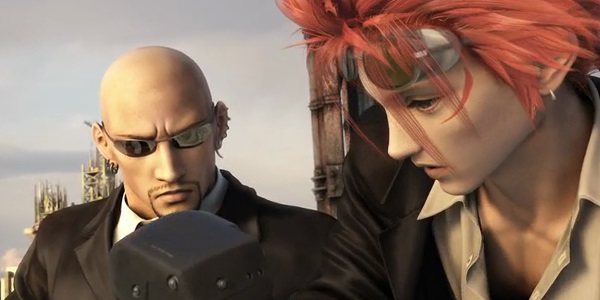
Employer - Rufus Shinra Sephiroth is the main villain of Final Fantasy VII, and is perhaps the most iconic (though not the best) member of the series' rogues gallery. The one-winged angel's nefarious plan to call forth Meteor and destroy the world, absorbing the lifestream that flows beneath the planet to become a God in the aftermath, is supplemented, however, by the antics of the amoral Shinra Company, who are responsible for both Sephiroth's creation and the environmental exploitation of the world. Shinra boasts its fair share of memorable characters, amongst them its leader Rufus (who takes charge after the early death of his father). Far eclipsing him, however, is the duo of Reno and Rude, members of the Turks, a group that handle the organisation's dirty work. Though ostensibly dangerous psychopaths, Reno and Rude are actually a hilarious double act, becoming more and more likable each time they encounter the protagonists. With antics including them refusing to engage the party after running into them in a bar because it is their day off, awkwardly discussing which members of the player's party they are attracted, or Rude (in the game's cinematic sequel) expressing shock and dismay when his signature sunglasses are shattered before pulling out one of several identical pairs from his pocket, their many appearances are never unwelcomed.

4. Judge Gabranth (Final Fantasy XII)
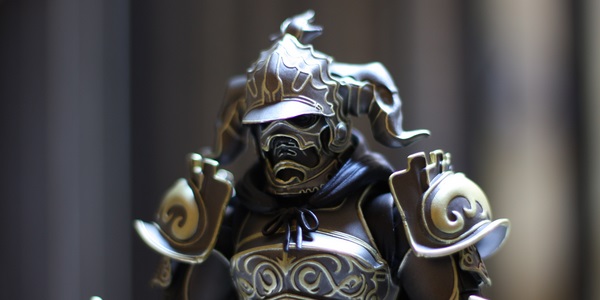
Employer - Vayne Solidor Final Fantasy XII was ultimately considered a disappointment by many, as its one-character-at-a-time battle system (annoying replicated in every game since) and incredibly bland protagonist detracted from what was an encompassing storyline and a fairly stellar supporting cast, led by the cocky sky pirate Balthier. It didn't help proceedings that the game's main villain, Vayne, was rarely seen throughout the narrative and had little interaction with the player's characters, giving the player little reason to despise him and desire to bring about his downfall as a result. Much more effective at drawing ire is Judge Gabranth, the leader of Vayne's band of Judge Magisters - ruthless enforcers of 'law and order'. Impersonating his twin brother Basch at the start of the game, he instigates the downfall of the Dalmascan Empire by murdering his king, then keeps Basch alive and subjugates him to emotional torture. Though he becomes a more sympathetic character as the story goes on, it's hard to forgive Gabranth given that he is the personification of the Archadian Empire's evil throughout much of the game, but his eventual heel-face turn stands out as one of the series' greatest moments.

3. Gilgamesh (Final Fantasy V)

Employer - Exdeath Final Fantasy V's Exdeath is quite a lazy villainous creation on Square's part. With little backstory, he attempts to destroy the game's worlds after being inadvertently released from the void where he was once imprisoned by player character Galuf and his three companions. Though he eventually murders Galuf in one of the series' most poignant scenes, the motivations for his master plan are barely explored. Thankfully, the game had a secondary villain that more than made up for this. Beginning as a henchmen to Exdeath, the swordsman Gilgamesh is perhaps the funniest character that Square have ever created (though anthropomorphic octopus Ultros from Final Fantasy VI might argue this). Thoroughly incompetent at his job despite being a master swordsmen, Gilgamesh nevertheless engages the party on several occasions, coming out with golden lines such as 'Enough expository banter! It's time fight like men! And ladies! And men who dress like ladies' Like his predecessors on this list, Gilgamesh eventually comes good, but his light-hearted villainy is the crown jewel of what is perhaps the series' least serious entry in terms of dialogue.

2. Seifer Almasy (Final Fantasy VIII)
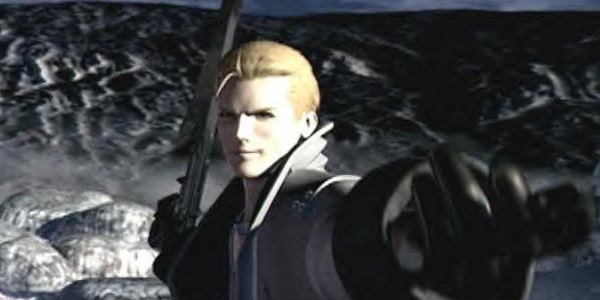
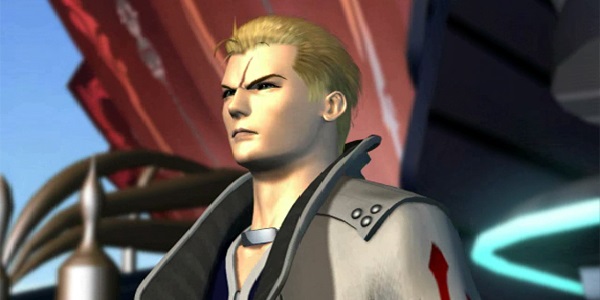
Employer - Ultimecia There have been many rivalries throughout the Final Fantasy series, but none of them come close to the one maintained by Squall and Seifer in Final Fantasy VIII. This is typified by their brutal duel in the game's opening sequence, which gives them mirroring scars and sets the tone for what is to come over the next three discs. As classmates of Balamb Garden, both desire to become SeeD mercenaries, but only Squall passes the exam after Seifer is deemed a failure as a leader. Departing in disgrace, he later shows up as a knight in the employ of the despicable Sorceress Edea, who is under the control of a future-dwelling sorceress of the future named Ultimecia that wishes to compress all of time and space to rule over it. This sci-fi plot (combined with the much-maligned but actually quite clever Junction system) put many gamers off of the series' eighth entry, and it is rarely featured in lists of the greatest games of all time. The rivalry at its core alone, however, justifies higher appreciation, as the deeply-rooted personal loathing held by the two individuals, which comes from their shared dreams but split destinies and love of the same woman.

1. Wiegraf Folles (Final Fantasy Tactics)
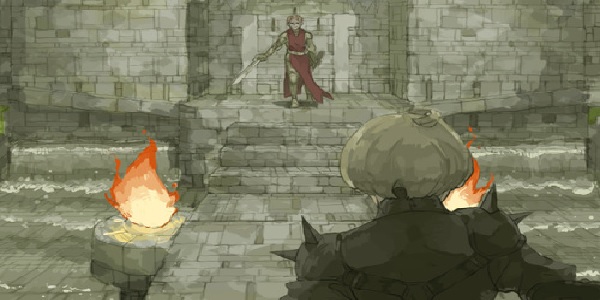
Employer - Folmarv Tengille Final Fantasy Tactics is something of an oddity in that it is one of (if not) the best entry in the entire series, but comparatively few people have played it or even heard of it in comparison to the well-known main franchise entries. Such individuals are missing out on a truly great and beautiful story that focuses on a number of individuals and groups vying for control of the seven kingdoms of Ivalice (very similar to a book that came out a year beforehand called 'A Game Of Thrones', but hey ho). At its centre is Ramza, a young member of the noble house Beoulve that turns his back on his villainous brothers, though not before he is pitted against Wiegraf Folles, a warrior with intentions of overthrowing aristocratic rule and giving power to the people, for the first time. He lives, but Ramza has an encounter with his sister Milleuda shortly afterwards, which claims her life. Swearing revenge, Wiegraf becomes an effective foil to Ramza when he is recruited by the Knights Templar, a dastardly offshoot of the Church of Glabados religious order. Given an artefact called a Zodiac stone for supposed safekeeping, he is slain in honourable battle by his nemesis. The stone returns him to life, however, leading to one of the series' most tragic moments when the reanimated Wiegraf proclaims that he no longer cares about his sister's death or his once noble intentions, wanting only to bring chaos and destruction to the world. There is nothing that players can do to bring him back around. Instead, they are forced to condemn a hugely underrated character (in a game full of underrated characters, from Argath to Gaffgarion) to a second and permanent death.

Contributor
Contributor

Alex was about to write a short biography, but he got distracted by something shiny instead.