5 Things Ghost Of Tsushima Gets Historically Right (And 5 It Doesn't)
More like Khotun KHAN'T EXIST, amirite?

Ghost of Tsushima sees players in the role of Jin Sakai: A katana swinging, poetry writing, fox loving Samurai who's just a little bit fed up with those dastardly Mongols.
Sucker Punch's latest title has been met with sweeping critical acclaim, that seems to flow gently from every media outlet like the gorgeously animated grasslands of Tsushima itself.
Significant praise stems from GOT's subtle nods to Japanese culture and media, especially since Tsushima is indeed a real island off the coast of mainland Japan. However, the developers haven't been shy in admitting they've taken a few discreet liberties when crafting their open world invader dismemberment simulator.
That's not to say the entire game is a pack of lies, but it can be hard to recognise what's true and what isn't without slicing through a dry, old textbook like a stack of bamboo.
So just who were the Sakai clan? How historically correct are Jin's weapons? Why's Khotun Khan such a dick? All these questions and more will be meditated upon, as we delve deep into real Japanese history to separate the honorable truth from the sneaky, ninjutsu fiction.
10. Fact: The Weather

This first one may seem a little reductive. After all, it's the weather, so what?
Well, aside from eviscerating your eyeballs with its sheer beauty, GOT's weather actually plays a key role in gameplay elements.
There are no annoying quest markers polluting the landscape like unintended, belligerent squatters, nor is there any minimap to drag your eyes inevitably downwards towards the bottom left of your TV.
Instead, GOT uses the wind as gentle directional guidance in order to point Jin where he needs to go, incorporating the land into an intrinsic gameplay feature. While this is fantastic game design, and something that should be mandated here on out for all open world games, it does leave the player with the nagging sense that this much wind is a tad impossible.
Turns out it isn't, actually. Tsushima itself is a coastal island, situated about halfway between Japan and the Korean peninsula. It is constantly subject to typhoons and strong, chaotic monsoon winds. Try pegging your washing out in that stuff.
In fact, in the real Mongol invasion of Tsushima, the Mongols were defeated not by Samurai, but by a huge typhoon that destroyed the Mongol's fleet. And this happened not once, but twice. Some luck, eh?
9. Fact: The Shrines

If you've played GOT for any length of time, you're bound to have come across big wooden gates and a few strangely helpful foxes.
These landmarks will lead Jin to various shrines dotted across Tsushima; dedications to the spirits and Gods of Japan's Shinto religion.
The Kami gates are named for spirits of nature, and are usually tied to one or more aspects of the natural world. They embody both good and bad aspects of nature, such as the Kami "Hachiman" being the God of War. Not that one. Well, maybe. Both titles are both owned by the same publisher after all...
Inari on the other hand, is the God of agriculture, rice... and foxes. For some reason.
He's also the patron deity for swordsmiths and brothels. No wonder Jin likes him so much. The food loving God even has a delicious sushi recipe inspired by him, so he's definitely in the running for best God ever.
Inari fox Shrines like those in the game actually still exist in modern day Japan, if any of you are thinking of planning a holiday there. No promises that you'll be led there by a magic fox, though. Maybe if you sing like Snow White.
8. Fact: The Armour

OK, so this is a bit of a contentious one.
Pretty much all of the armour you can wear in GOT has its basis in real life sources, with a couple of exceptions. However, not all of them would have existed within this period, making Jin not only a Samurai, but apparently someone with access to time travelling technology.
A lot of the clothing is era appropriate, however, and there's clearly an effort by Sucker Punch to take as few visual liberties as possible.
Even the more outlandish helmets and masks are realistic. Japanese Samurai armour often came with garish designs and colours, due to the abundance of dyes from various flowers, and allowed the wearer to stand out on the battlefield. Great for looking fabulous, although terrible for attracting arrows.
This emphasis on aesthetics was mostly so Samurai would be sufficiently witnessed when performing heroic deeds in battle, and would even shout their names and lineages to their opponents to ensure everyone knew who was fighting who. Think of it as the medieval version of the twelve year olds who constantly scream obscenities on Xbox Live.
7. Fact: The Culture

If you've played GOT for any length of time, you may be forgiven for scratching your head at Jin, the brutal Samurai warrior, scourge of Mongols and Ghost of Komoda, taking spa days and writing poetry.
After all, you'll never see Geralt playing the flute, or Joel explaining to Ellie why chrysanthemums are ecologically important before shooting a looter in the face.
Yet these activities, seen today as the furthest thing away from the masculine stereotype, were part and parcel of the Samurai lifestyle.
Although the Samurai spent a lot (read: A LOT) of their free time fighting, they were also lords and educated rulers, for whom philosophy and gardening were just as viable pastimes as bowmanship and brutally putting down peasant revolts.
The Samurai, like many cultures around the world, believed their spirit was just as important as their body, and strove towards keeping both healthy, either by creating music or relaxing in a hot spring. Of course, whether any actual Samurai looked as good as Jin does while taking a bath is still heavily academically debated. Well, maybe not, but it should be.
6. Fact: The Mongols
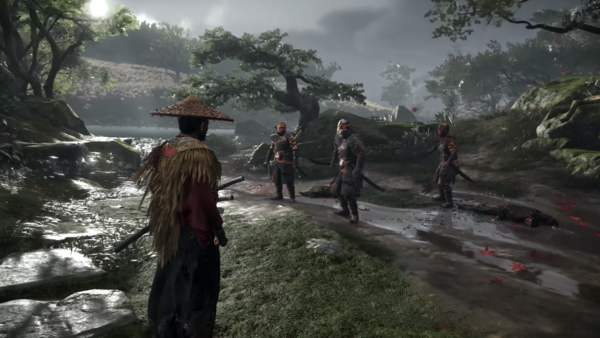
Yes, shockingly, the Mongols were real. Bet you just had your mind blown there.
Seriously though, of the Mongols who actually attacked Tsushima, most were Korean and Chinese soldiers, drafted into the Mongol empire after Kublai Khan invaded both countries, and declared himself King of China. No, seriously. And if you think that's bad, he routinely travelled around in a constructed, mobile tower pulled by four elephants. Wonder if he was overcompensating for anything?
As such, the Mongol army was massive, perfectly capable of swarming the entire island of Tsushima, much like their in-game counterparts do.
They were also diverse, owing to the sheer number of conquered peoples that made up the empire. This meant there was likely a wide array of warriors and fighting styles that the Japanese had to contend with, which affords a lot of inspiration for different enemy types.
This is probably what led to Sucker Punch choosing this particular time period to set their game in. More enemy types means more gameplay variety, as opposed to just fighting other Samurai, for instance. Coming up against different tactics requires different and unique play styles from the player, meaning more ways for Jin to use soldiers as pin cushions. Hooray for historical accuracy!
5. Fiction: The Katanas
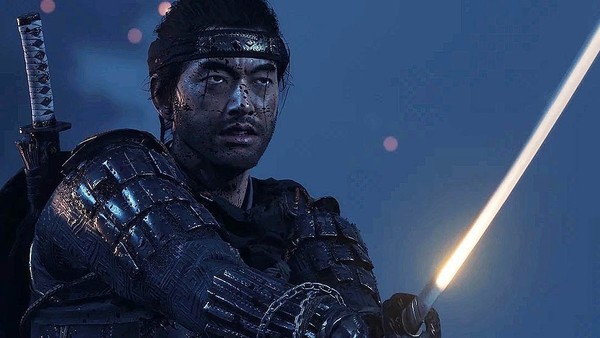
Despite some quite careful adherence to historical fact, there are also a lot of ways in which GOT takes massive liberties with its source material, even down to its most iconic weapon.
Samurai in the 13th century would not have used katanas. This may be hard to believe, considering Japanese people swinging around swords and yelling angrily has been a cultural staple from Kurosawa to Tarantino, but Katanas only came into use in the Muromachi period, around 100 years after the game takes place.
This might not seem like a massive issue, but imagine if Ezio from the Assassin's Creed franchise had suddenly started mowing down the pope with an assault rifle, for example. It'd be a tad strange.
Samurai from the Kamakura period (when GOT is set) would have mostly trained to fire bows from horseback, which is why the bows in GOT have a very different shape from the ones we're used to seeing in our fantasy stories. This is also why the helmets and armour had the strange, box shape to them- to better deflect arrows. The more you know, huh?
It's such a shame, then, that Jin's horse is sadly a little bit s**t in a fight, really.
4. Fiction: Khotun Khan

Yeah, so, Khotun Khan. The main man. The big cheese. The head Honcho. The brutal, glaive wielding fly in the ointment.
Completely fictional.
That's right folks, the main antagonist of GOT, and the supposed driving force behind the Mongol invasion actually never existed. In real life, it was Kublai, not Khotun, who oversaw the invasion of Japan.
Even more interestingly, of the three main commanders of the Mongol forces, one was actually a Chinese general by the name of Liu Fuxiang, who ended up being shot in the face by a Japanese Samurai.
Why Sucker Punch didn't use this real basis for their story is unclear. Three generals, all of different nationalities, beliefs and motivations - forced to work together by an off-screen and powerful Khan - would have made for a very interesting character dynamic.
That's not to say that Khotun's a bad character, mind you, and his interest and respect for Japanese culture is especially intriguing. It's this knowledge and intellect that's used to turn many of Jin's allies against him, a welcome break from the usual musclebound meat sacks that litter the AAA games roster.
Historically though, Kublai wasn't really concerned with the Japanese or their beliefs. He was just concerned that they weren't dying as fast as he wanted.
3. Fiction: The Samurai Code
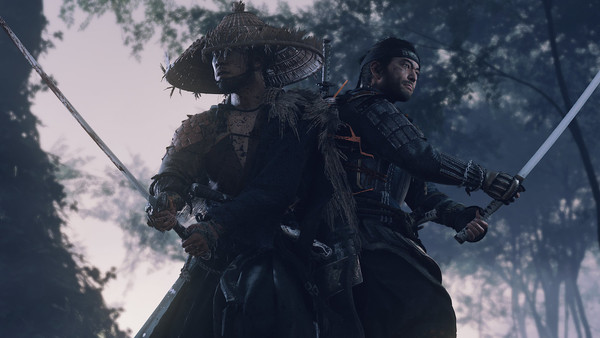
The "Ghost" in Ghost of Tsushima refers to Jin's alter ego, and the more underhanded practises he uses to prison shank Mongols and grow his infamy. This is a source of regret and shame for him and his friends throughout much of the story, and is decried as "dishonourable" to the Samurai way.
A real 13th century Samurai would be incredibly bemused by this mindset. Shockingly, the notions of honour have changed slightly in the last 800 years.
Despite what popular culture insists, Samurai were just as brutal, bloodthirsty and prone to squabbling as any other warrior class in medieval periods. It's almost as if being trained how to wield a deadly weapon, as well as being told you've a God given right to rule gives you a slight complex of some sort.
Bushido - the Samurai way of the warrior - didn't come into prominence until the mid 1600s, long after the Samurai stopped practising real warfare.
That's not to say that Samurai didn't have any rules or morals, though. In fact, one of the most hair raising Samurai practises was "seppuku"- committing suicide by disembowelment as a sign of loyalty. Thankfully, Sucker Punch neglected to add this to GOT. Nobody wants to see that in 4k.
2. Fiction: Jin's "Ghost" Arsenal

Sorry, Ninja fans, there's no way Jin could have ever used a smoke bomb in 1274. Or a bomb of any kind, really.
It would be a gross generalisation to say that Japan has had a fairly isolationist history, but Japanese innovation at the time of GOT mainly consisted of who had the biggest bow. Devices like firecrackers and other incendiaries would have been completely foreign concepts to Jin, being introduced almost 200 years later by Portuguese merchants.
While this did lead to "explosive" developments, they were way off from Jin's lifetime. Forget "Jin the friendly ghost," our hero will have to stick with "Sakai the distinctly unfriendly Samurai" for the time being.
Even though Samurai definitely used stealth and nighttime ambushes, their tactics were much more focused on single combat, rather than Jin's "Shinobi" approach.
In one of the more famous stories from Samurai/Mongol battles, Samurai archers started by shooting a single, harmless arrow at the invaders - an outdated practice to announce their incoming attack. This could have done some serious damage to the Mongols, who laughed so hard many of them almost ruptured an organ. They soon recovered though, and replied by shooting actual arrows. Doesn't take a PhD in history to work out who won that fight.
1. Fiction: Jin Sakai
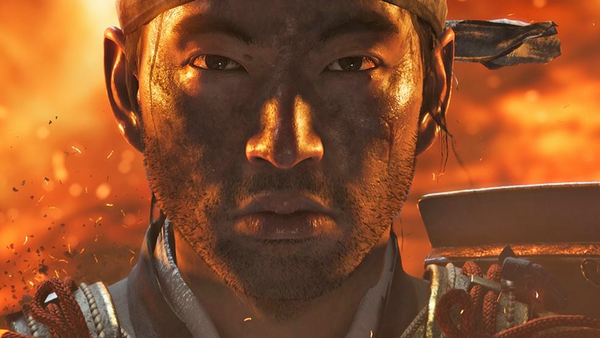
And now for the biggest fiction of them all: Jin Sakai himself.
Yep, that's right, Jin Sakai, the main protagonist and player character, much like his marauding Mongol nemesis, never actually existed. Again, truly shocking stuff.
This was a wise choice by the developers, as it's much easier to create a protagonist without having to deal with the thorny issue of: "Yeah but like, what was he actually like?"
Seeing as how many, many, MANY actual historical figures have grisly and darker sides to their personality (hey, we were all young once), starting from scratch meant that Sucker Punch wasn't in danger of accidentally casting a mass murderer or other unsavoury character as their leading man.
Having said that, from the amount of Mongols that Jin gleefully fillets like a sushi chef's first time with tuna, the young Lord Sakai could easily be awarded that dubious honour as well. That's right, you keep smashing that "end suffering" button, you bloodthirsty little maniac.
Just a small point to end on: There was a clan Sakai that existed in Japan, but they were founded in the 14th century, and lived on the mainland, not Tsushima.
Watch Next
Quiz: How Well Do You Remember Kill Bill: Vol. 1?
