5 Things That Are Hard To Forgive Nintendo For
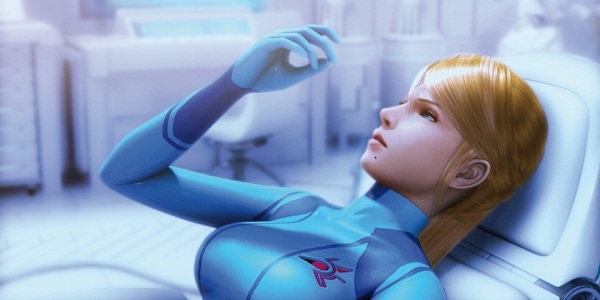 Most gamers got their start in a shiny, colorful world created by Nintendo. Whether they were riding on horseback through verdant fields of Hyrule or blasting through the unstable alien planet of Zebes, Nintendo had the attention of kids, teens, and adults alike. Nintendo possessed the unique ability to provide new players with an introductory course in video games while simultaneously challenging core fans with depth and excitement. But the 80s and 90s are gone, and Nintendo has lost its stranglehold on the video game market. Ever since Sony unleashed the behemoth PlayStation and Microsoft elbowed its way into the market with the Xbox, Nintendo has found itself in a multi-front war of attrition. Personally, I used to love Nintendo. I liked that the company differentiated itself by encouraging creativity and innovation in a world that's obsessed with efficiency and formulas. However, Nintendo has recently deviated from that standard of excellence. Instead of creativity, they produce tepid re-imaginings of games that were successful years (or decades) in the past. Development of revolutionary innovations has given way to investment in gimmicks that add nothing to the video game experience. Nintendo has been squeezed by tradition on one side and progress on the other, leaving the company without an identity. They are not beyond help, but some choices have left fans scratching their heads. Here is a list of boneheaded decisions by the Big N, and why it's difficult for fans to pledge their undying loyalty as they once did.
5. Poor Wii U Support
 Going back ten years, I can list a half dozen consoles that I've bought because they featured games that I wanted to play. I bought a Nintendo 64 because I wanted to play Super Mario 64. I bought a GameCube because I wanted to play Super Smash Brothers Melee. I bought a PlayStation 2 because I wanted to play Metal Gear Solid 2 (and a PS3 because I wanted to play MGS4). My point is, very few people drop hundreds of dollars on a console if there isn't a new game they can't wait to boot up and become immersed in. Software has always defined hardware; that's just how it is. Currently, the software defining the floundering Wii U are million-dollar ports that have already been available for purchase on more powerful consoles for years (Assassin's Creed, Mass Effect) and the endlessly irritating Just Dance series. Really, Nintendo? You have a cornucopia of universally-known mascots that, if you could just focus on for one moment, could be teed up for a flagship launch title, and instead you launch your most powerful console ever with Sing Party and Tank! Tank! Tank!?

4. Redundant, Rushed Platforms and Peripherals
 Nintendo was always a pioneer in innovation. Some of their trailblazing expeditions were successful (Nintendo DS, Wii), and some were not (VirtualBoy, Nintendo 64DD). However, recently, it seems like Nintendo is obsessed with churning out consoles in order to solve problems that don't exist. I don't want to harp on the Wii U too much, but it's really an egregious example of how Nintendo is creating real problems by trying to solve imaginary ones. Nobody had an issue with aiming down a sniper scope on a TV screen, and yet Nintendo is now making players look through a scope on a glorified tablet instead. The Nintendo DS was cool, and I spent a lot of time playing it, but in a mere five years, Nintendo had pushed out the DS Lite, the DSi, and the DSi XL. That's three different redesigns that didn't need to happen. Now the 3Ds has its own morbidly obese cousin, the 3DS XL. And how did this help Nintendo? It didn't. Nintendo posted a loss of $366 million for the fiscal year ending March 31, 2013.


3. Failure to Adapt to Adult Markets
 I have a very youthful taste in video games. I enjoy colorful environments, goofy characters, and clever interactions. In a world where every game has a separate physics engine just for the fountains of blood or gratuitous, full-frontal sex scenes, it's refreshing that one company out there still appeals to the imagination instead of carnal or violent fantasies. That being said, I'm 22 years old. I've been playing video games for half of my life at this point, and I haven't played a proper, first-party Nintendo game since Legend of Zelda: Twilight Princess was released in 2006. Nintendo has always shied away from games that feature violence or sex, and rightfully so, since it positions itself as a family company. But in most families there's an adult, or at least an angsty teenager. That person is going to have a tough time finding a Wii game that provides a fun, exciting experience that doesn't contain dialogue written by Mr. Rogers.


2. Homogenous Game Selection
Nintendo is soaked with tradition. I can say unequivocally that as long as there is a Nintendo console, Mario, Zelda, and Samus will exist. Nintendo is allowed to keep using these characters and environments because they've been around for thirty-nine (!!!) years, and they deserve to utilize their own gold-plated intellectual property they've worked hard to sculpt. But it's hard to forgive Nintendo for the shoddy treatment they've been giving their all-stars lately. Metroid: Other M was a total embarrassment, and the New Super Mario Brothers series is cute, but serves no purpose beyond wasting time. Even Legend of Zelda: Wind Waker, which I consider to be the crowning achievement of the Zelda series, got the HD treatment for the Wii U, which is proof that Nintendo is more interested in capitalizing on nostalgia rather than new experiences. New series are not immune to this lazy tune-up, either. Animal Crossing: City Folk was simply a Wii port of Animal Crossing: Wild World, and while it added a few neat things, it was just a thinly-veiled rehash of something that had worked in the past. Nintendo's software library was at its most diverse during the era of the darling GameCube. Brilliant 3rd party titles such as Baten Kaitos and Tales of Symphonia were being released on a fairly regular basis during those years. Unfortunately, when Nintendo unveiled the Wii with it's proprietary motion controls and sup-par processing capabilities, those 3rd party developers that had contributed so much to GameCube's diverse library jumped ship for more orthodox, less niche territory like Sony and Microsoft. Since then, Nintendo has basically been relying on their aging mascots to carry the brand, which at best are overextended, and at worst, stale. The company seems to be in the mindset where they know that an old product was successful, so they spit-shine it and release it on their new console, hoping that fans will line up to buy the same thing they just bought a year or two ago. They keep reaching into their ragged bag of tricks that they've been using for decades, when they should be focusing on appealing to 3rd party developers that can give the platform some real depth and individuality. The fans deserve better than that, and so do the characters that are wallowing in mediocrity due to Nintendo's laziness. 
1. Cancellation of E3 Press Conference
 So it's come to this, Nintendo. You've cancelled your press event at E3 2013, the single biggest and most important video game trade exposition in existence. Do you know what this means? It means that Sony and Microsoft can breathe easy, knowing that their most esteemed competitor has bowed out. It means Valve may very well be on its way to replacing you as a part of the Big 3, if they decide to press forward with the Steam Box. It means that the public will see your absence as an admission of defeat on the Wii U. It means that even in these dire times, when rumors of failure and comparisons to the ill-fated Dreamcast are swirling, you've basically proved that you have nothing worth mentioning for your smoldering systems. Now, I'm sure the decision came after an agonizing period of reflection and consideration. I have no idea what logistics are involved in making a decision like this, but I know this: it is a bad sign.

