7 Ways No Man’s Sky Gives Us A Science Boner
2. The Devil Is In The Details
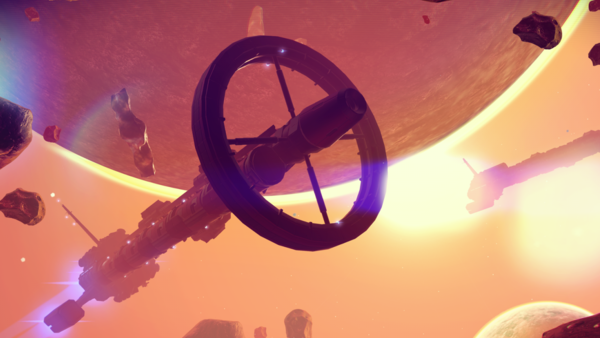
It's picky, but there are some little details in NMS that will make your inner science nerd purr.
The types of planets, for example, are defined by their positions around their star. They abide by the real-world "Goldilocks Zone" that we see in our own solar system, and those in the rest of the galaxy, meaning that planets that are too close to their parent star will be hot and barren, too far away and they'll be cold and barren, but in the middle of the two, they'll be just right and more likely to harbour lush, technicolour life.
As well as this, planets are more often than not barren. Extrapolating from what we know of solar systems, the conditions for life are pretty finely tuned and, by the looks of it, you're more likely to end up with a dead rock than an intergalactic menagerie. Worry not though, because barren planets can still be a great source of riches and resources in NMS (and, probably, the real world).
NMS also takes into account that space is a pretty awful place to be as a squishy human. Many of the planets are irradiated deathtraps and you'll need to take good care of your suit in order to survive.
The amount of deadly radiation in space is actually presenting a major issue for real-world scientists, in that it's tricky to figure out how to keep our astronauts alive and protected long enough in deep space to actually explore it. For now, we're limited to playing No Man's Sky.