8 News Stories That Prove Gaming Has Already Changed Forever
Is the age of exclusives over?
This generation has already been one of the weirdest the industry has ever seen - almost functioning as a transitional period as companies and publishers flirt with experimental monthly services like Xbox Games Pass and PS Now. But, as it winds down and the big console makers get all their ducks in a row for the announcement of newer machines, the future of the industry is finally coming into view.
Nothing has really been officially announced yet, but the shifts going on behind the scenes, glimpsed in news stories here and there and general rumblings about future plans all indicate the same thing: the gaming industry as a whole has transformed right under our noses. It's been a tumultuous couple of years but the grand plans of these companies are starting to make sense. Mostly.
This new clarity was signalled in glorious, Orwellian fashion with Google's unveiling of their own gaming service: Stadia. If it can fulfil its all-digital, streaming-focused video gaming experience, then the likes of Sony and Microsoft are going to have to take notice, and adapt in due kind.
Fortunately, it seems like they've been preparing for the new face of the gaming landscape for quite some time now...
8. Sony And Microsoft's Exclusives Are Going Multi-Platform

Since 2019 kicked off, fans have constantly heard murmurings of Microsoft's plans to expand their software and online services. They began a partnership with Nintendo last year to make major titles like Rocket League cross-platform (all the while making Sony look like a spoiled sport), but they've just announced that Xbox Live - and a bunch of exclusive games - will also be appearing on Nintendo consoles.
This is kicking off with Cuphead, out at the end of April, the two companies have explained that the plan is to bring as many titles over to the Switch as possible. At the same time, a whole bunch of former Sony exclusives - namely, Detroit: Become Human, Heavy Rain and Beyond: Two Souls - are about to debut on PC.
It's been bubbling under the surface for a while now, but with Google Stadia boasting cross-platform play across all consoles along with these partnerships and former exclusives going multi-platform, the industry as a whole seems to be entering an age where the divisions between systems don't matter all that much.
7. Google Stadia's Crowd Play Functionality Makes Streamers Even More Valuable

Speaking of the Google Stadia, there was one feature in the company's console unveiling that became an immediate talking point: Crowd Play. This system would, theoretically, allow fans watching games being played on YouTube to jump into those very same games at the push of a button. Even better, they wouldn't just be jumping into their own servers, but the very session they're currently watching.
It's intended to further bridge the gap between a streamer's audience and the streamer themselves, upping engagement and ultimately awarding the experience with a lot more intimacy. It's a win for YouTube from a purely business sense, of course, as this futuristic feature is something the closest competition, namely Twitch, doesn't have. If adopted by the major names, then it could see Google getting a substantial one up on their rivals.
At the very least, though, it should ensure that streaming only gets even bigger from here on out. The big personalities in the business have been making headlines over the past decade for the sheer amount of money they make, and the influence and power they wield will only continue to grow if companies double down on features like this.
6. Halo Infinite Could Be A Games As Service Title

Even though it was announced nearly a year ago now, we still have no idea what Halo: Infinite actually is. The next big instalment in the Master Chief saga, fans have been able to piece together that, yes, Infinite is effectively Halo 6, and that (according to the description of its new engine, anyway) will probably be an open world game.
However, judging some recent comments made by a member of 343 Studios, it looks like Infinite is going to be even more of a radical departure than previously thought. When discussing the sequel, there was mention of how the ways players interact with games are changing, and that the team wants to create a platform that's constantly evolving, being updated, and inviting people back for years to come.
And which sub-genre hits all of those features and is currently ridiculously in-vogue? Games-as-service.
There have been rumours for a while that the game could have MMO features, and seems to be locked in to receive an open world of some sort. It wouldn't be out of the question if that morphs into Infinite being a live-service release. No console has its own exclusive in this sub-genre yet, but that could all change soon.
5. No Man's Sky Updates Are Humiliating Other Developers

No Man's Sky has come a long way since its disastrous launch.
When the ambitious indie dropped, it pissed off just about everyone, famously dubbed "No Man's Lie" because it boasted none of the features which were touted in pre-release trailers and interviews. Since then though, Sean Murray and his team have worked non-stop to deliver the vision they had for the adventure title, dropping the No Man's Sky NEXT update last year to raucous acclaim.
The major update introduced a whole load of features, including many of the ones fans had been clamouring for. It did wonders to turn around the public perception on the title, and the developers could have really left it there and moved onto either new projects or a proper sequel. Instead, they got right back to work on their next big update.
The rest of the year went by with no real progress but then, earlier this month, the team announced No Man's Sky Beyond, a patch that has actually rolled three updates into one massive content drop. It's genuinely astounding that Murray and co. have continued to support the game - all at no extra cost - for so many years now.
They've completely pulled it around, and it, alongside other major rags-to-riches success stories like Star Wars Battlefront 2, has established how blockbuster games should be supported.
4. Microsoft's All-Digital Xbox One
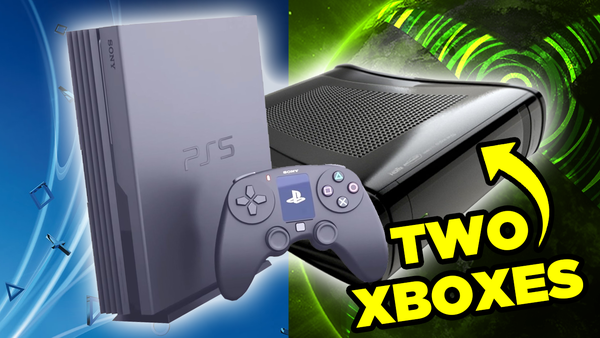
While Microsoft soft-announced their next console last year and haven't said anything official on the matter since, that hasn't stopped fans getting their hands on a whole host of information about the company's next piece of hardware. Namely, the fact that there isn't just one new console coming, but two.
The Xbox Scarlett will be Microsoft's premier, next-gen machine, but they're also apparently releasing an all-digital edition of the regular Xbox in the coming months. At a cheaper price, the machine will be entirely used for players who buy their games digitally rather than physically.
So far, the reaction has been mostly positive, with increased choice only benefitting the Xbox brand as a whole. Interestingly though, this is essentially the future Microsoft were planning for when they announced the original version of the Xbox One back in 2013. While that still had the ability to read discs, it very much felt like prep to enter an all-digital future.
With this console, the focus on Game Pass and the Stadia being a streaming service, that all-digital future could be arriving sooner than anticipated.
3. 2019's Video Games Are Underperforming (Or Are They?)

Despite the industry as a whole enjoying a record-breaking year in 2018, 2019's biggest hitters have been overshadowed by constant news headlines that they're underperforming. Sequels like The Division 2 and Far Cry: New Dawn both sold a fraction of their predecessors, while new IPs like Anthem also sold less than Bioware's other titles. Not to mention Crackdown 3, which didn't even break the top 10 of the month it released after a six year wait. Ouch.
While these poor sales seem like disasters on paper though, it's not quite so bleak. These charts only take into account physical sales, and if anything, are more indicative of how the digital marketplace has exploded over the past few years. Take Crackdown 3 for example; the sequel's poor reception and lack of marketing no doubt resulted in soft sales, but a debut so low probably had more to do with so many trying it out via Microsoft's Game Pass than ponying up for a physical copy.
This is on top of news that 80% of the UK video game market is now made up of digital sales, and these figures show how people at large are moving away from physical media, and how these statistics need to evolve to accommodate that.
2. Ninja's $1 Million Paycheck Proves Marketing Has Changed

As alluded to previously, streaming is big business. Popular names like PewDiePie have been raking in millions for years now, but one little news story seems to signify an even greater paradigm shift in how these personalities are being used as marketing tools. Publishers paying "influencers", be it streamers, YouTube personalities or even Instagram models is a common practice, so nobody really batted an eye when it was revealed that EA paid popular streamer Ninja $1million to play Apex Legends.
What is interesting, however, is how Apex Legends received no formal marketing prior to its launch. Announced and released on the same day, the developers explained that in order to avoid bad press and let the title speak for itself, they decided to avoid a regular marketing push. It made sense; the announcement of a free-to-play battle royale game, made by the people behind Titanfall and published by EA, would have received massive pushback.
Of course, EA still marketed the title by paying streamers, a far more insidious way to promote a game like this. While paid sponsorships usually have to be disclosed, the relationship between streamer and audience is inherently more trustworthy, and this allowed the publisher to get their game in front of millions of people while downplaying their potential to push back or respond vocally.
It's kinda shady, and will no doubt be a marketing approach the industry leans into even more in the coming years.
1. The Cloud Will Be The Future Of Gaming Tech

Unsurprisingly, the one thing that's dominated the news cycle this week has been the Google Stadia. Not only is its vision of a streaming future an exciting (if a bit dystopian) prospect, but it also acts as the culmination of the baby steps Microsoft, Sony, Nintendo and Valve have all been making across the past few years in terms of digitizing their services and technology.
What got lost in the mad string of promises though, was the reiteration that cloud technology is the future. Google explained that, by utilising the limitless space of the cloud, they've be able to lift limitations developers currently have to deal with when producing games.
For instance, the cloud could increase the player count of battle royale games from being in the hundreds to being in the thousands, and create a lushly detailed open world title where every piece of the environment is fully destructible.
Of course, these are similar promises to those Microsoft made when they revealed Crackdown 3 would be running on the same technology a few years ago. For whatever reason, that sequel didn't end up boasting those fantastical features, but the company has still doubled down on their commitment to include it in games going forward. In fact, the company just did an entire showcase at GDC delving into the technology.
It might not be quite there yet, but it's clear the cloud will provide the backbone for games in the near future.