8 Reasons Why Gaming Just Isn’t Gaming Anymore

Remember when we knew exactly what we were buying before launch? Us neither.
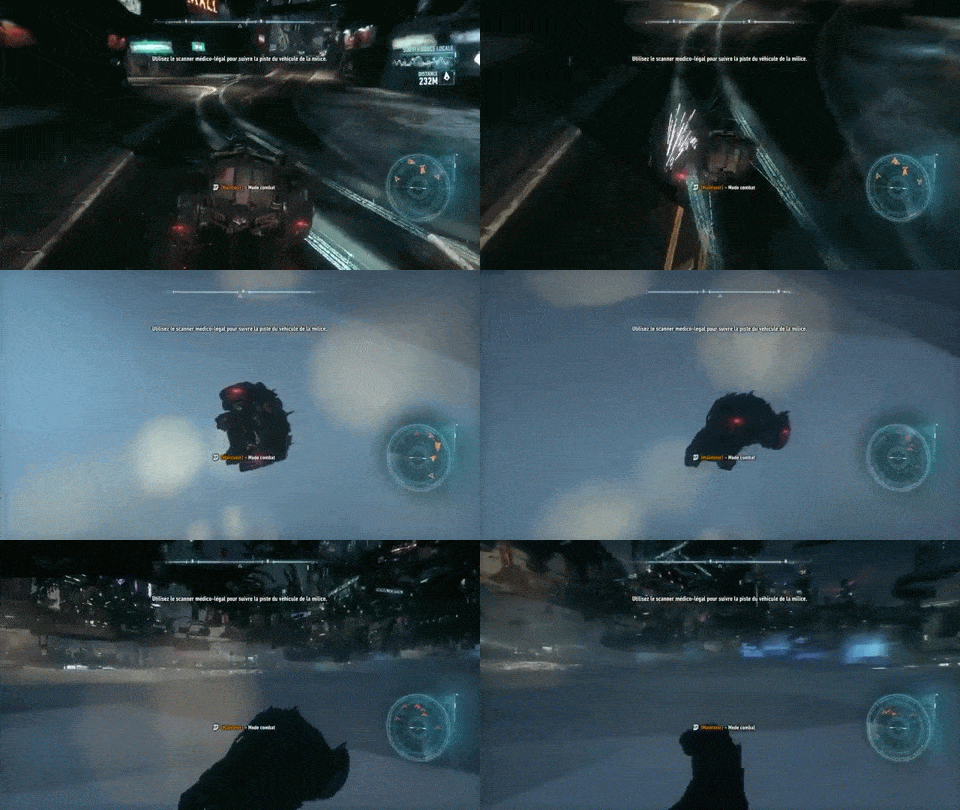
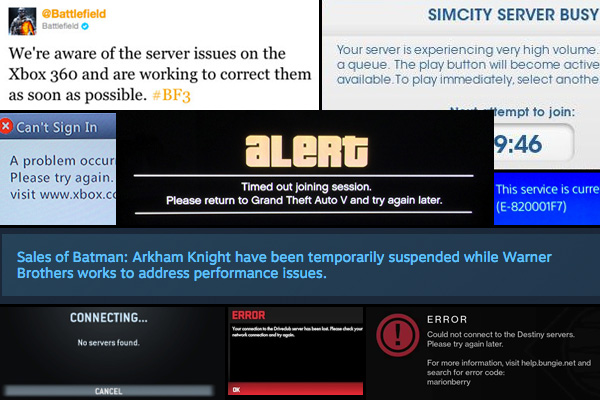
You know that sour feeling in the pit of your stomach whenever any sort of "Pre order now!", "Day One DLC" or "Buy the Season Pass!"-type language gets bandied about? It's thoroughly justified, and something that proves just how far gaming has come as an entertainment medium - one that although there's always propensity for immense amounts of creativity, tends to abuse the consumer more than ever in 2015. Take Batman: Arkham Knight for example. Rocksteady used to be one hell of a dependable developer (and they still are, to some degree), but as soon as Warner Bros. decided to go all-in on insultingly paltry Season Pass options, that's meant rushing the game out the door, failing to fix the PC version and gutting a host of features, maps and characters for the sake of selling them back to you later down the line. Right now, fans who had faith in the developer (or who just unabashedly love the Batman license through and through) coughed up the £32.99 at launch in good faith, the assumption being that's the only way to get the 'full Arkham experience'. However, pre-orderers were rewarded with a couple of 10 minute (literally) add-on mission packs, before the Season Pass has rolled out a half-hour Batgirl mission, the future being full of such tantalising things as character skins and challenge rooms; the latter being included in Arkham's Asylum and City. I highlight Arkham Knight as a high profile tipping point, but you'll already be aware of everything from Assassin's Creed to Driveclub, Evolve to Battlefield - even The Witcher 3 has had to have eight sizeable patches to get it up to speed, consecutive ones breaking things the former initially put right. Culturally it's a farce how unreliable the average game release schedule and everything that goes alongside it has become - and all I've mentioned is only the tip of the rant-filled iceberg...

8. Games NEVER Work On Launch Day

It's pretty remarkable as you look back across gaming's past, to think the vast majority of the industry's most influential titles released states that were never altered one bit through patches or DLC add-ons. Final Fantasy VII, Super Metroid, Metal Gear Solid, Ocarina Of Time, the developers behind these games couldn't even consider the possibility of patching in fixes later down the line. Despite some of them still having the occasional graphical hiccup here and there, the general consensus was whatever you pushed out the door and onto shelves better be your best work, or your reputation would be in tatters. These days, publishers like EA, Warner Bros., Ubisoft and Activision push for increasingly tight deadlines for developers to release their games, assumedly for the sake of cashing in faster and more often. They're unaware of the reality of game design (Xbox community head Phil Spencer even noted executives really "should play more games" to get a better understanding of everything), and it's led to an industry where companies are forced to fall back on patching their games to a state that in years gone by, would've been the norm.

7. Buying On Day One Gets You A Worse Product

The industry wants you to pre-order everything, right? To give them the most money up-front, guarantee your purchase, love for the franchise and commitment to the brand. Fine, to some degree anyway. If they want to throw out a whopping great Assassin's Creed statue, then if you're huge fan by all means tuck in. However, what many developers have in mind for their entire project i.e. their initial, fully-formed vision for the game before budgetary reasons settle in, is NOT what you're picking up through these more luxurious first offerings, or the base game. Not any more. Instead, as we see with parsed out 'Season Pass' content alongside bug fixes and elements added to the game from constant fan feedback, it spits directly in the face of those who put down their hard-earned cash in the first place, being everything that comes after day one is a better, more refined and thoroughly more feature-complete offering. Why should I, the consumer, spend money on something like Shadow Of Mordor's season pass (totalling something like £100 in conjunction with the base-game), only for a 'Game of the Year' version to come out the following year, including everything previously locked away for a fraction of the price? It used to be these re-released special editions were reserved for games that truly deserved them, and not that Shadow of Mordor doesn't, but as soon as the advertising for a game starts touting "Six months of content!", anyone with any sense of foreboding knows all the 'exclusive content' will be packaged together somewhere later down the road.

6. Where Are All The Demos?

Remember when we knew exactly what we were buying before launch? Me neither. Used to be every major game had a demo that went alongside it, either through magazine add-ons, bundles with games (Metal Gear Solid 2 with ZOE, for example) or even as one-offs in cardboard sleeves you could pick up in-store. Sure they came with the obligatory "Gameplay in the final version will differ"-type warnings, but you got a pretty solid idea what you were in for come release. Certain genres could hold back, as how could you segment off a decent chunk of an RPG, for example? But for the most part, demos were just a staple of the industry that we both expected, and delivered on reliably. Across this generation we've seen that go out the window, where even Microsoft's Xbox Live Arcade - a service that only posted your game if a free trial version was available - no longer holds to this. Triple-A games get listed for pre-order with only the barest whiff of a screenshot, and although you can blame gamers/fans for buying these things out of blind adoration (something we've always done), the point stands that the lack of gameplay demos is directly to force you into purchasing the full version with less information on what that actually entails.

5. Digital Prices Are Insulting

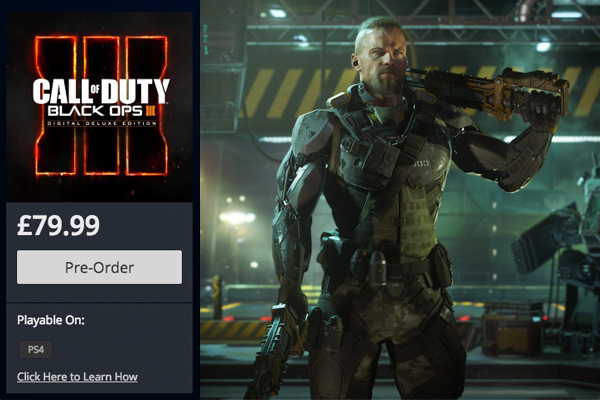
With a batch of screenshots and a gameplay demo, Call of Duty: Black Ops III's deluxe edition is listed on the UK store as £79.99 (about $125), which I don't know about you, just makes me disheartened and ultimately disenfranchised with where there industry is at. Let's be clear, Call of Duty is an incredibly well-made game. Its shooting is proficient and tight, last year's instalment is probably the finest since Modern Warfare, and in terms of the general feel of gameplay, it comes across as very polished - especially by comparison to many other yearly franchises. However, should a COD fan who wants to experience the full version of their favourite series have to put down an entire week's wage to do so? You could rationalise by saying game production budgets are sky-high right now, and creators 'need' such prices to recoup the funds that go into your favourite products. But where does it stop? Where's the respect for the consumer, and the fact that at the end of the day, there's only so much money we can put aside to support a hobby, pastime or whatever label you want to give it? It reeks of when Sony's Ken Kutaragi mentioned, in response to the PS3's astronomical launch price, " consumers to think to themselves 'I will work more hours to buy one'", which is quite possibly the worst way to treat your consumers. In experimenting with just how much love gamers have for their medium (something that's fairly endless), the industry has realised they can charge almost anything and we'll justify it with the need to own whatever's on offer. Honestly though, what does that say about the relationship we have between consumer and producer?

4. Trade-Ins Are Discouraged

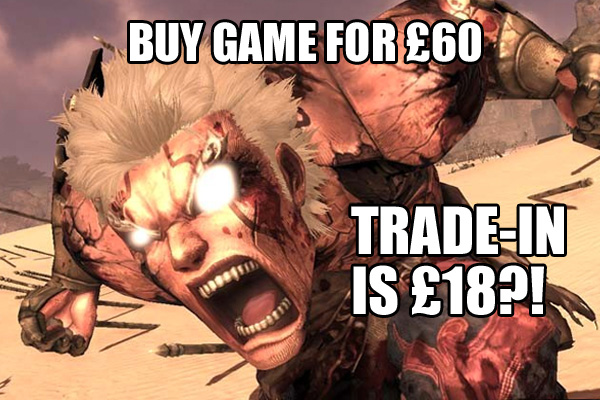
The biggest thorn in the gaming industry's side over the first two decades of its living room existence was the notion of trade-ins; that consumer-first idea that favoured brick n' mortar stores by allowing them to run deals on the latest games, whilst also letting you walk home with a second-hand version of whatever was fresh on shelves for a lesser price. Publishers never liked that, not one bit, and they set about green-lighting the implication of restrictive software on the latest generation of consoles; ones that - if Microsoft's initial vision for the Xbox One hadn't been so staunchly opposed - would've genuinely banned trade-ins without a very laborious license-authentication process. Either way, the former idea of knowing you'd fetch a good price with your selection of older titles now amounts to only a few coins, as thanks to the higher costs needed to get high-profile titles in stores in general, only the most reputable outlets are still going - which also happen to be the ones pushing pre-order 'bonuses', strategy guides and DLC add-ons to stay in the good books.

3. Glitches Aren't Fun, They're Crippling

Glitches used to be rare, do you remember? They were there if you really looked for them - such as a car clipping through a wall in Gran Turismo, or a wrestler's hand going through the ropes in Smackdown - but ultimately, the game itself took centre stage over any aesthetic issues. Nowadays you're just as likely to have your character's face fall off, a mission start-point not activate or a complete loss of save data than get through it in one piece. Certain games and their respective developers got by thanks to the consumer still getting to experience a grandiose product with no equal, like Bethesda and their Fallout/Elder Scrolls series, but even Skyrim had a bug on PS3 that continually expanded your save file until it bricked the game. You could laugh off something as unintentionally hilarious as someone's hand going through their chest or hair not animating properly, but with increased fidelity in terms of character models, world design and mechanics it means everything is continually sold to you under the guise of "This is the most polished version of 'gaming' yet". In reality though, we're currently experiencing the most consistently broken rollout of games in history.

2. Innovation Is Nowhere To Be Found In Triple-A Titles
Go on, what was the last big-budget triple-A game that recently put innovation and/or a unique game hook to the forefront of its design? It was telling at the close of 2014 that gamers actively struggled to compile 'Best of' lists, giving the top spot to either Dragon Age for its sprawling landscapes, or 'I can't believe it's not Assassin's Creed!', Shadow of Mordor for sheer playability in a sea of car-crash retail releases. Metal Gear Solid V seems to be the only game that's pushing its respective franchise into new territory, but then again you could also argue its 'new' appeal - building a base by extracting soldiers with air-lifting equipment - has been done in 2010's Peace Walker. Think of the past decades of gaming. We had everything from the sprawling narrative of Ocarina of Time, through the perfection of stealth and perk-based multiplayer with Metal Gear Solid/Splinter Cell and Call of Duty: Modern Warfare, and even Rockstar taking a huge risk with Red Dead Redemption, locking the game's true ending behind your own will to seek out an optional revenge mission. What's the reason for this sudden lack of boundary-pushing material? Well, 'data'. EA's Peter Moore stated the 'data' they had access to when started development on the newest instalment of Star Wars: Battlefront pointed to games that were multiplayer-only being very successful (something you can whisper to the carcasses of Titanfall and Evolve), yet PC Gamer noted other numbers point to higher sales figures for single-player modes in the same titles. As such, publishers will side with whatever's the most profitable over the most enjoyable, as god forbid they make a loss anywhere along the line trying to do something new. To close out 2015 we're on course to get Just Cause 3, Star Wars Battlefront and Fallout 4; all games that should be enjoyable enough and polished to a mirror sheen (save for EA's servers inevitably tanking on day one), yet aren't anywhere close to flying the flag for forward momentum.

1. Where Are All The Characters?!

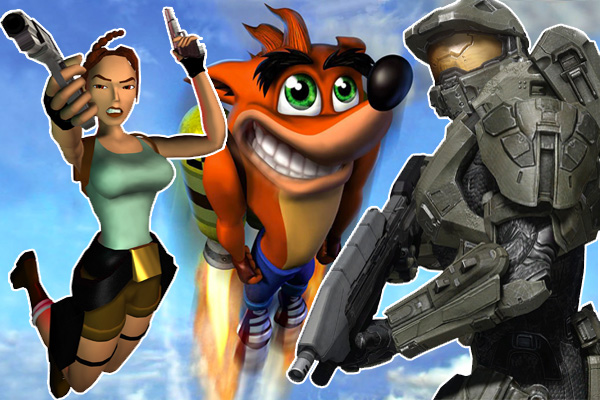
Watching Microsoft's performances from both E3 and Gamescom, they opened both shows with a highlight reel of all their titles that were coming soon, rattling through a number of characters to showcase their first-party lineup. The problem that arose was, Microsoft don't have a strong first-party lineup whatsoever - especially when it comes to anything identifiable. That goes for Sony these days too, who in losing platforming icons like Crash or Jak & Daxter, have gained... erm, Knack? Or the new Infamous guy? Perhaps a solemn-looking dude from Bloodborne? Maybe it's a cultural advancement thing, as the nearest thing to identifiable movie characters are just repurposed from comics now too, rather than Indiana Jones, John McClane, Darth Vader etc. - but all the same, its good for an entertainment medium to have recognisable mascots or figures. Characters like Sonic, Crash, Lara Croft, Master Chief etc. can do wonders to instil a sense of community and love between gamers and their products, but it's something even Nintendo are stretching too thin thanks to not creating any new ones in far too long. It goes without saying that aside from Nathan Drake, gaming hasn't produced a loveable, well-known character that represents his medium at first sight in years - something that surely comes from companies like Sony and Microsoft carving their own brand identities, rather than bolstering them through association with the best of what's on offer from their respective platforms. Do you feel increasingly disenfranchised by your beloved medium, or is there far more to be excited about that I'm overlooking? Let us know in the comments!

Gaming Editor
Gaming Editor

WhatCulture's Head of Gaming.