9 Crippling Problems With The Video Game Industry (And How To Fix Them)
Are you happy with the current console generation?

Whether it was the weirdly stilted start to the generation, or the fact that many of its best games only emerged across the last year and a half, this console cycle has absolutely flown by. To the point where both Sony and Microsoft - especially the latter, given the distance they're creating between the Xbox One's launch and the Scorpio - are already looking to when they can release another system.
All of which forces you to look at the industry overall: Are we in a better place now than last generation? Are developers able to capitalise on their creative visions, or are they hamstrung by increasingly seismic budgetary concerns? Are microtransactions and the mobile gaming scene a threat to objective quality, and if so, is there anything we can do to stop it?
It takes only a few seconds to step back and contrast the abject high-points of this cycle - the Witcher 3s, the Overwatchs, the Rocket Leagues, DOOMs and Shovel Knights - with the last (one that went out with a bang as Bioshock Infinite, The Last of Us and GTA V closed 2013), to see that actually, there are quite a few worthwhile issues to address.
Let's start with...
9. When Was The Last Time You Played A New Genre?
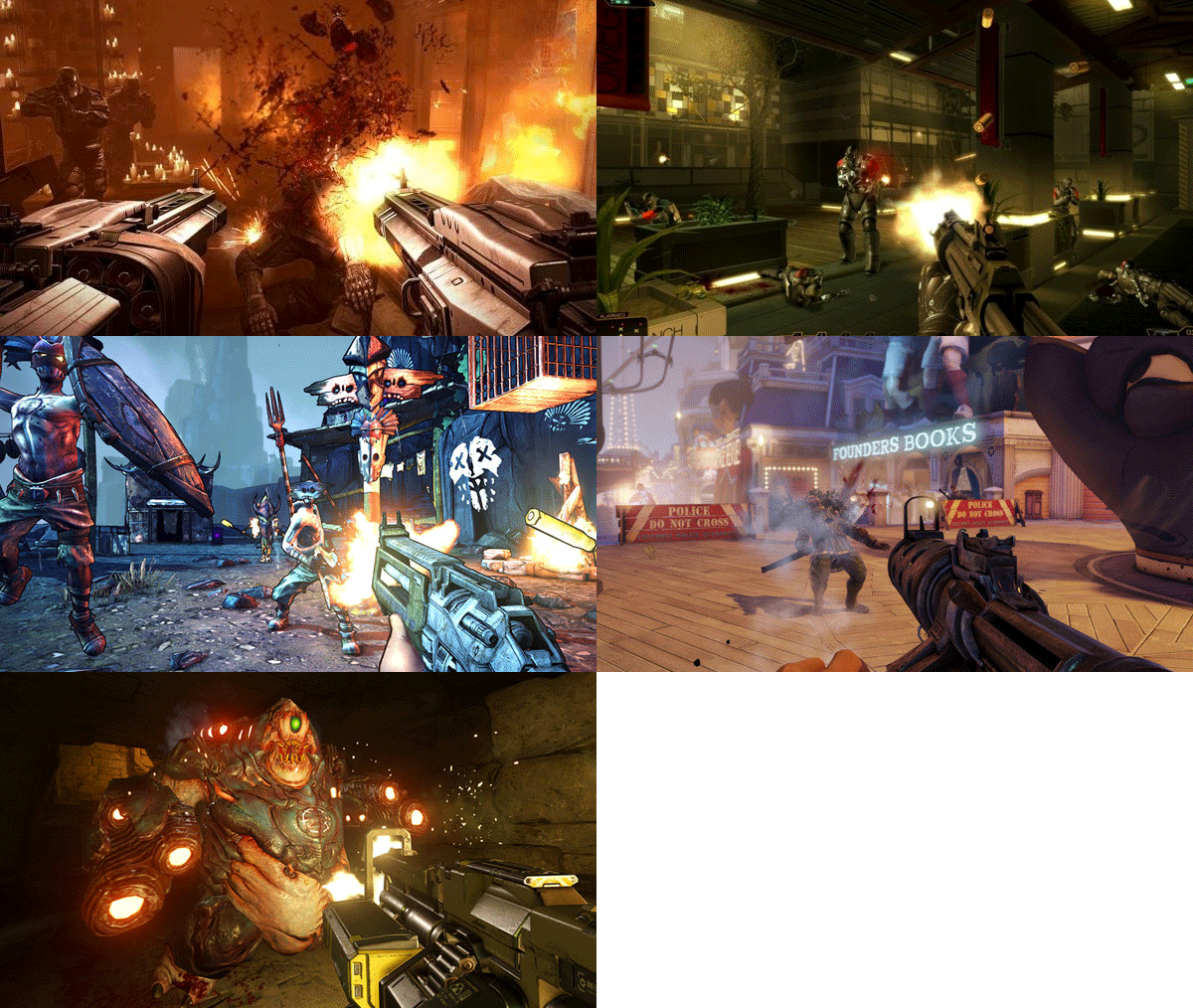
The Problem: Thanks to the industry's exponential rise, encompassing a myriad of genres over time, refining them, raising budgets to do better and throwing the results out to an ever-hungry public, we've arrived at a point where it feels like all the major possible genres and methods of gameplay have been realised.
This all relates to budgetary constraints, too. For Honor is the first game in years where Ubisoft took the time to create a core mechanic that we've haven't seen in a million other releases, yet it's one game amidst a sea of identikit-feeling titles. Where do we go from here?
The Solution: Part of a solution is identifying the problem - which is to say, only the most marketable titles show up on peoples' radars. There's an understated fact that a lot of your favourite video games from decades gone by were created on shoestring budgets, and through an indie mentality.
Look up the history of Naughty Dog and Crash Bandicoot if you want proof - they went from sketch to mascot through sheer force of will and talent, not through anything relating to targeting demographics or marketing before Sony got involved.
The overall issue is people THINK there aren't 'any new genres' or game mechanics because the net they're casting is incredibly small. You wouldn't say movies were terrible because Transformers or 50 Shades of Grey sucked, right? There are a wealth of additional titles popping up left, right and centre - we just need Sony, Microsoft and Nintendo to showcase them alongside the triple-As more often.
8. Physical Vs. Digital Has Resulted In Paralysis

The Problem: Music and movies' primary delivery methods are almost completely digital these days, yet when Microsoft attempted to pull the trigger on a majority-digital Xbox One, we revolted.
It was with good reason (the pitch and convenience aspects were godawful), but have you noticed how every game has a 10+GB patch, a series of updates or a lengthy install time whenever you buy a disc?
That's all down to the need to support physical media.
The Solution: If we're keeping discs in the long run (and increased vinyl sales would show that physical media has its place, when done well), publishers need to relax their launch dates so devs can release fully-finished games, not those that went to print months prior and are reliant on a 'Day One Patch' to be what was advertised (looking at you, Assassin's Creed Unity, No Man's Sky, and pretty much everything under the sun).
If we're going all-digital, patches and game updates would already be included in the games themselves whilst they're downloading, but that requires FAR bigger hard drives, as both Sony and Microsoft drastically undershot both the average size of a game this generation (50GB), and how many the consumer would want to buy on any given month. Physical it is, for now, anyway.
Speaking of consoles...
7. Console Cycles Are A Total Mess

The Problem: PS4, PS4 Pro, Xbox One, Scorpio, Nintendo Switch... and whatever's in the pipeline for the future of handhelds (probably the Switch again), either way, right now the idea of a 'console generation' has been thrown off centre by Sony introducing the world to the thoroughly pointless PS4 Pro.
Whilst you could think of that system as a half-step towards a PS5, Microsoft are prepping the Scorpio to be a proper next-gen console - at least, according to those who've gone hands-on with it. Releasing later in 2017, that means we've got the PS5 nowhere to be seen, the Pro in circulation three years after the PS4, the death of the Xbox One after just four years if it disappears in light of the Scorpio, and Nintendo's Switch slap-bang in the middle.
The Solution: Stop worrying about hardware. Uncharted 4, Halo 5 and Breath of the Wild prove these systems can run games at butter-smooth frame rates with genuinely jaw-dropping visuals. There's simply no need to release half-step systems, and for Microsoft, you're just starting to gain traction with the Xbox One S and general consumer trust - don't blow a T-1000 sized hole in the side of your aspirations for the sake of 'better graphics' nobody needs or ever appreciates.
6. People Don't Trust The Gaming Press

The Problem: You can extrapolate this out into people getting incredibly sick of any old sensationalist headline proclaiming "The end of the world is nigh!", but in gaming, we've really got an issue with audience autonomy, and the importance of critics.
Thanks to the GamerGate debacle of 2014 and everything about No Man's Sky being the second coming, yes, review scores and critical opinions still carry weight, but you're more likely to pick something up off a friends' recommendation or a forum post than read a long-form review.
The Solution: If you never want to be disappointed to led astray again, start paying attention to authors more than headlines. Find sites you like the tone of, and find writers who both speak their mind in a way that lines up with your own.
Guys like the Kinda Funny crew, Giant Bomb, Jim Sterling have all gone above and beyond to project their personal subjectivities to the masses, and have accrued a loyal following of likeminded gamers in the process. The issue is with sensationalism across the board, but once you develop a taste for who to trust and how to see through how a lot of online journalism works overall, you'll be better off as a consumer in the long run.
5. Everything Is Open-World (Even Games That Shouldn't Be)

The Problem: Even the great Hideo Kojima said "Once you've gone open world, you can never go back", and it's testament to how pretty much every major video game genre still works in this template, that scores of developers have rejigged their creations to suit.
Metal Gear Solid V, The Legend of Zelda, The Witcher 3, Shadow of Mordor, Horizon Zero Dawn - even Uncharted 4's levels were made far more open-ended than ever, simply to account for this nebulous sense of "See that? You can go there!"
The Solution: Some games work an absolute treat in an open-world, providing an unparalleled sense of exploration, tone-setting and placement of missions. Others - like L.A. Noire, Need for Speed Rivals and Mafia III - simply space out all their objectives, and leave you driving or running for hours in between checkpoints.
The realisation here, is that not everything has to be open-world, period.
As Nioh proved, taking something as prolific as Dark Souls and making it mission-based can work very well, and a game like Assassin's Creed would surely benefit from Ubisoft taking a page out of the new Hitman's book, rather than being open-world because it's a bankable genre to slap on your marketing materials.
Let the purest sense of level design dictate the genre, not the other way around.
4. Importance Of Graphics Is WAY Overblown

The Problem: After pandering to the "D'argh it's just not shiny enough!" PC crowd, we've arrived at a point where visuals and graphics are touted as something that's just as important as gameplay. Let me ask you some questions though: Do you care about 4K? How about dynamic shadows or increased detail waaay off in the distance? Is a game fundamentally better if a character is rendered in lifelike detail?
Of course not. Uncharted 4 could've looked like a PS1 game and still been one of the Games of the Year. Likewise, something like a Castlevania: Symphony of the Night, a Mega Man X or a Metal Gear Solid wouldn't benefit whatsoever from a smoother aesthetic.
The Solution: Gameplay trumps graphics, substance trumps style. It's that simple.
The whole "Look how GOOD this looks!" approach to selling video games is as old as time, but should've died off when HD TVs first came out, because we're literally at a point where developers spend years upon years perfecting the texture of a random NPC's coat, just so they can get accepted by the mainstream consumer.
Sony especially need to back off the 4K train, and showcase the features of their games that we're going to interact with and enjoy, not just stare at. In this medium, gameplay is - or should be - everything, and that's a sentiment many could do with reminding themselves about.
3. 'Remake Culture' Will Always Be Disappointing

The Problem: We have a real, real problem with both nostalgia and the general assumption that things were better, "back in the good ol' days". Donald Trump won an election off that very sentiment, and whilst I'm not paralleling that orange-faced lunatic to the resurrection of another, Crash Bandicoot, there's something that needs to be made clear:
You can't re-experience a first impression. It's impossible.
The reason you loved something like Crash or Final Fantasy VII, was because there was nothing else like it at the time. We've seen all the innovations, all the lessons learned and the forward momentum made since then, and the only thing people are getting excited about when it comes to an HD remake of a classic, is revisiting the mindset of their childhood, not the game itself.
They want to be wide-eyed and young again, which simply can't be done.
The Solution: Move forward, create new games, have new experiences - let them feed into appreciation of new products. Honestly, if you're forever thinking back on old school games and wishing the industry would be like that again, it's like lamenting Metallica for not releasing another Master of Puppets.
If you want a game-related solution, look at how iD Software and Machinegames continued DOOM and Wolfenstein, or how Sega revitalised Sonic. You pay homage to the past and move on, don't try to live in it. The fact is: You're not the same person - age or otherwise - you were back then, and peddling to base nostalgia will always lead to disappointment. Every time.
2. The Industry Doesn't Know How To Market To A Maturing Demographic

The Problem: For the longest time, games were 'for kids', thought of as wastes of time played only by basement-dwelling NES-lovers, forever clutching their precious pixels in place of any physical interaction. All that changed with the overwhelming success of Wii Sports and Call of Duty: Modern Warfare though, as suddenly gaming was wrenched out of the underground and into the mainstream.
The average game was revealed to be 35; a tech-savvy individual who's paid attention over the years, ageing alongside a medium that was always 'theirs', but is now casting a wider net than ever.
The Solution: This point goes hand-in-hand with microtransactions and blind boxes, as how many runaway news stories have you read about anyone over 30 accidentally spending thousands of dollars on in-game purchases? Exactly.
Every once in a while we get something like a Last of Us, a Firewatch, a Bioshock Infinite that really massages the temples and appeals to a mature gamer with matured sensibilities, but far too often it's this refusal to accept that the majority of gamers are of age, that cripples the majority of narratives and depth of game mechanics.
Put it this way: Those floating arrows, hand-holding tutorials and "Press X to win!" on-screen prompts? They aren't for you. They're for people - or an age group, physically and mentally - that want their games to be one big digital sugar rush.
1. Blind Boxes With Terrible Reward Rates

The Problem: Even the mighty Overwatch didn't escape this idea, and it remains the only thing wrong with Blizzard's otherwise exemplary FPS. Indeed, 'blind boxes' have popped up everywhere from Mass Effect 3 to For Honor, and are a carryover from the mobile gaming scene - the idea that some mysterious reward lies in a 'box' of some kind, which you can unlock by paying additional real-world cash, or grinding a certain currency in-game to get it eventually.
Such a practice reliant on the former, has no place in products that are being sold for a premium price. None.
The Solution: At least code around the occasional duplicates that'll show up if/when you open a number of crates at once. When your game's progression is built around opening a mystery box, there's nothing more disheartening or futile than seeing a duplicate item and knowing you've wasted your time.
Alternatively, if the mechanic is proven to work with consumers, filter the money into a better resource than just straight revenue. Rocket League uses its 'reward crates' to pony up the cash for the Rocket League Championship, for example, ensuring that at least it's the player that benefits from putting money into the game, rather than just re-rolling the dice over and over.
That said, all involved could remove this mobile gaming-influenced toss from our fully-priced products, and restore a sense of progression that means paying a premium gets you every aspect of a finished game.
What a novel thought.
--
Are you happy with the industry right now? Let us know in the comments!