Deus Ex: Mankind Divided - 10 Things It Must Fix From Human Revolution

Eidos have one hell of a task topping their 2011 masterpiece.

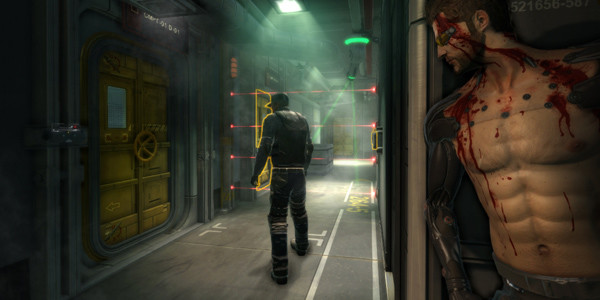
After four years, the fourth instalment of the mighty leather-clad sci-fi opus Deus Ex is back, and Eidos' Matrix-meets-Blade Runner genre-bender has always had a special place in plenty gamers' hearts - mostly thanks to losing entire weeks of game-time in the 2000 original. Thanks to some graphics that haven't aged too well considering the focus on gunplay, character interaction and a slew of incredibly detailed (for the time) environments, it was over to 2011's Human Revolution to relight the fire underneath the franchise's behind, as although 2003's Invisible War was serviceable enough, it didn't have the same spark that only the original team can bring. Over to Mankind Divided and a sequel that's going to take place two years after the conclusion of Human Revolution, seeing returning-hero Adam Jensen heading up crime-hounds Task Force 29 as the world lives up to the game's title - the split between people who favour augmented limbs and those who don't creating violent rifts in the populace. Jensen's design is looking just as fantastic as ever though, with his repurposed body also bolstering a huge number of additional abilities and weapons - however as Human Revolution's weaker aspects proved, concept and execution can occasionally be miles apart, and it's up to Eidos to deliver on 100% of their potential this time around.


10. The Boss Battles

Sometimes wasted potential is just as bad as downright broken gameplay, and for whatever reason during development, Eidos ended up outsourcing their boss battles to another studio - resulting in a handful of encounters that felt completely out of place in regards to the rest of the game. Basically it boiled down to the core concept of Deus Ex being loaded with choices when it comes to how to spec your character either through stealth, assault, hacking or a mixture of all three - yet the bosses completely favoured one or the other individually. It resulted in plenty people feeling like they were playing the game 'wrong' as they literally didn't have the requisite skills to beat guys like the explosive-tossing first boss Lawrence Barrett; a character that favoured a face-to-face confrontation despite some players building their version of Jensen to favour a stealthier approach. The flip-side to this became people that could speedrun certain battles in a minute or two, making them completely unbalanced all-round, and something that's sure to be rectified by developing in-house this time.

9. Adam Jensen€™s Voice

One the one side you've got Solid Snake, and on the other, Christian Bale's Batman - now obviously one is from games and the other a trilogy of movies, but Bale more than proved there's a limit to how gruff and throaty you can make your 'tough guy voice' before it sounds completely laughable. Jensen's tone in the first game wasn't as comically over-the-top as Bale's, but Elias Toufexis' take on the 'gritty hero who's seen some things' trope ended up sounding so fake and forced, it actually turned people off the game altogether, which was a real shame. Luckily in the new trailer it seems like Adam's voice is a little more natural, but it remains to be seen if overall we're going to be getting another iteration that sounds like a 15 year-old trying to do his best 90's action hero impression, or a fully-fledged, believable character instead.

8. A Satisfying Ending

Although Mass Effect 3 got the raw end of the stick back in 2012 (also getting EA branded The Worst Company In America), it became the reason every developer under the sun should forever stay away from randomly inserting multiple choice endings into their games - especially if nothing in the preamble alludes to it. For Human Revolution though it predated this by four years, releasing in 2011, and was exactly that - the developers literally throwing out some consoles with a selection of buttons, each pertaining to a different cinematic montage. Granted some people loved the idea of whatever you chose not being the 'right' ending, but it remains that at the time forums still lit up with people complaining about how simplistic the whole thing felt - with the very fact that none of the endings were particularly memorable being a crippling factor to an otherwise very enjoyable story.

7. More Excuses To Use Your Best Abilities

Across the course of Human Revolution you'd acquire everything from the ability to bust through walls and snap necks in seconds, to deploying a whirl of miniature mines if the going ever got tough. The problem, was there were hardly any reasons or level-paths designed to let you do this. Take that wall move for example, very rarely would you come across any scenario where an enemy had their back to one you could then get around (and behind) to pull it off effectively. One of the best things about this Metroid-goes-sci-fi concept has always been the idea of travelling through any given area and making a mental note that "Oh, if I'd specced that way, I could get in there, but I'm gonna go this way for now", and although HR definitely had points like that, it wasn't as pleasurable to seek them out and experiment like in the original.

6. More Varied Enemies That Force You To Adapt

A worthwhile talking point that stemmed from HR was the overarching sentiment that aside from some boss characters, you were forever wailing on male enemies - and even they were fairly identikit - with the bosses being the only time you'd have to vary up your playing style to accommodate. Obviously Eidos have bitten off quite a chunk of potential they might struggle to chew in factoring in so many different play-styles from the outset, but a variety of enemies that only appear in each players' worlds depending on their speccing options would be the best way to force us into using every move available within a specific set. Playing as a stealth character? Have some enemies cloaked in the environment, only able to be picked out if you really focussed on them, MGS 3's The End-style. For firearm-lovers suit up a 'heavy' in the next room that forces you to decide exactly how to clear a place out, and so on.

5. Lose The Battery System

At the end of the day, giving players so many awesome gameplay possibilities only to restrain each of them to a small meter that's forever depleted/recharging only serves to stop you experimenting and having as much fun as you'd like. Yes, you can argue they were trying to restrain your attacks so you weren't destroying platoons of enemies in a blur of scattered mines and cloaked stealth takedowns, but there should be tiers to the abilities that allows for an endgame where you're far more powerful than beforehand. Perhaps at the outset of everything you need a battery allowance for the bigger or more special attacks, yet as you rank up, each tier of abilities has an associated level cap, and as you get stronger and more capable, things that once cost you at the beginning end up being free. Whatever happens gameplay-wise for us to literally recharge our batteries (even a cooldown animation that you could deploy at the cost of making noise, maybe?), it can't be tied to a finite item you can easily run out of like before.

4. Equal Augments Per Section

The core concept of a future gone wild with sci-fi body-modding possibilities is Deus Ex's greatest asset, and one that although it did deliver on its concept following the first trailer and gameplay footage, is always going to be loaded with potential. Everyone loves a good stat progression screen and a little look at where your character's heading later on, and although HR had some cracking abilities locked away under multiple tiers of the same section, it didn't feel as fleshed out in terms of the amount of things available to each part of Jensen's body.
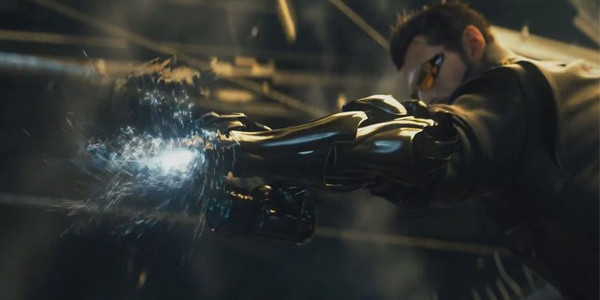
As Adam can be seen using something of an electrified punch alongside a concussive blast in the Mankind Divided trailer, it looks like Eidos are learning from their mistakes. The explosive Typhoon attack you got near the end of HR felt like something designed for an assault playthrough, and if these additional abilities/attacks are any indication, it'll let you feel more comfortable ranking up any given play-style knowing a suitable reward awaits at the end.

3. Far More Meaningful Routes/Options In Levels

As mentioned earlier in this piece, one of the most immediate things that fans of the original Deus Ex lamented not being a bigger focus was the idea of multiple routes through essentially every scenario. With Mankind Divided looking to re-introduce the idea of talking to far more NPCs and exploring more Hitman-like options for any given situation out in the open world, hopefully this transfers over into the main missions behind enemy territory too. For some it's not really a Deus Ex game unless they can carve an identifiable path through every level, and as the conversation on "How did you beat this part?" nearly always boiled down to the same answer every time (trying your individual play-style, messing up and shooting everything) the game never made you feel rewarded for wandering off the beaten path. Mankind Divided needs to pepper its street-side exploration with a plethora of larger, sandboxed areas where you can really take your time and plan out a variety of approaches, alongside knowing what you're going to do if things go sideways. Radical Entertainment's Prototype is a strange comparison here, but they're one of hardly any developers that actively want you to feel empowered in the skin of someone stronger than the average person, and by all means keep the contemplative difficulty from the first game, but let players feel like they can learn and master the skills available.

2. No Half-Baked DLC

So it's already been mentioned that Deus Ex's development was a little strange as they outsourced the boss fights, but according to Kotaku's writeup on the optional DLC, their were originally more worlds planned for the game that for one reason or another ended up getting shafted in the end. For 'The Missing Link' DLC (the only thing ever released post-launch) Eidos seemingly took a random moment of inactivity (Jensen is in cryo-sleep at one point in the story) and said "What if a bunch of random stuff happened... and then he went back to sleep?" In the main game you'd barely even know these events have happened as they're not discussed by Jensen or anybody else, and the gameplay-worth of this pack just felt like a collection of rooms thrown together for the sake of doing something with the unused assets following the first release. There's a good reason this comes bundled with the PC release these days, and with any luck Eidos won't be delivering fairly sparse sections of 'gameplay' for the sake of it in the future.

1. Much More World And Level Variety

Ask anyone to describe a level from Human Revolution and the resulting mix of 'umms' and 'errs' will dance around essentially telling you everything was a haze of black and yellow. Seriously, although sticking to your guns for any length of time will establish an 'identity' of sorts, this reliance on a two-tone colour palette that refused to deviate across a very length 25+ hour game only served to hamper the game's memorability when trying to think of anything that stands out. 2012's extremely underrated Syndicate was a brilliant take on the whole biometrically-enhanced future, and one that maintained a full colour palette across its dubstep-infused cityscape. Now, Deus Ex obviously doesn't have to turn into the same thing, but variety comes in more forms than just the colour palette, and when HR had you exploring the insides of different businesses and their cloud-tickling skyscrapers, the end result should feel like an impressive trip through an entire world, not one visual filter applied afterwards. What from Human Revolution would you fix and what should stay the same? Let us know in the comments!

Gaming Editor
Gaming Editor

WhatCulture's Head of Gaming.