Fallout 4 Story Recap: 12 Major Plot Points You Need To Know

How to best prepare for November 10th in 12 essential steps.
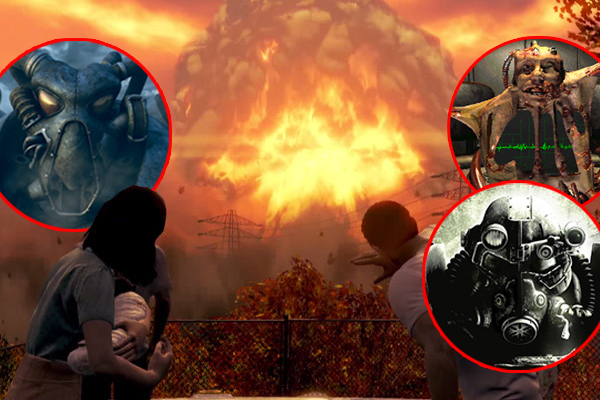
Fallout 4 review With Fallout 4 just around the corner, there's a good chance you're going into it as someone who's never played a Fallout game in their life (shame on you), or as someone who's played the previous games but doesn't remember the rich story of how the wastelands came to exist in the first place. There's a lot of information to absorb in Fallout's alternative-history universe. While Fallout 3 and New Vegas stand up well as self-contained stories, they're defined by a long line of events that diverged from real-world history soon after World War II. US culture seemingly stayed stuck in the 1950s, while technology advanced towards a 'World of Tomorrow' of lasers and robots, rather than the information era of smartphones and slick (but less badass) techs we have today. The Fallout universe is filled with shady organisations, dwindling global resources and nuclear conflict. Do you know what started the 15-year conflict that concluded in the world becoming a nuclear wasteland, how Super Mutants came to exist, or the origins of powerful Fallout factions like the Enclave and Brotherhood of Steel? If not, then you'll be wandering the Boston wasteland like an amnesiac (which is kind of appropriate given your character awakens from a 200-year cryosleep), but for anyone wanting to get the most out of Bethesda's latest, here are the 12 most important events leading up to the player's emergence from Vault 111 in Fallout 4.

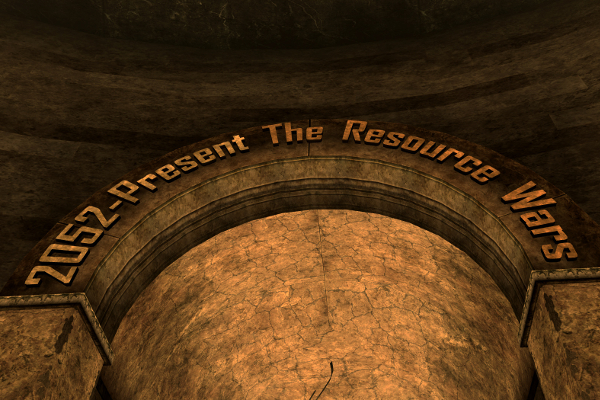
12. 2052: The Resource Wars Begin

There are plenty of points at which this timeline could start, but the official start of the Resource Wars feels most fitting. Leading up this conflict, the entire world was in turmoil due to a global fossil fuel shortage. The United States had already invaded Mexico for its oil supplies, while tensions between the European Commonwealth (Fallout history's equivalent to the EU) and the Middle East reached boiling point over the Middle East's skyrocketing oil prices. Eventually, Europe put its tanks where its figurative mouth was, and began a war that would go on for 15 years. In July of the same year, the United Nations collapsed after insurmountable internal disagreements, and at the end of the year, the first nuclear weapon of many in the war was fired, decimating the Israeli city of Tel Aviv.

11. 2054: US Government Commission Construction Of The Vaults

Vaults are a pretty big deal in Fallout, and not only provide a convenient starting point for three of the five canonical games in the series, but also reveal some dark truths about the kind of people who are in power in its universe. In 2054, the US government commissioned the Vault-Tec Corporation to build 122 Vaults around the country (which should guarantee us Fallout sequels for the next few hundred years). All the vaults were constructed by 2074, but when the bombs dropped in 2077, many of the Vaults sealed up before their assigned inhabitants reached them, because most of the population thought that the nuclear sirens were just another training drill (isn't the point of a drill that you do exactly what you'd do in the real situation?). Each vault was a habitable, self-sustaining environment that could hold up to 1000 people, and was filled with water purification systems, hydro-agricultural farms and defensive equipment. But the real purpose behind the vaults wasn't to save people, but to use them in a giant social experiment, the Societal Preservation Program. The vast majority of vaults were designed for inhumane or dystopian experiments. Vault 87, for example, was purposely infected with the Forced Evolutionary Virus (more on that later), Vault 92 was designed for the training of super soldiers, while Vault 112 - from Fallout 3 - plugged its inhabitants into an endless virtual reality simulator (controlled by a complete psychopath). The vaults were monitored and studied by Vault-Tec, and it was usually the vault's leader, or Overseer, who gathered the data for the US government (or Enclave, as it would come to be known after the nuclear war). The government believed that these experiments were crucial to understanding human behaviour in isolation, and would be vital in their attempts to re-colonise the country after the Great War.

10. 2066: China Invades Alaska

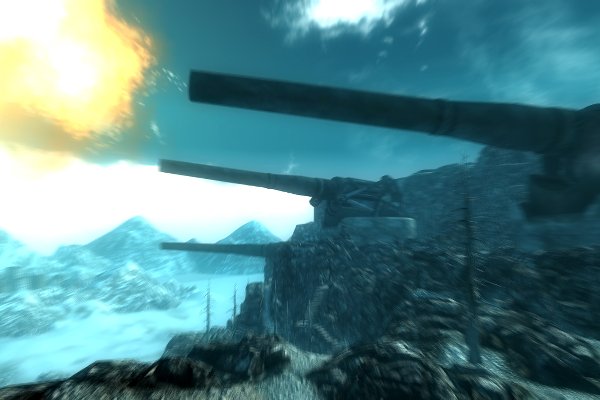
After years of global conflict with small exchanges, China cranked the Resource War up a notch by invading Alaska. Why would anyone want Alaska? Oil, lots and lots of it, which the US was refusing to sell to the Chinese due to dwindling supplies. The Anchorage Front Line, which the US established in Alaska to protect its oil interests, got pushed back, and an 11-year conflict over the precious Alaskan oil pipeline (you can take part in a simulated version of this battle in Fallout 3's Operation Anchorage DLC). During the decade-long battle, tensions escalated between Canada and the US, because Canada was reluctant to allow US troops through to defend the Alaska pipeline. Throughout the conflict, the US demanded more and more of Canada's resources, causing protests, riots, and an attempted attack by Canadian rebels on the Anchorage pipeline. Eventually, the US annexed Canada in 2076, causing further discontent and rioting in both countries.

9. 2073: Pan-Immunity Virion Project (PVP) Launches
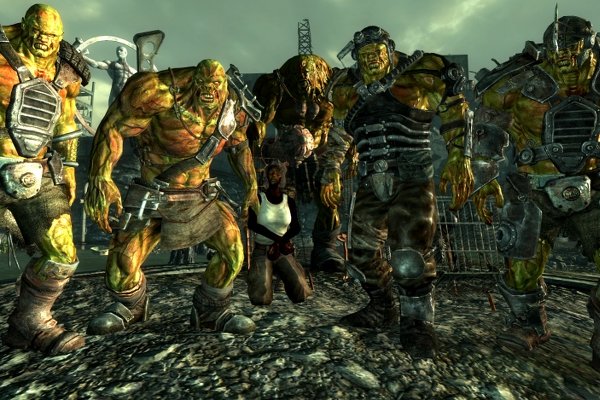
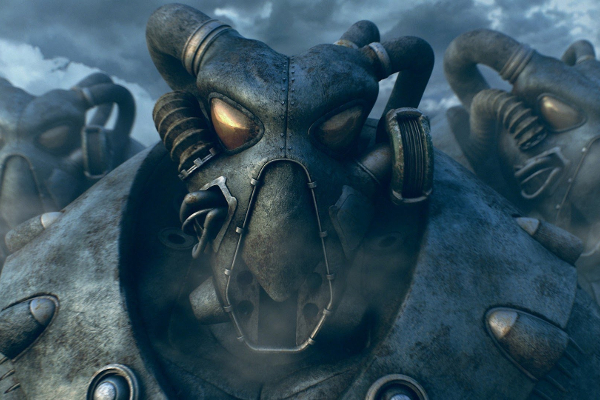
During the US' war with China, the government took on the services of military tech firm West Tek to develop an an antibody that would protect its soldiers against China's biological weapons (which previously caused the New Plague in 2052, responsible for the deaths of hundreds of thousands of Americans). The project was named the Pan-immunity Virion Project (PVP), and in 2075 it was discovered that the genetic tweaks were causing side-effects including increased brain activity and accelerated muscle growth in its subjects. The US Army saw the opportunity to militarise these side-effects for its war effort against China. They relocated the research facility to the Mariposa Military Base, and renamed it to the Forced Evolutionary Virus (FEV), a name that better reflects its effects of mutating humans into something more powerful. During this time, experiments on animals were carried out, leading to the creation of recogniseable wasteland monstrosities like floaters, centaurs and deathclaws. Eventually, the FEV was used by 'The Master', Richard Grey, to create even more powerful mutants, including everyone's favourite - the Super Mutants (pictured).

8. 2077: The Enclave Is Formed

The Enclave is a powerful organisation made up of descendants of presidents and other key political figures in the pre-apocalyptic US government, and features prominently in Fallout 1, 2 and 3 (and to a lesser extent in New Vegas, and probably/hopefully Fallout 4). Before the firing of the rockets that plunged the world into nuclear winter, the most powerful figures in the US government read the escalating political tensions and anticipated the impending conflict. They dispersed to various safe locations around the country, with the main group locating itself on the Poseidon Oil Rig - one of the world's most lucrative remaining oil reserves. After the Great War, these groups would come to be known as the Enclave. After the Great War, the Enclave re-emerged to try and re-establish governance of the US, while intending to eliminate mutants, wasteland wanderers, and just about anyone else who they deemed as irradiated and 'impure' from their envisioned society. With their influence, army, and scientists, the Enclave went on to become the most technologically advanced, powerful, and dangerous faction of post-nuclear America. Anyone who's played the Fallout games will be all too familiar with the Enclave's genocidal plots, inhumane experiments, and relentless drive to re-establish the American nation at a huge cost of human life.

7. 2077: The Great War Begins... And Ends

Brutal though war may be, it'd be better to get it over and done with in a couple of hours rather than drag it on for a tortuous number of years, right? Answers in a postcard. It's not likely that was the explicit thinking behind the apocalyptic Great War of 2077, but the result was the quickest and most destructive war in human history. The Enclave's President, Dick Richardson, tells the player in Fallout 2 that it was the Chinese who fired the first bombs, but this is never confirmed. A relatively minuscule number of US citizens made it into the Vaults on time, but the vast majority of the country's - and world's - population perished. The fallout from the bombs was so powerful that it turned the world into an unliveable desert for years, and the impact was so great that the planet's topography was forever altered, with entire mountain ranges emerging in the aftermath of the blasts. Some who hid out in makeshift bunkers managed to survive, but the radiation turned them into ghouls, who created their own communities on the surface while the Vaults remained shut for at least the next 20 years. The Great War destroyed the United States as a nation, leaving a power vacuum that the Enclave took upon itself to try and fill, attempting to reunite the country - albeit without any impure elements like vault-dwellers, ghouls, and pretty much anyone who didn't wear a suit and wasn't descended from an Ivy Leaguer.

6. 2077: The Brotherhood Of Steel Is Formed

Anyone who's played a previous Fallout game will have heard of these guys, and is probably emitting a silent cheer at the mention of their name. The Brotherhood of Steel was formed by US army captain Roger Maxson, who was assigned to provide security at the Mariposa Military Base, where experiments with FEV were being forcefully carried out on military prisoners. Appalled by what he saw at the base, Maxons effectively took over command of the base when his superior, Colonel Robert Spindel, committed suicide following a mental breakdown. Maxson executed the researchers behind the horrific experiments at the base, and declared his troops' desertion from the US army on 20th October, three days before the bombs dropped. Days after the Great War came and went, Maxson and his troops left Mariposa and headed for the Lost Hills underground bunker - a journey that would come to be known in Brotherhood of Steel lore as 'The Exodus'. The soldiers reunited with survivors from the area, and travelled for weeks to the Lost Hills, losing many people to raider ambushes along the way. Some time after arriving at the Lost Hills bunker, Maxson founded the Brotherhood of Steel, a group with the noble goal of rebuilding civilisation, although with the tendency to not welcome outsiders and not share its strong core of military technologies. The group extended its power across much of New California over the next 100 years, protecting inhabitants of the area from raiders, and asserting its dominance with military-grade weaponry and the iconic T51b power armour (pictured).

5. 2162: Brotherhood Campaign Against 'The Master' - (Fallout 1)

Finally, we arrive at the events of the first Fallout game, and need to tell that from here on in the list becomes spoiler central if you haven't played previous titles in the series. But it's all part of the canon leading up to Fallout 4, so it'd be remiss of me to ignore it. In October 2161, the Brotherhood of Steel encountered its biggest threat yet, in the form of an abnormal number of Super Mutants appearing in the New California area. In 2162, they were approached by the mysterious Vault Dweller (that's you in Fallout 1!), who warned the Brotherhood of Steel about the Super Mutant threat, and eventually earned their trust to become the first outsider allowed into the group in decades. With the Vault Dweller's help, the Brotherhood discovered that the Super Mutants were being created using FEV at the old Mariposa Research Facility, and were led by a mutated psychic super-being called 'The Master' (pictured). The Brotherhood and the Vault Dweller stormed The Master's facility, taking heavy casualties but eventually coming out victorious. The relative safety (by Fallout standards) of the New California area after that encouraged the formation of the New California Republic in 2189, a faction that would start out in the small town of Shady Sands, but would grow to be a leading power in west-coast America, and play a central role in the events of Fallout: New Vegas.

4. 2241: Enclave Oil Rig Gets Destroyed (Fallout 2)
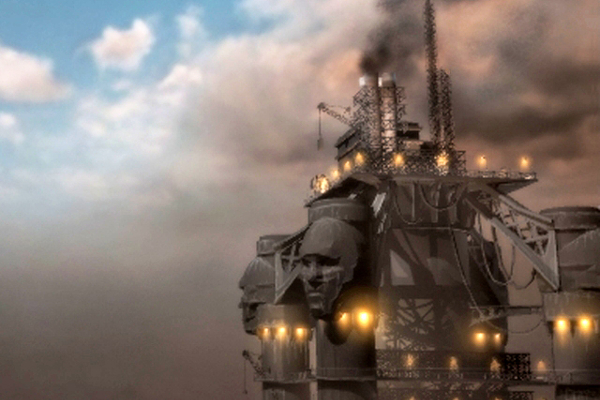
After defeating the Master, the Vault-Dweller convinced a group of inhabitants from his home, Vault 13, to head out into the wasteland and create a new life on the surface. The village of Arroyo was founded in 2167, and soon became a thriving tribal community. Arroyo continued to grow until 2241, when a terrible drought brought the village to the brink of extinction. The Village Elder (the Vault-Dweller's daughter) asked The Chosen One (the player, and the Village Elder's son) to seek out a Garden of Eden Creation Kit (GECK). These powerful devices are capable of regenerating vast swaths of desolate land and make them fertile again, and play a big part in many major events of the Fallout canon. While the Chosen One was out searching for the GECK, Arroyo was attacked by an Enclave force armed with powerful Vertibird aircraft, and its inhabitants were taken away to the Poseidon oil rig, to be experimented on with FEV. The Enclave had created an airborne strain of the virus designed to kill any 'impure' people, leaving alive only those with no radiation in their bodies. The Arroyo tribals were to be used as the 'impure' sample in the experiments, while the inhabitants of Vault 13 were to be the 'pure' sample. The Chosen One eventually destroyed the Enclave oil rig, killing its president and saving the hostages. This move all but wiped out the Enclave's presence on the west coast of America. During the Chosen One's mission, the Brotherhood of Steel came into its first conflicts with the Enclave too. Concerned by the Enclave's advanced technology and growing power, the Brotherhood sent the Chosen One to steal the Vertibird schematics for them. While the Chosen One succeeded in this mission, it's not known if the schematics ever made it back to the Brotherhood.

3. 2277: Brotherhood - Enclave War (Fallout 3)
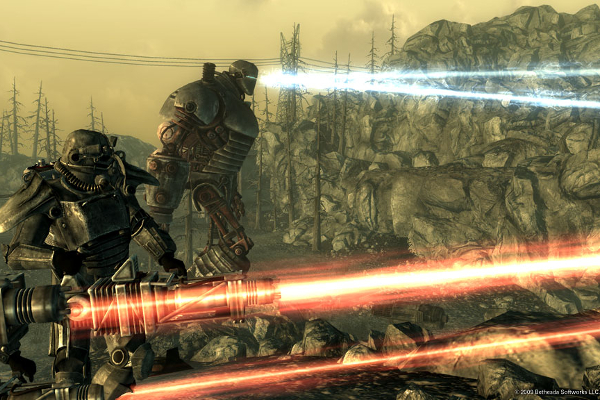
When the Lone Wanderer (the player in Fallout 3) emerged from Vault 101 to go in search of his father, he couldn't have predicted that he'd end up playing a key role in a war between the Brotherhood of Steel and the Enclave. The Wanderer's father, James, dedicated his life to Project Purity, an endeavour that aimed to provide pure water to the whole wasteland. The Enclave, a shadow of its former power but still influential on the east coast, was up to its old tricks, and tried to infect Project Purity with FEV, which would kill all mutants, ghouls and wastelanders. The Lone Wanderer thwarts this plan, and then joined the Brotherhood of Steel in an all-out assault on the Enclave, destroying the group as a major power in the wasteland.

2. 2281: One Of Many Possible Outcomes (Fallout: New Vegas)

Returning to the west coast of the US, and having much more in common with the lore of Fallouts 1 and 2 rather than 3, players control the Courier, who was left for dead after trying to deliver a package to New Vegas. The Courier gets saved and recovers, going in search of the mobster named Benny who nearly killed him. Along the way, the Courier gets caught up in a power struggle between the despotic Caesar's Legion, the New California Republic, and a robot army led by the mysterious leader of New Vegas, Mr. House. There are small hints of the player's actions in Fallout 3 on the world of New Vegas. Throughout the wasteland, you encounter remnants of the Enclave, many of whom arrived there after fleeing the DC Wasteland in Fallout 3. Devoid of power, they're no longer the menace they were in previous games, and you can enlist their support to fight for whichever faction you choose to support in the game. With the divergent possible endings in Fallout: New Vegas, it's not clear which one will be considered canonical. Given the pattern of the series, it's likely that in Fallout 4 the player will only see small hints of the events of New Vegas in the game, but it certainly won't be long before zealous lore hunters exploring the Boston wasteland will start piecing the connections together.

1. 22??: Whatever Happens In Fallout 4

Bethesda have done well in keeping their storyline cards close to their chest for Fallout 4, which means that just over two weeks before its release, we know precious little about the game's plot. What we do know is that it takes place '200 years' after the bombs dropped, but it's not clear if that means exactly 200 years, like Fallout 3, or whether it might be a few years later, like New Vegas. Given that every Fallout game up to this point has been released chronologically in the Fallout mythos, it's not likely that that will change for Fallout 4, and I'm among a majority who think it'll take place at the same time as, or just after, the events of Fallout: New Vegas. The player chooses whether they're the husband or wife in a family, that also has a son called Shaun. In the early trailers for Fallout 4, it's heavily implied that the player's husband/wife and son die in the nuclear blast. The player emerges from Vault 111 in the New England area known as the Commonwealth, after surviving for 200 years in the vault (possibly due to cryogenic preservation). The player's canonical name is the Sole Survivor, because they're the only person who survived an as-yet unknown disaster that occurred in Vault 111. And, well, that's really all we know about the Fallout 4 plot so far. Feel free to speculate on what it could entail based on all the info listed here; will the Enclave rise up again? Will the Brotherhood of Steel be someone you can side against for once? Will it tell us what really happened at the end of Fallout: New Vegas? Or maybe we shouldn't speculate on what will happen too much, and instead just head out to the Boston wasteland with a strong knowledge of the backstory, but also with the giddy excitement of not really knowing what to expect when Fallout 4 lands 10th November. Did we miss anything? Let us know in the comments, and please create an account if you'd like to contribute your own content!

Contributor
Contributor

Gamer, Researcher of strange things. I'm a writer-editor hybrid whose writings on video games, technology and movies can be found across the internet. I've even ventured into the realm of current affairs on occasion but, unable to face reality, have retreated into expatiating on things on screens instead.