15 Video Game Franchises That Tried Something Wildly Different (And Failed)
These video game franchises tried something completely different, but it didn't quite go to plan...

Creating a successful video game franchise is a tough task. Building a world and characters that players can become invested in, while carving out a specific style of gameplay that gives the whole thing a unique identity, takes years of refinement and cultivation from a developer.
Franchises like Dark Souls and Final Fantasy have built strong fan bases, with each of them known to be the absolute best-in-class for their specific genre. So when a developer occasionally takes a bold swing and moves a franchise in a completely different direction, this often catches fans by surprise. Sometimes, like when Yakuza became Like a Dragon and moved from beat-em-up to turn-based RPG, this can be just what the franchise needs to stay fresh and relevant, and it proves to be a masterstroke.
For these 15 entries, though, the shift in direction didn't have the desired effect, either alienating the fan base completely, proving to be commercially unsuccessful, or just moving too far away from all of the things that made it successful in the first place...
15. Bomberman: Act Zero

With his cutesy design and brightly coloured costume, Bomberman was an easily recognisable video game character in the 90s and 2000s. By then, the Bomberman series had developed a reputation as a colourful, family-friendly set of games perfect for multiplayer fun. The games featured a top down camera where players had to navigate maze-like arenas, using bombs and other power-ups to kill their opponents.
In 2006, the series was bizarrely rebooted as Bomberman: Act Zero. Gone was the cutesy, colourful tone. In its place was a gritty, sci-fi aesthetic that the studio was hoping would appeal to a more mature audience. At the time, games like Gears of War were all the craze, and developer Hudson Soft clearly felt it could get in on the act with this new look.
The core gameplay retained some familiar elements, but it took place in otherwise unrecognizable, bland industrial arenas. Bomberman himself was an unnamed cybernetic soldier, and his enemies were clones. The franchise's identity had been completely stripped away in an instant, leaving fans wondering what the heck the developers were thinking. Judging by the reaction of fans and critics after it was released, pretty much everybody agreed, these changes were not wanted or needed.
It came as no surprise when the next Bomberman game dropped the entire sci-fi aesthetic, and returned the series to its roots. Bomberman: Act Zero was written off as a one-off experiment which failed miserably, and today, fans of the series remember it as probably the darkest time in the franchise's history.
14. Banjo-Kazooie: Nuts & Bolts

In the late 90s, fans were being treated to what many consider to be the golden era of 3D platformers. Alongside the likes of Crash Bandicoot and Super Mario 64, Banjo-Kazooie was very much a part of that golden era. For many, it remains one of the N64's greatest games, with its visuals, gameplay, level design and soundtrack all receiving overwhelming praise.
A sequel, Banjo-Tooie, helped grow the franchise's reputation as one of the best in the platforming genre. Developer Rare's acquisition by Microsoft in 2002 delayed future sequels, but 6 years after the acquisition, a new Banjo-Kazooie game was released, titled Nuts & Bolts.
However, Nuts & Bolts can only really be called a platformer very loosely. Instead, the bulk of the gameplay sees players constructing custom vehicles from a wide range of different parts, in order to complete a series of objectives. Different objectives require different types of vehicles, and players have full autonomy over what they build. It was a fun, unusual concept, but it was not what fans of the series wanted at the time.
The game is still incredibly divisive to this day, and it was such a radical departure from what the series was known for, that it proved to alienate many fans. Some felt it was an interesting concept but should not have been linked with the Banjo IP, which subsequently never released another mainline game. Years later, there is still plenty of clamour for a proper sequel to the pair of platforming games. Whether that ever comes to fruition remains to be seen.
13. Metal Gear Survive

Hideo Kojima's infamous Metal Gear franchise is one of the most influential video game IPs of the 21st Century. Many modern stealth and action mechanics take their cues from the series in one way or another even to this day. After Kojima's much-publicised fall out with developer Konami in 2015, fans of the series were left wondering exactly what that meant for Metal Gear's future.
Konami's first foray into the series post-Kojima was a wildly different take that nobody saw coming. 2018 saw the release of Metal Gear Survive, a survival action adventure game that bears scarce few similarities with the other games in the series. Bland, uninteresting characters and a bizarre narrative, which sees a soldier travel to a parallel dimension where he encounters a strange virus that turns people into zombies, serve as the backdrop for the game which tasks players to spend the majority of their time scavenging for resources and fighting zombies.
Players have to manage their thirst and hunger as they explore the world, heal wounds using medical supplies, and even engage in tower defence segments in order to unlock fast travel points around the map. Doesn't exactly sound like vintage Metal Gear Solid does it? The bizarre shift in focus was jarring to say the least, and did little to quell fans' fears that Kojima's exit would damage the franchise's future. The game received a lukewarm reception, and was forgotten about almost as quickly as it appeared. It's rarely mentioned today at all.
12. Resident Evil 6

Resident Evil 6 is often remembered as being the black sheep of the family. Resident Evil 4 had reinvented the franchise for the modern audience, doing away with the fixed cameras in favour of a new over-the-shoulder perspective that influenced countless 3rd person shooters that came after it. This was followed by Resident Evil 5, which was noticeably less horror-focused, and more concerned with action.
Rightly or wrongly, Capcom believed that action was what fans were craving more than the series' original themes of tension and horror, so the developer decided to double down on this approach with Resident Evil 6. The game went all-in on action, pretty much doing away with horror entirely in favour of more guns and more explosions. The campaign is filled to the brim with waves of monsters to mow down with a wide assortment of weapons. Ammo scarcity is no longer an issue, with the series' well-known survival mechanics also finding themselves pushed into the background.
Many consider Resident Evil 6 to be the weakest of the series, and a complete betrayal of the franchise's identity. Capcom clearly heard the backlash, as the series went on a short hiatus after the sixth entry. The release of Resident Evil 7 saw a complete overhaul to the series, shifting the focus to first-person, and putting survival horror back at the forefront. Since then, Capcom has still attempted to find a balance between horror and action, and the game's most recent entries, including this year's Resident Evil 9: Requiem, have proved the developer has perfected its formula.
11. Fallout 76

Bethesda's post-apocalyptic Fallout series is one of the most popular RPG franchises on the market. The series has gradually evolved past its isometric roots into the more well-known FPS games that have become renowned for large open world maps, memorable NPCs and choice-driven gameplay that can impact the narrative in meaningful ways.
Fallout 4 was seen as something of a high point for the series, so many wondered how the formula could keep evolving. In 2018, the developer released Fallout 76, but its safe to say it didn't quite go down as well as past entries.
Instead of another single player story-driven RPG, Fallout 76 is an always-online multiplayer survival game. At launch, there were no human NPCs to interact with in the vast wasteland in which the game is set. Bethesda wanted the players themselves to be the inhabitants. This concept, though ambitiously optimistic, simply didn't align with what players wanted from a Fallout game.
The world felt empty. Without a narrative in the traditional sense, players felt rudderless, wandering around the desert without really knowing why they were there. Add in plenty of Bethesda's trademark bugs and glitches at launch, and it was a recipe for failure. The backlash was so bad, Bethesda was forced to backpedal, adding in human NPCs and a much more cohesive narrative in a DLC update.
Nowadays, Fallout 76 is a much better game. With numerous post-launch updates coming off the back of player feedback, Bethesda has shown it is much more in tune with its fan base. The franchise's popularity was not damaged at all with this blunder either, with an Amazon Prime TV series cementing its pop culture status.
10. Saints Row (2022)

After the release of Grand Theft Auto 3, plenty of copycat games started sprouting up in the early 2000s. Games like Mafia and True Crime: Streets of LA attempted to replicate the phenomenal success of Rockstar's groundbreaking title. When Saints Row was released in 2006, it attempted to put a far more satirical spin on things. As several sequels followed, the series turned into an over-the-top parody of GTA. By the time Saints Row IV came out in 2013, players were playing through missions where aliens invaded the white house without even batting an eyelid.
That 4th game signalled what many thought was the end of the series proper, aside from a couple of expansion DLCs that followed shortly after. Surprisingly though, a reboot simply titled Saints Row was released in 2022. Fans of the series were curiously eager to dive back into this whacky world where pretty much anything could happen, but when they played this new entry, they found it was a different beast entirely.
Gone were all of the series' fantastical elements like zombies or aliens. The bombastic costumes, weapons and cars were also nowhere to be found. Instead, the game presented a much more grounded open world, with run-of-the-mill characters, missions and stories. It was incredibly disappointing for legacy fans. It also exposed Saints Row's biggest weakness. Remove all of the bombastic elements, and what's left is a bland Grand Theft Auto clone devoid of its own identity. Fan and critical reception was poor, and the game's sales were so underwhelming that it subsequently led to Volition being closed down, and the series going on indefinite hiatus.
9. The Bureau: XCOM Declassified

In the late 90s, XCOM garnered a reputation as a solid tactical strategy series. Players were tasked with managing a squad of troops in turn-based combat, where every decision mattered. However, when The Bureau: XCOM Declassified was first unveiled in 2010, it seemed to be a complete departure from previous instalments. Instead of an isometric tactical turn-based game, fans found themselves looking at a first person shooter set in 1960s America. FPS-style gunplay and exploration replaced the tactical battles fans expected. The backlash towards the game's initial unveiling was swift and unanimous. To its credit, developer 2K Marin listened, and The Bureau: XCOM Declassified underwent several radical changes.
By the time the game actually launched, it was no longer an FPS. However, it wasn't a tactical turn-based game either. Instead, fans got something in between. A third person tactical shooter that retained some elements of the series' trademark squad-based mechanics. Unfortunately, this middle ground still ended up alienating plenty of fans. It wasn't a particularly compelling shooter, and it wasn't the tactical strategy game fans wanted either.
Thankfully, The Bureau: XCOM Declassified seemed to be a one-off experiment, and the developer moved to put things right with subsequent entries which were much more faithful to the original games.
8. Final Fantasy XVI

The Final Fantasy series is no stranger to change. In fact, arguably it reinvents itself with each new mainline entry. Its roots as a turn-based RPG haven't stopped developer Square Enix from constantly finding ways to evolve the series' combat. 2020's Final Fantasy 7 Remake managed to find what many feel was the perfect balance between real-time action and strategic combat that still kept an element of turn-based. With this being a remake, though, many expected the next mainline instalment to adopt a far more traditional approach. Enter Final Fantasy XVI.
The series' 16th mainline entry was a radical departure from classic RPG mechanics the series was known for. There's only 1 playable character, and no party members to equip or control. Exploration is almost non-existent, with the narrow, linear maps not allowing for detours. The combat offers no elements of turn-based mechanics whatsoever, making way for simplified real-time action. Series staples like status effects and MP are gone without a trace.
It was a bold move from Square Enix, but there's no doubt it was also a kick in the teeth for veteran fans. Despite reviewing relatively well, the game's sales underperformed compared to Square Enix's forecasts. While its not clear whether that's specifically because of the new approach, it remains to be seen exactly what this means for Final Fantasy XVII, and whether it returns to its RPG roots as many fans hope for.
7. Castlevania Judgement

Along with Metroid, Castlevania's unique blend of combat, platforming and exploration spawned a whole sub-genre known as the Metroidvania. Players would typically spend their time exploring 2D maps, fighting enemies and navigating tricky platforming segments. It's a formula that has produced some exceptional games like Hollow Knight in subsequent years, with countless Metroidvanias released year on year.
In 2008, Konami surprised fans by releasing Castlevania: Judgement, a fighting game that was a complete departure from any other Castlevania game ever released. The game had a couple of key things going against it right from the off, which meant it would have a tough time winning fans over.
Firstly, it was a Nintendo Wii exclusive. A strange decision for a fighting game, given the gimmicky nature of the Wii's remote, and this led to controls that were just as complex and unruly as many had feared. Secondly, Castlevania fans had no desire to see their beloved characters repurposed to try and compete with Tekken or Street Fighter. The new art style that the game introduced was also strongly condemned by fans and critics for being 'too Anime'.
The Castlevania: Judgement experiment can be considered a failure in pretty much every sense of the word. Konami did not attempt to follow it up with any subsequent fighting spin-offs, and this one was consigned to the history books never to be mentioned again by the series' devoted fans.
6. Crash Team Rumble

Bursting onto the scene in 1996, Crash Bandicoot quickly became a mascot for Sony's PlayStation. He starred in a series of colourful, challenging platforming games that appealed to a wide demographic. Like so many other mascots, Crash Bandicoot's success meant that he inevitably found his way into a plethora of sequels and spin-offs. Some of these were successful. 2001's Crash Team Racing, for example, saw the series briefly transition into an extremely fun cart racer. For the most part though, fans preferred Crash to be doing what he does best: smashing, jumping and belly-flopping his way through levels.
2020 saw the release of Crash Bandicoot 4: It's About Time, a proper sequel to the original 3 PS1 games from the 90s. This new sequel's success had fans excited about the future of the series, as there was clearly still a big appetite for Crash and his platforming adventures.
Instead, the next game would be Crash Team Rumble, a 4v4 online multiplayer game with a full live service model, in a big departure from what fans expected. Despite reviewing fairly well, fans found the game got boring extremely quickly thanks to the limited game modes, and the live service model was heavily criticized due to its pricing and grindy nature.
Post-launch support ended quickly due to the game's lacklustre player count. Today, the servers are still live, but the game's player base has significantly diminished. Many fans are hoping Crash Team Rumble was the series' only foray into the world of live service, with a return to traditional platforming the preferred route back to success.
5. Silent Hill: Book of Memories

Konami's survival horror series Silent Hill is considered among the best in the genre by many. Since its debut in 1999, the series has spawned multiple sequels, each of which has added something new to the mix, while never straying too far from the tried-and-tested survival horror formula. The series always preferred the 'less is more', psychological approach to horror.
In 2012, Konami released Silent Hill: Book of Memories for the PS Vita. Instead of the usual third person survival horror, the game was an isometric action RPG featuring hack and slash combat, randomly generated loot and dungeons, with optional co-op multiplayer and even some light RPG character progression elements.
It was so far away from what the series was known for, many fans felt it was a Silent Hill game in name only. It felt more like a standard action game that had Silent Hill slapped on the cover. There was no tension, no atmosphere, and certainly no psychological horror. You simply fought a bunch of enemies, gaining experience points and looking for better equipment.
Book of Memories was shunned by Silent Hill fans worldwide. Nobody asked for this, and while it was a half-decent dungeon crawler in its own right, it just didn't seem to belong in the franchise whatsoever. Following the game's poor reception, Silent Hill quickly returned to its survival horror strengths, and hasn't looked back since.
4. Mortal Kombat: Special Forces
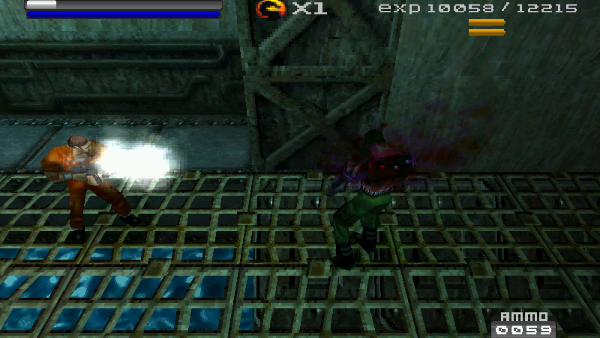
Since first launching in 1992, Mortal Kombat has become one of the most successful fighting game franchises in history. Its success has spawned multiple sequels, reboots, spin-offs, TV series, and movies. With the IP seeping into various mediums and becoming a part of 90s pop culture, it was inevitable that not every venture would be successful.
Perhaps the biggest example of this is Mortal Kombat: Special Forces. Released in 2000, Special Forces is a third person action adventure game, a radical departure from the series' fighting game origins. It focuses on US Army Major Jax Briggs, a playable character from the games, as he pursues another series regular, the criminal Kano.
Jax uses a variety of weapons, explosives, and even his fists as he takes on waves of enemies, making his way through linear levels. The game's rocky development journey led to several aspects, such as Sonia Blade being a playable character, being cut. A discounted price at launch did not help the poor reception the game received.
Clunky controls, repetitive level design and combat, and technical issues helped to ensure that Special Forces is considered among the worst Mortal Kombat games ever. Other spin-offs did follow, but the failure of this one definitely stung Midway. When Mortal Kombat did eventually try its hand at third person action again with 2005's Shaolin Monks, Midway had clearly learned some valuable lessons, as that title proved to be far more successful.
3. Tony Hawk: RIDE

Ask anyone who owned a PlayStation in the early 2000s who Tony Hawk is, and you will invoke a sweeping sense of nostalgia that may see them dusting down an old skateboard from the garage. Such was the significance of this series, it had kids and adolescents taking to the streets trying (and failing) to replicate their in-game tricks.
After multiple successful sequels, the franchise went in a wild new direction with 2009's Tony Hawk: RIDE. The game came bundled with a skateboard peripheral, which was compulsory. This skateboard came equipped with infra-red sensors which detected motion and shifts in body weight, allowing players to actually feel like they are performing the on-screen tricks on their own skateboard.
On paper this was an incredibly cool concept. The problem was that in reality, it just didn't work how it was supposed to. Broadly, the skateboard itself was unresponsive, tricks were tough to perform, and even basic actions were made to be far more frustrating than they were supposed to be. A series that was known for its precise, tight controls had all of a sudden been flipped completely on its head.
Despite an ill-fated sequel titled Tony Hawk: Shred releasing a year later, the whole skateboard peripheral concept was quietly abandoned by the series' publisher, Activision, and the franchise returned to its tried-and-tested formula in subsequent entries.
2. Dino Crisis 3

Capcom's Dino Crisis quickly built a cult following upon its release in 1999. Known as Resident Evil with dinosaurs, the game combined Resident Evil's trademark camera and control scheme with a new threat- prehistoric dinosaurs on the rampage. It was scary, atmospheric and full of tension, so it came as no surprise when a sequel followed the year after.
The sequel leaned much heavier into action, but it was still a critical and commercial success, and it felt like the franchise was going from strength to strength. Then, in 2003, along came Dino Crisis 3, the game that single-handedly derailed the entire franchise.
An Xbox exclusive, Dino Crisis 3 is still an action game at its core, and players still fight against dinosaurs. This time though, the action bizarrely takes place 500 years into the future, aboard a space station. The dinosaurs themselves have been cloned and mutated from various DNA strands, and players must battle their way through the station, which also doubles as a giant puzzle they must solve.
It felt like an awfully strange decision for the series. Coupled with the character's rapid movement speed being completely offset by the game's camera, and frustrating controls and mechanics, the game failed to live up to its predecessors. Even more disappointing than the game itself was the fact that its failure meant fans never got to see a Dino Crisis 4. Capcom has recently revived a couple of its dormat IPs like Onimusha, however, so fans will be praying there is still hope of a sequel.
1. Fable: The Journey

There's no doubt that the action RPG series Fable has proved to be one of Xbox's most successful IPs since its debut in 2004. Player choice and freedom have always been the series' standout elements, and, mixed with decent melee and ranged combat, it quickly became a fan favourite.
By the time 2012 came along, Fable had already spawned two mainline sequels, with fans excited for more. Around this time, Xbox was beginning to heavily market its Kinect peripheral, and was looking to involve as many of its major franchises with the motion sensor device as possible. Developer Lionhead Studios subsequently released Fable: The Journey, a Kinect exclusive that raised more than a few eyebrows.
The game is essentially a first person, on rails shooter, that feels more like a Kinect showcase than an actual entry in the Fable franchise. Players travel through Albion in a horse and cart, using the Kinect's motion controls to perform actions like steering, casting spells and interacting with the environment. There's no exploration or RPG mechanics whatsoever. Many of the franchise's fans felt it was completely disassociated with everything they loved about Fable.
Fable: The Journey ultimately failed to live up to the high standards the series had set for itself. It felt like an unnecessary gimmick. It did little to push the franchise forward, and proved to be the last game the series would release other than a remaster of the original. Until 2027's impressive looking reboot, of course, which many fans are hoping will drag the Fable IP back into the spotlight.