PlayStation VR Review: 8 Early Reactions You Need To Know
Is it worth half a grand? Well...
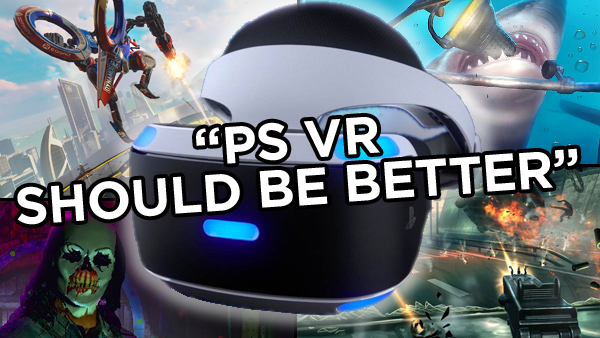
At this stage you've probably heard countless, "VR is upon us! The future is here!"-type soundbites reverberating around the techno-sphere, but until now (or rather, October 13th, which is the street date), such things were resigned to those who owned high-end PCs and fancy hardware configurations.
Sony are aiming to change that with the PlayStation VR; a headset that works with the standard PS4, the Slim, and eventually, the PS4 Pro. It means that for half the price of something like Valve's VIVE headset, you can jack into everything from Gotham City as Batman, to scaring yourself silly whilst exploring a mansion in Resident Evil 7.
At least, that's the pitch.
The reality is by no means virtual, as with the embargo lifted, tons of outlets are posting their thoughts on Sony's 'revolutionary' headset, and although they skew towards positivity overall, reveal a handful of important negative factors that need to be addressed.
After all, PS VR is ostensibly a new console, and if you're dropping shy of half a grand, there are a handful of things you need to keep in mind.
--
8. The Price Is Misleading
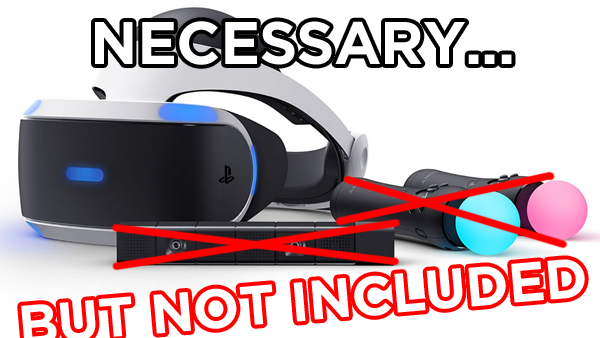
"PS VR costs £349 in the UK, making it cheaper than either of its competitors, the Oculus Rift (£499) and HTC Vive (£689), although that initial price doesn't take into account either the accessories needed or the hardware required to run it." - Katharine Byrne, Expert Reviews.
Something that's being slightly skirted over - despite it being incredibly important - is that forking out the base cash for a PS VR doesn't actually mean it works out the box.
Why? Because you need an additional PlayStation Camera. No joke, the system won't even function without one, as if the Camera can't track your headset, all you're left with is a black screen. You can hear the outcries from Christmas morning from here.
So to clarify, throwing down $400 gets you the PS VR headset and all its required cables, but it doesn't come with a PS Camera, which is an additional $50. Many launch titles also need a pair of PlayStation Move controllers (which launched back in 2010), setting you back another $70-$80.
So in total, the PS VR doesn't really cost what it's advertised as. Even if you can track down a bundle deal that'll get you everything in one go, sadly there's no way to "Enjoy virtual reality for just $400!".
7. The Screen's Resolution Is Permanently Blurry

"The PSVR's graphical fidelity is occasionally noticeably lower than what's possible with HTC Vive and Oculus Rift." - CNET
"The thing with every VR headset right now, anybody who's new to VR puts [them] on and thinks it's a little bit blurry because they're used to crisp 1080p or 4K displays. Even though that is in there, because it's spread over such a wide field of view, it's not gonna look pixel perfect, it is gonna look blurry no matter what headset you wear. This is pretty much comparable in terms of visual fidelity with [Oculus & VIVE]." - Tested.
Thanks to Sony opting to pitch PS VR as the more "affordable" version of a technology that's very much in its infancy (and therefore, rather pricey), some corners had to be cut.
One of the biggest (and something that caught me off guard when playing Batman: Arkham VR) is that the screen's resolution is half of that present on the Oculus or VIVE. It results in a noticeably blurry image should you choose to focus on anything, and for me at least, resulted in the constant feeling that everything needed to be re-calibrated.
Sadly, this is just the reality of VR gaming, especially on a system that's the cheapest of the three available. The reality is, you won't notice such things when the events onscreen kick in and you're free to get immersed in flinging Batarangs and bullets around the room, but for every other instance of anything from standing still to reading text, well, it's quite off-putting, to say the least.
6. 90% Of The Games Are Geared Towards Being "Experiences"

You can expect a ton of commentary to emerge from this talking point: How do the likes of Sony, Valve, Oculus etc. teach the masses how to use VR, how to control it?
We're not talking about the introduction of analogue sticks or vibration here, many experiences such as piloting a character around a map in Overwatch, for example, are incredibly jarring in VR. As such, you'll get a demo disc with the PS VR made up of a number of different, shorter experiences.
Even the set-piece filled, "barely a game" (according to Gamespot) Batman: Arkham VR can be clocked in an hour, and that's a separate, standalone title. The assumption is that across the industry, developers are creating games that sell the immersive factors of PS VR, as oppose to releasing something like Call of Duty VR, as I, you, we, literally couldn't handle it.
We need to become accustomed to what it feels like to get lost in a virtual world for any 'risks' to be taken in game design. To that end, only the likes of Battlezone are fully-priced (and Resident Evil 7 is on the horizon, sans its demo), as the vast majority of what's on offer feels like the 'Wii Sports' approach to showcasing technology.
5. You Can Experience A 226 Inch "Cinema Mode" For Movies And Old Games
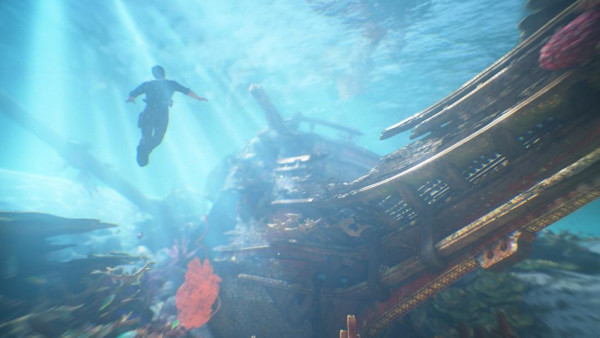
"It’s as if you’re playing your PS4 on a 163in projector in an otherwise entirely pitch black room. It’s immediately pretty awesome."
"It is worth pointing out, though, that resolution is compromised when you’re in Cinematic Mode, and your movies, games and menus look a lot less sharp and more jaggy when you play them through the headset rather than a TV." - Tom Parsons, Stuff.tv.
Whilst Sony needed some fallback reasoning to say, "Hey, this will enhance your old games too!", the much -discussed 'Cinema Mode' is both brilliant and immediately limiting.
On the one hand, it can take your basic PS4's screen and amplify whatever you're doing - be it a movie, game etc. - up onto a whopping 226 inch, projected screen.
On the other, as mentioned the PS VR's resolution is noticeably blurry, meaning even 1080p movies and games get reduced in quality. This probably won't be a factor if you're rollicking through the jungle as Nathan Drake, but when it comes to just sitting and watching a movie, chances are you'll notice everything looks like it's caked in a thin layer of vaseline.
Still... 'Star Wars on the big screen' without leaving your house?
F**k.YES.
4. The PS Camera Can Lose Track Of You Very Easily
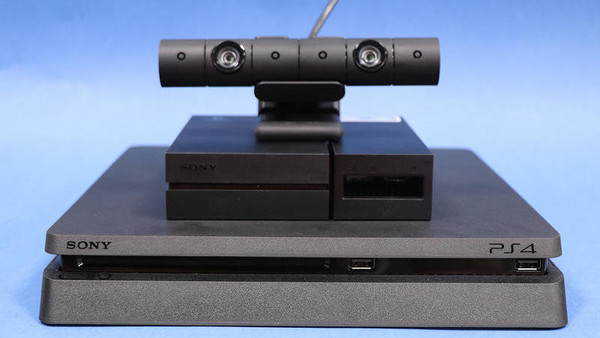
"[PS VR] knows what you’re looking at in the virtual world by using the camera to monitor the positioning of the headset’s blue lights in the real world. This obviously means that you need to be in a position that the camera can reliably see you.
The official guidelines say that you need to be at least 2ft from the camera and no more than 9.6ft away, and that you’ve got about 1.9m of width to play with. It’s a bit too easy to stretch beyond the camera’s vision and find something's out of your reach. It doesn’t happen all of the time, but when it does, it shatters the illusion created by an otherwise all-consuming virtual world." - Tom Parsons, Stuff.tv.
"The tracking leaves much to be desired [...] First you could have the controllers in front of you, and they could be jittering and moving around, off from where your actual hands are. They're often pointing slightly wrong, or they're in a different position." - Tested.
Apologies for the amount of negative points contained within this writeup, but in many respects, once you get past the whole "Holy sh*t, it's like I'm there" reaction stuff, these are what come back around, especially considering the amount of money you'll be investing. Just ask someone with a 3D TV...
Without going so far as to compare the PS VR to Microsoft's disastrous Kinect, this launch window and footage that comes alongside is invaluable. Where the Kinect's first few weeks were dogged my the hardware refusing to acknowledge users, so to are tons of livestreams showing users attempt to get their PS VR's calibrated, only for nothing but a black screen to pop up instead.
It's entirely probable that you could semi-naturally develop the ability to subconsciously prevent yourself from venturing out of the camera's line of sight over time, but for every time a great big "You've left the area/OUT OF RANGE" prompt appears, it's disastrous.
To be clear: the PS Camera tracks the lights on the PS VR's head to know where you are. Obscure them or turn away too fast/much, and it immediately halts everything.
3. It Might Make You Very Sick
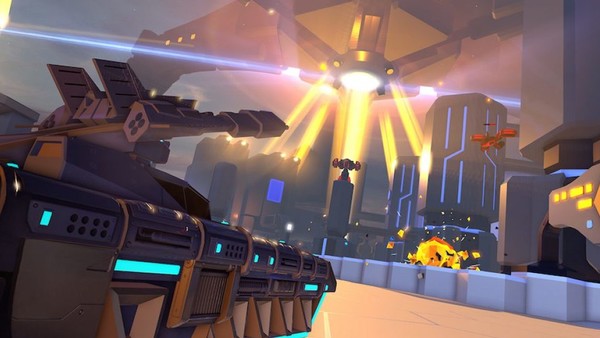
"While playing faster titles that feature a lot of movement, including Battlezone and the multiplayer vehicle combat game RIGS, nausea is more likely, especially in long play sessions. We did experience motion sickness after playing Battlezone for an hour, but were unable to repeat the sensation the following evening, despite trying extremely hard by making lots of erratic movements in the game world." - Keith Stuart, The Guardian.
"The kind of smooth analog-stick-driven movement that shows you moving from point A to point B in a non-VR game like Call of Duty or Overwatch can be nauseating in VR, especially if you’re walking in one direction while turning to look in another. Your inner ear gets confused and virtual reality sickness quickly sets in." - Stephen Totilo, Kotaku.
It won't be until the general public have access to PS VR for a good length of time that we'll really get some statistics on the ratio of people affected, but scouring early reports online lead to all manner of things including motion sickness, and a general sensation of wooziness and nausea when 'returning to the real world'.
Copious testing was of course carried out on the PS VR to nail a forced refresh rate of 120Hz (120 frames per second), in theory leading to no latency and semi-guaranteeing just moving through 3D space won't make you queazy. It's possible the amount of people that are still affected is akin to those who need to sit for a moment after a particularly intense bout of Halo, but it's something to be weary of.
To be honest, older gamers will remember the "Don't play for longer than 30 minutes!" warnings that came with the original analogue stick controllers, and it's not like we didn't acclimatise to that sensation over time.
Still, PS VR is by all accounts a 'whole new way to play'. You need to acclimatise yourself to everything from what general movement feels like, to how to use a controller in tandem with your own actions. Moving too much too fast or too sudden, will only result in the need to take a break.
2. It's VERY Easy To Damage The Lenses
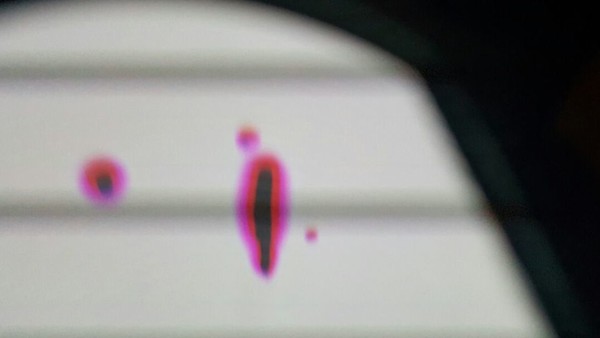
"Use and store your PSVR in a place where sunlight isn't an issue. The lenses will collect sunlight and each will focus it on a single point or line, and will very quickly damage your display. This has happened to people with the Rift DK1, DK2, CV1, and the Vive in the past. It's definitely not something to ignore.
It's bad enough when a normal display has a little burn mark, but in a VR HMD it's catastrophic. It sits in front of your face and doesn't move, and is enlarged because of the lens magnification." - FrothyWhenAgitated, Reddit
Shout out to the above Redditor, who popped up to clarify that leaving the PS VR (and any VR headset) in direct sunlight will actually damage it significantly.
It sounds like the kind of issue a reviewer could easily miss as they're testing out the headset regularly, as oppose to factoring in the reality of living with new hardware, and the storage requirements that come later. You'll most likely be using your PS VR in a living room to account for the sheer space required for it to function - which is also where sunlight can get to it very easily.
No doubt a ton of third-party companies will emerge with all sorts of storage cases and ways to mount your PS VR when it's not in use - but for now, be very aware of what could be one of the PS VR's biggest negatives.
1. You'll Probably Need A PS4 Pro Eventually, But This Totally Works For Now

"It is frustratingly held back by outdated hardware that can’t quite do what’s being asked of it [...] I’ve also been disappointed. Sony’s lovely, well designed headset is consistently undermined by inferior motion controllers, an underpowered console, and a lackluster camera." - Kirk Hamilton, Kotaku.
"The PS Move came out for the PS3 in 2010. It’s now six years old. The PlayStation camera came out in 2013. I understand why Sony would use existing controllers and cameras rather than developing and releasing much more expensive new ones, but the compromise they’ve made is evident in almost every moment of every game." - Stephen Totilo, Kotaku.
"Playstation VR is VR for people who don’t care about having the best system in the world - they just want to have a good damn experience. It’s actually fun, which despite the lofty ideas spouted by technologists, is what playing games is all about." - Alex Cranz, Gizmodo.
Yes, despite Sony being adamant that the PS4 Pro wouldn't offer "any exclusive features", VR functionality is clearly geared towards the future, and the increased processing kick the Pro can provide.
Case in point: The ludicrous amount of wires and additional hardware you need to get the PS VR off the ground. A small Processor Unit sits between your PS4 and the TV, and it's one that needs to run a bevy of cables between the two.
This means you've always got one USB cable hanging out the front of the system, but hey, wouldn't you know it, the PS4 Pro has a rear USB port! Almost as if the PS VR would fit more snugly with that system.
Couple the inevitability of Sony embracing this extra power to deliver better VR experiences with the fact that every aspect of the VR's setup other than the headset itself is drastically outdated, and you can guaran-damn-tee there'll be a revamped "all in" version of this stuff in the next couple of years.
To conclude, PS VR is a fun first step for mainstream-level VR, but one that requires a TON of managing expectations. You thought No Man's Sky didn't deliver? The PS VR certainly isn't in the same ballpark... provided you know what to expect.
--
Let us know in the comments if you're still planning on picking one up, as well as where you sit on the VR hype train!