20 LAZIEST Video Game Re-Releases They Thought You'd Buy
When developers churn out the same old games, you'd better hope you didn't pre-order them.

Much like movie reboots and remakes, every year video game developers and studios inundate us with re-releases of old video games. Some purport to remaster the original games, others claim to entirely remake them, and some just keep quiet, hoping we won’t notice. Well, guess what? We do.
While there are plenty of re-releases worth your time, energy and loot, there are many more that are, at their core, just pure lazy. When studios run out of ideas or need a quick cash injection, they punt one of these through the system and expect you to snap it up. Sometimes you prove them right, and sometimes you throw it back in their faces and let them collapse under the weight of their own idleness.
These aren't games that are necessarily worse than the original – and, in many cases, they are actually a bit better. But they are all low-effort, disappointing and not at all what we expect. And hey, a few of these have genuinely started out as an attempt to bring a video game from previous generations onto current gen consoles in a good way – but the end result is what counts.
Whatever the case, these are 20 video game re-releases they thought you'd buy. But did you?
20. Super Mario 3D All-Stars (2021)

Super Mario is one of the longest-running game franchises today and one of the most commercially successful, penetrating the culture across generations and remaining relevant to gamers for four decades. Part of Nintendo’s ability to capture such an audience over this timespan has of course been the endless merchandising, but also the company’s interest in innovating and expanding upon their Mario offerings.
As such, when a new title drops, gamers flock in their millions to grab it – without even reading the back of the box first. This was certainly the case for Super Mario 3D All-Stars, commemorating the 35th anniversary of the little Italian plumber back in 2021. Gathering together Super Marios 64, Sunshine and Galaxy for the first time in high-definition on the Switch, it seemed like a no-brainer. And it was, just not in the way you think.
Nintendo updated the graphics and the controls, and then decided that was pretty much all that was needed. The games are straight ports of the originals, with no meaningful extras or additional content. To make matters worse, the release was time limited, with both the physical and digital versions on sale for just six months, and this kind of pressure selling makes the laziness of the port even more insulting. Sure, if all you wanted was to play the games on a modern console, maybe this was enough, but to fans of the franchise who still had and played the original games this was fifty quid spaffed up the wall.
19. Metal Gear Solid Delta: Snake Eater (2025)
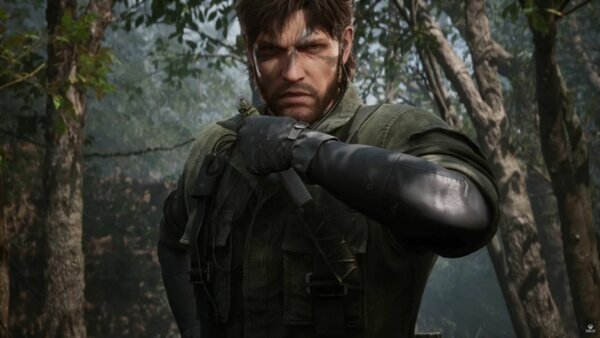
Metal Gear Solid remains one of the most revered video game franchises, despite having not put out a proper, main series title since 2015. The story of quite a many undercover, extra-legal operatives named Snake has enticed generations of players with its constantly developing array of stealth and action gaming features and mechanics.
With a wealth of prior games to choose from, it must have been tough for Konami to select which to give a full-works overhaul to in these last few years. And they opted for Metal Gear Solid 3: Snake Eater, which (don’t believe its lies) is actually the fifth entry in the franchise. Yay?
Now, we don’t dislike the game. Far from it. Not least because it’s the closest we’ve come to some proper new MGS action in a good long while, since the incomparable The Phantom Pain bowed out, leaving only Metal Gear Survive in its wake. But we expected our next journey with Snake to be breathtaking, not just good enough. There is no getting away from the fact that Metal Gear Solid Delta: Snake Eater was only half an effort, with up-to-date graphics, gameplay and features (like permanent scarring), but tacking so close to the original that there has been little to make it really stand out from the crowd.
18. Angry Birds Trilogy (2012)
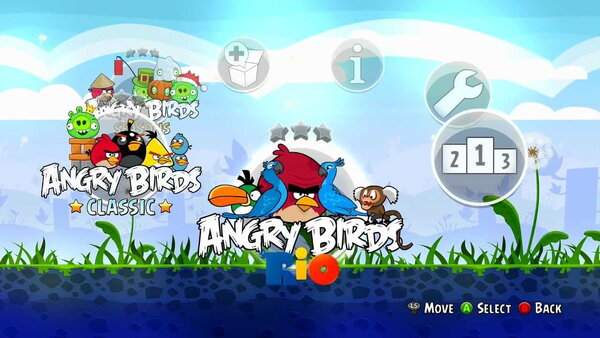
Back in the early 2010s, Angry Birds was the go-to mobile game. The simplicity of launching different sized birds at pigs somehow captured phone users globally, and generated an international empire for the IP, including branded tie-ins with Star Wars and Friends, animated series spin-offs and major console versions.
Enter Angry Birds Trilogy, collecting the first three of Rovio’s games in the franchise (Angry Birds, Seasons and Rio), and launching them onto the Nintendo 3DS, PlayStation 3 and Xbox 360, with subsequent ports for the Wii and PS Vita. Given the console price tag, the game would have to be something special to justify forking out thirty pounds for something that cost just a few quid on your phone.
Even though developers Exient Entertainment and Housemarque built the game fresh rather just porting it from mobile, they failed to understand what was needed for a strong, full-effort console release. Sure, there were 19 new levels, but when there are 600+ in total to play, this was a drop in the ocean. There was no serious attempt to create a larger narrative, make more expansive use of the processing power consoles had to offer, or indeed add new features (3D play, for example) that would have justified the release.
17. Marvel Ultimate Alliance (2016)
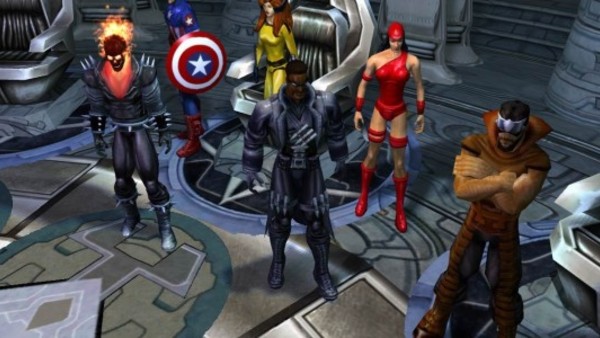
If there ever was a natural successor to the disappointingly short-lived, team-based, action RPG X-Men Legends games, it is Marvel: Ultimate Alliance. Originally released on the PlayStation 2, Xbox and Xbox 360, Ultimate Alliance expanded the roster beyond just the mutants, affording us the opportunity to round up the comic book franchise’s icons in a single unit – including Black Panther, Ghost Rider, Spider-Man and Thor – long before the MCU was even a twinkle in Kevin Feige’s eye.
The game enjoyed a substantial shelf-life, making it to the PlayStation Portable, Windows, Game Boy Advance, PlayStation 3 and Wii before its sequel stole the limelight in 2009. Who, then, would say no to a modern re-release for the iconic game on eighth generation consoles?
And that’s exactly what we got in 2016, with a release for PlayStation 4 and Xbox One. At around thirty pounds, this seemed a small price to pay to jump into the action again with a whole new set of skills, maybe additional characters, MCU-relevant features, etcetera. Sad to say that was wishy thinking, because the digital-only release was merely a straight port by developer Zoë Mode. No frills, no thrills, no extras. And to add insult to injury, this release hit just before the Marvel license expired, and was promptly delisted.
16. Horizon Zero Dawn Remastered (2024)

Post-apocalyptic action RPG Horizon Zero Dawn put Guerrilla Games back on the map in 2017. With a story following a young huntress with spears and bows fighting machines creatures, it combined the kind of primitive action found in games like Far Cry Primal with the apocalypse survival scenarios of the likes of Fallout or The Last of Us.
The game’s combination of stealth, action, a large open world environment and intuitive skill trees made it a stand-out game of not just the year but the decade. Now, for such a recent game, it was admittedly surprising to get a remastered release as soon as 2024. And it’s not difficult to see why.
At the time of release, the game was already available on the PlayStation 5, so the remaster was going to have to go some to make it worthwhile. And no prizes for guessing that it didn’t. Sure, certain gameplay options and features were brought in from the sequel Forbidden West, and the graphics, animations and character designs were touched up, but by and large the game is the same, and this just feels like they expected us to buy the same title, for the same console, twice.
15. Warcraft III Reforged (2020)

It has been many years now since Fortnite stole the crown and knocked World of Warcraft from its seemingly unbreachable position as the most successful and popular massive multiplayer online game of all time. And yet, the now three decades old Warcraft franchise is still massive by anyone’s measure.
It made sense, then, to resurrect one of the series beloved earlier titles for this generation. Enter Warcraft III: Reforged, a game that promised to bring together Warcraft III: Reign of Chaos and its expansion The Frozen Throne in an all-new package. New graphics, remodelled characters, bringing gameplay into the modern era and carefully restoring a classic.
Somehow though, developer Blizzard absolutely gubbed it. Despite several delays supposedly for fine-tuning, the game released with cutscenes and other features seen in marketing materials nowhere to be found. The game was buggy as all heck, crashed often and had pared down features from the 2002 original. Lazy doesn’t even cut it.
And, yes, maybe you bought it, but given Blizzard wound up in a position of offering full refunds for players in February 2020 (just one month after release), that money probably didn’t leave your account for long.
14. Star Wars Battlefront Collection (2024)
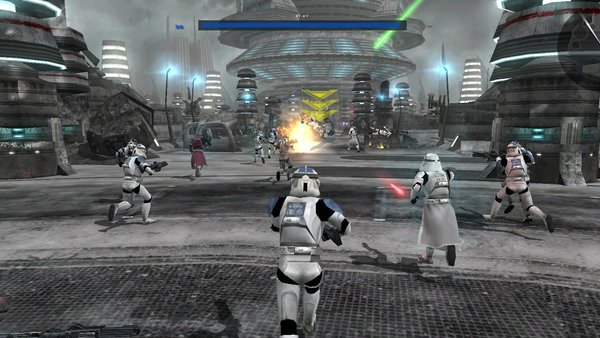
Many moons before the loot crate/DLC nightmare of modern Battlefront, there were two sixth-generation games that changed the landscape of Star Wars gaming forever. 2004’s Battlefront and its 2005 sequel Battlefront II gave us the opportunity to drop into the action on all of the major battles of the original saga, fighting as the CIS, Republic, Rebels and Empire on Naboo, Tatooine, Hoth, Endor and just about everywhere else in that galaxy far, far away.
And, despite those aforementioned modern Battlefront games, anyone who played the originals waited a long time for them to make their debut on eighth and ninth generation consoles. But make their debut they did, with an announcement of the Battlefront Collection in February 2024, before releasing in March.
Now, while all of us appreciate the appearance of these games on modern hardware, the re-release itself was far from ideal. Developer Aspyr rolled the two games into a single bundle and added Kit Fisto and Asajj Ventress to the roster, plus a couple of bonus maps, but this is about all the effort they could muster. The game dropped with innumerable issues and glitches; the controls had outdated mapping and cumbersome features; four-player splitscreen was a thing of the past; etcetera. In all, the game was more of a bog standard port than a worthy update, and you were just as well dragging out the old CRT TV, SCART cable and PS2.
We'll get 'em next time.
13. Final Fantasy Crystal Chronicles Remastered (2020)
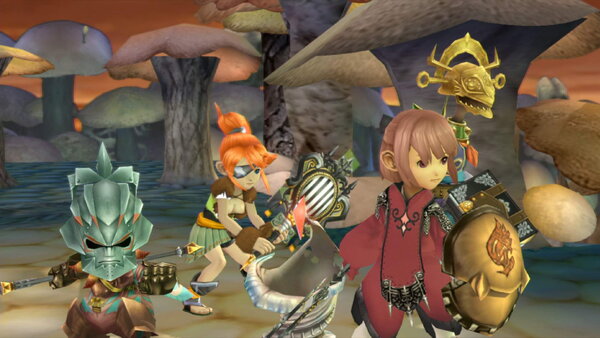
Square Enix’s Final Fantasy is one of the most successful game series of all time, with many different strands and jewels in its crown. One of the more minor jewels is the dungeon crawler Crystal Chronicles series, which toiled away in the shadow of the main series and released onto only Nintendo hardware between 2003 and 2010.
Diehards held a candle for the Crystal Chronicles for years, long after sixth game The Crystal Bearers closed out the series, and finally, a decade later, their cries were answered. Final Fantasy Crystal Chronicles: Remastered Edition touched down on the Nintendo Switch, PlayStation 4, Android and iOS in 2020, with boosted graphics, new music arrangements, thirteen new dungeons, cross-platform multiplayer and a promise of around half the game having been completely remade.
This sounds like a lot of work went into it, but if you spent the money and expected something more, you were sorely disappointed. Most of the changes or updates turned out to be minimal, and the development team actually made some things worse, including not bothering to include local multiplayer, and the online co-op that was included was buggy with, amongst other issues, progress only counting for one player. Given how much this game was always geared towards multiplayer, this was not the thing to slack on…
12. Silent Hill HD Collection (2012)

Along with Resident Evil, Silent Hill is one of the most recognisable horror franchises in gaming. Konami’s iconic series finds various protagonists drawn to the titular monster-town, where they must fight to survive while solving puzzles and uncovering their mysterious connections to the place, and the town’s own secrets in the process.
And in 2012 Hijinx Studios gave PlayStation 3 and Xbox 360 players the chance to experience Silent Hill again. Well, kinda…
Contrary to what the title suggests, the Silent Hill HD Collection was just the second and third games from Konami’s original run, excluding four other main games from the series. And that would have been okay, because Homecoming was already available for this generation of console, and getting the chance to play just two of the others with fresh graphics and in crystal clear definition was better than none at all – or at least that’s what Hijinx banked on players thinking.
In practice, the quality of the so-called HD Collection was sloppy and lackadaisical, with comparisons to the originals often proving it greatly inferior. They fumbled the textures (the fog, the fog!), took a scattershot approach to sounds and voices, and didn’t iron out bugs so crashing and freezing became common and expected. Thankfully though, few enough people actually bought it to justify Hijinx ever leading a game’s development again.
11. Star Wars Episode I Racer (2020)
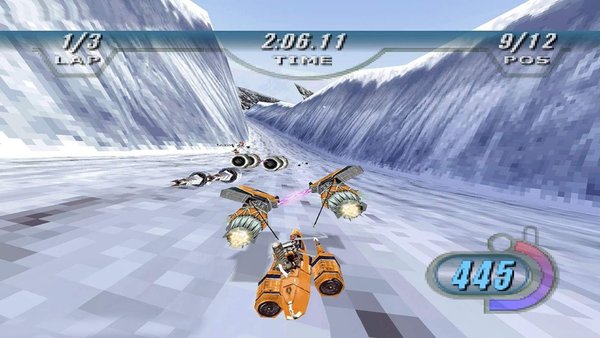
To this day, Star Wars Episode I Racer is still not just the best podracing game, but the best Star Wars racing game out there. Playing as Anakin Skywalker, Sebulba, Ben Quadinaros, Gasgano and every other alien you see on the starting line of the Boonta Eve Classic in Phantom Menace, you have the chance to go far beyond Tattooine, competing in the kind of races Qui-Gon references in the film, getting up close and personal in high-speed events that require skill, concentration and Jedi-like reflexes.
For a game released in 1999, especially one by the notoriously uneven developer LucasArts, this was a doozy, giving PC gamers the ride of their lives for years, with ports for the Nintendo 64 Dreamcast and Game Boy Color never quite comparing but at least holding their own enough to become home gaming classics. And so, twenty years on, a re-release was warmly welcomed.
To give the game its due, there were no wild promises made prior to the release of the HD version, so we shouldn’t have been too surprised when it arrived on the Switch, PlayStation 4 and Xbox One in 2020 with basically no changes. The graphics were sharper, the textures rounded and polished, but that was it. And yet, despite this re-release being simple and lazy, so many of us bought Episode I Racer again just so we could hit the nostalgia button without reverting to Windows 98.
10. Red Dead Redemption (2023)

Boil it down and Rockstar have basically two feathers in their cap: Grand Theft Auto and – you guessed it – Red Dead. Following a modest showing for 2004’s Red Dead Revolver, it was fair to think the series was a non-starter, and yet six years on Rockstar came out swinging with Red Dead Redemption. The cowboy action-adventurer made an open world of the Old West, offering endless hours of robberies, duelling, bounty hunting and gambling, with an Honour system designed to keep us from going too dark.
And given this title originally released onto Xbox 360 and PlayStation 3 consoles, some modern gamers had never even had the chance to play it before, despite mining days, weeks and months into its sequel – and because of the undeniable quality of the sequel, some folks just weren’t interested at all. Well, that was supposed to change come the release of the game onto the Nintendo Switch and PlayStation 4 in 2023.
What we got, however, was a Red Dead barely adjusted from the original. In plain language, it was just a straight, direct, boring old port, with the graphics still looking very seventh gen, and the idea that existing fans would want to pay forty quid for something they already had laughable. Yet plenty of unsuspecting fans did just that.
9. Pokémon FireRed & LeafGreen (2026)

Back in 2004, Pokémon FireRed and LeafGreen gave many fans of the original games what we wanted: the Red, Blue and Yellow story, characters and world on the GameBoy Advance, with all the bells, whistles and current (for that time) features one would expect from a Pokémon game. And these games were brilliant.
We returned to Pallet Town with a spring in our step – literally, because this time we had running shoes. Like always, we there were the original 150 creatures to catch across the familiar Kanto region, but for these upgraded versions, we could now explore the Sevii Islands and snag ourselves an additional sixty-five second- and third-gen Pokémon.
But this isn’t what we’re here to talk about. No, instead we look to the most recent re-release of FireRed and LeafGreen, which just dropped on the Switch a few months ago. Strange, after their early success with revamping these games, to think that Nintendo would port them onto their current console and do… well, nothing. Nothing new, nothing expanded, nothing improved – just a straight port, and the same games all over again, for an extra £16.99 apiece.
8. Sonic Colors: Ultimate
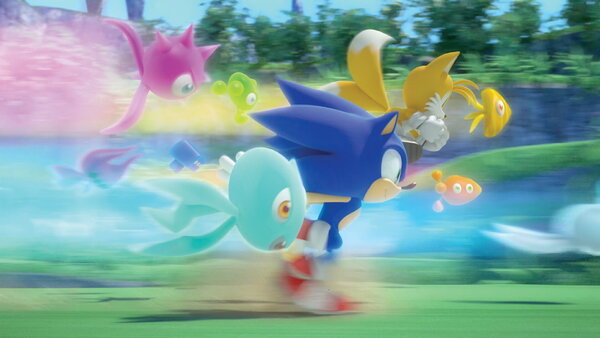
One of the all-timer games for the Nintendo Wii, Sonic Colors took most of what was wrong with cornerstone title Sonic Unleashed and threw it out. Playing solely as Sonic, we got to experience the ideal blend of classic side-scrolling action and modern 3D gaming, while taking on the kind of tough-as-nails challenges one didn’t usually associate with the family-friendly Wii console.
And, as part of the franchise’s 30th anniversary celebrations came Sonic Colors: Ultimate, for the Switch, Windows, PS4 and Xbox One. But rather than being developed and overseen by SEGA’s Sonic Team, as we might have expected, it was instead farmed out to Blind Squirrel Games. Who? you may ask. Who indeed.
Colors: Ultimate had a fresh soundtrack and revamped visuals, but when it came to the nuts and bolts of the development, it skidded off the edge. Developed from the Wii version, it somehow released with innumerable bugs and technical issues not present in the original, the cutscenes were upscaled using AI, and the load times were unacceptable.
Granted, it’s SEGA’s initial laziness that gave us what followed, but it’s difficult to lay the blame for this useless re-release far beyond Blind Squirrel’s door.
7. Call of Duty Modern Warfare 2 Campaign Remastered (2020)

Modern Warfare 2 was one of the games that changed not just the face of the Call of Duty franchise, but online gaming as a whole, gaining a large fan base with a compelling story, iconic characters and controversial gameplay, while bringing hordes of players in with its addictive multiplayer mode – establishing a template the games still use today. So why wouldn’t we want to play an updated version of the 2009 game in Call of Duty Modern Warfare 2 Campaign Remastered?
Well, it depended what you were in it for. As with many remasters, Modern Warfare 2’s main problem was that it didn’t go far enough. Beenox improved the character models and look of the levels, updated the broad feel of the game, and remade the cutscenes using motion capture tech. So it at least looked how it should look. But although they made use of the engine from the modern games, it still felt quite 2009, with enemy AI behaving how they used to behave, and not enough in the way of new abilities or features to switch up the experience of a campaign we had played many, many times.
It was fine, but it was also just the campaign; and if there’s one thing the Call of Duty games are known for, it's their short campaign playtime. No Spec Ops, no Multiplayer – none of all those crucial elements from the original game that could have made the remaster look like a complete and proper effort.
6. Assassin's Creed III Remastered (2019)
Despite turbulent times at Ubisoft this past decade, the studio has managed to continue development of some of its best-known games, including Far Cry and Assassin’s Creed. The latter leapt onto the scene in 2007, with the fun, if repetitive Assassin’s Creed, before coming into its own with titles like II, Brotherhood and Revelations.
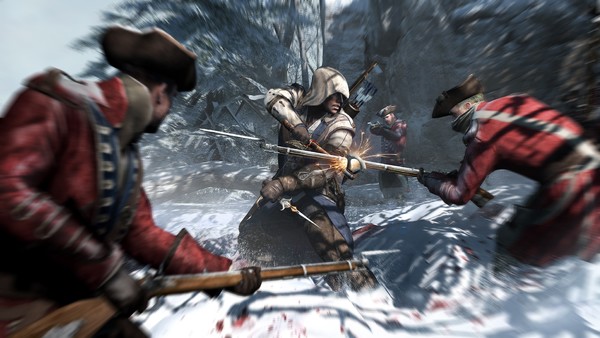
There was a three-game break between the second and third instalments proper, while Renaissance protagonist Ezio Auditore da Firenze’s story was mined for all it was worth, and when III finally arrived in 2012 it was not quite as good, but good enough. With the action now set in eighteenth-century Colonial America, we played as half-English, half-Mohawk “Connor” Ratonhnaké:ton, living out our Last of the Mohicans fantasies in real time. And seven years on, Ubisoft dropped the remastered edition.
Seven years is a somewhat brief time for a remastered version, especially as it was just migrating from seventh onto eighth gen consoles. Included were improved mechanics and graphics, with free aiming with the bow and more intuitive UI, along with all the original DLC. However, there was no move to iron out, alter or improve the original game’s issues. The combat still had the animations that made it feel less like you were playing it than it was playing you, the stealth was somehow clunkier than previous games, and the story still bridged a lot of its narrative with exposition instead of gameplay. Not really enough to crack the wallet for.
5. Days Gone Remastered (2025)

If Ubisoft’s seven years seems like a curiously short time to wait before releasing a remaster, then Bend Studio/ Sony’s six-year gap between the original and remaster of post-apocalyptic, Sons of Anarchy/Mad Max-adjacent action-adventure game Days Gone seems downright confusing.
Set in Oregon after a 28 Days-style pandemic turned a good chunk of humanity into violent, feral zombie-like Freakers, the 2019 game kicked us into action as outlaw biker Deacon St John (voiced by video gaming icon Sam Witwer). While not the perfect game, Days Gone offered an enjoyable open world that may have been a tad repetitive and uneventful at times, but definitely made the most of its biker premise.
Fast forward to 2025 and Sony dropped the remastered version for PlayStation 5 gamers, with new modes, such as permadeath, speedrun and survival, to tempt existing fans to splurge on it once more. But these features turned out to be window dressing for a game that hadn’t been done quite right. On the one hand, noticeable improvements like better lighting simulation, more convincing nighttime scenes, and more dynamic sound design were precisely what we wanted in a remaster; but on the other, compromises and alterations like trade-offs in image quality, sub-4k resolution and lower frame rate felt like a step back.
On balance, the improvements didn’t outweigh the new limitations, and even the low price point for the PS4-to-PS5 upgrade couldn’t seem to justify buying it over again.
4. GTA Trilogy The Definitive Edition
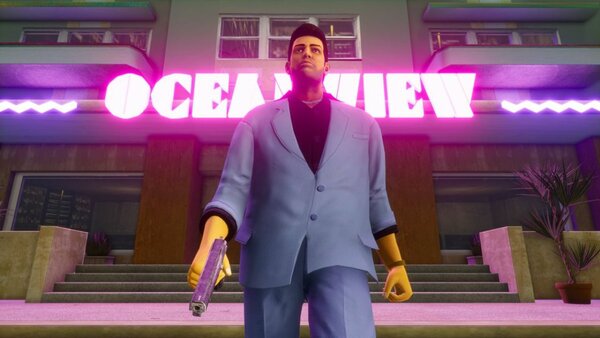
Grand Theft Autos III, Vice City and San Andreas are the zeitgeist for early-noughties gaming, dominating the first half of the 2000s, and giving a whole generation of youngsters an unhealthy obsession with killing hookers. With each game, the graphics got tighter, the maps got larger and the crazy characters and plot just kept getting better and better, with San Andreas managing to sign names like Samuel L Jackson, Axl Rose, James Woods and Ice-T onto its voice cast.
And this era set a release rate for Rockstar – with just three years separating three games – that it would never be able to live up to again. So, in the great, yawning gap between GTA V and VI, what else was there to do but release Grand Theft Auto: The Trilogy – The Definitive Edition.
The title made big promises, and while it was certainly good to get the opportunity to hop into the old games again, was it really worth it? Farmed out to Grove Street Games, the end product was super lazy, barely even taking the time to do more than round the edges on the graphics and touch up the lighting, when they had the opportunity to do a full, proper remaster that would have brought the game up to date. There's no point in a 4k or 1080p image on a next-gen console if it's still the visuals and gameplay of yesteryear. Not our definition of "definitive".
3. Tomb Raider Trilogy (2011)

Tomb Raider has brought acrobatic adventurer Lara Croft to our screens and consoles for three decades, and during that time there have been some iconic games and some we’d rather forget. Along the way, the style of the game and design of Lara Croft herself has been tweaked to evolve with new hardware, trends and capabilities, and 2006’s Tomb Raider Legend was considered one of the more important games for the franchise in this context.
Legend followed the iffy Angel of Darkness, and set a new standard for the series while conducting something of a soft reboot. It paved the way for the following year’s remake of the first game, Anniversary, and Underworld the year after that. And just three years following Underworld, Crystal Dynamics deemed it time to unite the so-called Legend trilogy in a single unit, with The Tomb Raider Trilogy releasing in 2011 onto PlayStation 3.
Given it had only been three years, it would have been a lot to expect anything to have changed for Underworld – and it hadn’t. What it did offer was Anniversary and Legend remastered in HD for the current hardware, but only remastered in the most limited sense. As a re-release, this offered value to gamers who didn’t have Underworld already or had never played the other games, but for diehards following the series all along, it seemed no effort had gone into this, with the disc’s basic DVD extras-style bonus content a slap in the face for the price tag.
2. Devil May Cry HD Collection
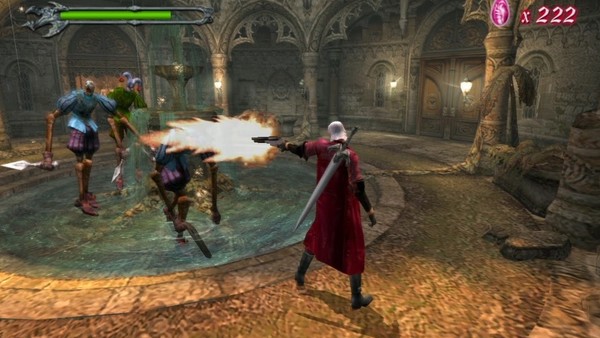
Hack-n-slash action-adventurer Devil May Cry’s fusion of gaming and Japanese style animation have made it a go-to franchise for decades, with its fast-paced combat making it distinct from other anime-influenced games like Final Fantasy. And there are few among us who didn’t succumb to the charm of the arcade-like rewards system, battling through hordes of hell things as silver-haired demon hunters Nero, Dante and (sometimes) Vergil.
With four main games under its belt plus a devoted fanbase the world over, Capcom decided in 2012 it was time to release the HD Collection. This bundle united the first three games under one title for the PlayStation 3 and Xbox 360, for what should have been an easy win, with just a bit of effort.
Ported by developers Pipeworks and Double Helix, the HD Collection has a well-earned notoriety amongst gamers that lives on today. Yes, the games looked a bit sharper, but the graphics were still pretty much the same, and given DMC 1 was a 2001 PS2 release, this was not an ideal thing. And there were so many visual and auditory issues and glitches that could have been smoothed out with due care and attention.
To make matters worse, publisher and original developer Capcom then doubled down and re-released the re-release onto PlayStation 4, Windows and Xbox One in 2018, while leaving most of the issues alone. If you bought it the first time, here’s hoping you didn’t the second. Fool us once…
1. Legacy of Kain: Defiance Remastered (2026)
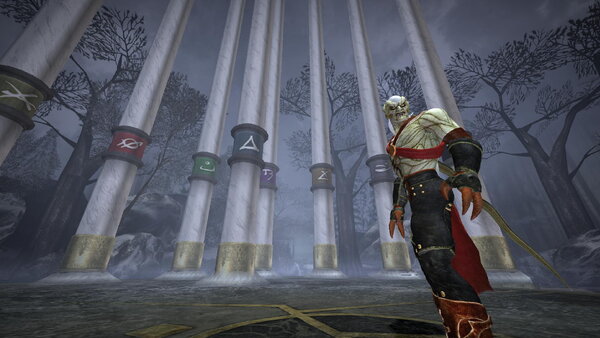
A recent series brought back from the dead via re-releases, Legacy of Kain doesn’t hold much of the good will or name recognition that a lot of the games being remastered and dropped onto new hardware lately. Yet, just two years ago Aspyr served up Legacy of Kain: Soul Reaver 1 & 2 Remastered – overhauled versions of the franchise’s second and third games, from 1996 and 1999 respectively – and this did well enough to justify more.
This year saw the return of Legacy of Kain: Defiance, the 2003 game continuing the epic story of vampire Lord Kain as he travels back in time and into the Land of Nosgoth's past, attempting to save it from an age of desolation. Bundled in a shiny new package for eighth and ninth gen consoles, the remastered game came with improved visuals, a new camera system and accompanying redefined geometry to accommodate this, plus a new Foresight wayfinding ability to bypass the hours of tedium we used to spend figuring out what games of this era wanted us to do.
But it needed more careful tweaking, tinkering and upgrading from developer PlayEveryWare to make it worth the money – most notably in the combat and gameplay. There’s no escaping that it was an old ass game, but it still felt like an old ass game. It was routine, repetitive and rapidly becomes boring, failing to live up to modern standards, and making the whole enterprise seem futile.