Star Wars Jedi: Fallen Order - 10 Games It Totally Ripped Off
Stealing from the best.

Despite its many flaws, Star Wars Jedi: Fallen Order has finally broken the streak of crushingly disappointing and downright bad Star Wars video games.
However, it's fair to say that developers Respawn Entertainment certainly didn't do it without a ton of inspiration.
Fallen Order draws influences from a wide gamut of video game genres, cribbing lovingly - or as some might argue, lazily - from some of the most iconic action-adventure games, platformers, and RPGs of the last few years.
Whether you consider Fallen Order a "jack of all trades, master of none" affair or a genuinely effective blend of countless iconic AAA smash hits, there's no denying how many diverse titles it's "borrowed" elements from.
The game simply wouldn't exist as it does, had these 10 games not blown players away first and set some distinct benchmarks for their respective genres.
And with Fallen Order posting gangbusters business so far, it's likely the inevitable sequel will follow the exact same lead...
10. Uncharted

Perhaps the most immediately obvious touchstone for Fallen Order's slickly cinematic, bombastic gameplay is the Uncharted franchise.
Naughty Dog's action-adventure IP has basically cornered the market on breezy thrills that could actually rival those of a Hollywood blockbuster, and its influence has been widely felt across the genre, most notably in the Tomb Raider reboot franchise, and now also Star Wars.
Fallen Order's opening hour in particular feels massively indebted to Uncharted 2, with a train escape sequence that not-so-subtly imitates Naughty Dog's own franchise-defining train set-piece.
More generally speaking, Fallen Order's grandiose camera movements and emphasis on traversal are clearly inspired by Uncharted, with the player required to frequently leap onto tricky platforms and scale the vertiginous sides of walls.
It's an especially telling comparison given that EA infamously cancelled a prior Star Wars game that was in development at Visceral Games with former Uncharted lead Amy Hennig at the helm.
9. Ratchet & Clank
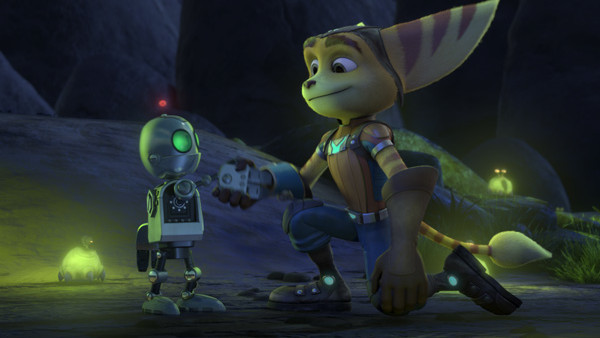
Ratchet & Clank might not seem like it would have a particularly significant influence on a AAA Star Wars game, but remember that the franchise is similarly a sci-fi action-platformer with an emphasis on planetary exploration.
But Fallen Order has uniquely borrowed something else from the platforming franchise: the symbiotic relationship between its titular hero and robotic companion.
Fallen Order's protagonist Cal is accompanied by BD-1, a cute, pint-sized droid companion who, for the majority of the game, sits on Cal's shoulder and helps him both open doors and disable enemies.
Furthermore, BD-1 receives upgrades periodically throughout the game to enhance its abilities.
This is also all true of Clank, and while Fallen Order (sadly) doesn't have any sequences which allow the player to control BD-1 - unlike Ratchet & Clank - the shared DNA between the games' robot mascots is undeniable.
8. Metroid & Castlevania

Once you look past Fallen Order's aesthetic similarities to Uncharted, it's clear that the game is heavily inspired by the "Metroidvania" subgenre, of course kickstarted by the Metroid and Castlevania franchises.
Metroidvania titles are defined by exploration, namely a gameplay loop where the player will unlock upgrades and abilities which then allow them to revisit previous areas with new traversal options available.
Fallen Order's overall design most certainly fits that description, given the freedom the player is granted to explore the game's various planets.
Moreover, returning to them after obtaining new Force abilities and BD-1 upgrades will allow the player to reach previously walled-off areas.
Though some might decry Fallen Order's lack of fast travel options, that's clearly because Respawn wants players to use their newfound skills to investigate alternate forks in the road.
7. Mass Effect

Though Fallen Order doesn't even begin to boast the depth of world-building, abundance of side content, or compelling characters as even the lesser Mass Effect games, its tonal and thematic influences are undeniable.
This is primarily felt through both the game's abundance of compellingly "humanised" alien characters, and especially by allowing the player to explore their transport, the Stinger Mantis, while bonding with their fellow crewmates.
This is immediately reminiscent of how the Mass Effect franchise treated its iconic vessel the Normandy, and while Mass Effect certainly gives players plenty more to do onboard its ship, Fallen Order's ship hub is nevertheless a clear attempt to evoke the same vibe.
Sadly the game doesn't really earn the sense of family it tries to force through - primarily by way of the Mantis' captain Greez - but at least you're able to do more with the ship than simply fast travel from planet to planet.
6. Dark Souls
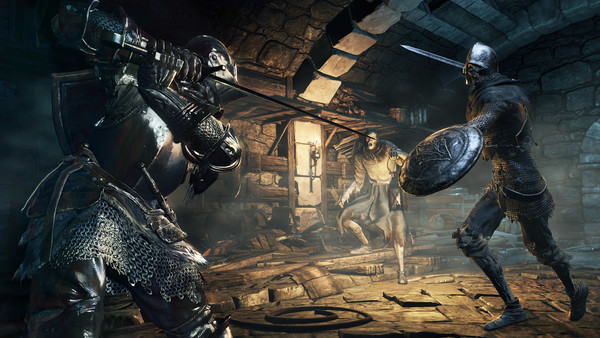
As much of a cliche as it is to call any new game "The Dark Souls of...," it's truly surprising that Fallen Order feels like the Dark Souls of sci-fi action-adventure games.
Though most players likely expected the game to be a fairly breezy, unchallenging platformer-actioner, Fallen Order pushes back a surprising amount on even lower difficulties, ensuring that beyond Story Mode, there's no way for players to simply spam their way to victory.
Much like the Dark Souls games - and pretty much every recent FromSoftware title, really - combat is mastered through an understanding of guarding, parrying, and attacking.
You need to wear down most enemies' guard before you can make a major strike, but doing so without blocking, parrying, and dodging is a sure-fire way to end up overwhelmed and killed by even basic combatants.
However, it's fair to say that Fallen Order's combat, while challenging, is nowhere near as demanding or frustrating as that of Dark Souls.
The series' influence is felt elsewhere throughout the game, too. Its save/checkpoint system is borrowed from Dark Souls' bonfires, to the extent that resting even respawns enemies, despite how little that really makes sense in the context of tangible human characters like Stormtroopers.
Fallen Order also features a similar death penalty mechanic, for while Dark Souls will leave a players' lost souls and humanity as a bloodstain near their death site, Fallen Order allows players to regain their health and XP by landing a hit on the enemy which killed them.
Some might call it a watered down take on Dark Souls, but given that a Star Wars game needs to skew to a broader audience, it's actually a pretty novel - if flawed - approach.
5. Prince Of Persia

One of the less-cited clear influences on Fallen Order is the brilliant Prince of Persia franchise, which was so fantastically reinvented with 2003's masterful puzzle-platformer Prince of Persia: The Sands of Time.
The game's key gameplay mechanics are the ability to run along walls in order to traverse the environment, and using the Dagger of Time to manipulate time - be it rewinding a fail state, freezing enemies, or solving contextual puzzle elements.
Wall-running is also one of Fallen Order's main traversal options, honestly to the extent where it feels a tad unimaginative and overused.
And while Cal isn't ever gifted the ability to rewind time or tinker with it on a major scale, he is similarly able to use his Force powers to briefly freeze enemies in place and also sneak past objects such as giant oscillating fans.
4. God Of War

Though Fallen Order's director Stig Asmussen did actually helm God of War III, his new game has far greater similarities to last year's incredible God of War reboot.
While both games share an obvious cinematic quality, a quasi-God fantasy, and a not dissimilar approach to environmental exploration, it's Fallen Order's boss fights that feel most indebted to God of War.
The 2018 reboot famously scaled-back the almost comically over-the-top boss fights from the earlier games to more grounded encounters, and similarly, Fallen Order's boss battles are for the most part relatively modest slug-fests.
Sure, Fallen Order's fights feel a little more "game-y", with bosses having various "tells" and attack waves that God of War's bosses often don't.
But the arena-like approach to most of the fights, where you're tasked with hacking away at a life bar while deftly bobbing, weaving, dodging, and blocking, feels ripped straight out of Sony Santa Monica's masterpiece.
3. The Legend Of Zelda: Breath Of The Wild

The Legend of Zelda franchise is regularly credited with popularising the "puzzle dungeon," as best evidenced by Breath of the Wild's fantastically diverse and challenging Shrines.
And while Fallen Order's puzzle elements don't even begin to lick the bootheel of Breath of the Wild, there are several passages throughout the game where the player is thrown into a dingy dungeon-like locale and left to solve a vaguely obtuse puzzle.
These sequences typically involve manipulating giant metal balls, lanterns, and pulleys while battling fleets of enemies in-between.
Though not hugely sophisticated, they might stump you for a few minutes a-piece, and if nothing else they're certainly impressively grand in scope.
2. Tomb Raider

Though it would be disingenuous to suggest that Fallen Order's traversal was in any way inspired by Crystal Dynamics' Tomb Raider reboot trilogy - given that both were clearly independently influenced by Uncharted - Cal Kestis does owe a certain debt to the reinvented Lara Croft.
In much the same way that the new Tomb Raider initially depicted Lara as a vulnerable novice, similarly does Fallen Order kick things off with Cal as a relatively low-level Force user who frequently gets his ass kicked.
Over the course of the game, however, he progressively unlocks his latent Jedi abilities and, by the end of Fallen Order, is certainly a force to be reckoned with.
And so, it's fair to say that the inevitable sequels will further Cal's quest to become a potent Jedi Master to rival the most powerful in the galaxy, just as Lara was elevated to a blood-thirsty predator by the end of the reboot trilogy.
1. Star Wars: The Force Unleashed

And finally, it'd be remiss not to mention the Star Wars game which Fallen Order itself is most obviously indebted so, and that's The Force Unleashed. If you're going to crib from something, it may as well be the best version of it, right?
Some have uncharitably called Fallen Order a "Force Unleashed clone," though given this game's higher level of difficulty, it doesn't have quite the same breezy wish fulfilment feel to it. You never get powerful enough to fell a Star Destroyer in Fallen Order, for instance.
But given that Star Wars video games in recent years have massively prioritised multiplayer over a compelling single-player campaign, Fallen Order does inherently feel like The Force Unleashed's spiritual successor.
Both games take place during the Purge and place the player in the shoes of a burgeoning Force user, albeit on opposite sides of the conflict (at least a first).
It's clear that Fallen Order took plenty of formal cues from its spiritual predecessor - though the less said about The Force Unleashed II, the better.