Tekken 7: 10 Essential Features Every Fan Wants To See

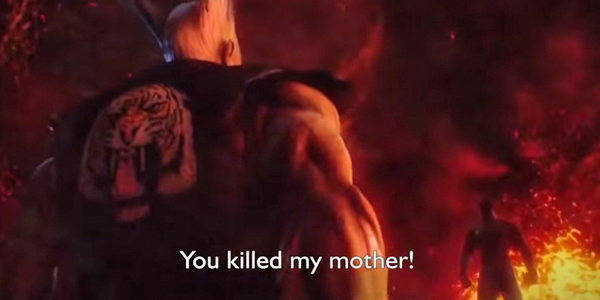
'Someone throwing a man into a volcano' is just a given at this point.
Few games on this Earth have the instant-appeal and nostalgic brain-tingle of Tekken - the series is one of the most successful gaming franchises of all time, and with 41 million copies in the bank it's pretty much the only other franchise alongside Street Fighter that springs to mind when thinking of fighting games (although we've got you covered if you just thought of Mortal Kombat too). With a completely bonkers anime story that's so ludicrous you just have to love it, the past entries have seen everything from demonic great-grandfathers coming back from the grave to tiny orange dinosaurs and even overly-flatulent scientists all taking part in The King Of Iron Fist Tournaments, but even that is not where the appeal lies, although it's certainly a large part of it. No, Tekken would not have maintained it's stature on the top pedestal if not for one of the most accessible-yet-deep gameplay systems in all fighting games, comprised of every major martial art under the sun. It's a system that's become to be known as a game having 'Tekken controls' whereby you have two dedicated punch and kick buttons, along with combinations of them producing throws and other special moves. Many gamers remember their first Tekken experience, as well as discovering one of your friends was one of "those people" who'll button-bashed their way through every fight as Eddie Gordo. Yeah, you know who you are. Over the years the series has never really dipped or had a particularly bad title, and so it's with a huge fan fervour that with Tekken 7 the hype machines are kicking into overdrive. With nothing confirmed and everything up for grabs, what do you want to see in the new game?

10. Custom Fighters

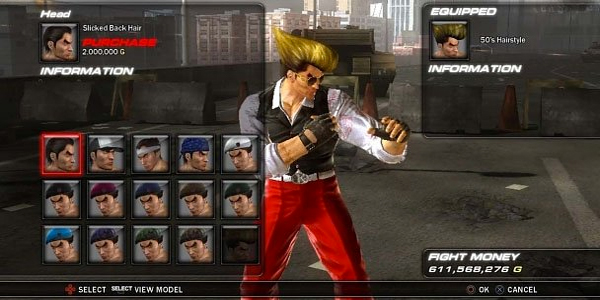
We've had everything from stacks of elaborately designed hats and hairstyles, to palette-swaps on original character designs and any number of random objects - all can be tacked onto the established fighters, however what we're yet to see in any Tekken game is a completely custom fighter, built from the ground up by you to be the King of Iron Fist. Sure one of the most meticulously laboured-over aspects of the game - and any fighting game - is the balancing of fighters amongst the roster, as any who played Tekken 2 will remember how you could just spam the likes of Devil or Angel's eye-lasers, barely giving your opponent any chance to get up. Therefore if some sort of creation system is to be implemented, a give and take mechanic would have to go alongside it when allocating standard and special moves. With most characters' basic moving speed being the same across the board (unless you're a more weighty chap like Kuma or True Ogre) it would all come down to having a trade-off between choosing a slow charge-up move like Paul Phoenix's punch, or being able to dole out a quick Law-style backflip-kick. The way to make this work would be choosing some 'signature moves' that open up more options down a similar path, but locks away any combo of special moves the developers could flag as problematic when used repeatedly or together. With such an elaborate character editor already in place and online play becoming a bigger staple of the game already - why not let us take part in the tournament ourselves with our own moveset?

9. Jin's Karate Stance

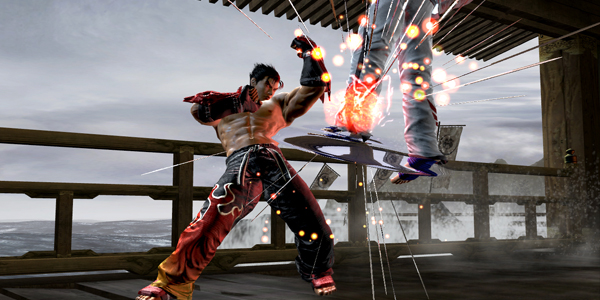
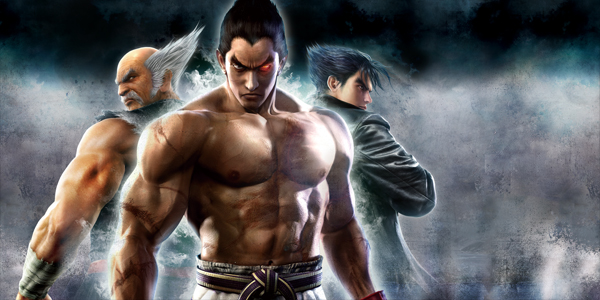
This is more a point about making sure certain characters become and stay defined, as back when Jin was first introduced in Tekken 3 he was essentially just a younger version of Kazuya. Obviously this was remedied quick-sharp in Tekken 4 when we found out that following his departure at the end of part three's tournament, he had enlisted in a dojo to retrained himself towards a traditional karate style instead. One of the things that makes him a fan-favourite though, is that he has a wealth of moves that cross between the two styles of karate and his 'family Kazama style', creating a hybrid set of animations that looks incredibly destructive, yet retains that learned sense of practiced martial arts the likes of Forest/Marshall Law and Hwoarang employ. Going forward we need to keep Jin distanced from Kazuya, as in Tekken Teg Tournament 2 he regained a few of his older moves - albeit with the help of a Mishima style partner - but they both must also feel completely different to Heihachi, as it helps to round off the 'big three' of the story nicely.

8. An Incredibly Tight Roster

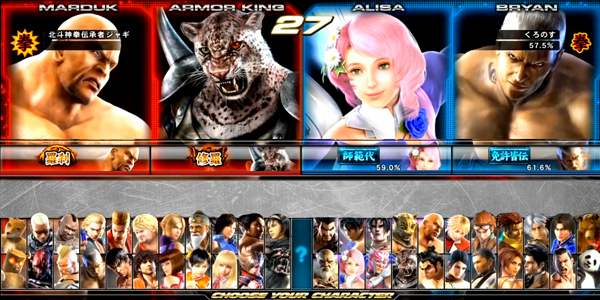
Even thought the power of the next gen consoles is going to allow Namco to go crazy with the character-creation tools, Tekken 6 was already fairly stacked when it came to the amount of fighters to pick from. As referenced in the previous point about Jin and his progression, it would be better to double-down on a a core set of fighters that are as diverse as possible, instead of having many that are occasionally skin-swaps with slightly different moves. It runs the risk of being compared to Virtua Fighter in this regard, but who do you know who plays Tekken that doesn't have a favourite character born out of the core set that's been around for years? It's extremely rare someone is going to pick Kunimitsu over Yoshimitsu, or Baek over Hwoarang. So far it's been the likes of the Tag Tournament games where Namco go hog wild and throw everyone in for the sake of it, but it's definitely a wise move to keep up what has been the case in the numbered instalments, and make every character feel as diverse as the last.

7. A Tekken Force Mode Done Right

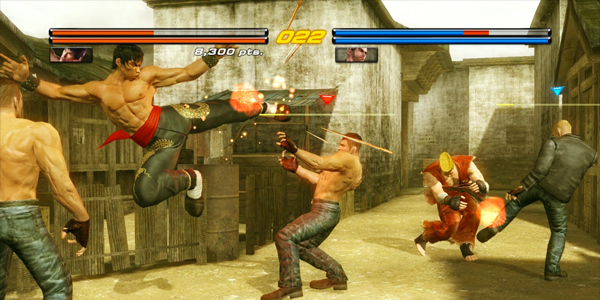
The Force-style modes have appeared in various incarnations since the series' (controversial) best Tekken 3, through 5's clunky Devil Within mode and 6's Scenario Campaign, which was fine albeit a bit messy in terms of onscreen enemies and animations. Many who played T3 or 4 will remember this original mode as one of the best 3D approximations of what a fully-realised crossover between Tekken and Streets of Rage would've looked like, and when we were wading in and scissor-kicking swathes of bad guys, it was perfect. For Tekken 7 though many fans would love to see a return to this side-scrolling style, albeit with some more context-specific animations. As we'll cover later in this article, the versions of the characters we see in cutscenes often feel far more powerful than what their in-game movelists would lead you to believe, so having multiple-enemy takedowns and environment-specific finishers would be perfect. Along with this, the only issue 3 and 4 suffered from was an occasionally spotty lock-on mechanic, as the Force mode was still essentially operating on a 2D plane, being that when you switched to other enemies you would only be able to grapple them directly - it's something that ties back into the idea of taking down multiple enemies at once, and perhaps having a button-toggle towards some area-clearing moves would remedy the problem.

6. Localised Accents/Languages

It's one of those things that as soon as someone points it out, you'll notice it forevermore. Aside from in Tekken Tag Tournament 2, localised accents and languages have not featured in previous titles games, leading to character intros where regardless of where a character is from, they'll still speak whichever language the game has been localised to in that region. We want Kazuya delivering occasional lines in Japanese, Steve Fox dropping a few British slang terms and Paul Phoenix being the American biker-badass we've always seen him as. Although there's been some contention over Producer Katsuhiro Harada engaging fans when they've requested the same voice actors as in the original games, surely with a new generation of consoles it's time to start fresh and get every character completely spot on? Keep Bryan Fury's laugh though, obviously.

5. Tag Minigames/Side Quests

What's better than one-on-one fighting in Tekken? Two-on-two of course, as is evidenced by the amazing success of the Tekken Tag spin-off games - especially being that the first was a PS2 launch title, carving out its own unique spot in your childhood. A great way to continue the appeal of these games is to drop them into the main iterations, as although it might not make perfect business-sense for Namco to essentially remove the main hook of another retail product, on next-gen hardware there's no tag-based alternative whatsoever. Plus, both Mortal Kombat and Dead or Alive successfully integrate tag modes into their games, and are much better off because of it. We'll no doubt get another Team Battle mode that'll let players run through a selection of their favourites back to back, but it's hardly Jin and Kazuya delivering simultaneous heel-kicks to a dude's face, now is it?

4. A New In-Fight Mechanic

Whether it be an Injustice: Gods Among Us-style showdown where you bet on how much of their power meter your opponent is going to put into an animated exchange, a Mortal Kombat vs. DC style in-air fighting mechanic or something entirely new, Tekken rarely explores new avenues within their core gameplay. Sure Tekken 4 had an instant-reversal move and a much bigger focus on positional play within the fighting arenas, thereby putting focus on getting your opponent up against a wall to deal out some massive damage, but aside from this and T6's introduction of the more-damage Rage mode, or the combo-specific Bound moves, there hasn't been a whole lot of progression in over a decade. The Injustice showdowns are particular fun to play out, not just for their betting mechanic but also for the visuals of seeing the fighters back up a few steps, trade some insulting lines, and then run head-first into each other, causing a screen-wide explosion. Being that the Tekken roster is packed to the brim with alliances and rivalries, having character-specific dialogue in these exchanges would be perfect.

3. A Phenomenal Campaign

Back in 2011 Mortal Kombat 9 came out of nowhere and delivered everything a fighting game's campaign should be. That is to say, what's better than indulging in a fighting game's core mechanics just for the sake of it? Having some drive and a sense of purpose, that's what. MK9 set up a series of fights interspersed with cutscenes that were rendered so well they looked in-game - so as soon as you felled one opponent, they would start talking and it would lead to some expertly written exposition, before another attacker may appear and you're instantly thrust back into combat again. There was no waiting, no load time, you were constantly engaged in the events of the story, and as soon as the time to take action was upon you, it was game on. Now, Tekken has always been a very traditional beast, incorporating incremental additions to its gameplay, but this structure for a story-based mode is something that would transfer directly over. Anyone who's grown up with the series and/or finished the previous story modes knows just how satisfying and fan-pleasing those ending cinematics are, and with next-gen technology pushing in-game graphics to a similar level, let's have one long interrupted session of gameplay and cutscene that meld together perfectly.

2. Environmental Combat

A potential answer to the 'new fight mechanic' idea is that of contextual animations being accessed when you're in specific parts of the arena. We've already seen certain aspects of the detailed backgrounds break away in Tekken Tag Tournament 2 and Tekken 4, but they've never had much of an impact in the fight. Say you're playing as someone like Devil Jin, who we've seen level entire buildings in his respective cutscenes - why not have him unleash a quick eye-laser to a pillar holding the roof above your opponent, only for the whole thing to come crashing down on them? Of course we don't want to go to far into Dragonball Z territory, but it remains that the likes of Jin and newcomers such as Feng Wei have become so powerful come the last games end, that their in-game versions should reflect this. Yes environmental destruction is a big part of Dead Or Alive's appeal (that and a couple of other ludicrously animated reasons), but with that franchise not having an instalment in two years, Tekken should look to pick up the slack. After all, we all know how satisfying running Heihachi's head through a few walls in his dojo would be while playing as Kazuya.

1. A Major Death

Speaking of Kazuya and Heihachi's relationship, it's as old as the series itself, which has now lead to the tagline of "The Final Battle", even though going off the teaser it doesn't seem as thought they'll be taking each other down. Whilst we're not saying it should be one of these two classic fighters that should meet their end, it was very evident in Tekken 5 when the already ancient Heihachi had his own father turn up to get involved in the action, that the series is stretching itself a little thin on the 'hidden relationships' front. From looking at the online chatter it seems many people are gearing up to be blown away by the story, and with a few key deaths thrown in, it allows certain villains or antagonistic characters to establish themselves in the canon as forces to be reckoned with, rather than elaborately designed punching bags. Which features do you personally want to see in the final game? Let us know in the comments!

In this post: 
Tekken 7
 
Posted On: 
Gaming Editor
Gaming Editor

WhatCulture's Head of Gaming.