10 Most Disappointing Hard Rock Albums In History
Releases that challenged the loyalty of fans who embraced these bands in the first place.
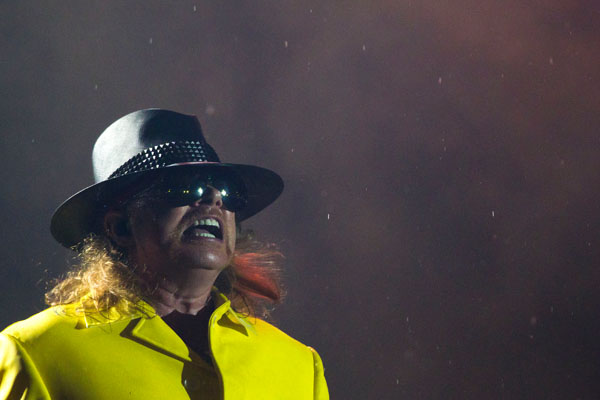 Felipe Dana/AP/Press Association ImagesMost headbangers of a certain age have gone through thisheading to our local music store in anticipation of snatching up the latest album by our favourite band on the day of its release. We rush home and throw it on our stereo, ready to once-again to be blown away - after all, their other albums were awesomehow could this not be? But as the album plays on, something is amiss. What pumps from your speakers is not what you were expecting. You cant always put your finger on whats wrong, but this is definitely not the music which made you love them in the first place. Maybe your band is stretching its wings and itll take several listens for you to warm up to it, maybe the frequent line-up changes have changed its sound - or maybe your band is committing the ultimate sin of selling-out. Whatever the case, its always a bit jarring when they decide to shake things up by confounding your expectations. This is especially true with hard rock and heavy metal, whose fans are a lot like our grandparentsresistant to change unless its so gradual that they dont notice (like Rushs evolution from a hard rock bar band to a progressive metal giant). Change isnt always a bad thing, but sometimes it comes too quickly for everyone to readily accept. The following isnt a list of the worst albums by bands weve grown to love (though a few are terrible). Some of them are actually very good (and one is a classic), but at the time of their release, they definitely challenged the loyalty of fans who embraced these bands in the first place.
10. Led Zeppelin - Led Zeppelin III
 AtlanticToday, Led Zeppelins original eight studio albums are held in such high regard that criticizing any of them is as blasphemous as tagging the Vatican wall. They are untouchable, as fresh sounding today as when first released. Led Zeppelin III, their quirkiest album, was the first in which the band began to display its diversity and ambition, moving beyond ripping-off old blues musicians to explore traditional folk, eastern music, bluegrass and the full-on heavy metal only hinted at in previous songs like Whole Lotta Love. Time would prove Led Zeppelin III to be one of their more interesting albums, and a necessary stepping stone for the band to enter its most creative period with their untitled fourth album, Houses of the Holy and Physical Graffiti. But in 1970, this album not only confounded critics, but legions of listeners who understandably expected more of the same sonic bombast of Zeppelins first two records. Of course, the band had recorded acoustically-driven songs before, but Led Zeppelin III had an entire album side totally free of Jimmy Pages fiery solos and Robert Plants banshee wails - arguably two elements which first endeared the band to the masses. Such drastic change made this a difficult album for fans to warm up to. Though Led Zeppelin III eventually sold six million copies, it is still one of the lesser selling albums in their entire catalogue. Obviously, whats considered disappointing is relative to which band youre speaking of.
9. Opeth - Heritage
 RoadrunnerHeritage is actually a pretty good albumchallenging, unpredictable and loaded with eccentric tracks totally contrary to anything currently deemed popular in any genre. The main reason Heritage is on this list is Opeth built a reputation and large following as a death metal band (mostly due to Mikael Akerfelts frequent use of cookie monster vocals), although the band has always explored metals more melodic and progressive side. Even the moody, mellotron-heavy 2003 release - Damnation - was seen as a one-shot departure from their usual sound and released almost simultaneously with their heaviest album Deliverance, so most fans werent too concerned. But not only was Heritage their first album in three years, it was devoid of Akerfelts death grunts (the guy actually has an incredible voice) and not a heavy metal album at all. The only track which comes close is Slither, a Ronnie Dames Dio tribute which sounds eerily like an early Rainbow song. Not only that, many of the songs were schizophrenically assembled, with jarring time-changes, passages so quiet it sometimes sounds like nothing is going on, and guest appearances by old jazz musicians. Though longtime fans have always accepted Opeths penchant for traveling back in time to the 70s, this organic-sounding, oddly-paced record was too much for many to swallow. While one must appreciate and respect Opeths uncompromising approach (long-time listeners whove been paying an iota of attention must admit this is the album theyd been threatening to make for years), its ironic that they would choose the very moment theyre on the verge of being regarded as the worlds premier death metal band to toss aside everything which put them on the radar in the first place.
8. Judas Priest - Nostradamus
 EpicIt is tempting swap-out this album for 1986s Turbo, as with poppy tunes and intrusive synthesisers, Turbo was a blatant and pandering attempt by Priest to keep up with the times (even though Metallicas more stripped-down approach was truly the cutting-edge of the genre). While derided by diehard Priest fans as catering to the MTV-hair metal crowd, the anthem-heavy Turbo isnt really that far removed from British Steel, widely considered their best album (all through the 80s, Priest had always tried to achieve the same crossover appeal of such pop-metal bands as Kiss or Def Leppard). But really, for an iconic band whove proudly waived the heavy metal banner for 40 years, 2008s bloated two-disc concept album, Nostradamus (their second record after legendary vocalist Rob Halford returned to pick up where they left off in the early 90s), was the most creatively-misguided release in their entire catalogue. Granted, at this point in their career Priest had nothing left to prove and could do whatever the hell they wanted, but to record such a pretentious, bloated, fantasy-based storytelling album - complete with orchestral interludes - showed just how out-of-touch they were. Not that anyone wanted Priest to suddenly appeal to the Hot Topic crowd or sound like Five Finger Death Punch, but lyrically, stuff like this was rendered ridiculous the very second This Is Spinal Tap was released in 1984. Despite Halfords stellar vocals, even the most ardent fan must admit lyrics were never Priests strong point, and on Nostradamus, such silly choruses as the one from the title track (Heeee haaaas seized the daaayHeeee iiiiis heeere to staaay) make Breaking the Law sound like All Along the Watchtower.
7. Celtic Frost - Cold Lake
 NoiseBack in the 80s, when hair metal reigned supreme, Celtic Frost was one of the most unique & uncompromising bands of the era. Their albums (most notably To Mega Therion & Into The Pandemonium) sounded like nothing else out there. Weird, unpredictable and definitely avant-garde, Celtic Frost were pioneers in what eventually became known as black metal. The band built a loyal underground following, only to do the most extreme about-face in heavy metal history by releasing Cold Lake in 1988, an album of sleazy sex tunes similar to what Motley Crue was pumping out. While Cold Lake wasnt exactly a bad album, it was completely contrary to the image the band had worked so hard to cultivate both musically and visually (leather, studs & eye paint were replaced with scarves, teased hair and with pube-sprouting spandex). Alienating all of their hardcore fans, Cold Lake caused a backlash that essentially brought Celtic Frosts career to a grinding halt, just when it was starting to gain serious momentum. Despite an immediate attempt to return to their old sound (on the album, Vanity/Nemesis), the damage had been done. Celtic Frost disappeared for 16 years before returning with their last (and heaviest) album, Monotheist (after which they broke up again, this time over the usual internal bickering).
6. Kiss - Dynasty
 CasablancaBy the end of 1977, Kiss were the biggest (and most prolific) band in the worldsix studio albums, two live ones (all within four years) and more merchandise than anyone but the most ardent fans could completely acquire. It was time for the band to take a break, so to keep the kiddies placated in the interim, Kiss belched out comics, toys, a gloriously-awful TV movie and four solo albums by each member. Lifelong fans will generally cite the bands ill-conceived concept album Music From The Elder as the low point in their long career, but the seeds of their initial downfall were planted long before that with 1979s Dynasty, heavily-hyped as The Return Of Kiss after a two-year absence (in the 70s, that was an eternity). But Dynastys disco leanings (most notably, I Was Made For Lovin You), along with continued overexposure and catering to the kiddie crowd turned off many longtime fans. With Paul Stanley hell-bent on channeling his inner Luther Vandross and Gene Simmons increasing penchant for crooning about himself, only guitarist Ace Frehley (with three songs, including a terrific cover of The Stones 2000 Man) seemed to remember Kiss was supposed to be a hard rock band. Dynasty sold well enough, but was also the first sign they were now more of a corporation than an actual band. Ultimately, the album had a negative impact on their career and the next, Unmasked, was largely ignored by those who made Kiss icons in the first place. As was Music From The Elder, a notoriously-misguided (and desperate) attempt to reinvent themselves with a concept album during a time no one else was making them. By the time Kiss was truly ready to rock again (1982s stunning and heavy-as-hell Creatures of the Night), everyone had stopped listening. Had this album been 1979s Return Of Kiss instead of Dynasty, chances are Kiss would never have had to resort to removing their make-up just to get peoples attention again.
5. Emerson, Lake & Palmer - Works Volume 1
 AtlanticThose who only know ELP from their mellow radio hits (like Lucky Man and From the Beginning) are probably wondering why a band most-often compared to Yes and Jethro Tull would be included on such a list. But ELPs early albums, while still loaded with the usual self-indulgence associated with progressive rock, were often just as loud and heavy as Deep Purples. Sonically, the only real difference between Brain Salad Surgery and Machine Head was that the former mostly relied on keyboardist Keith Emerson to make everyones ears bleed. At the time, ELP were huge, even headlining over Black Sabbath and Deep Purple at the 1974 California Jam, one of the biggest music festivals of the 70s. After 1973s Brain Salad Surgery - their most popular (and heaviest) album - ELP disappeared for four years while its individual members indulged their egos with various solo projects. When they finally decided to pull their heads from the sand in 1977, a lot had changed. Punk rock reared its ugly head, disco ruled the airwaves, bands like Deep Purple were in their death throes and Pink Floyd had taken over as the face of progressive rock. In terms of remaining musically and culturally relevant, Works Volume 1 was the worst possible album they could have made at the time. First of all, it was an ELP record in name only, released as a double album, with each band member given complete control of an LP side in order to showcase their individual talent. Only side four featured the three of them actually playing together (including Fanfare For The Common Man, the last enduring track theyd ever record). Worst yet, almost none of it could be even loosely defined as rock; Emersons side was piano-based classical music, Lakes consisted of syrupy acoustic ballads, while Palmerwell, theres a reason drummers are seldom a bands primary songwriter. None of this music would have found an audience without ELPs name attached to it. Works Volume I reeked of a cynical cash-grab by a band whose members no longer had any creative use for each other, yet still depended on the value of their brand name.
4. AC/DC - Flick Of The Switch
 AlbertYou might be asking yourself, How can a band whove pretty-much made the same album over and over for 40 years possibly have one which ranks among the most disappointing? A fair question since, if nothing else, AC/DC have been poster boys of consistency. The answer is producer Robert John Mutt Lange. Until he came along, AC/DCs albums were fun but very raw. With Highway to Hell, Black In Black and For Those About To Rock, Lange truly gave the band sonic balls with a reverb-heavy sound where the drums, bass and vocals slammed into you as hard as the guitar riffs. Hes arguably the chief reason Back In Black is the one AC/DC album everybody owns. Despite their massive success working with Lange, AC/DC chose to produce their next record themselves, stating a desire to go back to the raw sound of their early albums (essentially taking a big step backwards). While no one was expecting another Back In Black, Flick Of The Switch was a commercial and creative disappointment. Not only was it a criminally-short 37 minutes long and totally devoid of any memorable songs, the album was sonically anemic compared to recent releases. Today, it remains one of the poorest selling albums in their entire catalogue (though it still eventually went platinum).
3. Ministry - Filth Pig
 Warner Bros.Though it can be argued they didnt invent Industrial Metal, Ministry (led by the always-amusing Al Jourgensen) brought it kicking and screaming into the mainstream. Suddenly, drum machines, distorted vocals, grating keyboards and sampling were not only intricate elements of their songs, but acceptable to the same headbangers who would have scoffed at such things only a few years earlier. Without Ministry, there would be no Nine Inch Nails, Rob Zombie or Marilyn Manson. Ministry peaked with the 1992 album, Psalm 69, a perfect fusion of guitar-driven heavy metal thunder and techno-dance music. With a bit of help from MTV, it was also the first industrial metal album to sell in huge numbers. It would be four years before Ministry reared its ugly head again (sidelined by Jourgensens drug abuse and dedication to various side projects like Lard & Revolting Cocks). In the interim, Nine Inch Nails & White Zombie took the concept and ran all the way to the bank. Ministry finally reemerged with the plodding Filth Pig, an album totally devoid of everything which endeared them to the masses in the first place. Gone were the samples, driving percussion and keyboard flourishes which made Psalm 69 so fun. For the first time, Ministry sounded like just-another rock band, using only traditional instruments to create their once-unique sound. Though it initially charted higher than every previous Ministry album, this was likely due to the enormous goodwill leftover from Psalm 69, because Filth Pig is a depressing, slow endurance test, almost as though Jourgensen suddenly wanted to be taken seriously as an actual musician rather than maintain his reputation as one of metals more amusing pranksters. The debacle of Filth Pig was the catalyst for their downfall, stopping their momentum in its tracks, ironically at the time when their established brand of industrial metal was at its popular peak. Theyve since re-embraced their techno-thrash roots, but few people are actually listening anymore.
2. Guns N Roses - Chinese Democracy
 GeffenWhen finally released in 2008 - 17 years after their last original studio disc and the most expensive-to-produce album in history - Chinese Democracy landed with a resounding thud. The only reason it eventually went platinum was because Best Buy (exclusive retailer of the album in the U.S.) cut their losses and started selling the CD for $1.99. With hindsight, its easy to see why Chinese Democracy tanked. Sole remaining original member Axl Rose wasnt fooling anybody by recruiting hired guns to take the place of Slash, Izzy Stradlin and Duff McKagan, all a huge part of what made the band great to begin with (imagine The Rolling Stones without Keith Richards). In addition, even diehard fans can be strung-along only so long before they either stop caring or have grown up and moved on. Its constantly-delayed release date became a running joke; Dr. Pepper even offered a free can of soda to everyone in the U.S. if Axl & Friends actually delivered the album on its final promised release date. By the time Chinese Democracy finally landed, the musical landscape had changed dramatically, and many of the albums tracks were now over a decade old (even the title sounded dated). While not a terrible album by any stretch, Chinese Democracy was doomed to fail. The only way to justify the amount of time and money spent to create it, Chinese Democracy would need to become one of the biggest selling albums of all time. In 2008, with record companies withering on the vine and even the biggest rock artists struggling to sell the number of records they used to, this wasnt gonna happen. But ultimately, Chinese Democracy deserves to a high place on this list because the only thing it really accomplished was to make everyone miss the original line-up even more. Despite what Axl Rose thinks, it was the five of them together who made those early albums great. Todays Guns N Roses are nothing more than a competent cover band.
1. Metallica - Load
 ElektraAfter The Black Album, Metallica was suddenly the biggest metal band in the world. Despite faint cries of selling-out from the long-faithful (whod be happy to hear Master Of Puppets, Part 10), Metallica were savvy enough to realise the thrash metal movement they helped create was destined to be short-lived. Still, considering theyd already achieved platinum status in that genre, The Black Album was actually the riskiest move of the bands career. The follow-up, Load, while not their worst album (that dubious distinction goes to St. Anger), was a massive disappointment for several reasons First, and perhaps most glaring, was the album took few risks. Most tracks were mid-tempo rock songs (some which couldnt even be classified as metal) in the vein of Enter Sandman, their biggest hit. The lone attempt at expanding their sound (the much-maligned country-tinged ballad, Mama Said) was too much of a stretch for many fans to accept, as with this album, all remainders of their thrash roots were gone. Second, this album was nearly 80 minutes long, the maximum running time a CD allows. What Load proved, was just because you can stuff that much music onto a single album doesnt necessarily mean you should. After all, Slayers Reign In Blood wasnt even a half-hour long, yet still a complete (and devastating) listening experience. Who cares how long a record is if you are tempted to skip through over half the songs? There are some great songs on Load, but among them are some youll never feel compelled to listen to again (a first for any Metallica album). Finally, this was the first time Metallica seemed truly concerned about their personal appearance too. Part of what made them initially appealing to the metal masses was the fact they looked like fans themselves, strutting from the garage with their stringy hair, ripped-up jeans, dirty sneakers and Saxon T-shirts to plug-in and blow you away. With Load, not only did they all cut their hair (heavily styled and loaded with mousse), they sported designer jackets, eyeliner and Hawaiian shirts, all sitting around a table sucking down cognac and cigars on the album's artwork. It was almost as if they were rubbing their sudden celebrity status in our faces. Consciously or not, Metallica has since spent much of their later career living down this era. As awful as St. Anger is, its as uncompromising as their first album, Kill Em All, and with Death Magnetic, Metallica acknowledged and re-embraced the era which first endeared them to their original fanslengthy, epic songs and carpel-tunnel inducing solos. Today, songs from Load are seldom ever played live. Which albums just made your heart sink after such a huge buildup? Let us know in the comments!