10 Times Metallica Attempted Career Suicide

Exactly what does it take to kill this band?
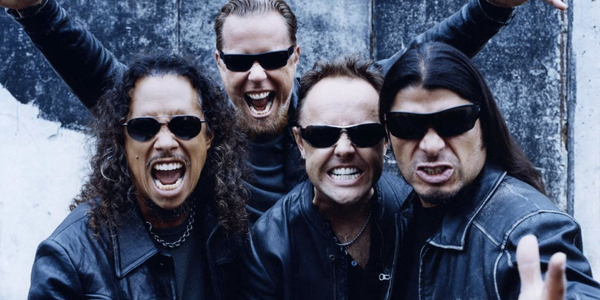
Metallica is arguably the biggest metal band in the world, their popularity seldom wavering even as music trends come and go. Every single Metallica album has achieved multi-platinum status (a feat only matched by Led Zeppelin and The Beatles), and they continue to sell-out arenas and stadiums throughout the world (even when they have no new album to promote). Historically, they are every bit as important to the evolution of metal as Black Sabbath. Metallica brought true metal to the mainstream and lent a major hand in killing 'hair bands' to allow the genre to grow beyond its often-ridiculed image. They are arguably the first metal band virtually everyone took seriously. Because of this, Metallica has endured while their peers fell by the wayside. Yet when we look back at the band's eclectic 30 year career, it's actually quite amazing they're still around. One can't help but wonder if perhaps Metallica themselves aren't just a tad suicidal. Over the years, consciously or unconsciously, they've gone to great lengths to sabotage their own careers with creative and business decisions no one in their right mind would make. More than any other band in history, Metallica have repeatedly attempted career suicide, only to emerge bigger than ever. Their continued success flies in the face of everything modern science (or common sense) currently knows about killing one's own career. The following is a list of Metallica's biggest attempts at career suicide...

10. Lulu

Long before it was ever even released, we were pretty certain the Lulu album would suck. Even those only casually familiar with Lou Reed and Metallica knew the two go together like peanut butter and anti-freeze. There was absolutely nothing to suggest their individual styles were even remotely compatible. And indeed, Lulu is a strong candidate for the worst record ever released by a major artist, let-alone two. Little more than Reed€™s quasi-racist, spoken-word beat poetry spouted over Metallica's monotonous riffs, it sounds like the music and words were randomly slapped together without regard to melody or synchronicity. And the whole thing is 87 minutes long - the sheer awfulness of this two-disc train wreck may even prompt you to assume it's a joke at the listener's expense. Sadly, this was Reed's swan song (RIP), and his six fans left at the time likely came to the same conclusion: €œWell, that€™s Lou Reed for ya.€ After all, Reed also subjected them to the equally-unlistenable Metal Machine Music decades earlier. But for metal fans hoping Metallica would follow-up Death Magnetic (their heaviest album in 20 years) with something similar, Lulu was a slap in the face. But as awful as it is, Lulu only ranks number 10 on the list because, technically, it isn't an official Metallica album. Like the sh*tty experimental records John Lennon recorded with Yoko Ono, this was nothing more than an exercise in self-indulgence, and Metallica emerged pretty-much unscathed.

9. Fade To Black

Metallica's second album, Ride The Lightning, is an undisputed classic, providing the template for Master of Puppets, widely considered their masterpiece. But back in 1984, even though they were unofficial leaders of the burgeoning thrash metal movement with their debut album, Kill 'Em All, Metallica already began to distance themselves from their peers. What did they do for album two? How about an epic, proggy instrumental (The Call Of Ktulu), an attempt at a Judas Priest-type single (Escape) and a mid-tempo, sing-along anthem (For Whom the Bell Tolls)? Then there's Fade to Black, a ballad, of sorts (by thrash standards, anyway). But even though it's still heavier than anything Motley Crue was pumping out at the time, this was a huge risk for a band still struggling to make a living in a genre where diversity was frowned upon. Grassroots thrash fans were already screaming sell-out - but the risk paid off. Regardless of what one thinks of the song itself, Fade to Black is arguably the best-known track on the album.

8. Napster

Metallica was commissioned to record a song (I Disappear) for inclusion on the soundtrack for Mission: Impossible 2. But before it was finished, demo tracks of the song popped up on a file-sharing website called Napster. While it was completely understandable that many music artists were vocally opposed to their music being made available for free, Metallica (mostly Lars Ulrich) led the charge to put a stop to it, threatening to present a list before a grand jury of thousands of Napster users who illegally downloaded their music. The move alienated a lot of fans, who countered that Metallica first built their own career through illegal tape-trading. This controversy destroyed any so-called 'street-cred' Metallica once had. A common response (mostly made by those who regularly download music for free) was that Metallica were already rich, and were now greedy money-grabbers. During this debacle, the media portrayed the band as spoiled and paranoid, terrified of their empire crumbling. As the band's unofficial spokesman, Ulrich himself was singled-out as an arrogant, self-righteous jerk (not entirely unwarranted, considering how badly he presented himself during the proceedings). On the other hand, look what€™s happened since. File-sharing and free downloading have all but destroyed the music business. Ironically, Metallica is one of the only remaining rock acts who haven€™t yet been affected. Their albums continue to sell in the millions, while most artists can no longer make a living on music sales alone. Turns out Lars was right all along. Speaking of which...

7. Lars Ulrich

Perhaps this is an ongoing suicide attempt, but back when the the band was starting out, drummer Lars Ulrich was arguably the biggest heavy metal fan on the face of the Earth, and so-badly wanted to be part of that world that he co-founded Metallica before he really even knew how to play. He got better of course, but if you were to ask any real musician (even today), most will likely tell you his skills pale in comparison to his bandmates. Whether or not such an assessment is accurate is obviously subjective (we think he's a great drummer), and perhaps some of the condemnation of Ulrich's musical ability stems from his ego, which seemed to swell exponentially as Metallica got bigger. Lars was the one who flaunted his wealth, hobnobbed with the red carpet crowd and alienated thrash fans who made Metallica so successful in the first place. In interviews, he often comes across as embarrassingly arrogant, repeatedly condemning his peers who chose to remain true to their roots. Since he also does the most interviews of any band member, Lars has become their unofficial spokesperson. He was especially painful to watch during the Napster hearings, where he came across as a spoiled brat whose toys were taken away. Lars may have ultimately been right about the impact of file sharing on the music industry, but the fact he loves the spotlight and doesn't know when to shut up has left a lingering bad taste in many people's mouths. But do we love Lars? Absolutely. Ultimately, he's still a metal fan (despite his repeated allegiance to Oasis) who's living the ultimate dream. This is a guy who initially had no discernible talent other than ambition. Maybe that's why we still tend to forgive him for his digressions.

6. ...And Justice For All

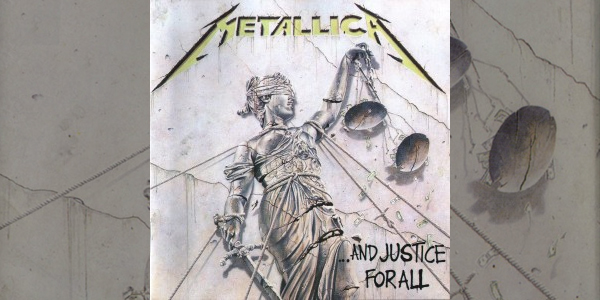
This was Metallica's first album following beloved bassist Cliff Burton's death. Despite the tragedy, they were still riding high on the momentum of Master of Puppets, and after replacing their fallen comrade with Flotsam & Jetsam bassist Jason Newsted fans expected a similarly heavy follow-up. If there was ever a time to play it safe and make Master of Puppets 2, this was it. Instead, Justice is an album of overly-complex progressive metal which would have made Emerson, Lake & Palmer proud. In addition Newsted's bass is almost absent, with the whole album sounding thin and shallow, with no bottom-end. There€™s a long-standing story that the final mix was part of Newsted's hazing. If that€™s the case, Metallica had a lot of guts risking their careers just to put their newest member in his place, especially since they were already not the most prolific of bands (the interim between albums was steadily growing, but more on that later). Despite the crappy mix €And Justice for All became their biggest album to-date (currently the second-best selling album in their entire catalog), largely due to yet-another pseudo-ballad, One. It is also considered by Metallica diehards to be their last great album.

5. The Big Makeover

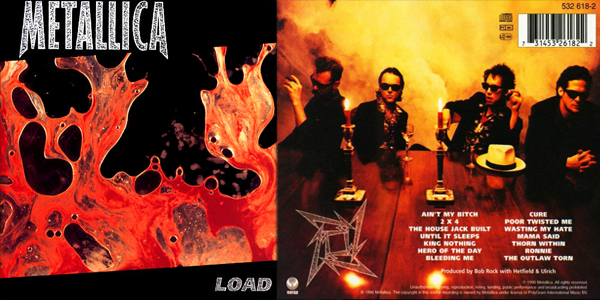
It may seem silly today, but the back cover photo of 1996's Load raised nearly as big a stink as the music itself. Here was the band, kicking-it around a table while sucking cigars and cocktails, dressed in Cuban suits, sunglasses and Hawaiian shirts. Most shockingly at the time, all four members had shed the long hair they used to whip around in sweaty, headbanging fury. This wasn't the scruffy Metallica we knew and loved. These guys (Lars and Kirk especially) looked like a bunch of swingers celebrating Cinco de Mayo. Even worse were the photos filling the CD booklet, which included suspenders, mascara, body art and band members tonguing each other. Metallica also had the audacity to modernize their classic 'lightning bolt' logo, which had graced every album, T-shirt and denim vest for the past ten years. Not only that, unlike previous original CD artwork related to themes of the albums, Load's cover featured Blood And Semen III, an abstract piece by avant-garde artist Andres Serrano, not created specifically for the band. Outside of the aesthetics, Metallica chose to promote the album by headlining Lollapalooza, an annual festival which showcased alternative rock acts, hip-hop, comedy and arts & crafts booths. It was as though the band, now full-blown rock stars, were suddenly ashamed of the humble roots which endeared them to the public in the first place. This sudden change would prompt fans and non-fans alike to unite to ask, €œWhat the hell are you guys thinking?€ But all those concerns would be moot if Load contained even a hint of Metallica's former metal masterpieces. Released five years after the Black Album (which was already receiving some receiving some public backlash), Load strayed even further from the band's roots in a blatant attempt to make everybody a Metallica fan (such as the full-blown country ballad, Mama Said). This was all simply too much change for one band at one time, and arguably should have killed their career (especially after the even-worse follow-up album of leftovers, Reload). Yet despite the fact you'd be hard-pressed to find anyone who liked any of the band's output during the 90s, Metallica remained a corporate juggernaut.

4. Some Kind Of Monster

Originally meant to be a document of the making of St. Anger, this film instead shows a band about to fall apart. Bassist Jason Newstead had quit, founders Ulrich and Hetfield are at each other€™s throats, and poor Kirk Hammett (the only person in the film who generates any real sympathy from the audience) stands by helplessly. The band hires a shrink (who, by the end of the film, comes across as a leech) to help them sort through their problems. Even former member Dave Mustaine shows up at one point for an emotional confrontation with Ulrich (and Mustaine was really annoyed the scene showed up in the final cut). We also meet new bassist Robert Trujillo, whose hiring is the metal equivalent of winning the lottery (even though being a bassist in Metallica has got to be the most thankless job in the world). He€™s more or less treated like a new employee, while Hetfield and Ulrich often come across as obscenely wealthy divas. Allowing themselves to be presented like this is a pretty brave-ass move on their part, and the film itself is long and difficult to watch at times, featuring very little actual music outside of a few St. Anger recording sessions (which won€™t make you appreciate the album any more than you already do). Speaking of which...

3. St. Anger

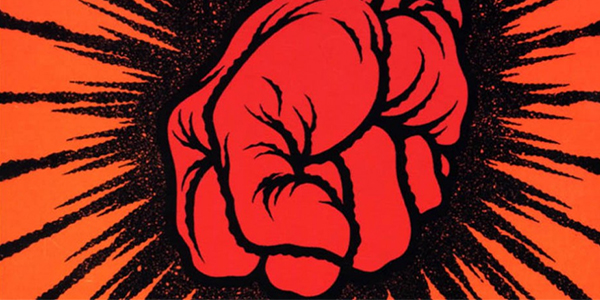
Truly, this was the first album where many thought Metallica had truly gone insane. It totally sounds like crap€on purpose. The whole conceit behind this record was, in producer Bob Rock€™s assertion, to make a quick & dirty garage-band type of album - only that band happens to be Metallica. Okay, not a bad idea for such a high and mighty band to strip things down and get back to its roots. But it came six years after their last studio album and was mostly assembled with Pro-Tools technology, with producer Bob Rock shoving all the mixing board settings to their highest levels. This made Lars' drums sound like he was beating on trash cans. And what idiot thought eliminating all Kirk Hammett's guitar solos (the best musician in the band) was a good idea? Not only that, the fact St. Anger took two years to record and is 80 minutes long is totally contrary to the concept of getting back to one's roots, especially when the production is so terrible it makes Kill 'Em All sound like Queen's A Night At The Opera. A few critics enjoyed it, most of the rest of us hated it, but everyone still bought it.

2. Metallica (The Black Album)

By 1991, the band had already achieved platinum success on their own terms. They won the first of many Grammys and were selling-out arenas worldwide with their uncompromising, epic-length music. But rather than following-up with another collection of songs that would give Dream Theater carpel tunnel syndrome, they put out the Black Album€12 tracks of simple riffs and more introspective lyrics, each clocking in at less than seven minutes, and not a single thrash tune to be found. Though sonically their heaviest, the slower tempos upset many of its longtime fans (most of whom ignorantly assumed speed had anything to do with whether or not a song blew your face off). But its success gained them millions of new ones. It€™s important to note the popularity and relevance of thrash metal was waning at the time. Only bands willing to move beyond the built-in limitations of the genre would survive relatively unscathed. Metallica may have been blessed with such foresight, but that was still no guarantee the effort to overhaul their sound would be successful. Think about it... Metallica were already critical darlings, with albums selling in numbers most bands could only dream of. Even MTV had warmed up to them. Remaking Puppets or Justice would have been the more logical (and safe) course of action. Instead, they took the single biggest risk of their entire career. If Metallica hadn't taken this plunge into unexplored territory, chances are the list you're reading right now wouldn't even exist. Love it or loathe it, you have to admit the Black Album is anything but a sell-out.

1. The Increasing Interim Between Albums

In their 30-plus year career, Metallica has released only nine studio albums, making Pink Floyd look as prolific as 70€™s-era Kiss. They released four albums in the 80s. Since 1991€™s Black Album, they have released only four more (only two during the 21st Century). Still, Metallica have cleverly managed to remain in the limelight the entire time€a new single here-and-there, bloated CDs of cover tunes, live performances with orchestras, ballyhooed package tours, live DVDs, warts-and-all documentaries, 3D concert films (see above)...all of which made them millions. When Metallica does decide to create new music, no matter how good or bad, it€™s an event. Even St. Anger, their worst album (based on sales and critical consensus), shot to number one on the Billboard charts and sold more copies than the all-time biggest albums by Slayer, Megadeth or Anthrax. But as of this writing, it's been over six years since Metallica's last studio album, and it'll undoubtedly be seven before their oft-delayed tenth disc is finally released. Visit virtually any metal metal news website and you'll read countless comments by disgruntled longtime fans who are sick of waiting. And a lot has changed in the industry since 2008 (when Death Magnetic was released). We're now living in an age when even long-awaited reunion albums by Van Halen and Black Sabbath have failed to achieve Gold Status. Kids don't buy rock anymore. Hell, most don't even buy music anymore. Even if Metallica's next album is a masterpiece, it's now doubtful it'll sell in the numbers they're used to. Even the EP, Beyond Magnetic (a collection of four songs from the Death Magnetic sessions) sold in relatively small numbers, despite its dirt-cheap retail price. Granted, musical trends and changes in the industry are beyond Metallica's control (diminished sales are probably a given at this point). However, thrash peers like Megadeth at least keep releasing albums on a regular basis in an attempt to keep their remaining fanbase happy. By the time Metallica ever gets around to releasing their tenth album, one has to wonder how many will be left to care. If this happens, it's entirely possible that Metallica could simply give up trying to remain musically relevant and become a nostalgia act like Kiss, making most of their money through touring. If that ends up being the case...suicide attempt successful. What do you think of the band in 2014? Let us know in the comments!

In this post: 
Metallica
 
Posted On: 
Contributor
Contributor

D.M. Anderson works and lives in Portland Oregon. He is the author of two young adult novels (Killer Cows & Shaken) and a collection of dark tales (With the Wicked). He has also published several short stories which have appeared (or will appear) in various anthologies and magazines such as 69 Flavors of Paranoia, Night Terrors, Trembles, Encounters, Implosion, Strange Fucking Stories, Perpetual Motion Machine. He documents his adventures in the dark on on his movie site, Free Kittens Movie Guide