Chris Cornell: Ranking Every Album From Worst To Best
Soundgarden, Supergroups, and Solo.

Chris Cornell is one of those rare gems in the music industry. He's connected to the spirit of old rock and roll, but has a knack - and the courage - for pushing his songwriting abilities forward.
He has a strong enough sense of self to create the things that will fulfill his own aspirations without going so far off the map as to completely repel his diehard fans. (With one notable exception which, due to the all-encompassing nature of this list, had to be included.)
Out of this rare blend of sensibilities came one of the defining bands of the 90s. Taking punk's energy-over-precision ideology and tossing it into a blender with all of their Black Sabbath CDs and a lone copy of the Sgt. Pepper's Lonely Hearts Club Band vinyl, the guys in Soundgarden placed themselves on a separate - but parallel - path from fellow grunge music icons Nirvana and Pearl Jam.
They were the first to shed the stigma of signing to a major label, and used their newfound exposure to sneak heavy metal riffs and freaky, dissonant rhythms onto mainstream radio.
Over time, Cornell stretched his wings even further, seeking to gain some personal satisfaction with disjointed solo albums and various supergroup excursions, with results ranging from "incredible" to "why are you doing this to us?"
But no matter the vessel he's operating, Chris Cornell has made some of the greatest music of his generation. Let's see how it all stacks up against itself.
15. Scream

The union of Chris Cornell and hip hop producer Timbaland wasn't as unusual as everyone made it out to be. He'd worked with rock acts before, even culling together such disparate acts as The Hives, Fall Out Boy, and She Wants Revenge for the collaborative Shock Value album.
But there was something strange about the way Scream turned out. Both Timbaland and Cornell seemed prepared to branch out from their respective comfort zones - why else would they decide to work together? - but neither fully bought into it, resulting in a schizophrenic, yet ultimately tepid, mess of an album.
There are brief moments of excitement to be had on Scream - though "Climbing Up The Walls" was probably a leftover from Timbaland's recording sessions with OneRepublic, Cornell's soulful lilt sells the cheesy pop-rock melodies surprisingly well - but on the whole, it's a hollow listening experience.
For some reason, people didn't enjoy hearing the most passionate singer of the grunge movement robotically half-singing the lines "No, that bitch ain't a part of me" over futuristic synths and dull drum loops.
14. Carry On

It's no coincidence that Soundgarden's most popular songs featured Cornell's intense howl front-and-center. It's more than a signature sound, it's a delivery system for the powerful, heavy metal ambitions of a band that occasionally let their melodies sink deep into the sludge. Cornell's caterwauling cut through any muck.
So...what happens when the sludge clears away and the melodies soften their edges?
Well, if Carry On is any indication, it leaves Cornell straining to elevate the lackluster instrumentation he's decided to surround himself with. There's nothing on here that carries the weight or oomph of a Kim Thayil riff, and Matt Cameron's strategic thumping was greatly missed on the limp and shuffling "Killing Birds."
There aren't any particularly horrible tracks on this album, it's just that the singer so thoroughly outshines the stuffy production at every turn with his dramatic pipes that it starts to sound like he's been asked to add a whole lot of spice to an incredibly overcooked steak just to make it edible.
13. Revelations

Whereas the supergroup's first album was a little clunky and disorienting, Out of Exile was much more unified and focused. It was the sound of a real band, rather than two separate band halves. Revelations was also the sound of a real band, but one that had been so sanded down and smoothed out that all of the character was gone.
That fact becomes abundantly clear when trying to pick out any legitimate highlights from the album.
The album opener and title track is a jaunty slice of hard rock groove, while the next track, the aptly-titled "One and the Same" builds on the weirdly danceable vibes exuded from its predecessor. Surprisingly, it works. A lot of people gave Audioslave guff for adding some "Motown bounce" to their album, but it's one of the few traits that makes Revelations pop. "Original Fire" gets one last funky punch in at track 5 before everything just sorta fades into a continuous drone.
Revelations isn't really all that bad. It's like your favorite worn-in spot on the couch: It's comfortable, certainly, but you know there are more rewarding things you should be doing with your time.
12. Ultramega OK

Paying tribute to heavy metal, punk rock, and classic psychedelia can get real messy, as Soundgarden's debut album proves. But don't let that turn you away, because no other band could stuff all of those influences into one record (and give equal shrift to each of them) and come out the other end with something so memorable.
What might strike any casual fan of the band's is just how nasally and shaky Chris Cornell's vocals are out of the gate. Indeed, "Flower" almost sounds like it was recorded with Billy Corgan at the helm.
Aside form the higher pitched vocals, this is also a more playful band than the one who would later out-somber even Nirvana. The punk rock in them is on display in full effect here, as is their power metal bombast. Just listen to those wailing guitars and that crazy, screeching falsetto from their cover of Howlin Wolf's "Smokestack Lightning."
It's a pretty uneven album, which also makes it one of Soundgarden's most exciting.
11. King Animal

Soundgarden's triumphant return kicks off with a jam that, in spirit at least, is similar to the beginning of Pearl Jam's Backspacer. It would be disingenuous to suggest that the aptly-titled "Been Away Too Long" is anything resembling party music, but it's certainly a little slicker with a surprisingly upbeat riff.
This is largely a fluke, though, as the rest of the album quickly dips back into the reassuringly heavy territory the band became known for in the 90s. All of the old staples are here: the downtempo dirges, the winding psychedelia, and the effervescent pops of energetic hard rock.
Some have criticized Soundgarden's later albums for adhering to a stricter formula, and that becomes a pretty valid analysis when listening to King Animal drift through the same peaks and valleys they'd hit on Superunknown. This time around, those dips are less thrilling, but that doesn't detract from how solid the individual songs are.
Standout tracks include the funky menace of "Non-State Actor" and the downright evil, devil-horns flashing "Blood on the Valley Floor."
10. Louder Than Love

If you like wall-to-wall screeching, wailing guitars with the occasional blast of vocal theatrics ringing through the melee, then Louder Than Love is the Soundgarden album for you.
Though there are some fast and furious moments on this album, by and large it's a slow grinder, wringing every possible reference to Black Sabbath they possibly can out of the melodies. Songs like the sluggish, rambling "Power Trip" set them firmly in the mold of stoner metal that bridges the gap between Deep Purple and Queens of the Stone Age.
How much you appreciate Louder Than Love is probably dependent on how much you can tolerate a band frequently diverting into ironic silliness, as they do with the punk-flavored "Full On Kevin's Mom" and the purposely insipid machismo of "Big Dumb Sex."
Overall, it's a muscular, efficient, heavy, and seemingly unfiltered. The word "raw" might be overused when describing this type of music, but Louder Than Love is unapologetically raw.
9. Out Of Exile

You kind of got the idea all of the songs from Audioslaves debut were written around - and driven by - the lead guitar riff, with everything else filled in later. While that method of songwriting can certainly work (just ask Slash), it would seem that Audioslave thrives more when the songs are constructed a little more naturally.
Don't worry, there are still plenty of memorable Tom Morello moments on the album, they just arrive without feeling like they're being forced on you.
Out of Exile also contains the song most unique to this supergroup, the beautiful, shimmery "Dandelion." The riff doesn't sound anything like the usual stompboxed Morello jam, and Cornell sounds like he just took a time machine straight out of the 70s.
A few moments on the album feel a bit cluttered to cut through the murkiness, such as the endless barrage of sonic blasts that should make "Man Or Animal" an exciting listen, but instead come off as just plain unfocused.
8. Higher Truth

The ornate, Baroque pop stylings of lead-off single "Nearly Forgot My Broken Heart" suggests that Chris Cornell has finally sunk into an easy confidence that lets him dive headlong into the warmer fringes of mainstream radio once again.
Producer Brendan O'Brien appears to have been brought in for Cornell's newest venture, not to lend his expertise in making grunge records, or even to recapture the sound of later Audioslave albums, but rather to expand on his work with pop-rock artists such as The Fray and Train. And as bad as that may sound, don't worry, this collaboration is much more fruitful than the average Lifehouse album.
It's a subtle album, for sure, one that favors sparse melodies in favor of bombastic guitar riffs, but once again it's Cornell's voice to the rescue. He elevates pop-rock tunes that are so lightweight they may have otherwise been blown away by a slight breeze.
All in all, Higher Truth lacks a lot of the punch that even Cornell's first solo album, Euphoria Morning, packed. But the quieter songs grow on you after a few listens, and "Circling" is absolutely breathtaking no matter how many times you hear it.
7. Down On The Upside

Rather than retreat from the more focused, precise craftsmanship that garnered them instant critical acclaim for Superunknown, they instead decided to just haze things up a touch.
Listening to a song like "Blow Up the Outside World," it's hard not to default to Beatles comparisons. But that blurry guitar coupled with Cornell's subdued, almost hollow vocals immediately harken back to "She Said, She Said" and "A Day In the Life."
Elsewhere, a few too many songs are lacking the signature brawn of the rhythm section. "My Wave" is a great song, but parts of the song fall flat and sound empty, as if the producer accidentally deleted one of the guitar parts, but was on a time crunch and simply went with what he had.
Down On the Upside is a curious blend of visceral, gut-hitting hard rock and crisp-but-fragile alt rock that never quite catches on the way the'd probably hoped it would.
6. Audioslave

Coming from two entirely different backgrounds of the 90s alt-rock movement, Rage Against the Machine and Soundgarden had only the flimsiest of similarities. It was exciting to think of their styles merging, but the question leading up to their debut was "Which band's methodology will come to the forefront?"
That was answered rather definitively with the release of lead-off single "Cochise," which simply plugged Cornell's muscular wailing into what could have very well been a pre-written instrumental track for an unreleased Rage album.
But this is a benefit for Cornell, and for his fans who had waited a long time to hear him unleash his shredding vocals in such a powerful way. It doesn't matter that he's not doing it over Kim Thayil's brand of brooding riffage.
Audioslave formed their own kind of chemistry. Rather than trying to feverishly whisk oil and water together, they simply let Cornell's oil hang out over Rage's water. Occasionally the two immiscible ingredients somehow merged together for a wholly original concoction. "Like A Stone" and "I Am the Highway" are two slow-burners that neither faction would have come up with individually, but all in all, what you see is what you get.
And what you get is pretty !*$% good.
5. Songbook

Harvested from Cornell's long and illustrious career, both as a solo artist and with his various bandmates, Songbook strips down songs from every chapter of his career and allows the singer to get as moody and reflective as he wants. The lone fact that none of it feels particularly self-indulgent or over-aggrandized makes it a staggering success.
Most of the songs chosen for Songbook had been overlooked by casual fans, with roughly two-thirds of the tracks falling into "obscure" territory. That's for the best, though, as Cornell sounds much more comfortable rearranging the tunes that he hadn't already played to death by that point.
It's not that these versions of "Black Hole Sun" and "Like A Stone" are necessarily bad, they just have that obligatory feeling to them that drains a bit of the original power out of them. Still, those hiccups are few and far between, as most of the album sounds more forceful than forced, allowing Cornell to update his old songs with a natural confidence that makes this go down so very smooth.
Also, nothing on Songbook sounds as forced or misguided at his too-precious acoustic cover of "Billie Jean." So that's a plus.
4. Euphoria Morning

Soundgarden fans who were used to hearing Chris Cornell's spellbinding howl overtop fast and furious rock melodies were probably a little taken aback the first time they heard the frontman's debut solo album. It's still a rock album, to be sure, but there's no sludgy, distorted riffs or arena rock bombast. It's just Chris. But that ain't a bad thing.
There's a slinky, deeply entrancing quality to Euphoria Morning that lends itself extremely well to Cornell's scruffy vibrato. For the first time in his career, it felt like he wasn't aiming for the gut or the rafters, but for somewhere deep inside the psyche, going at the album with a more cerebral approach.
Thematically Euphoria Morning (originally titled Euphoria Mourning), is heartbreakingly cathartic, with Cornell issuing indictments of his own failures and giving listeners a peak into the tumultuous years between Soundgarden's breakup and his first solo release.
And that's why this album succeeds. Whether he's dipping his toes into bluesier territory, or further extending the psychedelic experimentations of Down on the Upside, Cornell never compromises lyrically. You're getting him at his most honest and introspective.
3. Superunknown

As sprawling and crisp as anything lumped under the broad category of grunge, Superunknown came to represent that heavier, psychedelic side of the movement. It was proof that the fringes of alternative music could find a place on commercial radio, so long as they kept most of their punk influences out of it.
Because that's really the biggest difference between Superunknown and the band's earlier work: an abundance of winding epics without the slightest inclinations of punk rock. Even considering that, however, it would be wrong to suggest this is the act of a band "selling out."
No, they simply switched gears to focus even more on the power metal that had worked so well on Batmotorfinger. And this allowed Soundgarden to showcase some of their subtler stylistic flourishes.
Working through the track list, it would be difficult to argue that this wasn't a wise decision. "Fell On Black Days" and "The Day I Tried To Live" are the album's finest singles, though even in spite of over-saturation, "Spoonman" and "Black Hole Sun" remain songs worth venturing back to.
2. Temple Of The Dog

A tribute album that led to the rare, blissful union of both Pearl Jam and Soundgarden's resident songwriters, Temple of the Dog became the impetus for Cornell to stretch himself into cleaner, slightly mellower territory, with a backing band that had a knack for arena-ready hooks.
It seems almost infeasible that these guys haven't gotten together to record another album in the intervening 25 years, considering how successful this merger was in 1991, but it also makes sense. They're all serious musicians who saw this as their eulogy to a friend, Andrew Wood. It wasn't meant to be anything more than that.
But what a touching and brilliant eulogy it is. Kicking off with the beautifully genuine and simple "Say Hello 2 Heaven," it's clear that this isn't going to be an art-rock record.
An unofficial solo debut of sorts for Cornell, who wrote the majority of the album himself, it sounds every bit as theatrical as the glam metal power ballads grunge would soon kick out the door, but the difference lies in the band's alternative touches. There are a couple of songs that wouldn't sound out of place on Soundgarden's Louder Than Love (particularly "Pushin Forward Back"), and that makes it even more interesting in retrospect.
Temple of the Dog doesn't completely reinvent the wheel here, so much as expand on the Mother Love Bone sound while adding a few of their own flourishes. And that is how you do a tribute album.
1. Badmotorfinger
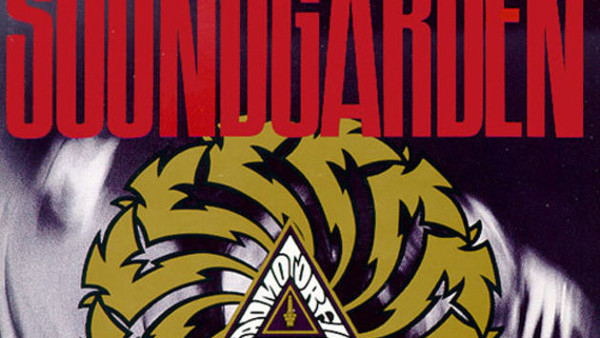
The ideal blend of craft and muscle, Badmotorfinger may not contain their biggest radio hits, but it's all-around better-crafted and sounds less desperate to fit into the grunge strictures that would envelop a large portion of Superunknown. This is an album of pure metal. And it's f--king brilliant.
Any album that kicks off with something as melodic and face-melting as the flawless "Rusty Cage" and transitions immediately into the ultra-powerful, riff-heavy dirge of "Outshined" is destined to be a classic. And although they certainly front-loaded the album - the epic "Slaves & Bulldozers" comes next, followed by the in-your-face "Jesus Christ Pose" - but that doesn't mean the rest of the album's a slouch.
Badmotorfinger is full of jagged edges, jarring turns, complex detours, and trap doors, but by the time "New Damage" finishes its atonal spiral, you immediately want to go back and navigate it all over again. It's like the Boss Level of any good video game: It's arduous, but ultimately so entertaining that you don't mind having to go back and start over multiple times.
It's a challenging album, for sure, but one that presents just enough on the surface to hook you in while promising fruitful rewards for repeated listens.
Badmotorfinger isn't just an album. It's a damn experience.