Top 10 Musical Pseudonyms

There’s a hell of a lot of musicians that could have made it on to the list but we're not naming names...
Pseudonyms appear frequently throughout the arts. Literature has George Orwell, Mark Twain and Oscar Wilde. Film has Boris Karloff, Marilyn Monroe and (sigh) Nicholas Cage. And those are but a few examples from areas that are positively overflowing with aliases. But with such a rich lineage of artistic pseudonyms, what is the reason for the rejection of given names and the embracing of alternative identities? It can be argued that alter egos can elevate a bland and unexciting title to the realm of the household and memorable, destroy class-based associations or even reflect the individual€™s creativity and artistic philosophy. And music, as one of our most innovative and dexterous mediums, offers a lot of scope for such performance and theatricality as well as the need for a name that will get you noticed. Always a platform for experimentation and exploration, music and lyrics afford the artist the chance to lose themselves behind the mask and play up to a constructed character. There€™s a hell of a lot of musicians that could have made it on to the list but I€™m not naming names. So you€™ll have to agree with who I€™ve picked!

10. Bez (Happy Mondays)

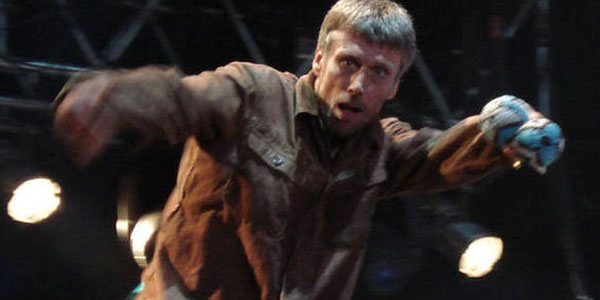
During the mid-80s to the early-90s, the Happy Mondays were the living, breathing personification of Britain€™s escalating rave culture. As part of Factory Records, home to fellow Manchester icons such as Joy Division and New Order, they will always be inextricably linked with impulsive label owner, Tony Wilson, and his New Order-owned brainchild of a nightclub, the Hacienda. Dressed in an industrial aesthetic that stayed true to the label€™s name, it became a hotspot for pioneering dance DJs and the ideal place to sample the new drug of choice, ecstasy. And fittingly, the Mondays€™ funky music and €˜E€™-influenced lyrical content reflected the hazy inner workings of the night club and its customers before becoming synonymous with twenty-four hour partying. Despite contributing very little (essentially nothing) to the Mondays€™ acclaimed sound, honorary band mascot, Mark €˜Bez€™ Berry, embodied all of the traits of the quintessential raver. Relaxed, cheeky and inclined to dabble in the odd illicit substance, he became the everyman of the Madchester scene. Equipped with an array of memorable dance moves and a flawless handle of maraca-shaking technique, this happy-go-lucky party animal reinforced the drug-addled humour that flourished in Shaun Ryder€™s trippy lyricism. However, the drugs finally caught up with him (and his band mates) in the midst of an ill-fated recording trip to the crack-soaked island of Barbados, an experience that produced the Mondays€™ universally ridiculed Yes Please! and bankrupted the already sinking Factory label in the process. -->

9. Eminem

Eminem4 After weathering an unhappy and pain-ridden childhood, it€™s unsurprising that Marshall Mathers opted to adopt an alternative moniker. Abandoned by his father in his infancy, bullied at school and maltreated by his unstable mother, the creation of Eminem (and later, Slim Shady) appeared to be a very public airing of his personal trauma and the unleashing of years of pent-up rage at those who had made his life so unbearable. --> --> Originally labelling himself €˜M&M€™ (but later altered to Eminem for possible copyright reasons), this alternative title was soon joined by a further nom de plume, Slim Shady. Often recognised as a controversial character that acts as Mathers€™ id, Slim€™s unsavoury rants complimented Eminem€™s heart-wrenching honesty effortlessly. In fact, it€™s quite unnerving how, to this day, Mathers slips in and out of these characters with such flair and ease, often embodying both aliases in a single verse and constantly blurring the line between truth and fiction.

8. Poly Styrene (X-Ray Spex)
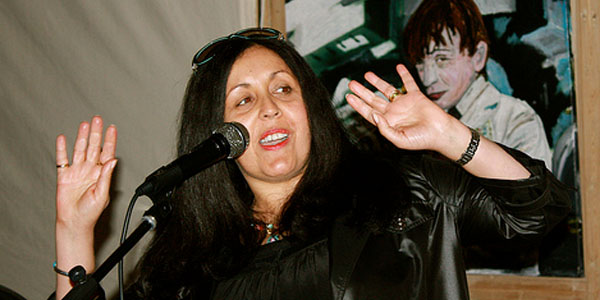
Everyone loves a play on words and judging by the name of the name that Marianne Elliot adopted, PUNks were no different. Hahahaha... Now, if you€™d just ignore that dreadful attempt at humour, we can move all move on!

Regardless of its inherent contradictions, if punk was one thing, it was vehemently political. But where The Pistols and The Clash bemoaned the state of a country that bordered on becoming a police state, Day-Glo-sporting art rockers, X-Ray Spex, used the movement as a platform to comment on materialism, artificiality and gender inequality. These themes permeated the band€™s only long-player, Germ Free Adolescents, and are perhaps most memorably found on their fabulously feisty stand-alone single, Oh Bondage, Up Yours!

In said single, a charismatic Poly Styrene uses the imagery of bondage to not only critique the static sexualisation and expected life trajectories of women but also to address the idea that people prostitute their true selves to survive in a conformist society; a theme of assimilation that prefigured further explorations of this allegory, on songs such as the Manics€™ explosive €˜Yes€™ and Pulp€™s disillusioned €˜This Is Hardcore€™. Defiant and provocative, Styrene was something of a pioneer for the modern-day female pop star, with her unconventional €˜quirky€™ appearance and challenging subject matter inspiring such chart subversives as Madonna and Lady Gaga.

As a reflection of X-Ray Spex€™s obsession with fakery and consumerism, the apt pseudonym Poly Styrene also somewhat depressingly suggested that no matter how hard people try to remove socially-ingrained preconceptions, our perceptions will eternally be the constructs of our inhabited society. After all, we are all just products of prevailing fashions and ideologies with little to no freedom of choice.

7. The Ramones

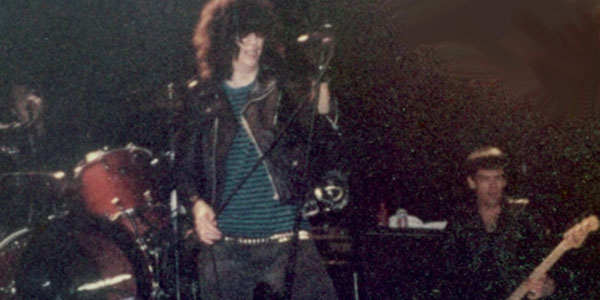
Leather-clad Converse endorsees, The Ramones, were arguably the first real €˜punk€™ band. Adopting the sleazy and snotty minimalism of the Stooges, MC5 and the New York Dolls (bands whose style has been retrospectively referred to as €˜proto-punk€™), these €˜four brothers€™ from the bowels of New York City stripped back the primal sounds of their predecessors even more so and prided themselves on thrashing out short, rudimentary two-minute songs that dealt with fixtures of the everyday- the drugs, the heartbreaks and the violence that permeated the streets. Their eponymous debut was the catalyst for a punk explosion that became a tale of two cities; a continuous musical dialogue between the aforementioned New York and a London nervously awaiting the inevitable entry of Margaret Thatcher into Downing Street. Yet, where punk is often recognised as a movement for €˜ripping it up and starting again€™, The Ramones€™ obsession with girl-group melodies undermined this short-sighted nihilism. Naming themselves after a certain Paul Ramon- a pseudonym that The Beatles€™ Paul McCartney frequently used when signing into hotels- the band further betrayed their love of what came before and their appreciation of the Fab Four€™s irrepressible song writing craft. And to think, Ramones protégées, the Sex Pistols, allegedly kicked Glen Matlock out of the band for €˜liking The Beatles too much€™. How ironic.

6. Tom Verlaine (Television)

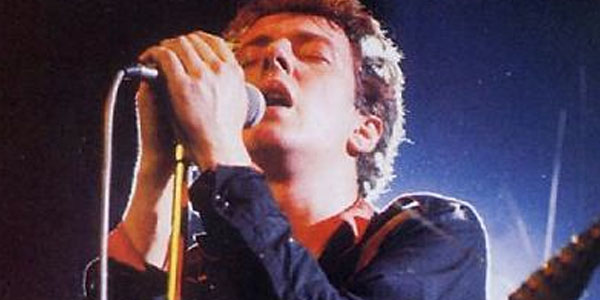
http://www.youtube.com/watch?v=jtZYdVNflsA Television are the only band that I€™ve ever heard being described as €˜proto-punk€™, €˜punk€™ and €˜post-punk€™. Maybe it was their sneer and demeanour that earned them the former two labels but conversely, perhaps it was their mix of complex guitar interplay and jazz-influenced tuneage that hinted at something more progressive and sustainable than the three chord formula and simplistic riffs of their contemporaries. Certainly, critics have always praised their technical proficiency and often recognise them as the most accomplished outfit to emerge from the mid/late-€˜70s CBGBs punk scene, an accreditation of which the band themselves were fully aware. This is reinforced by Tom Verlaine€™s dismissal of close friend, Richard Hell, from an early incarnation of the band due to supposedly inadequate bass playing, showcasing the ruthless streak of a man who would not let lacklustre musicianship hinder the quality of his band. Indeed, first-hand testimonies (check out the scathing Verlaine anecdotes in one-time Blondie bassist, Gary Valentine€™s, superb autobiography) regularly allude to the front man€™s pretensions, prejudices and cocksure belief in his band€™s rightful place alongside Patti Smith at the top of the New York punk hierarchy. It seems fitting then that the artist born Thomas Miller would select a nom de plume that paid homage to one of the most respected, precocious and lauded poets of the French tradition, Paul Verlaine. True to his namesake, Verlaine€™s lyrics contained a tortured poetic heart and employed abstract, rather than obvious, language, to convey the tensions and troubles of €˜70s America in an era where most bands favoured the real over the fantastical. The co-author of some of music€™s most revered albums, Verlaine€™s arrogance may not be to everyone€™s taste but if you€™d written an album as definitive as Marquee Moon, I€™m sure you€™d be shouting about it too!

5. Iggy Pop

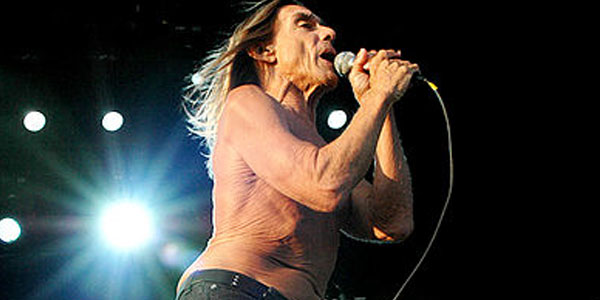
iggy-pop Long before he sold out to €˜the man€™ and became a literal puppet for a car insurance company, Stooges€™ leader, Iggy Pop, was one of the most intense, unpredictable and unique front men of all time. His wild onstage antics varied from hurling his sweaty semi-naked body into an adoring crowd (inventing 'stage-diving€™ in the process) and cutting himself with glass to proudly exposing his manhood. As a member of The Stooges, he bridged the gap between the €˜60s counter-culture and the flowering punk scene, borrowing his enchanting stage craft from Jim Morrison but ramping up the sexuality and self-destructive propensities of the Doors€™ front man several notches and applying guttural vocals to raw, filth-ridden and ennui-laden lyrical subject matter. Baring the hardly-catchy or memorable birth name, James Osterberg, his more distinctive alter ego, Iggy Pop, was a marriage of two separate identities. Forever in and out of crude high school garage bands, Osterberg had a brief spell as the drummer for the Iguanas and eventually adopted a shortened version of the band€™s name as part of his new identity. The origin of 'Pop', however, is far less rock and roll. Inspired by a close friend, Jimmy Pop, who suddenly lost his hair and eyebrows; Iggy shaved his own as a mark of solidarity and subsequently took the surname to complete the persona. Pretty boring, huh? That sort of behaviour might seem outrageous on a lads€™ night out but it barely registers on the Iggy Scale of provocative and ludicrous behaviour. This is a man who regularly vomited in front of a live crowd and played on, for crying out loud!

4. David Bowie

Db Often labelled a chameleonic musical phenomenon by the music press due to his various and vast guises, this popular appraisal of David Bowie is fundamentally incorrect. A chameleon changes its colour in order to adapt to its surroundings and ensure of survival whereas Bowie CREATED the very environments that his countless imitators adapted to. So, if anything, his copycats were the real chameleons, feeding off Bowie€™s innovations in order to stay relevant. He embodied the ultimate glam superstar in Ziggy Stardust, flirted with soul on Young Americans and produced the murky and alien-sounding Berlin Trilogy all in less than ten years, becoming the most diverse and trend-setting musician of his age. Despite essentially becoming what Ziggy originally intended to caricature (a ravaged, drug-reliant rock star) the enigmatic artist€™s most famous alter ego was but one of many. Others included Aladdin Sane (a kind of Americanised Stardust), The Thin White Duke and perhaps, most surprisingly, the name Bowie itself. Born with the most bog-standard and humdrum of British surnames, Jones, David adopted this more noticeable and exotic surname to distance himself from the similarly-named Monkees member, Davie Jones. A lover of the performing arts and its experimentalism, Bowie translated his love of the theatrical into all of his numerous incarnations and ensured that the thematic content of his music was always matched by a striking and distinctive visual appearance and display. An iconoclast in every sense of the word.

3. Johnny Rotten (Sex Pistols)
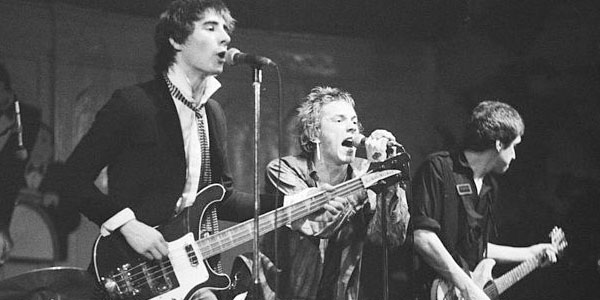
Describing himself as €˜a public hate figure at 20€™, the musical icon that was born John Lydon put the fear of God into conformist society with bilious anti-establishment lyrics and an unsettling, gruesome stage presence. Recruited by impresario, Malcolm McLaren, to front the band that morphed into the Sex Pistols after associate and future Clash manager, Bernie Rhodes, spotted him sporting a home-made 'I Hate Pink Floyd' T-shirrt and safety-pinned trousers inside the McLaren-run punk retail hotspot, Sex, Lydon set about re-inventing himself as Johnny Rotten and quickly became the (decaying-toothed) poster boy for the London scene. Rotten was, in fact, a name that perfectly encapsulated Lydon€™s new-found antagonism as well as being symbolic of the stagnancy, corruption and hypocrisy that abounded in the firmly-established British institutions that the Pistols€™ man critiqued. Honourably forthright and dangerously honest, Rotten€™s penchant for nihilism and multi-faceted, eloquent attacks on the monarchy, Capitalism, record companies and expectation seethed with a genuine anger and fury that combated any notion that the Pistols€™ image and ethos was fully controlled and orchestrated by McLaren. Yet amongst this hatred, Rotten managed to achieve the impossible and imbue his defiance with a sarcastic and ironic humour, proving that if there was hope, it lay in laughter.

2. Joe Strummer (The Clash)

As we€™ve already established, the punk movement was rife with contradiction. And The Clash, despite being my favourite band of all time, provided us with many, many inconsistencies. Following on from The Pistols€™ ousting of Glen Matlock due to his Beatles fixation, The Clash€™s paradoxical philosophy was glaringly visible in the lyrics to White Riot B-side, 1977. Despite the angry proclamation that there was no place for €˜Elvis, Beatles or the Rolling Stones in 1977€™, Mick Jones€™ guitar work on this track and their debut album, was, in fact, covered in the six-string hallmarks of a certain Keith Richards. The band€™s love of Mr Presley also later became evident in their slick visual reference to his self-titled record on the cover of their 1979 double LP, London Calling. But if that wasn€™t enough, the band€™s charisma-exuding front man, Joe Strummer, was another major contradiction in terms. Born John Mellor as the son of a Foreign Service diplomat, Strummer received a public school education and could easily be described as comfortably middle class. But, in his pre-Clash years, he re-branded himself €˜Woody€™ Mellor in homage to his political and musical hero, Woody Guthrie, a move which began his rejection of his father€™s ideals and betrayed his fierce left-wing beliefs. After years of being known to everybody as Woody, Mellor settled on Joe Strummer as his musical stage name. This crude surname referred to his rudimentary rhythm guitar skills whilst €˜Joe€™ presumably reflected his desire to voice the disillusioned opinions and everyday realities of the €˜average Joe€™. For a movement that was supposedly incited by tonnes of disaffected working-class teens, The Clash leader€™s position at punk€™s forefront saw him eternally haunted by his privileged background and the critics who questioned his legitimacy because of it.

1. Bob Dylan

The solo musician whose dexterity, flair and class awoke the innovative spark in the aforementioned David Bowie, a feat that the Brixton-born €˜70s icon acknowledged in his love letter of a track, Song For Bob Dylan, the man born Robert Zimmerman is perhaps the most famous proponent of the pseudonym. The unwitting figurehead of the early 1960s folk scene, Dylan€™s decision to €˜plug in€™ and embrace electric rock and roll at the Newport Folk Festival mid-way through the decade still remains one of the most monumental moments in all of music history, marking the point where he alienated die-hard folkies and began to successfully adapt his critically-lauded tunesmithery for the burgeoning rock scene. There has been widespread debate over where Zimmerman€™s choice of alternative surname originated but it was finally confirmed by the man himself (if his word can be trusted) that it was inspired by his love for the poet, Dylan Thomas. And certainly, there can be no disputes that Dylan is a powerful poet at heart and one of, if not the greatest, lyricists in all of modern music. Taking influence from Thomas and the Modernism of T.S Eliot and Ezra Pound in addition to the Beat scene that directly preceded music€™s ascension to the forefront of the counterculture, Dylan€™s complex analyses of social issues such as war and racism and personal topics like love, heartbreak and despair were crafted with such eloquence and insight that they were, and are still, unrivalled in their brilliance and verbosity by any artist since.

Contributor
Contributor

A 22 year old English Literature graduate from Birmingham. I am passionate about music, literature and football, in particular, my beloved Aston Villa. Lover of words and consumer of art, music is the very air that I breathe.