10 Classic Children's Books That Are Actually Racist

Timeless stories of childhood innocence and inconceivably racist stereotypes.
Nostalgia can be a powerful thing. It can make even the dullest childhoods seem bright and full of adventure, the most mediocre children's cartoon a masterwork in storytelling and pretty much any charting pop song in the 1990s the anthem of a generation. Unfortunately, these rose-tinted perceptions don't benefit from even the barest scrutiny and are easily shattered, revealing just how naff most of our childhoods actually were. However, there is some small comfort to be found in the fact that everyone is subject to operating under the misapprehension that 'things were better back then', and you're not alone in your mistaken belief that the old X-Men cartoons were actually good in any way. This cultural nostalgia doesn't extend simply to the perceived quality of things, though; it seems that humans have even programmed their brains to whitewash out the controversial or insensitive parts of great works of art so that the rest can be enjoyed without discomfort. And many of the western world's best-loved children's books have conveniently forgotten-about racist undertones (and sometimes overtones, too). But it would be ridiculous to throw the baby out with the racist bathwater, right? So the stories are still published - many in their original forms - in order to preserve the author's original intent, despite that intent being to obnoxiously disparage minorities in many of their book's pages. When you remember these stories, you're likely not thinking about the distorted portrayal of minorities in the books, as most of the following books have produced sequels and adaptations that do away with any uncomfortable material, but it's all still there in the original texts of ten children's novels that you'd never have guessed were actually racist...

10. Charlie And The Chocolate Factory

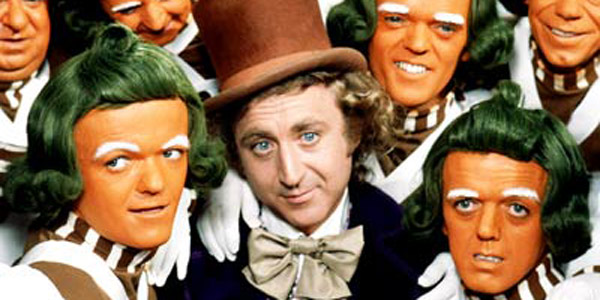
Quite possibly author Roald Dahl's most popular children's book, Charlie and the Chocolate Factory is a charming, colourful journey into the mind and titular workplace of Willy Wonka, delighting generations of kids the world over during nighttime readalongs. Unfortunately, Dahl's original text was a little more colourful than most parents would be comfortable with reading to their sprogs these days. You can probably guess where this is going: Oompa Loompas. But why? Aren't the strange little men who run Wonka's factory orange with green hair, and thus surely exempt from accusations of racism? Well, yes - if you're going by their (some would argue definitive) depiction in the 1971 film adaptation. But the Loompas were initially supposed to be black pygmies hailing from "the very deepest and darkest part of the African jungle where no white man had been before." Naturally, the idea of a rich white man forcing black slaves to do his bidding was quickly seen as a rather unsavoury notion and later versions of the text from the 1970s onwards changed the colour of the characters' skin from black to white... only a little too late for the illustrated editions of the book from 1964.

9. The Secret Garden

Frances Hodgson Burnett's early 20th-century novel about a young English girl who is forced to move back home after her parents die in India and discovers the eponymous greenery has been adapted into stage plays and films numerous times. It's not hard to see why: the story connects with young children who feel alienated from the adult world and wish to create their own to hide from them and features many sweet-natured moral lessons about caring for and about others. Well, most of them are sweet. After the protagonist, Mary, arrives at her new home in Yorkshire, a servant named Martha remarks that she thought the little girl would be black as she had come from India. Mary is upset by this comment, replying that "blacks are not people," a pretty reprehensible stance that no-one ever corrects. She later has to change out of her black clothes into white ones before she can find the garden and the book features several more highly unnecessary epithets against Indians and dark-skinned peoples in general. Maybe little Mary never needed to leave that garden after all...

8. Tintin In The Congo

The globetrotting adventures of Herge's intrepid reporter Tintin and his dog Snowy have long been standard fare for both getting kids to read and as a gateway into comics. The Belgian youngster's exploits have reached massive audiences, resulting in a cartoon series and at least one massive Hollywood blockbuster movie. Herge's stories helped to debunk racist stereotypes about Asians in the mid-20th century, which is why our next entry is a little baffling... Tintin In The Congo sees the titular hero journeying to Central Africa and getting embroiled in tribal warfare and a diamond smuggling ring orchestrated by Al Capone (naturally). Herge's depictions of the natives are nothing short of odious, his big-lipped, wide-eyed simpletons hailing the white reporter as having special powers: "White mister is big juju!" exclaims one thoroughly impressed woman after Tintin 'heals' her sick husband with a drop of quinine. The backwards attitudes present in the book were symptoms of the European colonial mindset Herge (and most of his countrymen) possessed at the time of the book's original publication in 1931, and wasn't intended to disparage the Congolese, who were under Belgian rule. That said, his condescending portrayal of the indigenous people as dumb and shiftless can hardly be seen as a positive one.

7. Noddy

Enid Blyton's hugely successful series of children's books (one of them, anyway) about a collection of toys living in Toyland was written between 1942-1963 and boy, does it show its age. Primarily focused on elfen wooden toy Noddy and his friends, the property was popular enough in the UK to spawn no fewer than eight TV adaptations, and is generally pretty tame in its subject matter. Well, except for the thing with the Golliwogs. In Here Comes Noddy Again, the titular hero gets tricked by a group of characters into coming with them into the woods where they proceed to steal his clothes and make off with his car. Those acts were committed by Gollies, representations of the black-faced, incredibly offensive dolls popular with Western children from a less tolerant age. These characters were untrustworthy thugs who have since been replaced in later editions of the books and completely excised in the television shows.

6. Pippi Longstocking

Like Little House On The Prairie, Swedish author Astrid Lindgren's series of books about the titular red-haired, incorrigible young girl who lives with a monkey and a horse have received scrutiny in recent years for their perceived but not entirely proven racism. In 2011, feminist theolgian Dr Eske Wollrad levelled claims that all three of the Pippi Longstocking novels "have colonial racist stereotypes" in them, especially in Pippi In The South Seas. When she meets several black characters on an island in the titular seas, they "throw themselves into the sand in front of the white children". Of course, Lindgren's granddaughter later pointed out that Longstocking doesn't stand for this kind of ridiculousness for long and feels uncomfortable being 'worshipped' in this way. All the same, the ethnic characters in the books are still portrayed as simpler than Pippi and her compatriots - and surely even suggesting that black children automatically assume white people are to be revered is something of an inappropriate statement, no?

5. Doctor Dolittle

It's everyone's favourite Eddie Murphy family comedy! No, wait, that's not right - it's a children's book from the 1950s about a doctor who discovers he can talk to animals that was later adapted with one of its more socially questionable subplots wisely excised. In the novel, the good doctor meets an African prince who wants to marry a white princess - which is about what you'd expect from a story involving talking animals, right? Unfortunately, this being the middle of the twentieth century and interracial unions not being quite as acceptable as they are now, the practicalities of this are shaky to say the least. So what does Dolittle do? What any good physician would - he bleaches the prince's skin white so that he can marry the girl without any of that nasty social stigma, producing "a smell like burning paper". So not only are children being taught that you should drastically change yourself in order to become acceptable to others, but that doing so will also make everyone sniff in confusion wherever you go.

4. The Chronicles Of Narnia

"What could be racist about a lion standing in for Jesus?" you cry. Well, nothing in particular, but it's rather telling that the C.S. Lewis stories that are most well-known and have been adapted into other media are the ones that are populated more or less entirely with white people (or, you know, talking animals). In a slightly dodgier area are the books featuring the Calormenes, a dark-skinned race of people with long beards, pointy shoes and turbans who live in the southern lands of Narnia and worship a demon-god named Tash. Oh, and most of them are cruel, terrible people. In The Horse And His Boy, for example, the lead Shasta runs away from home when his adoptive Calormene father decides that he wants to sell him into slavery. Most Calormenes are characterised as being selfish and mean-spirited, which is probably why they're okay with performing human sacrifices in the name of Tash. The only members of the race who actually beggar any kind of sympathy are those who renounce their race, culture and faith and accept the teachings of Aslan... which is kind of heavy even for Lewis.

3. Little House On The Prairie

Laura Ingalls Wilder's family saga of life on America's western frontier is not only a world-famous series of children's books but also a crucial document of what life was like for the 19th-century pioneers that populate the texts. Parents have lovingly read Wilder's stories to their children for generations. But those stories have also been banned from American schools for the racism present throughout them. Whether or not the Little House books are vindictive in their use of racist language is up for debate, but the evidence is all there: there is a great deal of time spent demonising Native American characters, painting them as savage and fearsome, a common cultural conception among frontiersmen in the days in which Laura grew up. Most of the negative language directed towards the natives comes from Ma's character, leading some to the conclusion that it's not the books, but Ma herself that is racist. And that gray area stays consistently inconsistent with other examples from the stories: when Laura's father performs in a minstrel show with grotesque caricatures of black people, she refers to them as "darkies". But there is also a black doctor character who's shown to be competent, smart and caring, throwing a curveball in the still-ongoing debate over the books.

2. Sherlock Holmes

Holmes and Watson require no introduction, being one of the most iconic (possibly THE most iconic) fictional crime-fighting duos in history. In the most recent adaptation of Arthur Conan Doyle's best known creation, the BBC's Sherlock, Holmes is an equal opportunities offender: he doesn't care if you're black, white, gay, straight, trans or even extra-terrestrial; everyone irritates him just the same. Unfortunately, the great detective from Baker Street has a bit more of a prejudicial streak in some of Conan Doyle's original texts, including a rather offensive encounter in The Adventure of the Three Gables. Holmes is pursuing a former slave, Steve Dixie, and once he catches up to him, tells the man that he won't ask him to sit, "for I don't like the smell of you," and that giving Dixie "any lip" is "certainly the last thing you need". This is all capped off, of course, by Conan Doyle's faithful narrator Watson informing us that Holmes was "staring at our visitor's hideous mouth." This isn't an isolated incident, either: The Sign of the Four features Tonga, a character from the Andaman Islands, and an in-universe reference book tells Holmes that his people "are naturally hideous, having large, misshapen heads, small fierce eyes and distorted features... They have always been a terror to shipwrecked crews, braining the survivors with their stone-headed clubs, or shooting them with their poisoned arrows. These massacres are invariably concluded by a cannibal feast." Which is about as bad at you can get for an author regularly championed as being liberal and progressive.

1. Peter Pan

Fantasy hero to millions the world over, Peter Pan's magical home of Never Land is, like The Secret Garden, instantly appealing to children as a place to escape from adults and never grow old. As timeless as J.M. Barrie's story about Peter and his adventures with the Darling children and the Lost Boys seems, there are more than a few elements in it which are thoroughly outdated. Aside from the sexism present in Barrie's original stage production, the author's treatment of Tiger Lily and the Native American characters in the story is thoroughly cringeworthy. Portraying a tribe as ignorant savages who hunt children and adults alike, Barrie writes that €œthey carry tomahawks and knives, and their naked bodies gleam with paint and oil. Strung around them are scalps, of boys as well as pirates,€ presenting a stereotypical view of 'American Indians' that was unsurprising for an author who'd never crossed the Atlantic to hold. Still, at least Barrie didn't feature the characters all that much and risk further racial prejudice as Disney did with their 'classic' 1953 animated adaptation of the story. One need only watch the 'What Makes The Red Man Red?' sequence in order to judge just how offensive the story could be: https://www.youtube.com/watch?v=Y_at9dOElQk

Contributor

Film history obsessive, New Hollywood fetishist and comics evangelist.