10 Mind-Blowing Misconceptions About The Berlin Wall

What should you actually believe about one of the most iconic symbols of the Cold War?

One of the most iconic images and symbols of the Cold War, the Berlin Wall dominated international relations throughout the 20th Century. Europe and the globe lived on constant alert throughout the century €“ potentially one international crisis away from a nuclear-weapon led World War Three €“ and one city, Berlin, lay slap bang in the centre of any potential disagreement. Partitioned into four sectors straight after World War II €“ supposedly run independently by the Allies of Britain, France the US and the USSR €“ and then split into €œWest Berlin€ (administered by the Western Powers) and €œEast Berlin€ (controlled by the Soviets), the city was eventually physically divided when a barrier was erected in August 1961. Berlin was situated inside Soviet East Germany, but was officially declared as a €œfree city€, offering a small pocket of capitalism in a sea of socialism in the West of the city and making it a constant source of tension. However, many misconceptions about the Berlin Wall exist. Here are 10 particularly mind-blowing misconceptions of the symbol of the Cold War...

10. That It Was Actually Called The Berlin Wall...
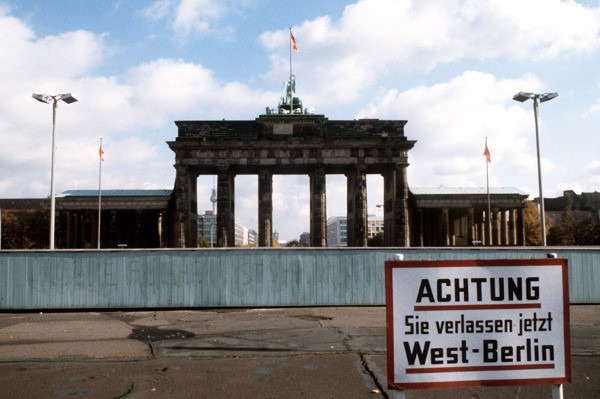
Although it is commonly known as €œThe Berlin Wall€, perhaps unsurprisingly that was not the original name given to it by East German leaders. Not only was it not given such a generic name, the German Democratic Republic€™s (East Germany€™s) authorities ensured that €“ much like the actual symbolism of a physical partition between East and West €“ it represented the difference between socialism and capitalism. It was dubbed the €œAnti-Fascist Protection Rampart€ (or €œantifaschistischer Schutzwall€ in German) when it was first erected overnight on August 13, 1961, by the East German government €“ a direct dig at the capitalist West, who Soviet propaganda liked to paint as being a mere extension of Hitler€™s fascist ideology.

9. It Was Not Actually A Wall At All Until 1965...
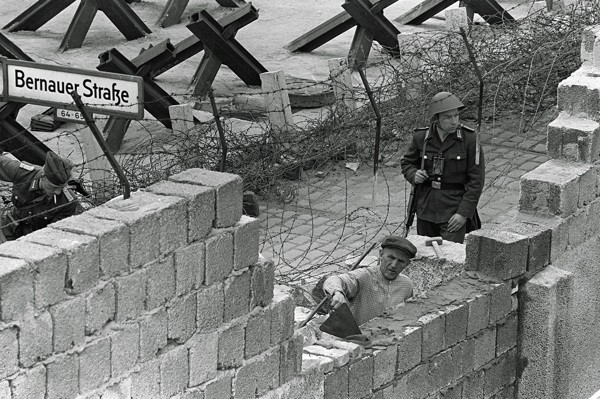
€œHow did the East Germans construct an 87-mile (140km) wall practically overnight?€, I hear you cry. Did socialism really provide such an efficient method for constructing huge infrastructure projects? Well, no. In fact on that night in August 1961 when the Wall first sprung into existence, it was not a €œwall€ at all €“ but in fact a wire fence that stretched along the dividing line of West Berlin and East Berlin. The construction of the €œWall€ itself was actually a gradual process. First of all, in 1962 a second wire fence, parallel to the original, was built 100 metres further into East Berlin to create a the €œDeath Strip€ €“ a barren area, filled with sand, in order to prevent escape attempts. And, over the next three years, the wire fence was gradually fortified and improved. Interestingly, it was not until 1965 when the partition actually became a physical concrete wall. The GDR and Soviet hierarchy had been reluctant to make the border an actual wall for fear of provoking a response from the Western Powers, so it took them until 1965 to do so. Finally, in 1975, the Berlin Wall as we came to recognise it was finally established. The €œBorder Wall€ (or Grenzmauer 75), also referred to as the €œfourth-generation wall€, was then constructed between 1975 and 1980 €“ providing a 3.6m high and 1.2m wide concrete wall that was practically impenetrable. The Berlin Wall, as we now refer to it, was not in fact one physical structure €“ it was a fluid barrier that developed over time.

8. The West Hated The Wall€™s Existence

This may be hard to believe, but the partition of Berlin without any physical barrier actually created problems for both the Soviets and the Western Powers. In fact, some historians argue that US President John F Kennedy actually paved the way for a physical barrier to be erected. Before Kennedy€™s comment that the US was determined to €œstand by our commitments to the people of West Berlin€ in 1961, no Western leader had ever made the distinction between €œEast€ and €œWest€ Berlin. Therefore, Soviet leader Nikita Khrushchev appears to have taken a direct implication from this that the US was only interested in the Allied sectors of Berlin and that East Berlin was de facto a Soviet Zone. Kennedy also made clear that, as long as the Western Powers were able to enter West Berlin without restriction, were able to protect the citizens of West Berlin, and held a sacred right over the Allied sectors of Berlin, he would have no objection to the GDR doing as they pleased with East Berlin.

7. JFK Was Publicly And Privately Unhappy With The Wall€™s Erection

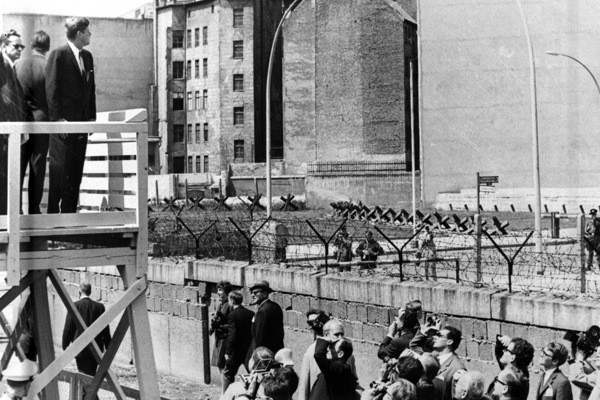
As has already been suggested, JFK was not only willing to accept the Wall, privately he was actually relieved with its construction. Kennedy may have been surprised by the erection of the Wall €“ its secrecy was one of the great successes of the East German regime €“ but he was not necessarily angered or disappointed by it. The US president was holidaying on his yacht in Hyannis Port, Massachusetts, just off the Kennedy Compound, when he heard the news. He went on to denounce the Wall in public, but in private he was relieved that the Soviets had finally made their play in a city that had proved highly toxic in superpower relations.

6. JFK Did Not Actually Refer To Himself As A €œJelly Doughnut€

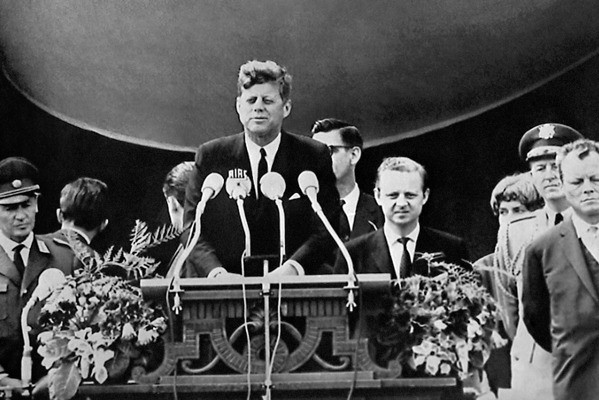
Jfk Doughnut One of the most common misconceptions to do with the Berlin Wall is actually a common misconception of a non-common misconception... if that makes any sense at all. When JFK made his famous trip to West Berlin in June 1963 and declared: €œIch bin ein Berliner€, he was not, as is often suggested, actually referring to himself as a €œjelly doughnut€. Kennedy did actually, as he intended, refer to himself as a €œcitizen of Berlin€ and not a €œpancake€ €“ or €œBerliner€ as they are referred to in parts of Germany €“ or €œjelly doughnut€. It is argued by some that €œIch bin Berliner€ €“ €œI am a person from Berlin€ €“ is the phrase Kennedy should actually have used, but without €œein€ added to the sentence there is no way the US President, who was not actually a resident of Berlin, could have said the sentence in a way that made sense grammatically. Such a shame, really, because otherwise that certainly would have been one of those great: €œHa ha, he really said that?€ moments. At least it clarifies my own common misconception that JFK really did think that he was actually a jelly doughnut...

5. The Berlin Wall Fell In November 1989
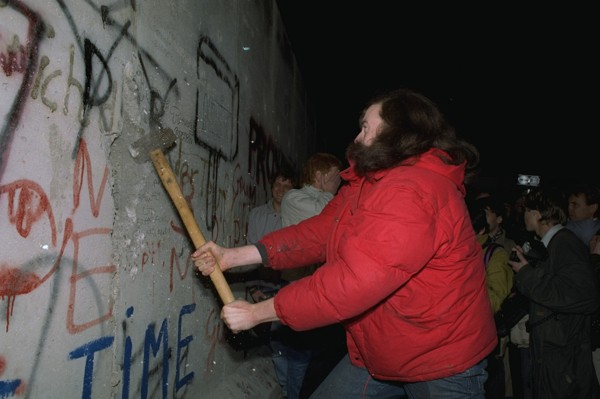
November 9, 2014, was commemorated as €œthe 25th anniversary of Mauerfall€ €“ the fall of the Berlin Wall €“ but, technically, this should not actually have been the case. In actual fact, the 25th anniversary of the fall of the Berlin Wall should be celebrated sometime between June and November 1990 €“ because this was when the East German military began to dismantle the Wall. On November 9, 1989, East Berliners and West Berliners did scale the Wall, enter opposite sectors of the city, and begin in the subsequent days to demolish and pull down sections of the concrete structure, but the majority of the barrier itself was not removed on that day or in the coming weeks. The whole of the Wall was not actually fully dismantled until 1992, meaning a specific date for its €œfall€ is almost impossible to precisely determine. This is why November 9 is seen by many as the €œanniversary€ of the fall of the Wall €“ in order for a specific commemorative date on which celebrations can be carried out.

4. Berlin Was The Only City Partitioned After World War II
Although Germany and Berlin are rightly remembered most prominently for being partitioned in the aftermath of World War II, Austria was also subject to Allied occupation. Austria was treated slightly differently to Germany due the fact the Allies viewed it as a €œvictim€ of Nazi aggression, rather than a perpetrator, yet its strategic importance and cultural relationship with Germany ensured it was still watched over closely. Four zones €“ run by Britain, France, the US and the USSR individually €“ were established in Austria, as they were in Germany straight after the Second World War, while Vienna was also subdivided. Five districts €“ four run individually by a different ally and a central district that would be jointly-administered by the Allied Control Commission €“ existed in the former imperial Austrian capital between 1945 and 1955, when Austria was finally given full independence. The partition of Berlin and Germany lasted 35 years longer, and was a source of far greater tension between the Western Powers and the USSR, but Austria€™s importance in international relations is forgotten all too easily.

3. That All Western Leaders Actually Wanted The Wall To Fall
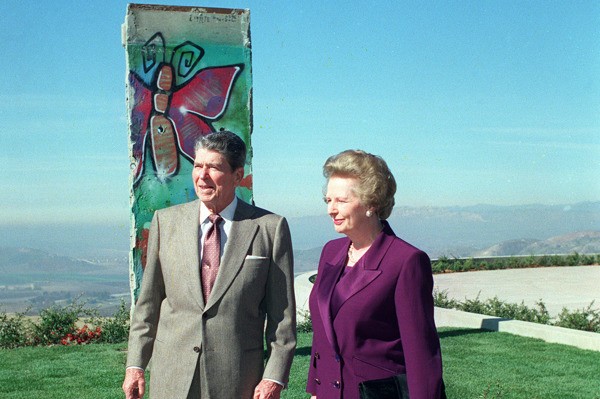
It would seem natural to anyone nowadays that all Western leaders would have longed for the fall of the Berlin Wall in the 1980s €“ with such pleas from US President Ronald Reagan urging Soviet premier Mikhail Gorbachev to €œTear down this Wall!€ being cited as a prime example of this €“ but nothing could be further from the truth. French President Francois Mitterend and, most prominently, Margaret Thatcher were both against the reunification of Germany in the immediate aftermath of November 9, 1989 €“ and were even appalled and horrified by the idea. In fact, Thatcher was so incensed by the prospect that she told Gorbachev: €œWe (Britain) do not want a united Germany. This would lead to a change to postwar border and we cannot allow that because such a development would undermine the stability of the whole international situation and could endanger our security.€ These comments, and the fear of a new Nazi-like expansion across Europe by a reunited Germany professed by Mitterrand, must be placed in context, however. Britain and France, unlike the US, were in close proximity to Germany. France had been invaded on at least three occasions in the previous 120 years by the Germans, and the British had been brought to their knees €“ as had the French €“ by two brutal World Wars. The fears may seem slightly hysterical and over-the-top, but are in a lot of ways understandable. A strong, united Germany could in theory have risen once again and looked for European domination. Therefore Mitterrand and Thatcher did not support the collapse of the Wall, as they feared the potential ramifications that could follow...

2. Graffiti Was On Both Sides Of The Wall Before It Fell
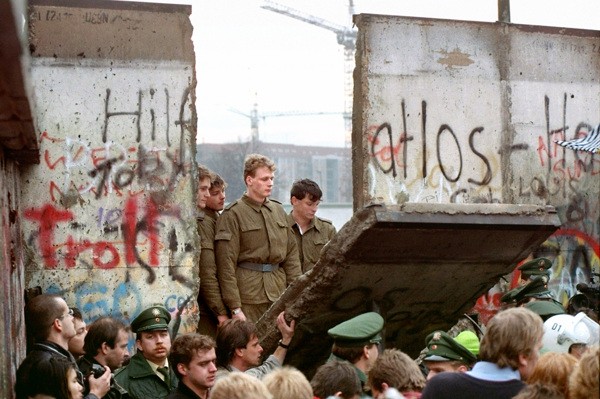
Imagery of the Wall and also all fragments that have been sold since appear to display graffiti on both sides. However, this was only the case on the West before the fall of the Wall €“ East Berliners only added artwork to their side after November 1989. Iconic photos of the Wall make it seem as if both East and West Berliners would have viewed graffiti and artwork on both sides of the structure, but Easterners would actually have only seen a bland, concrete barrier. The 100m €œDeath Strip€ prevented any East Berliner getting anywhere near close enough to the Wall to be even able to think about spray-painting it before November 1989 €“ nevermind how they would have gotten hold of any canisters...

1. The Soviets Wanted To Partition The City
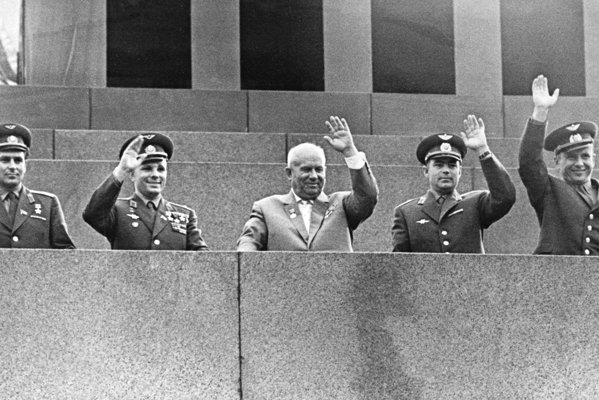
The Soviets desired Berlin to be partitioned by a Wall, surely? Not so, I€™m afraid. To Khrushchev and the rest of the hierarchy of the USSR, a physical barrier separating East and West Berlin was a last resort €“ an undesired acceptance of the status quo that had become ingrained in the make-up of the city. Joseph Stalin before him, and Khrushchev himself, both hoped that they could force the Western Powers out of Berlin €“ a pocket of capitalism in a sea of socialist East Germany €“ and reunite the city under communism. That is one of the main reasons why it took until 1961 for a physical barrier to erected €“ it was a begrudging acceptance that the West would not leave Berlin and the €œfree city€ would remain as such. Khrushchev gave Walter Ulbricht and the GDR government the go-ahead to build the Wall, albeit reluctantly and solely as a defensive measure, having exhausted all methods of ridding Berlin of the Western Powers. To Khrushchev, the Wall was there to diffuse a potentially toxic situation in Berlin that could realistically have resulted in World War Three if it had escalated once more. The Soviets did not want to build the Wall, it was merely erected as a last resort to maintain control over East Berlin.

In this post: 
Berlin Wall
 
First Posted On: 
Contributor
Contributor

NUFC editor for WhatCulture.com/NUFC. History graduate (University of Edinburgh) and NCTJ-trained journalist. I love sports, hopelessly following Newcastle United and Newcastle Falcons. My pastimes include watching and attending sports matches religiously, reading spy books and sampling ales.