10 Richest People Of All Time
5. Andrew Carnegie ~ $310 Billion
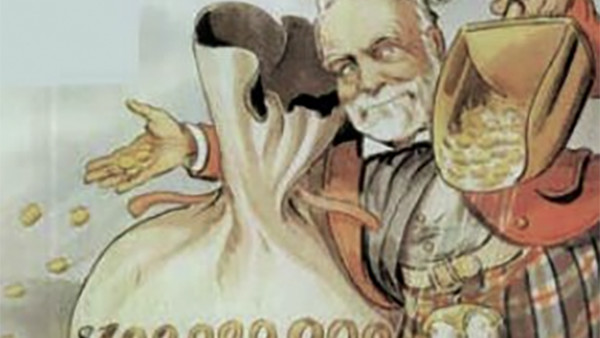
Unlike most of the moneybags in the mausoleum of mega-millionaires, Andrew Carnegie didn't wisely invest all his cash on property, playthings, or political favour, but instead chose to splurge over 90% of it on philanthropic causes like a right mawky sap.
America's second wealthiest industrialist grew up in humble origins. Born in the small Scottish town of Dunfermline, Carnegie's family shared a single room cottage with neighbours. The young Andrew owed his future fortune to charity; he received his education courtesy of a free school gifted by Adam Rolland. The gesture stuck with him.
With the family not having a spare dime to scratch their collective arses with, they took the plunge on the potential prosperity of America, migrating over 5000 miles to Pittsburgh. The move changed Carnegie's life. His work ethic saw him rapidly move from being a humble telegraph messenger to the personal telegraph assistant of the railroad company's Andrew Scott. When Scott, impressed by Carnegie's savvy, loaned him $500 to invest in Adams Express, his mother remortgaged the house as collateral. It paid off - to the tune of $10. Nevertheless, the delighted Carnegie was hooked.
Over the next 50 years, Carnegie continued to invest, leading the rapid expansion of the United States' steel industry. In 1901, he sold the Carnegie Steel Corporation to J.P. Morgan, netting somewhere in the region of $310 billion. Sick of the bags of cash cluttering up his house, Carnegie spent the remainder of his life redistributing his wealth to charitable causes, setting up dozens of educational institutes which today bear his name.