10 Traitors Who Were Proven Right
2. Germany Couldn't Hope To Fight On Two Fronts And Win - Rudolf Hess
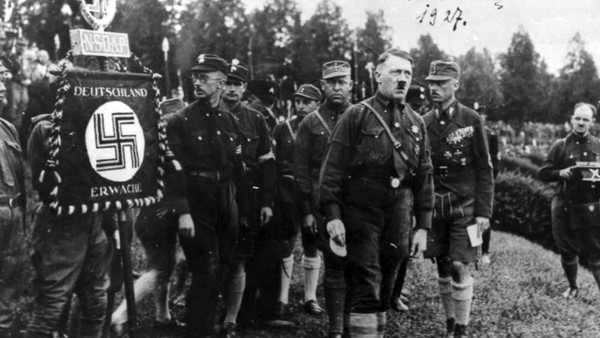
Let's be abundantly clear: we are not saying Rudolf Hess is in any way a hero, someone to admire, or that he should be exonerated.
Hess was a Nazi. There is no such thing as a good Nazi. Hess was third in line in the Nazi succession, he had helped Hitler to write "Mein Kampf", and he pushed forward the Nuremberg Laws, which formed the cornerstone of Nazi persecution against the Jews.
But he was correct when he realised Germany could not fight a war on two fronts and hope to win. Though the Nazis had failed to conquer Britain in 1940, Hitler wrongly believed he had the United Kingdom stuck in a stalemate. Therefore, in Hitler's mind, Germany was in a position to safely attack the Soviet Union.
When Hess learned of the plans for the offensive, he decided he had to act, and attempt to negotiate a peace settlement. He was convinced Germany could not defeat the Russians while Britain was still a threat.
His peace proposal essentially boiled down to this: if Britain allowed Germany control of Europe, then she would leave Britain's Empire alone. Hess was not being altruistic. Again, there were no good Nazis.
Having opened a dialogue with the Duke of Hamilton, who Hess wrongly believed represented a British faction opposed to the war, he took a plane and flew to where the Duke lived in Scotland, on 10 May 1941.
Hess left behind a letter explaining his self-appointed mission to Hitler, who unsurprisingly, went ballistic at the perceived betrayal. Stripping his former deputy of all his powers, Hitler ordered that if Hess ever returned to Germany, he was to be shot on sight.
As for Hess's plan? The Duke of Hamilton was not an appeaser, as Hess had hoped. After meeting with Hess, the Duke handed him over to Prime Minister Winston Churchill, who realised Hess had no authority whatsoever to broker a peace deal between Germany and Britain.
Hess was jailed for the duration of the war, before being returned to Germany for the Nuremberg Trials. Sentenced to life imprisonment, Hess was held in the notorious Spandau Prison in West Germany, where he remained until 1987, when he took his own life.
As for Hess's prediction? Hitler launched the invasion of the Soviet Union on 22 June 1941, and despite initial successes, he could not match the manpower and resources of the Red Army, who crushed the Nazis and drove them back all the way to Berlin.
Nor could Hitler keep Britain out of the war. She continued to fight on at sea, and in North Africa and the Far East. Once the Americans joined the war in late 1941, Britain became the launching pad for the liberation of Europe.
Incidentally, there were many Nazis who turned against Hitler, and some even tried to assassinate him. But they only did that once Germany started to lose the war. They believed Hitler needed to be removed either because they saw him as a bar to peace terms with the Allies, or because they hoped a more able replacement might swing the war back in Germany's favour.
They didn't try to kill Hitler because they were secretly good men. There were no good Nazis.