5 Reasons Disney's Star Wars Story Group Is A Good Thing (And 4 Reasons It's Not)

Wiping out great stories in the interest of continuity in canon might not be the best idea in the world...
The Star Wars Universe is a vast and occasionally confusing place: beyond the six blockbuster films, the universe also contains thousands of comics, books, video games, and even multiple TV series. While many franchises, sciences fiction franchises in particular, develop this way eventually, most are clear about the status of the extra media. Paramount, for instances, does not acknowledge the Star Trek Books as Canon and has said as much many times, and the Stargate series has similarly ignored its literature. The answer for Star Wars has never been as clear cut. The Official Rules, such as they are, have generally been that the movies occupy their own special place in the Star Wars Canon, and that everything that is not a movie falls into the "Expanded Universe" unless stated otherwise. For instance, the Star Wars Tales series of comics is purposely not canon. From this point, everything in the Expanded Universe forms the wider canon for Star Wars unless it directly contradicts information in the movies. Even this has been played with a few times, with the recent Clone Wars series being afforded the same level of canon as the movies. In the decades that have followed the release of the original Star Wars, the Expanded Universe has become a very crowded place. With Disney set to launch a new trilogy (and beyond) of Star Wars films, the time has come for them to clean house. To that end, Disney has announced the creation of the Star Wars Story Group. The Group will be responsible for sorting through the existing stockpile of Star Wars fiction and deciding what can stay and be given the status of official canon, and what must go. Once that enormous task is complete, they will need to make sure all Star Wars projects that follow, be they films or things that would have previously fallen under the Expanded Universe umbrella, fit snuggly into the same overall story line. The movies-rule-all hierarchy will be gone and all future fiction will be equal. It is unclear right now exactly how drastic the cutting of previous stories will be. This is a good thing for the future of Star Wars, but understandably a sore spot for lovers of what has come before. With that in mind, here are five reasons why the Story Group is a good thing, and 4 reasons why it may not be.

The Good

5. It Paves The Way For The New Star Wars Trilogy

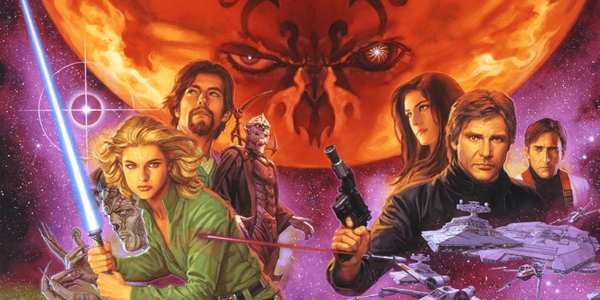
A quick look at the catalogue of Star Wars fiction shows that the years following Return of the Jedi is a very crowded place. Understandably, before the prequel trilogy arrived beginning in 1999, spawning an interest in the history of the universe, the most asked-for area for new stories was what happened to the heroes after the credits rolled on Return Of The Jedi. As a result, the era filled with stand-alone novels, trilogies, comics, video games, and more. For Disney to set a new trilogy of films here, they faced an important question: what do we do with the current stories? The assumption had been that the old rules would apply. The movies would come out, and whatever existing stories or information they contradicted would be overruled. Hopeful EU fans held on to the notion that perhaps an existing story, like Timothy Zahn's Thrawn Trilogy, would be adapted for the film. It turns out that the answer will take a little bit more work. Because of the presence of the new films, this era of Star Wars is likely to see the heaviest pruning, and many of the existing stories here may be cleared out to make room for the new Abrams trilogy. While this may mean that we lose some treasured characters and stories from the EU, we will not have to waste any more time debating what does and does not count in the Star Wars canon, and Abrams can focus on making good movies instead of worrying about stepping on the Expanded Universe's toes.

4. Goodbye Continuity Snarls

To say there are a number of continuity errors in the Star Wars universe is something of an understatement. The Prequel Trilogy showed us that the Clone Wars consisted of the Jedi fighting alongside a Clone army against a force of droids, but prior to that, several works, like 1995's Children Of The Jedi, reference the Jedi fighting against clones. Early EU works assumed that Obi-wan trained Anakin as an adult, an idea supported by Anakin and Obi-wan's original Force ghosts at the end of Return Of The Jedi both being played by actors around their 60s, but obviously the prequels messed with that. And the Cartoon Network Clone Wars microseries and the James Luceno novel Labyrinth of Evil both establish contradictory accounts of what Obi-wan and Anakin were doing immediately prior to the opening moments of Revenge Of The Sith. Different arms of the Lucas empire can provide headaches of their own, especially when third-party comic publisher Dark Horse is brought into the equation. LucasArts-produced video game Dark Forces II: Jedi Knight and Dark Horse product Dark Forces: Jedi Knight have several inconsistencies, despite recounting the same story. LucasBooks and Dark Horse have, in the past, argued over exactly who's idea the extra-galactic invasion seen in the New Jedi Order book series originally was. Many of the largest tangles are the fault of just the movies themselves. Did Yoda train Obi-wan, as he says in Empire Strikes Back, or did Qui-gon, as shown in Phantom Menace? Why does Vader not seem to recognize C-3PO on Cloud City, despite having built him? Leia says she remembers her mother in Return of the Jedi, but Padme dies in childbirth in Revenge of the Sith. Obi-wan's "from a certain point of view" line from Empire Strikes Back is often offered up as the best explanation. While there have been editors and others, like Leeland Chee, the 'Keeper of the Holocron' at LucasArts, whose job it has been to try and sort all of this out, these measures are relatively recent, and the EU has already grown past a point where it is feasible to control without stronger structure. The Story Group will be able to rectify the EU inconsistencies, and while they certainly cannot do anything about the movie snarls, they can prevent them in the future.

3. Some Things Just Have To Go

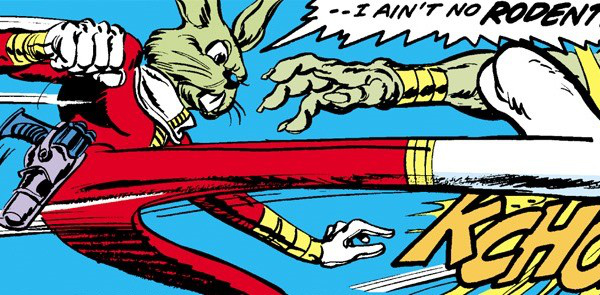
The EU has given rise to some utterly ridiculous things over its decades of existance. Fans that point to Jar Jar Binks as an unnecessary, out-of-left-field addition to the universe should look to Jaxxon, the anthropomorphic rabbit smuggler and his ship, the Rabbit's Foot as the worst offender here. Jaxxon was introduced in the Star Wars comics published by Marvel in the late seventies and his species, the Lepi, remain a valid, if seldom used, part of the EU today. Then there's Waru, an extradimensional being from a parallel universe first introduced in 1994's much-maligned The Crystal Star. Waru was described as a gelatinous blob with a scaly covering possessing healing abilities and some anti-Force powers. At best, the character is a bad execution of an interesting concept, and at worst, something future Star Wars fans should be spared from. Any franchise that has been running as long as Star Wars is bound to have less than desirable memories in their past, and the Story Group provides Disney and LucasFilm with a unique opportunity to clean up the family album. Which means we can all start pretending right now that the Star Wars Holiday Special never happened.

2. Clearer Rules And More Accessible Stories
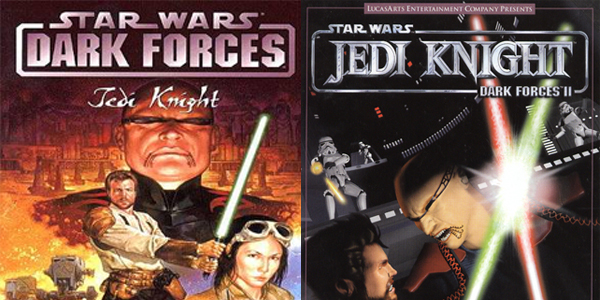
If you consider yourself a big-time Star Wars fan, you have likely argued with another fan about whether or not the books and other media "count." The opinion here does not just boil down to "they do" or "they don't" either. Some fans will tell you the books count, but the video games do not (an argument supported by the Dark Forces: Jedi Knight snafu described two pages previous), others cling to the idea that only the movies matter, while those like yours-truly believe everything is canon (unless it directly contradicts the movies, of course). From now on, this argument will be a thing of the past. Everyone will know exactly what counts and what does not, and everything going forward will be a part of the ever expanding Star Wars canon. More importantly, these new rules will make it easier for new fans brought in by the new films to jump into the fiction. They will not have to worry about whether they have to read a book series from the 1990s to understand this new one that's on the shelves, or whether this story from years ago that contradicts the one they just read is right.

1. Marvel Comics

In 2015, after a long run at Dark Horse, Star Wars comic books will return to the place it all began, Marvel. It's a move that many saw coming, and quite frankly, it makes sense for Disney to bring as many things in-house as they can. The move to a new publisher brings its own question of what happens to the stories and characters that Dark Horse gave rise to during their time with the license. The Story Group gives Disney the opportunity to get out in front of those questions and clear up the continuity before Marvel dives back into it. Marvel's job will be much easier with a clean (or at least least slightly cleaner) slate when they take over the brand. In addition, the Story Group will likely, by cleaning out existing stories, create quite a few timeline openings that Marvel can begin to populate with new stories.

The (Potentially) Bad

4. The Character Casualties

While the EU has certainly been guilty of the ridiculous (Jaxxon) and the forgettable (Waru), it has also gifted us with some truly great characters, like Kyle Katarn, Mara Jade, and the children of Han and Leia. Characters that got their start on screen, like Wedge Antilles, have gone on to have starting roles of their own in book series and comics. If I were asked to name my top five favorite Star Wars characters, you would only recognize one of them from the movies. It would be a shame, not only for the fans, but for future authors and creators, for these characters to disappear forever. It is tough to tell at this stage who will stay and who will go, but it seems likely that many of the characters who are important players in the post-Return of the Jedi years of the Star Wars universe will either be cast aside or radically altered. Even if Han and Leia's kids Jaina, Jacen, and Anakin Solo make it into the new trilogy, it is probable that they will be vastly different than the versions we have seen in the past. At this point we can only cross our fingers and hope that the Story Group does not go overboard when throwing out old characters and stories. Which leads me to...

3. All Of Those Great Stories

At its heart, the Star Wars film series is about the Skywalker family. This is a tradition carried on by the post-Return of the Jedi EU. While the rise and fall of Anakin Skywalker is a tragic story, the arc followed by his grandson Jacen Solo is no less heart-wrenching. In fact, the whole story is made more personal because of the amount of involvement readers had in his entire life, stacks and stacks of books that followed the character from birth to death. However this saga is likely one of the stories to see the axe, if not a heavily edited retelling, when the Story Group goes to work. Other great stories, like the Thrawn Trilogy, are also likely to be, at the very least, reworked to fit into the new order. While we can hope that stories farther removed from the movies, like the Knights of the Old Republic video game series, will be spared, we will not know for sure what survived the cut until likely next year at the earliest.

2. Retreading Old Ground

When the Story Group is done, big segments of the Star Wars timeline are likely going to be cleared out and ready for fresh stories. Fans that have already seen, read, or played through the events that follow Return Of The Jedi are going to have to find out all over again what happens after Return Of The Jedi. While this will hopefully lead to new and original material, the temptation will certainly be there for authors to put their own creative stamp on an existing story, the way J.J. Abrams took elements from The Wrath Of Khan to make Star Trek Into Darkness. While it is not being called a 'reboot' exactly, that is more or less what this new system will offer for new Star Wars authors. When Marvel launched the Ultimate Universe in the early 2000s, it was billed as a way for them to tell new stories free from the shackles of existing continuity. What we got instead was a universe populated by characters with minor differences from their original counterparts (Peter Parker works on the Daily Bugle Website), changes made just to grab headlines (Nick Fury is black now! He's also Sam Jackson, but that actually happened a little later), or Marvel taking a do-over on previous stories (I'm looking at you, Clone Saga). It took years before the Ultimate Universe began to get comfortable doing its own thing out from the shadow of its older brother. That is the trap that new Star Wars stories will have to struggle to avoid as Star Wars finds its direction for the future.

1. Alienating A Fanbase

The Star Wars universe has been delighting fans for decades, and those fans have become invested in those stories. Many of the more beloved characters in Star Wars have never seen the silver screen. How are generations of fans going to feel when those characters and stories are shoved aside to make room for the future? Will fans of the New Jedi Order (despite the series detractors, it ran as long as it did because people were reading it) accept a new Star Wars universe that the Yuuzhan Vong never invaded? What about the time and money fans have already poured into those stories? It is a tough sell telling your fanbase that the scores of fiction they poured through is now meaningless and that money was spent for nothing. To call back to the Star Trek and Marvel Ultimate imprint examples, both of those franchises achieved their 'reboots' and gave themselves fresh storytelling ground without stepping on the toes of or invalidating the original canon. Star Wars will be completely deleting stories and characters that fans have formed strong attachments to, more akin to DC's risky "New 52" initiative, where they rebooted the entire universe to make way for a new one. Disney will have to work hard to ensure that their new Star Wars is worth the fresh time and monetary commitment for fans to start over with. Whatever the result, the Story Group will ensure that Star Wars is around to continue delighting new fans well into the future, and if these new caretakers can live up to the task, that is a win for everyone. What do you think of the new Star Wars Story Group? Share your thoughts below in the comments.

Contributor
Contributor

I'm very proudly a nerd, which is the quality you'll see most on display here. Star Wars, Doctor Who, and Spider-man are my biggest nerdy obsessions, but I don't like to exclude anything. I'm also an avid sports fan. My teams are the Detroit Red Wings, Notre Dame, and Detroit Lions. I love playing and watching hockey, but don't get to do the former often enough. I play some guitar, and love music. That's me, concisely speaking.