7 Times The Media Spectacularly Failed To Understand Science
It's not really science if you just make it up.

Yes, okay, the press probably isn't the best place to be getting reliable facts from, but is it too much to ask that they have at least a little think before publishing something outlandish?
The thing about reporting science, is that it's (a) difficult (b) important and (c) frankly a little boring. For this reason, "science pieces" are regularly run with, at best, a touch of sensationalism and, at worst, wild fabrications.
This would all be well and good, but a lot of science reporting in the media is about the things that affect real, proper people. Stories about health, education, the environment et cetera, might change the way people behave, raise their kids, eat, exercise and generally live their lives.
Apart from anything else, people read science stories to improve their knowledge. Seeing as there's such a dearth of scientific literacy out there already, it's a bit of a wasted opportunity to exclusively report pseudoscientific woo that will just keep us scared and stupid.
7. Tom Brookes And The Magic Ancient GPS
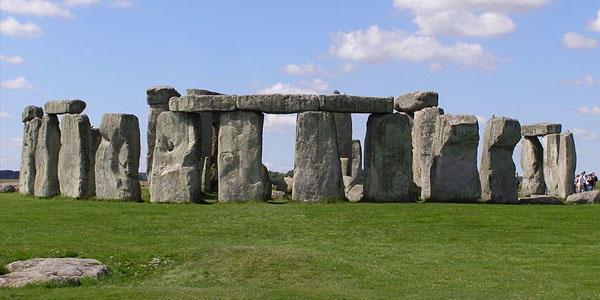
We tend to regard people in the olden days as both magical and stupid. As such, people tend to have some pretty weird ideas about all of those monuments they left behind. Sure, getting around ancient Britain was tough, but not so impossible that they needed to use literal fairy magic powers to do it.
Researcher Tom Brookes didn't seem to think so though, and set about carrying out analysis on over 1,500 prehistoric monuments in Britain. He found, to the astonishment of himself and the nation's press, that they all seemed to connect up in a grid of isosceles triangles and arrows handily pointing to the next monument. Amazing, right?
Theories abound as to what could possibly be behind this, with everything from ancient mathematicians, to ley lines to (of course) aliens.
Something that was not taken into account, however, was that if you draw straight lines between any three locations, they will form a triangle. The effect is even more potent when you discount the locations that don't line up, and include things like cathedrals and sites from totally different periods. In fact, mathematician Matt Parker produced exactly the same effect using the locations of old Woolworths stores. Perhaps they're of some mystical significance too?
This didn't stop the press proclaiming that the ancients used a prehistoric GPS to get around, as opposed you, you know, navigating like everybody else.