8 Crazy Futuristic Science Experiments Happening Right Now
One step at a time, science fiction is becoming science fact.
If you keep even half an eye on the latest scientific and technological advances, it might not have escaped your attention that we are legit living in the future.
Little over a decade ago, your smartphone would have blown the most hardened technophile's mind, and yet they're already becoming old hat in the early-adopter circles as technology is woven ever more seamlessly into our lives. Medicine has also been given a distinctly futuristic facelift with lab-grown organs and smart drugs.
Space travel at the turn of the century retained an almost vintage feel, with many shuttles and satellites carrying technology that is already old on launch. However, the last few years have seen an explosion in private companies revolutionizing the way with think about space exploration, with reusable rockets and serious, grown up conversations about Mars missions.
The march of progress continues on and there are many scientists in many labs working on projects that sound more like science fiction than science fact.
From planet-cloaking devices to implantable tech to writing the source code of life itself, either the scientists have been reading a bit too much Arthur C. Clarke, or we're about to enter a future of our childhood dreams.
8. Touch My Buttocks Quoth The Robot

People are always harping on about how "sex robots" are a practical inevitability, but scientists are discovering that touching robots on their naughty bits actually makes humans distinctly uncomfortable.
During the study, scientists hooked the participants up to sensors that would measure their stress response as a humanoid robot instructed them to touch various parts of its body, including those parts. According to the readings, the test subjects became increasingly uncomfortable when instructed to touch areas such as the buttocks, crotch and eyes.
The experiments are actually designed to help us understand how we might feel interacting with robots as teachers, carers and companions in the future. The results so far seem to suggest that it would be "awkwardly".
Watch the vaguely uncomfortable footage from one study here.
7. Bacteria Batteries
As fossil fuels continue to become increasingly dirty words, interest in developing new and better ways to power our society is growing.
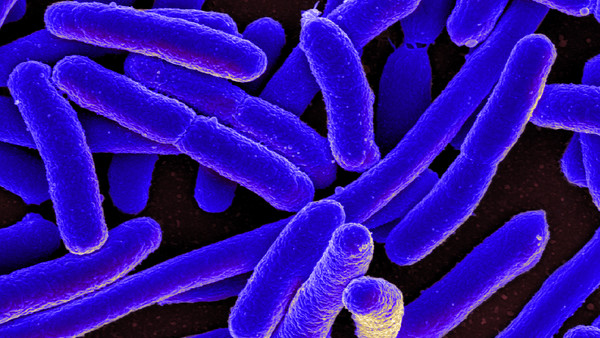
As part of this, scientists in the UK are working on a rechargeable battery powered by bacteria. They figured that, whilst solar and wind power are great and all, they're pretty variable. Frankly, it didn't seem fair that people in Britain would be plunged into a post-apocalyptic hunter-gatherer existence after the switch to solar power, on account of never having seen the sun.
On the other hand, bacteria - like diamonds - are forever.
The batteries contain two different microbial systems: one that uses bacteria to form acetate from electricity and one to convert the produced acetate back into electricity. The researchers managed to charge the battery in 16 hours, then discharge it again over the next eight hours, mimicking a typical day-night cycle.
6. Biological Programming The Source Code For Life
Programming languages have allowed us to create everything from the iPhone to the smart home, but now scientists are working on creating one that can hack into life itself.
That's right, scientists are developing a literal life hack.
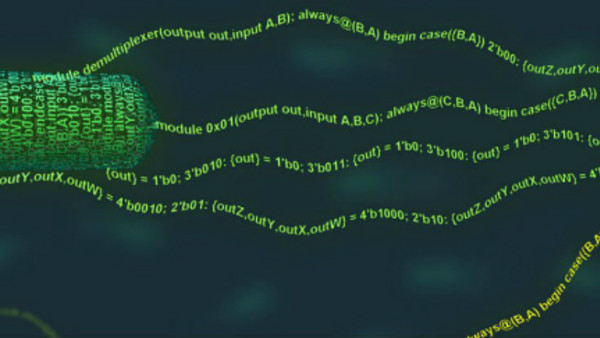
The researchers at MIT have created the first programming language that allows them to create DNA-encoded circuits and control living cells. This gives us that power to programme living organisms.
So far, the team have produced a language specific to the bacteria E. coli - the one that will give you a nasty case of food poisoning - but they see the potential in being able to code for things like your gut bacteria to cure conditions such as lactose intolerance, or even find new ways to deliver medication with bespoke microorganisms.
What's more, the programming language is simple enough that you wouln't need to be a super-genius to do it.
5. Laser Cloaking To Hide Us From Aliens

Stephen Hawking and many others, has warned us in the past that trying to reach out to our alien neighbours might be a very bad idea indeed. With this in mind, astronomers at Columbia University in New York are working on an interstellar cloaking device for the Earth, should we ever want to hide our existence from less-than-friendly extraterrestrials.
And it uses lasers.
In our search for other planets around other stars, we use a technique called the transit detection method. This involves looking for a dip in a star's brightness as the planet passes in front of it. The idea behind the cloaking device is that we could mask our own planet's transit signal by cancelling it out using a laser, with the beam directed at the star where the alines might live.
Alternatively, we could also use the lasers to modify the light broadcast during transit to make it more obviously artificial. This would be a big sign to any watching extraterrestrials that there is intelligent life down here. We could even use it to send encoded messages.
The jury is still out on whether it would be a good idea to announce our presence to the universe but, without a cloaking device, we might not have a choice.
4. Samsug Patents Smart Contacts
Rejoice, tech fans, because Samsung have just taken us one step closer to a sci-fi future.
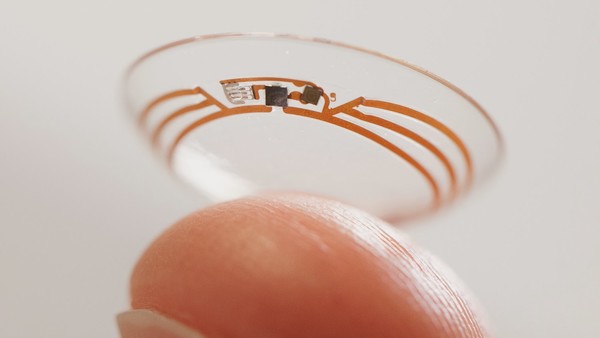
The South Korean tech company have been granted a patent for a smart contact lens with a display that would be able to project images and information directly into the user's eye.
The lenses have a camera built in and can be controlled just by blinking. Of course, you'll have to get used to people randomly blinking a lot when they talk to you, but if we've gotten used to people making hands-free phone calls in public then we can probably handle it.
Google do already own a patent for a smart contact lens, but their are mainly intended for medical purposes, using chemical levels in tears to monitor things like blood sugar.
The patents are obviously still in the concept phase, but we can live in hope that they might some day be developed for commercial use.
3. Robonaut
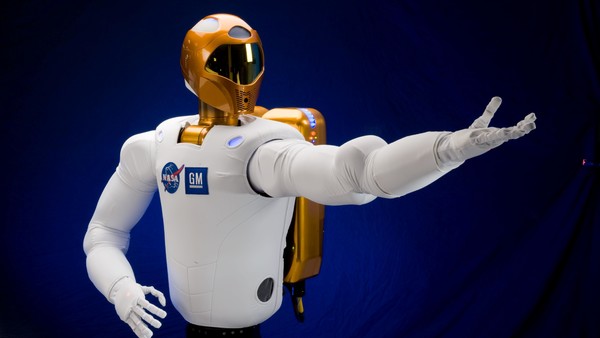
Despite sounding like some kind of Robocop sequel, the Robonaut is an actual ongoing project by NASA, to develop a robot colleage for the astronauts aboard the ISS.
Robonaut is a humanoid robot that can think for itself, dexterously handle tools and carry out tasks that would otherwise be carried out by the human crew members. The idea is that it will eventually be able to perform space walks and work alongside the humans as another crew member.
Robonaut can see, think and follow orders. It even tweets.
One of the major challenges is making sure that it can function in the weightless environment of the space station. So much of the research into robots so far has been in an attempt to find a way to make them walk like us, but allowing them to move about in zero-G is completely new ground.
2. 3D Printing Organs
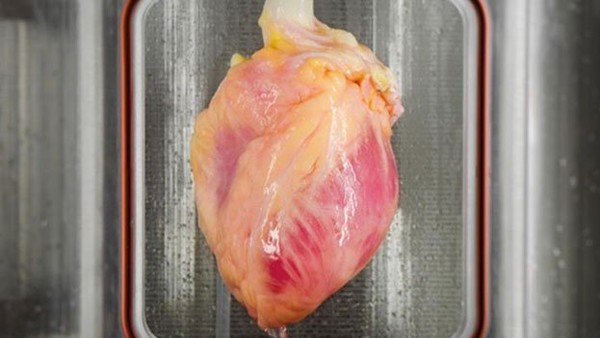
If you told a passing alien that we regularly cut the organs out of dead people and sew them into our living bodies, they'd probably think you were a total psychopath.
With life-expectancy on the up, the need for people to be able to replace or upgrade their organs more often is also growing. The other problem with this is that not enough people are dying to provide sufficient donor organs.
Prosthetic implants can work for simple parts like heart valves and hip joints, but there's no real substitute for the real thing, is there? This is where producing fully functional, biological material in the lab comes in.
Using the 21st century's technology darling, the 3D printer, early-stage experiments are hoping to solve the organ donor problem by printing functioning organs using living cells. What's more, using the patient's own cells to produce a new organ eliminates the need for the patient to take anti-rejection drugs for the rest of their lives.
1. 3D Printing Martian Soil
Futurists always live in hope that humans may one day colonise another planet, and we've nearly all got our sights set on one in particular (it's red and rhymes with "bars"). However, it would all be very well slinging a troupe of humans across the vacuum of space to an alien world, only for them to spend the first month assembling flat-pack.
To colonise a planet you have to have somewhere to live, but sending pre-fabricated materials into space is just so prohibitively expensive, costing around $100,000 per kilogram just to get to the moon, that it is essential we find a way to build structures with the local materials.
So, rather than taking a village of pre-fab houses, scientists are proposing we send just one 3D printer to build structures out of the Martian dust itself. Given the name Selective Separation Sintering (SSS), the process involves taking the ceramics in the Martian soil and super-heating them to form usable building materials such as bricks and tiles.
This kind of on-the-go material synthesis could be a key component in making space travel affordable enough to actually happen, perhaps in our lifetimes.
Love the smell of science in the morning? Like us on Facebook or follow us on Twitter for plenty more.
Want to write for WhatCulture Science? Click here to find out how you could get paid to write about what you love.