10 Reasons Fernando Torres Failed At Chelsea

Why the Spanish striker failed to live up to his enormous price tag.
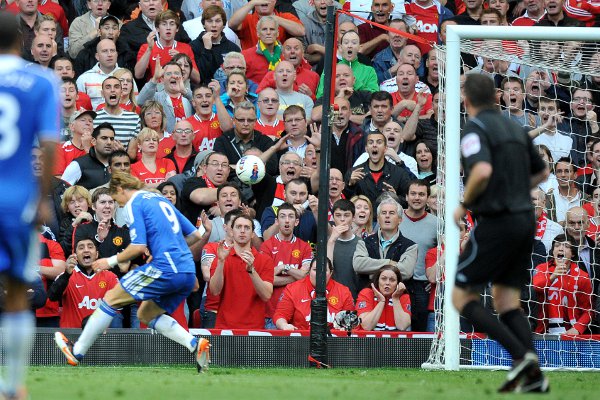
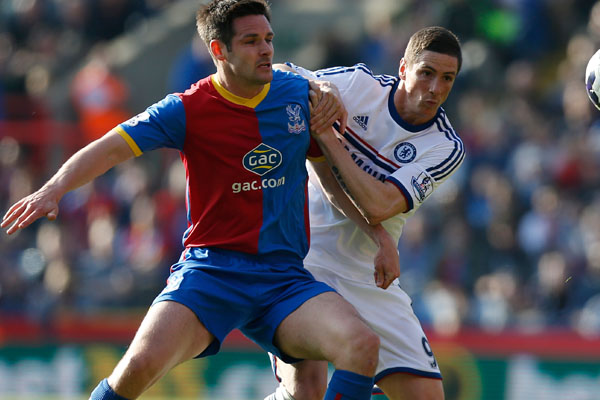
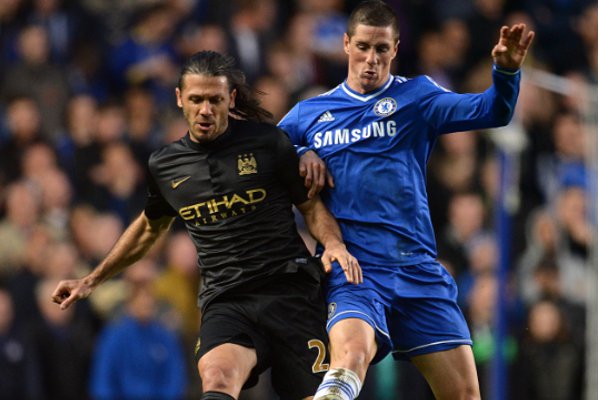
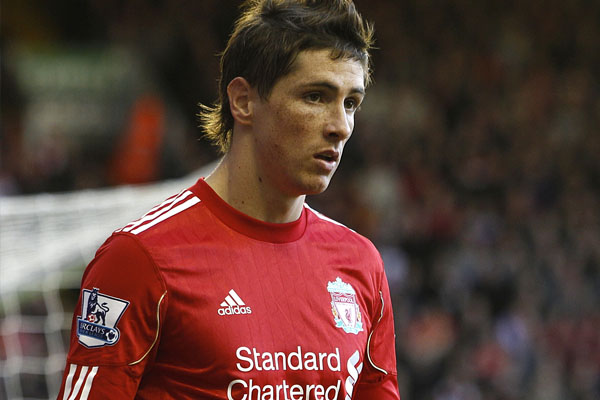
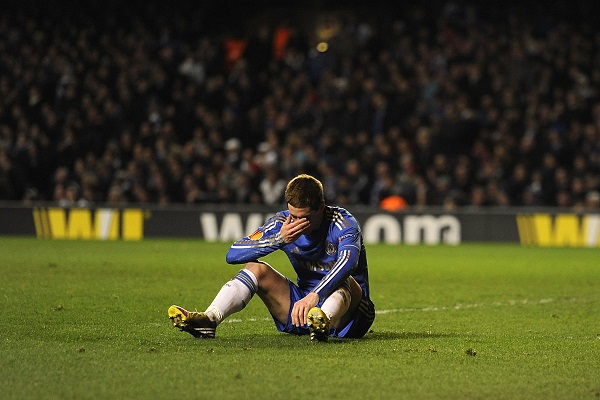
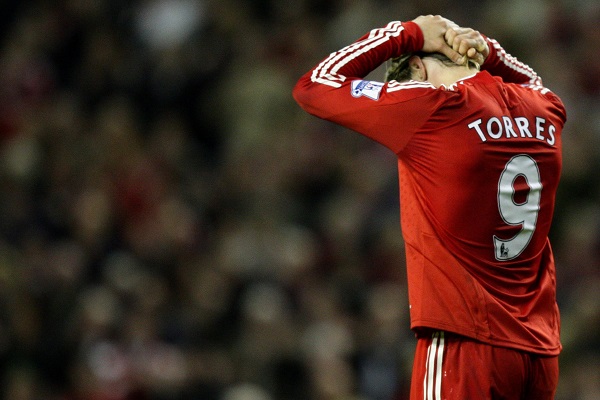
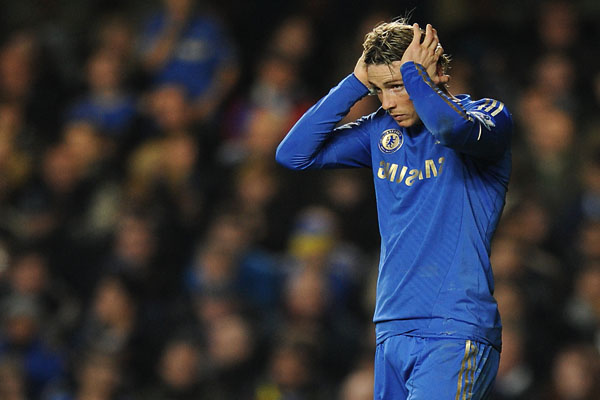
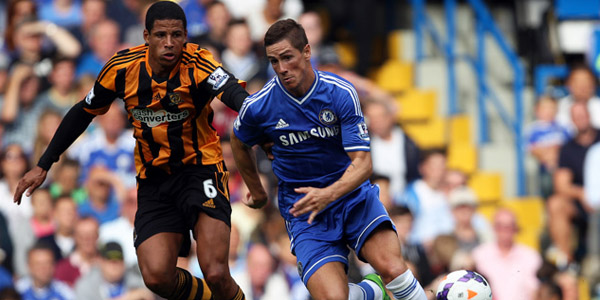
Over the years, Chelsea have signed a lot of high profile strikers who have struggled to live up to their potential: no fewer than half my list of 10 Players Who Stole A Living From The Club is comprised of men who never managed to fire Chelsea to the top as expected. Among all of these striking misfits, Fernando Torres stands out as not only the only player still at the club, but also the one who cost the most and has arguably failed more spectacularly than any among his undistinguished peers. Arriving from Liverpool in the last minute of the 2011 January transfer window and costing a whopping £50 million transfer fee and £175k per week in wages, Torres looked off the pace and out of place from the start, enduring a run of 903 minutes until finally bagging his first goal in a Chelsea shirt. Subsequent seasons have scarcely gone any better, with him managing only 11 goals in almost 50 appearances in 2011/12 and despite breaking the 20 goal barrier in 2012/13, a large number of those came against weak opposition as Chelsea won the Europa League. With him more famous these days for his horrible misses, most humiliatingly firing wide in front of an open goal at Old Trafford, what exactly went wrong for the Spanish striker after he made the move from Anfield to Stamford Bridge? With news of his potential departure from Chelsea gathering steam, read on to find out why Torres' Chelsea career may have been doomed from the start.

10. The Transfer Fee

Being the subject of a £50 million transfer would put a gargantuan amount of pressure on anyone, especially when they play in a position where they will be judged so directly on their productivity. Strikers are signed for goals and if goals don't come, few emerge with their reputation intact. Torres was an internationally renowned striker though, who for years had been regularly competing on the top international and European stage for Spain and Liverpool respectively. If anyone was equipped to handle that pressure, surely it was him? It's true that Torres had plenty of experience going into high-pressure situations, yet there's a big difference between the pressure of a match and enduring the full scrutiny of the media following the most expensive transfer between English clubs in history. In even the biggest match, where one player is considered the star of the show, he will still only ever represent one performance among eleven on the field that day. He may disappoint and the team go on to win regardless, or may have a sensational game yet errors by his teammates ultimately to lead to a loss. He may get a lot of attention, but there is always the mitigating factor of him needing his teammates as much as they need him. When it comes to a big money transfer, however, the media focus is entirely on the one player and how performs. In a sense, the £50 million fee isolated Torres from his new teammates from the start, with the entire story being about whether he would live up to his fee for Chelsea, not whether Chelsea's results would improve with him in the side. It was a completely different, more focused and aggressive type of pressure than Torres had ever experienced before, and as someone who never had the ego of a Cristiano Ronaldo to immediately assume he was worth the money, he suddenly not only had to prove his worth to his new team and the media, but also to himself.

9. Timing

If the enormous transfer fee put an inconceivable amount of pressure on Torres' shoulders to perform, the timing of the move only made it worse. Chelsea were first linked with the striker a few days before the end of the January transfer window, seeing their initial £40 million bid rejected by Liverpool. With Didier Drogba and Nicolas Anelka struggling for goals in the Premier League, the London club knew they were in need of a striker, so why they left it so late to begin negotiations remains an enigma. It took until almost the final minute of the final day before Torres finally concluded his move, with the player reportedly being forced to hand in a written transfer request before Liverpool were willing to sanction the deal. Having all this happen in such a short space of time must have been quite the shell-shock for the striker, particularly having to make a short notice demand to leave the club where he had been venerated as a hero. That much must be taken as his responsibility, however, as it was his choice to make the move from Liverpool to one of their biggest league rivals. Despite this, moving at such short notice meant he had little time to prepare himself mentally for the move and subsequent consequences. Many Liverpool fans voiced their anger at his perceived disloyalty, even going so far as to burn his jersey outside the club's training ground. To make matters worse, his first game for Chelsea was an away game at Anfield, where the stadium which had only the previous week cheered him as their king now roundly booed his every touch and mocked every mistake. Unlike a summer transfer, moving in winter offers no time for the player to adapt to his surroundings and get to know his teammates prior to stepping out on the field with them. The pressure is immediate, only further exacerbating the already heavy burden of the £50 million fee.

8. Going To A Rival Club

Swapping clubs is always going to be a big life decision for a player, but moving between such fierce rivals as Liverpool and Chelsea means accepting a quite unique and often unpleasant type of pressure. As described in the previous entry, Liverpool fans were less than impressed when their hero made the move down South to London. Had Torres being paying attention to his former club's recent history, he might have seen this coming. Fans infamously made death threats against Steven Gerrard's family in 2004 when the Liverpool captain was on the verge of a move to Jose Mourinho's title-winning Chelsea side, leading to the player pulling out due to fear for the safety of his nearest and dearest. The reaction to Torres leaving might not have been quite so hateful, but the fans certainly did not hold back in making public demonstrations of their anger. Just as Sol Campbell discovered when moving from Tottenham to Arsenal, fans reserve a unique place in hell for players who move between rivals. Torres had been a hero at both his previous clubs, Atletico and Liverpool, so the scorn was not something he would have been used to. While many Chelsea fans were delighted to have captured Liverpool's prize asset, seeing it as confirmation of their club's superiority after years of jibes based on Liverpool's comparatively more trophy-rich history, others were suspect of the player for having shown such disloyalty and were concerned whether the move was motivated by the right reasons. There was certainly a sense that not only did he have to survive the anger of the Liverpool fans he left behind, but also had to convince a contingent of the Chelsea crowd of his good intentions as well.

7. Struggling With Fear

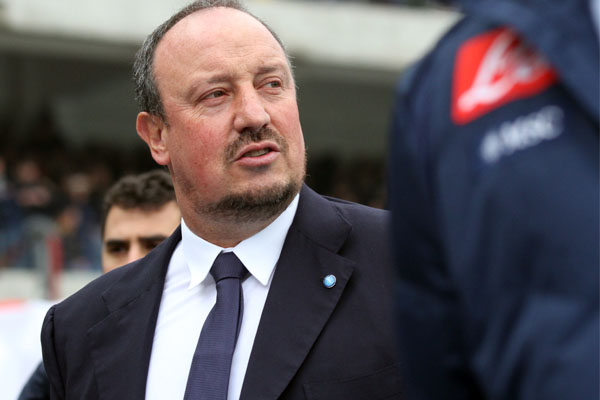
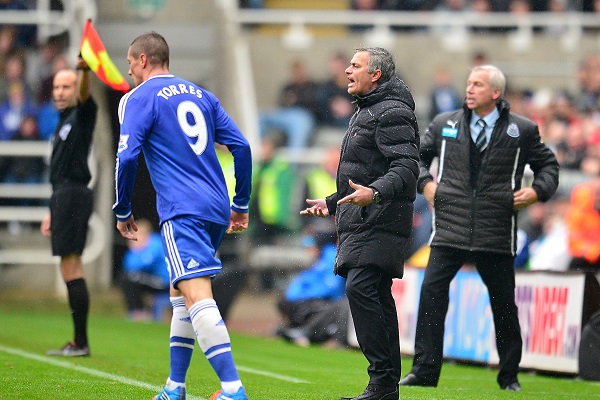
Torres had flourished in his two previous clubs in no small part thanks to the absolute adoration of the supporters. The definition of a confidence player, he never looked more comfortable than in front of a packed Anfield crowd cheering his name. The contentious nature of his move to Chelsea meant he had to face a new kind of playing atmosphere, where his new fans already had a number of icons in the team - John Terry, Ashley Cole, Frank Lampard, Didier Drogba - and despite the Stamford Bridge crowd consistently getting behind him, the gulf between what his teammates had done for the club and his own status as the £50 million striker who couldn't find the net became even more pronounced with every game. By Torres' own admission, he lost faith in his abilities and began deliberately positioning himself to avoid having to take shots on goal. Having once been a player whose game was singularly devoted to making runs into clear goalscoring positions, his movement was now being scrutinised for doing precisely the opposite. Having been beloved for his entire career, he found himself mentally unprepared for the challenge of having to prove his worth and fight for his place, exemplified by complaints about his treatment by Villas-Boas and Di Matteo, both of whom dropped him to the bench following poor form. Unfortunately, despite the club doing everything they could to accomodate him, including the unfortunate signings of former teammates Raul Meireles and Yossi Benayoun and even more ill-advised appointment of the widely hated Rafael Benitez in the Chelsea hotseat following the sacking of club hero Di Matteo, he's never looked like recovering his confidence since.

6. Poor Form Going Into The Move

Fernando Torres' form at Chelsea may have persistently resided on the wrong side of hopeless, but while the pressure of his move from Liverpool and the circumstances under which it was conducted undoubtedly were a big contributing factor, his struggles in front of actually actually go a little further back to the start of the 2010/11 season. Rumours of a move had been brewing ever since former manager Rafael Benitez had left the club that summer under a cloud. Despite Torres scoring an impressive 18 league goals the year before for a total of 22 overall, Liverpool had finished 7th, resulting in the club missing out on Champions League qualification. The departure the year before of key playmaker Xabi Alonso was also seen as a contributing factor in Torres' supposed unhappiness as the Spanish contingent at the club had weakened considerably. Roy Hodgson was brought in as manager after enjoying some success at Fulham, but his pre-season preparations were repeatedly disrupted by talk that his star striker wanted to leave in search of Champions League football. Hodgson failed to steady the ship and the departure of Javier Mascherano to Barcelona on further convinced that Liverpool were a side in freefall. The instability was clearly also having an effect on Torres, who had already missed pre-season through injury and was struggling to find the net with the same regularity as he had the season before. Hodgson was sacked shortly after Christmas and club hero Kenny Dalglish was brought in to salvage the team's season and bring the restless Anfield crowd back onside. While the team's form improved, performances from many key players remained below par, Torres among them. A brace against Wolves inspired hope that he was starting to find his feet again, but ultimately proved to be his final goals for the club, finishing with 9 in 26 appearances for the season before moving to the Blues.

5. Questions Over Fitness

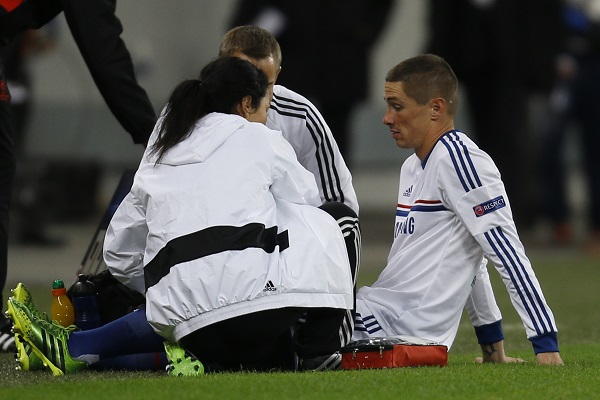
Talk of Torres having problems with his knees had been circulating since April 2010, when he missed the end of Liverpool's season in order to have surgery to rectify a persistent injury. Manager Rafael Benitez had spoken at the time about Torres being 'exhausted', adding to concerns that the player's health was on the wane. Missing the pre-season preparations in 2010/11 meant he went into the season struggling for match fitness, which combined with a general feeling of unease about the direction the club was heading in to result in his worst run of form for Liverpool to date. When Chelsea came in for the striker in January 2011, the player looked a fraction of his former self. In the months following the move, with Torres' form significantly worsening after his move to London, questions were raised about why the move had taken until the last minute of the transfer window to conclude. The more reasonable argued that it was simply in order to ensure that Liverpool were able to secure a replacement in Andy Carroll, signed for £35 million from Newcastle at the same time. More suspicious whispers however implied that Liverpool knew of Torres' injury and held out as long as they could not only to extract the most money possible out of a clearly desperate Chelsea, but also to ensure that the player would not have time to undergo a full medical which might reveal the delibilitative nature of the problem in his knees and scupper the move. We'll never know what is fact and what is fiction, but can say for sure that Torres arrived at Chelsea showing a very distinct lack of match sharpness and missing the few extra yards of pace which had proven so essential to his game.

4. Initial Goal Drought

Whether it was the pressure of the last minute move, questions over his fitness or the intensity of the media spotlight which resulted in Fernando Torres' atrocious form from the moment he first pulled on a Chelsea shirt, the simple fact is that he went 903 minutes before scoring a goal for his new club and for any striker, that's bound to be a confidence killer. As previously described, any striker is judged first and foremost by their ability to put the ball in the back of the net with at least some degree of regularity. A £50 million striker is expected to do so virtually every game, or at the very least make significant contributions in swaying each match in his team's direction. Torres' first game was a loss away to his future club, in which the man signed to end Chelsea's struggle for a consistent league goalscorer looked even more impotent than his competition. It didn't help that the Liverpool players showed no respect for their former colleague whatsoever, challenging him aggressively at every possible opportunity, and it's fair to suggest that they were probably feeling just as betrayed by his departure as the fans booing from the stands. That first failure set the tone for the games to come though as despite Torres straining every sinew to break his drought and his teammates doing much the same to give him the opportunities, the crucial first goal just wouldn't come. By the time it did, the relief was there for all to see in Torres' celebrations and the supporters' cheers. It was, however, the second goal in a 3-0 win over bottom-ranked club West Ham, possibly the least essential way possible for the big money striker to open his account. It took until midway through September the following season for him to score again, finding the net with a delicate lob in a 3-1 loss at Old Trafford - another inessential strike. If fans were nevertheless hoping that a goal on a big occasion might prove a turning point, Torres subsequently went and hit the worse miss of his Chelsea career to date, rounding the keeper before firing wide with the goal completely at his mercy.

3. Upheaval At Chelsea

Torres moved out of a messy situation at Liverpool and into a equally shambolic one at Chelsea. Despite winning the Premier League the year before, Carlo Ancelotti had been struggling to get consistent performances out of his players ever since the sudden and unexplained dismissal of his assistant, Ray Wilkins, the past November. Wilkins was a Chelsea man through and through, providing Ancelotti with a middle man of sorts between his European coaching style and the fire-in-the-blood traditions so beloved in English football. The previously steadfast unity between the players seemed to take a sudden and powerful hit, resulting in a dreadful run of results that saw the club go right to the end of the year without a win, finally brought to an end on December 29th by a somewhat scrappy 1-0 victory over Bolton. Despite recovering morale enough to guide the team to 2nd place in the league, Ancelotti was fired at the end of the season, leaving Torres once again facing uncertainty at a time when pre-season should have been a time for him to finally settle into the club and adapt himself to its methods. The incoming Andre Villas-Boas, whom the board hoped would be a new Mourinho after his outstanding success at Porto, proved a complete disaster, showing inept man-management skills and struggling to implement an attacking strategy which saw the team's high defensive line continually ripped open. When he was fired and assistant Roberto Di Matteo was promoted to first team coach, Torres found himself playing under his third manager in barely over a year at the club. Di Matteo reinstated the club's veterans to the side, whose experience led the team to their first ever Champions League victory but also saw Torres come under increasing criticism for his inability to find the net. Di Matteo too was sacked early the following season, being replaced by Rafael Benitez on an interim basis. While the former Liverpool manager was brought in to help Torres get back to his best form, which one could argue he did given the striker's final haul of 22 goals that season (albeit with only 8 coming in the league), the damage was too deeply ingrained and Demba Ba was signed in the January transfer window to bolster the club's attacking options.

2. Too Many Games

With Torres arriving at Chelsea supposedly suffering from a pre-existing condition, the sudden and drastic increase in the number of games he had to play each season put a huge amount of extra stress on his already ailing body. Only in his first season at Liverpool had he played over 40 games a season. With the club failing to qualify for the Champions League in his last two years at the club, his appearance numbers steadily declined from 46 in 07/08 to 32 in his final full season in 09/10. Chelsea had at that point firmly entrenched themselves among the Champions League establishment and frequently challenged into the latter stages of the domestic cup competitions in addition to their league responsibilities. In his first full season in London, Torres played 49 matches for the club, three more than his highest total at Liverpool when he was five years younger and the most he had played in any season since 04/05 with Atletico Madrid. The subsequent season saw that number hugely increase once again, with the club going out of the group stages of the Champions League before going on to win the Europa League, where Torres was their only eligible striker. 2012/13 was a 64 game season for Torres, playing 16 games in Europe in addition to missing only two Premier League games. Even the fittest player would struggle to get through a season that intensive and it seemed a miracle that Torres, already in physical decline, survived it at all.

1. Poor Fit For The Club's Tactics

As Andriy Shevchenko discovered to his cost, if a player doesn't fit the system his club is playing, he'll always have difficulty making the most of his talents. Fernando Torres arrived at Chelsea under the worst imaginable circumstances, so finding himself slotted into a tactical system which not only didn't suit him but seemed designed to actively negate his natural instincts only made matters worse. At Atletico and Liverpool, the team's tactics were designed around allowing Torres to make runs off the last defender and benefit from his teammates looking for him in space at every possible opportunity. His game was based on using his acceleration to get on the end of searching passes, either to feet or on his head, and slamming them home with predatory precision. He was at his best in high tempo games, where opponents struggled to react to the direct, rapidfire passing happening in front of them. Chelsea, on the other hand, were used to playing with powerhouse Didier Drogba up front, a colossus around whom the team could navigate. He came deep to pick up the ball, bullied defenders and created chances for others in addition to using his physical prowess to make room for himself. Chelsea's was a game of carefully managed build-up play, wearing opponents down with triangular passing and using the full width of the field to drag defenders out of position. While hardly a weakling, Torres lacked the strength to perform the target man role up front that his new club's tactics were designed to accomodate and his instinct to run onto searching forward balls through the defence was denied by the Blues' system of keeping passes short. Where Drogba was an expert at punching holes in opposition defences, Torres only knew how to run through them, a style which his teammates did not know how to adapt to, despite their best efforts. What do you think caused Torres to fail so spectacularly at Chelsea? Share your thoughts below in the comments thread.

Contributor
Contributor

28-year old English writer with a borderline obsessive passion for films, videogames, Chelsea FC, incomprehensible words and indefensible puns. Follow me on Twitter if you like infrequent outbursts of absolute drivel.