Premier League Transfers: 15 Talented Imports Who Completely Flopped
The modern Premier League is a multicultural phenomenon; thanks to the influence of players like Eric Cantona and Gianfranco Zola, the league is the destination for players who see the money and headlines that await them, and thus, every season we sit back and wait for the latest big money foreign signing, that promise to transform the league and guide their new team to glory. In the past players like Didier Drogba and Sergio Agüero have justified their price tag and the inevitable hype that surrounded them - but not every big name signing has worked for their English buyers. For some of the failures bad scouting is to be blamed; they are the players who never had the talent to justify their transfer and failed because they simply weren€™t good enough, like Nacho Gonzalez for Newcastle, or more spectacularly Ali Dia at Southampton. For others however it€™s something else; there have been many footballers with obvious and proven talent that have flopped during their time in England. Obviously, the English Premier League is a different beast than other football leagues, its relentless pace and constant pressure on the ball has caught out even the most talented of players, and as a result, even those players who have enviable CVs to boast of their skills, and silverware to cement those boasts can look like disinterested Sunday league cloggers. The move to the Premier League can be a difficult proposition and failure could forever sully the reputation of a player. To celebrate that curious situation, let€™s look at 15 talented imports who completely flopped, despite doing well in other countries...

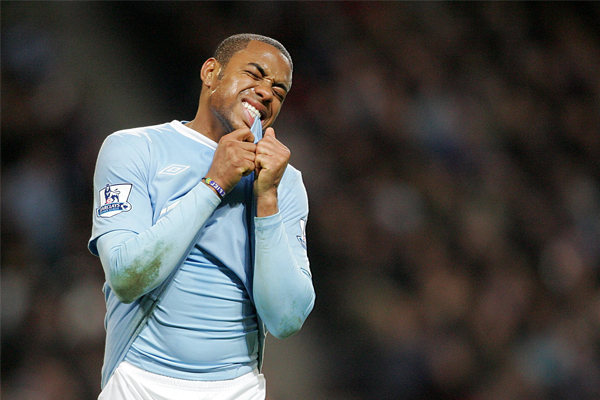
15. Robinho

In fairness to Robinho, he had a decent first season at Manchester City, but it just wasn€™t enough for a player who was hyped as Pele€™s successor. Of course most decent young Brazilian forwards are given this title, but Robinho actually seemed to have the talent to back it up. Despite having won two league titles with Real Madrid, a number of factors - including interest in Cristiano Ronaldo - meant that it was time for the Brazilian to move on from the Spanish super club. Almost everyone believed this move would be to Chelsea, and even the player himself seemed convinced, but the move was hijacked however by now Abu Dhabi backed Manchester City, as Robinho became the group€™s first big signing. Despite his apparent desire to move to the capital, Robinho joined the emerging City and had a good start to his new life, scoring a debut goal against former suitors Chelsea. And again, though he started well, he never lived up to the hype that surrounded him. His form in his first season was decent bringing a return of 14 goals, but the team could only finish mid-table, before a disastrous second season in which his poor form and injury problems led to him being shipped back to Brazil, re-joining Santos on loan for six months. In the meantime, the Abu Dhabi owners continued to shape City into a club that would challenge for major honours - leaving their first major signing behind them. A move to Milan produced a further league title, but Robinho hasn€™t achieved what was expected of him and the title of the next Pele has moved onto Neymar.

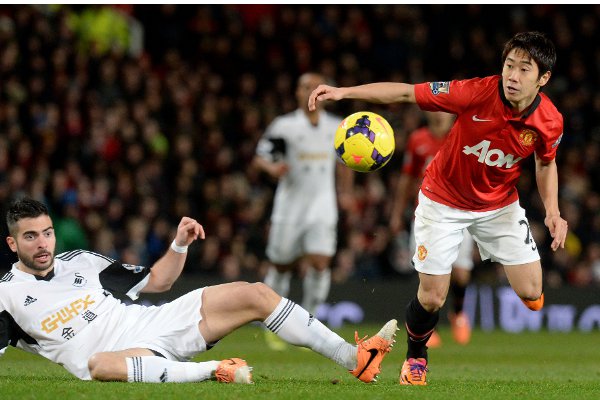
14. Shinji Kagawa

Is this too soon? Maybe. But is it too harsh? No. Shinji Kagawa was one of the last big signings made by Sir Alex Ferguson, and a cynical person might argue that he was signed purely for commercial reasons; with Asian icon Park Ji-Sung having left Old Trafford the club was in need of a new poster boy for that part of the world. Kagawa is Japan€™s star player, having made a name for himself in the Bundesliga as part of Jürgen Klopp€™s resurgent Borussia Dortmund, and it would be naïve to suggest that Kagawa€™s star status in Asia played no role in the transfer - but make no mistake - he certainly has the talent to back it up. Or at least he did have. This is what makes his current predicament so hard to watch, he has rarely played a string of games and only occasionally shows flashes of brilliance that earned him the move to England. Some would make the argument that both of his United managers have failed to play him in his best position- usually farming him out on the wing where he has proven to be largely ineffective. Though this argument does have some merit, some of the responsibility must fall on the player himself. It is too much of a coincidence that both Alex Ferguson and David Moyes have largely ignored Kagawa- he simply isn€™t bringing it. There may very well be a free Shinji campaign still going on, but Shinji is going to do something himself or face being a United flop.

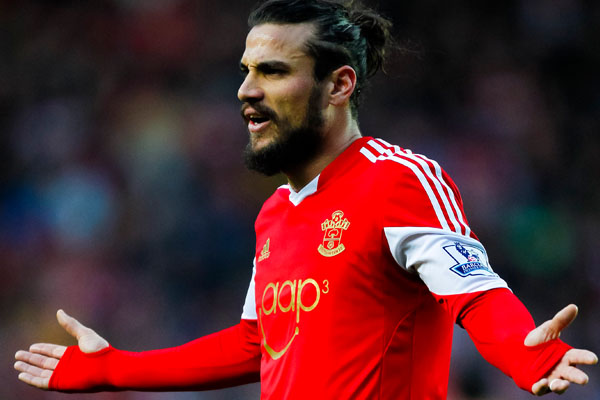
13. Dani Osvaldo

The return of Southampton to the top flight was a good thing. The club was a fixture of the Premier League during the early years, and though the days of Matt Le Tissier and The Dell may be long gone, but it still feels like Southampton is back where it belongs. This resurgence was built on the back of the successful youth system, which in recent years has produced talent such as Theo Walcott, Gareth Bale and Alex Oxlade-Chamberlain. Having thrived in its first season back, the club invested in the summer with record signing of Roma forward Dani Osvaldo. Osvaldo is player of undoubted ability; he came to the Premier League as Roma€™s top goal scorer and is well respected in Italy. His high profile arrival was a signal of the progress Southampton had made and it appeared he would provide competition for newly minted England star- Rickie Lambert. Despite the anticipation and the great players around him, it didn€™t work. Rather than adding a new dimension to the team, Osvaldo stuck out like a sore thumb, appearing out of place with the skilful young Saints. He scored a few goals but it wasn€™t enough to displace Lambert. The failure of the transfer was soon confirmed; Osvaldo was already banned for three games when Southampton suspended him for two weeks, due to an undisclosed training ground incident. When this incident was revealed to be a fight with team mate José Fonte- which he had allegedly started- it was clear that his days were numbered. Osvaldo joined Juventus on loan until the end of the season, with an option for the Old Lady to buy in the summer.

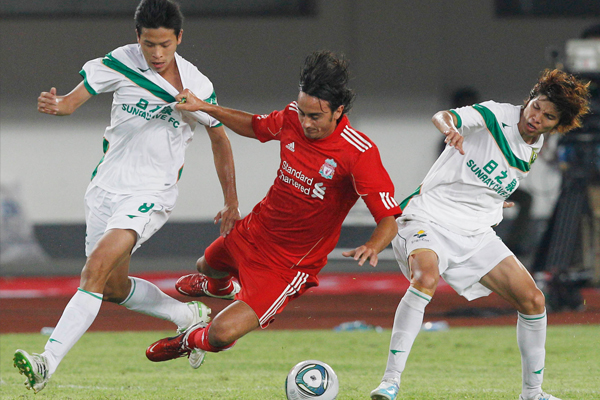
12. Alberto Aquilani

Alberto Aquilani joined Liverpool for a big fee during the ill-fated reign of Tom Hicks and George Gillette. The Italian was signed by Rafa Benitez, for what would turn out to be his final season at the club. In the years since, Benitez has received a lot of criticism for the signing- which is partially unfair. Aquilani had performed with distinction for his previous club AS Roma- if he could reproduce that level of performance then the price tag would have been justified. With Xabi Alonso having departed for Real Madrid it appeared Aquilani would be his long term replacement €“ but he would struggle to even get a game at his new club. Despite joining the team in August he failed to make a Premier League appearance until November; this trend of sporadic appearances would define his time at the club, as Aquilani failed to make any sort of impression and was clearly not fancied by the manager. A change in management did little to change this as Roy Hodgson and Kenny Dalglish both chose to loan him back to Seire A. After spending stints on loan at Juventus and AC Milan, Aquilani finally got a full transfer to Fiorentina. Having performed well in Florence he appears to have put his Liverpool hell behind him, and has gone some way to rebuilding his reputation.

11. Anderson

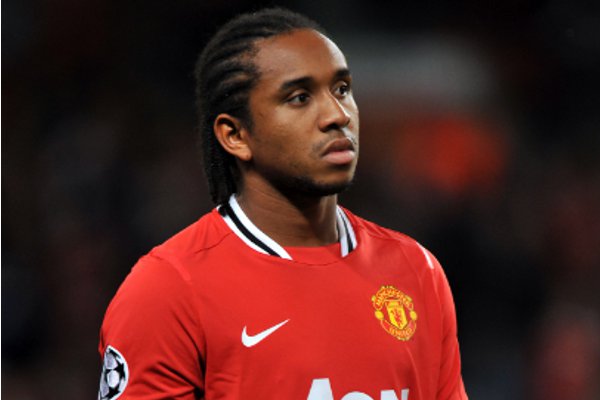
This was baffling; Anderson€™s Manchester United career has unsurprisingly provided him with an array of medals, but very few could surely understand how he managed to stay at the club for so long. Anderson was one of a long line of South Americans to build a name for himself at FC Porto; his transfer to England alongside Nani and Owen Hargreaves, looked to be a sign that Sir Alex Ferguson was building his latest United team. It€™s fair to say that none of the three will go down as legends at Old Trafford - but Anderson is easily the worst culprit. Hargreaves career was sadly derailed by injury, whilst Nani has had periods of good form, but Anderson just seemed to sit around and do nothing for years. He joined Manchester United as a teenager who appeared to have a bright future ahead of him with both United and the Brazilian national team, but of course this future hasn€™t materialised; Anderson very rarely played for Man United and his physique led to continuous questions over his fitness and commitment to his career. Yet still he stayed at the club, picking up pay checks and medals for seemingly very little effort. So why was he there for so long? Maybe he had a positive influence within the squad or perhaps Alex Ferguson had a blind spot when it came to Anderson; either way David Moyes clearly saw things differently. Anderson has finally left Manchester United, with Moyes sanctioning a loan move to Fiorentina. It€™s a shame that such a seemingly talented guy appears to have thrown away years of his life rotting on the bench.

10. Andrei Arshavin

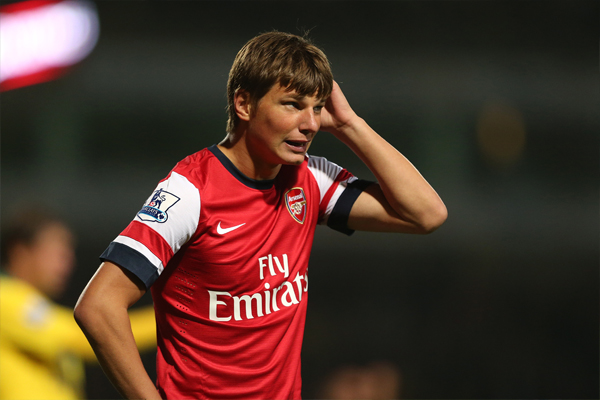
Yet another example of a player bought after an impressive international tournament and failing to consistently reproduce that form at club level. Andrei Arshavin was the star player of an impressive Russian team that made it to the semi-finals of Euro 2008- though Arshavin was banned for the first two group games. Though he had been a key player for a successful Zenit St. Petersburg side for a number of seasons, his performances at the Euros enhanced his reputation to another level. Arshavin was reportedly courted by a number of clubs including Barcelona and Tottenham, but it was Arsenal that landed his signature. Arshavin was signed by Arsenal for a then club record sum and was seen as a real coup for the Gunners, and perhaps a sign that the Gunners were now ready to compete at the top level again. Of course we know that didn€™t happen, but with Arshavin joining a team that included Fabregas, Van Persie and Samir Nasri- it€™s easy to understand the optimism. The highlight of the Russian€™s time in the Premier League was undoubtedly the game at Anfield, in which he scored every Arsenal goal in a 4-4 draw with Liverpool. His performance that night will likely never be forgotten, but it will also serve as a reminder that he didn€™t manage reach those heights ever again. Arshavin was eventually consigned to the bench and seemed to hang around far longer than he appeared welcome, before finally returning to Zenit.

9. Andriy Shevchenko

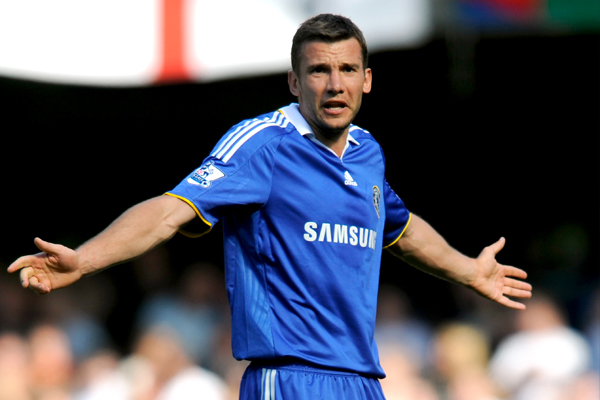
Before Torres, there was Shevchenko, the Ukrainian who was legitimately heralded as one of the deadliest strikers in Europe. His name struck fear into the hearts of opponents and helped drive forward the AC Milan side of the early 2000s, during which period the Ukrainian won Serie A and the Champions League, before departing Italy to join Chelsea in 2006. He had been courted by Chelsea€™s billionaire owner, Roman Abramovich for over a year and for the club record sum, Roman eventually got his man. His arrival at the club also help fuel the rumours of a falling out between the owner and then manager Jose Mourinho - who allegedly did not share Abramovich€™s affection for the player. Despite these issues, it€™s easy to imagine that Shevchenko firing in the goals like had in Italy would likely have curtailed the problems between the manager and owner, but sadly for all involved, this did not happen. The Andriy Shevchenko that arrived at Stamford Bridge was not the same man that was consistently brilliant for AC Milan. It was never a case of him not trying- which spared him the wrath of the fans- but rather time having taken its toll. It was too late and given the slower pace of Italian football, an aging Shevchenko was always going to struggle. The relationship of Abramovich and Mourinho seemed irrevocably damaged and the manager departed- Shevchenko was no more successful under future managers and eventually returned home to Ukraine.

8. Juan Sebastián Verón

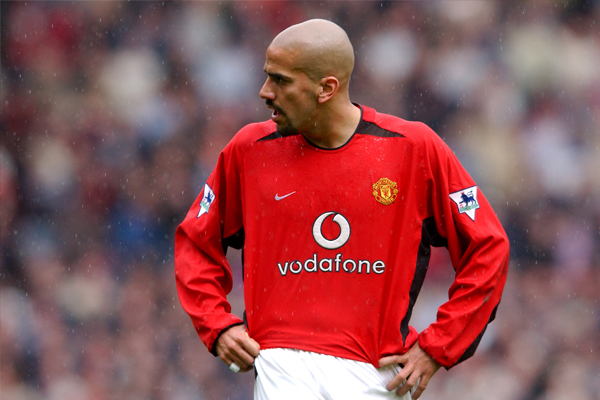
Juan Sebastian Verón is a legend of South American football, and rightfully so, but the favourable reputation that he holds in his home continent does not extend to England, where he is considered a prime example of an expensive flop. Verón left his native Argentina for Italy, where he built his reputation as one of the best midfielders in European football, establishing himself as a key player for Lazio as the capital club won Serie A in 2000. His time with Lazio, along with previous spells at Sampdoria and Parma, led to Verón€™s transfer to Manchester United for a mammoth fee, which unfortunately piled a lot of pressure on the Argentinian who was expected to drive United to further success, both at home and in Europe. Verón had dominated games in Italy but failed to have the same effect in the Premier League. Most tend to agree that this was down to the faster pace of English football; he was used to having time and space with the ball, something that he would rarely get in his new surroundings. This issue effectively made him useless, as his greatest strength had been taken away. Despite his failure at United, for some baffling reason the newly minted Chelsea decided to spend another large sum (though not as obscene as the initial outlay by United) for his services. Not surprisingly Verón€™s time at the bridge was also a failure - likely for the exact same reasons as before, and when Jose Mourinho joined Chelsea in 2004, Verón was sent on loan to the place where is talents were best suited- Italy. He had a good time at Inter, winning the Coppa Italia twice and being awarded a Seire A win by virtue of the Calciopoli scandal. Though he did fairly well in Milan, there was no getting away from the fact that his reputation was badly damaged in Europe - but he had no such problem in South America. He returned to Argentina in 2006 by joining Estudiantes of the Argentine league and led the club to great success.

7. Hernán Crespo

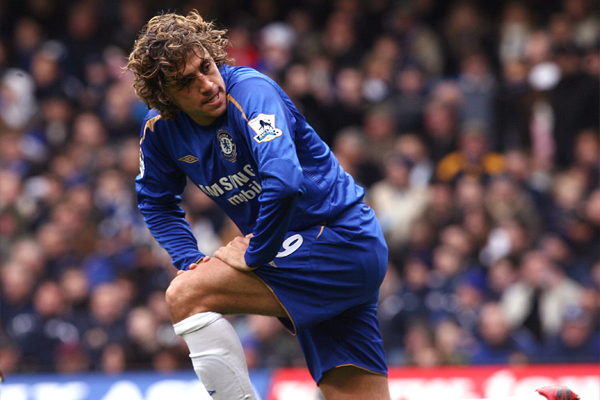
Hernán Crespo was one of a number of forwards bought in during the early period of the Abramovich era, which also saw the arrival of players like Mateja Kežman and the disastrous Adrian Mutu, who all tried to grasp the spot that Didier Drogba would eventually own. Eidur Guðjohnsen left for Barcelona, Kežman simply wasn€™t good enough and Mutu was fired for drug use - but Crespo was a different case altogether. It was clear that the Argentinian - who had been a world record signing for Lazio - was extremely talented, but he wasn€™t living up to it. Crespo was one of the first big signings of Roman Abramovich€™s ownership, joining alongside the likes of Claude Makélélé and Joe Cole. Though he was undoubtedly a good striker, he struggled to fit in with Chelsea€™s style of play. It became clear that the blues required a different type of forward - a big powerful presence - and Crespo simply didn't fit the bill. Like his compatriot Juan Sebastian Verón, Crespo€™s talents were better served in Serie A, and the arrival of new manager Jose Mourinho would provide the opportunity of a return to Italy. During his loan spell at AC Milan, Crespo showed why he was once such a coveted striker, and on what turned out to be a miserable night in Istanbul, Crespo€™s positional awareness and deadly finishing were on full display, as he scored two goals to seemingly kill the hopes of Chelsea€™s rivals Liverpool.

6. Patrick Kluivert

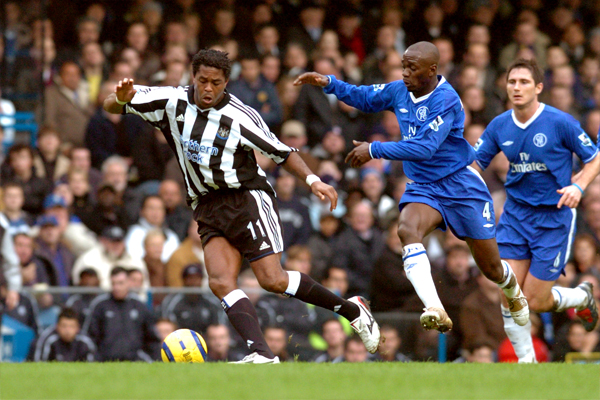
Until recently Patrick Kluivert was - perhaps surprisingly - the highest goal scorer in the history of the Dutch national team. He was the lead striker of the Ajax golden generation of the 90€™s and alongside teammates such as Edgar Davids and Clarence Seedorf, fired the team to Eredivisie and European success. After an unsuccessful period at AC Milan, Kluivert joined FC Barcelona where he enjoyed personal success in a lean period for the Catalans - though he did win a La Liga title. As Barcelona began to transform itself back into a European force, Kluivert, Rivaldo and other players of their era were phased out, which led to the Dutchman€™s transfer to Newcastle United. By the time of Kluivert€™s 2004 arrival, Alan Shearer was ageing and a long term replacement was needed. Despite seemingly being around forever, Kluivert was still in his twenties at this point and it was perfectly feasible the he could be the man for the job. His time at the club however, made clear why Frank Rijkaard had shipped him out of the Nou Camp. Kluivert is one of those players who apparently peaked early and declined quickly with age. Whereas Ajax teammates like Seedorf and Edwin Van Der Sar maintained their quality well into their thirties - Kluivert could not do the same. His one and only season with Newcastle provided a decent, but underwhelming return of goals, and he became a journeyman for the rest of his career, before announcing his retirement in 2008. And meanwhile, Newcastle are arguably still looking for that Alan Shearer replacement.

5. Jon Dahl Tomasson

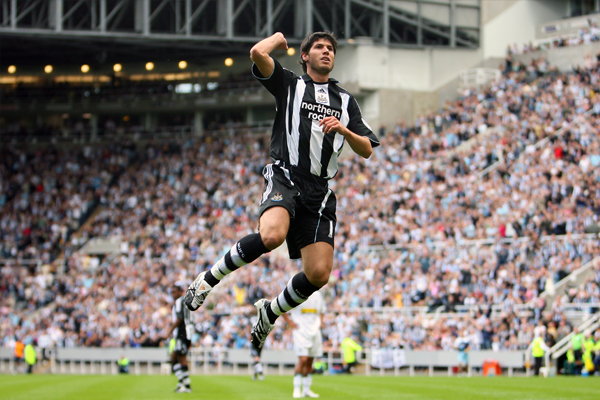
If you would have told a Newcastle fan in the nineties that Jon Dahl Tomasson would go on to be a Champions League winner, they would have laughed in your face. The Dane had come to the attention of European clubs due to his prolific form for Heerneveen of the Eredivisie, and his excellent displays in Holland convinced Newcastle United to splash the cash. Newcastle at that time were genuine title contenders and Tomasson looked to be a canny addition to Kenny Dalglish€™s team. Tomasson encountered several problems during his time with Newcastle, which collectively led to his failure in the Premier League. Alan Shearer - the clubs star player - suffered a long term injury, which compounded by the baffling sale of Les Ferdinand to Spurs, left Tomasson with a great deal of pressure on his shoulders. The pressure was seemingly too much for him as he got nowhere the level of performance that was expected of him, and though he is certainly deserving of some criticism, he was still unfortunate to some degree. Tomasson was neither world class nor an out and out striker, expecting him to stand in for Shearer and Ferdinand was absurd. His time at Milan showed that Tomasson was determined to be the best that he could possibly be and wanted make the most of whatever talent he had. He may have spent the majority of his time as a substitute, but commitment to his craft ensured that he earned the medals that he won.

4. Afonso Alves

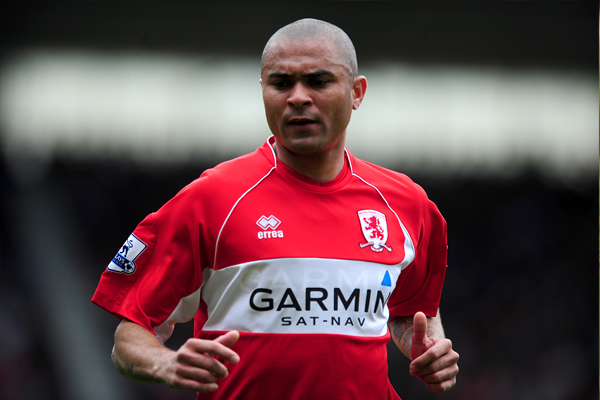
Once upon a time the Eredivisie was a stepping stone for South Americans- most famously Brazilian strikers like Romario and Ronaldo, and for a brief period it appeared that Middlesbrough had unearthed another of these gems, in the form of Afonso Alves. Though questions were raised about the reliability of Eredivisie players, it was difficult to ignore Alves€™s phenomenal record with Heerneveen, where he had a fantastic goal scoring record, prior to his big money move to the Premier League. He actually looked like a steal for the North East side. He joined the club in January of 2008 and his first half season provided unspectacular but promising results - including a brace against Man United and a hat trick against Man City. Any hope that these performances provided was soon extinguished in the next season; Alves endured a miserable season and his return of four league goals helped condemn Boro to relegation. Not surprisingly the Brazilian didn€™t stick around for life in the Championship and left for Qatar at a fraction of the price the Middlesbrough had paid. Some might argue that Alfonso Alves was never truly talented in the first place, but I believe he showed what he was capable of against the Manchester clubs and he could have done more if he put the effort in.

3. Diego Forlan

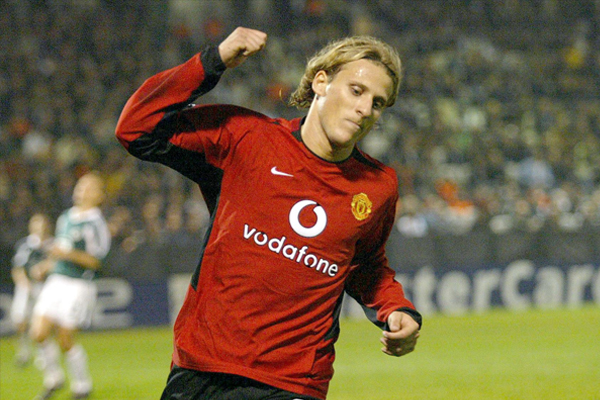
You€™ll struggle to find a more popular high profile flop than Deigo Forlan. The Uruguayan had drawn the attention of Middlesbrough whilst playing for Argentinian side Independiente, and it appeared that he would be on his way to the Riverside when Manchester United hijacked the deal. With all due respect to Boro- the choice must have been a no brainer, and with the opportunity for trophies and larger salary in his sights Forlan decided to take his chance with the Red Devils. It was a difficult challenge for the striker to take on; he had Ruud Van Nistelrooy and Ole Gunnar Solskjaer in his way, but clearly he backed his own talent to carry him through. Sadly we didn€™t get to see this talent on a regular basis; his goal scoring was patchy at best and he looked nowhere near good enough for such a big club. Whatever the reason maybe for the failure - it certainly wasn€™t though lack of effort, his determined attempts to find his form earned the affection of the United fans. Eventually Sir Alex Ferguson had to bite the bullet and cut his losses: Deigo Forlan went on to La Liga, where he finally proved his worth. His time at Villarreal and Atletico Madrid was very successful, with Forlan winning the Golden Boot for each club, and he also showed his goal scoring worth at international level by being named the best player and joint top scorer at the 2010 World Cup.

2. Albert Luque

Thanks to his time at Mallorca and especially Deportivo, Albert Luque established himself as one of the best Spanish players outside of the big two of Barcelona and Real Madrid, and his form in La Liga had led to a call up to the Spanish national team and it seemed likely that it would bring the attention of Europe€™s big hitters. This is why it seemed such an impressive move by Newcastle when they appeared to steal a march on the rest and snag his signature. Perhaps the rest of Europe knew something that the Toon didn€™t, because this is a move that they would certainly regret. Albert Luque spent more time on the injury list than he did on the pitch at Newcastle. Between his various stints on the physio€™s table he did little to remind the fans of the player he once was, aside from scoring in a memorable victory at Sunderland, but even then his goal prompted the caveat laden "and even Luque scored." Instead of being the effective winger that Newcastle wanted, Luque was instead a very costly passenger that Newcastle struggled to shake off, and there's a good chance that the vastly inflated price that brought him to England was one of the reasons the club is now stoically dedicated to not paying over the odds for players who are on the downturn. His fall from grace got to such a drastic extent that he was considered a reserve before his departure for Ajax.

1. Adrian Mutu

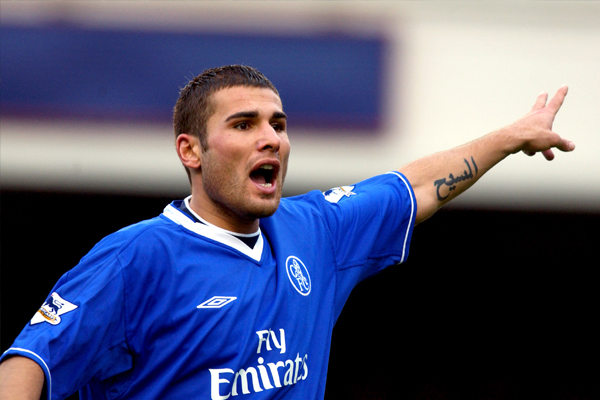
Adrian Mutu committed one of the worst crimes a sportsman can - he threw way his talent. Much like his short lived Chelsea strike partner Hernán Crespo, Mutu made his name in Serie A - with his time at Parma in particular highlighting his potential. He was rewarded with a move to Chelsea, becoming yet another name to join the Abramovich revolution. He time in London started well but began to tail off as the Blues finished runners up to the Invincibles of Arsenal and lost to Monaco in the semi-finals of the Champions League. The consequence of this was the firing of Claudio Ranieri and the incoming of José Mourinho. Though the special one€™s arrival at Chelsea would mark the start of a great period of success for the club, it also coincided with a disastrous time for their Romanian striker. The two did no spend long in each other€™s company; Mutu€™s long term future was already in question because of the record signing of Didier Drogba, when he failed a drugs test due to cocaine use. Chelsea and Jose Mourinho took the opportunity to get rid of a very talented, but untrustworthy player and released him in October of 2004. Despite receiving a lengthy ban, Mutu€™s skills on the pitch meant he wasn€™t without a home for long. He signed for Juventus and eventually Fiorentina, where he was smashing in the goals before failing another drugs test. A legal battle between the club and Mutu has dragged on for years, with the club seeking compensation from the player for breach of contract. Which other foreign talents flopped in the Premier League? Share your own picks below.

Contributor
Contributor

A guy who is in too far to many geeky things then he would care to admit. A film, tv and gaming enthusiast he will maintain that Rocky III is an awesome movie until he draws his final breath. Embarrassing Fact- owns five different versions of Ocarina of Time