10 Star Trek Assassinations That Changed Everything
These Star Trek characters changed everything but paid the ultimate price to do it

We might all like to believe that the future presented in Star Trek, and particularly in legacy Trek, is all rosy and full of friendship. That may be true in the early seasons of The Next Generation, when one confines ones view to Starfleet vessels, but that is far from the norm in the expanded universe.
The Klingon Empire barely goes a week without someone biting the dust, while assassinations are considered the standard for a Tuesday lunch on Romulus. On Cardassia, if you can make it to the local tailor's shop without an attempt being made on your life, you're considered an honoured elder.
So, which of the many assassination attempts in Star Trek make the slightest bit of difference, and which of them are considered notable? It feels awfully harsh to deem any assassination 'dull' but then one must also consider their outcome. Did YOUR assassination change the course of a war, Seán? No? Then perhaps we won't be considering you for this list.
It's a Targ eat Targ world out there.
In the Game of Star Trek Assassinations, you win, or you die.
Well, obviously.
10. Chancellor Gorkon

The assassination of Chancellor Gorkon kicked off a seismic shift in the Alpha and Beta Quadrants, rivaling the explosion of Praxis itself. When Star Trek VI: The Undiscovered Country arrived in theatres, The Next Generation had been on the air for several years, so the audience was used to the Klingon Empire being allies. The death of Gorkon paved the way for this alliance.
Rogue elements from the Empire and Starfleet worked together to have him killed, which ironically was one of the earliest examples of cooperation between the two powers. As often happened, they failed to take the reckless nature of the Enterprise crew into account, thus putting Kirk et al. in line to scupper their plans.
The assassination was based on the death of Abraham Lincoln, evidenced in the design of Gorkon. The latter's death was part of an overall attempt to derail the peace talks, while the former's death was part of an overall attempt to revive the Confederacy. Thankfully, neither were successful.
The Khitomer Peace Talks were the beginning of a new age of peace in the Galaxy, with Gorkon's death serving to solidify their importance.
9. K'mpec

Another Klingon Chancellor, another assassination - and don't assume we're finished with them yet either. K'mpec is killed in The Next Generation episode Reunion, though one could argue his death had been occurring for some time. Duras had begun poisoning the leader in small amounts, though perhaps regretted the slow approach after the Enterprise was involved.
K'mpec's assassination ushered in another era for Klingon-Starfleet relations. It takes place after Gorkon's death chronologically, though it appeared on-screen first. Had Duras succeeded in his plan to become the Head of the High Council, it would have been the end of the Alliance.
Duras's death at the hands of Worf - itself a consideration for this list - was the next step, after K'mpec's death - in exposing Romulan interference within the Empire. It would take another year or so to be fully exposed, but K'mpec's death by Duras's poison set the chain of events in motion.
It would lead to K'Ehleyr's death, Gowron's ascension to the big chair, and the revelation of Sela, daughter of Tasha Yar, as well as the cunning Duras Sisters.
8. Vreenek

...all it cost was the life of one Romulan Senator, one criminal, and the self-respect of one Starfleet officer. I don't know about you, but I'd call that a bargain.
The Senator to which Garak was referring was Vreenek, one of the fiercest advocates for the Romulan non-aggression pact with the Dominion. After luring him to Deep Space Nine, Garak snuck aboard his shuttle, planted a bomb, and set the stage for the end of said pact.
Sisko may have been furious, at least on the surface, to discover he had been an accessory to murder, but consider the result. The Romulan Empire joined the war effort against the Dominion, striking back at bases along the border, and helping to bolster the Federation Alliance Forces.
The methods of War are shrouded in shades of grey, and there is no question that Vreenek's death broke many of the sacred laws of Starfleet. When law stands in the way - outsource. Garak was right, that was why Sisko had come to him. It may not have been overtly conscious, but none but Garak had the fortitude to pull it off.
7. James T. Kirk (Mirror Universe)
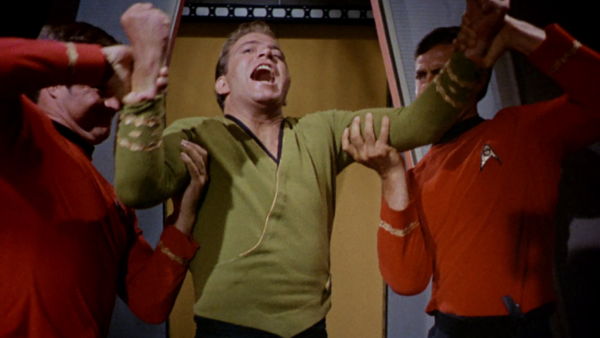
When can one man's death spell the end of an Empire? Ok, lots of times really, when one considers history. But in Star Trek, the Mirror Universe went through an enormous shift of power once James T. Kirk lay dead in the ground.
The accidental arrival of Prime Universe versions of Kirk, McCoy, Scotty, and Uhura instigated the end of the brutal Terran Empire. Spock, as logical in that reality as ours, listened to their assertions that peace was the best way forward. He had even calculated the Empire would founder some 240 years after their arrival, regardless of their actions. With their influence, he brought that ending forward by centuries.
His message of peace left the former Empire open to attack so, almost one hundred years later, the Cardassian-Klingon-Bajoran Alliance rose and conquered it. This spelled doom for most of the Terrans, as they quickly found themselves deposited into slavery. A rebellion was born almost instantaneously, but it would take years for it to truly strike any major blows.
Mirror Kirk may have been an awful human being, in our estimation, but his death led to the destruction of the Empire and the eventual rise of both the Intendant and the Regent.
Whoops.
6. Romulan Proconsul Merrok

Romulan Proconsul Merrok was mentioned by name in Broken Link, though it would take Garak's diary to truly explain his significance. While en route to meet with the Founders, the tailor regales Odo with stories from his past to distract him from his suffering.
Merrok was an interesting name to choose as his assassination paved the way for the Tal Shiar/Obsidian Order Alliance and the assault on the Founders' original homeworld.
He had been a sponsor of the Tal Shiar and wielded enormous influence over the organsiation, though he was openly hostile toward Cardassians in general. He even supported an alliance with the Klingons to further solidify Romulan interests in the Alpha Quadrant, which brought him into conflict with Enabran Tain.
Tain dispatched Garak to Romulus, who at that time was posing as a gardener. With the careful cultivation of Edosian Orchids and the White Star Of Night (a plant native to Vulcan that is also found on Romulus), the operative was able to poison the Romulan with the flower's toxic blooms.
This cleared the opposition to Tain, leaving the road open for the Alliance, eventual destruction of the Obsidian Order, and crippling of the Tal Shiar.
5. Former Obsidian Order Officers

With the final stages of the joint Obsidian Order/Tal Shiar operation in the Gamma Quadrant, Enabran Tain saw fit to start cleaning house. We as an audience first became aware of this when Garak's Tailor's Shop exploded on the promenade, even if that had been caused by the former agent himself.
The assassinations of the former operatives served to draw Odo, already investigating events thanks to Garak's actions, further into the situation - something that ended up saving Garak's life, the life of the crew of the Defiant, and forwarning the Alpha and Beta Quadrants to the eventual assault by the Dominion.
Colonel Lovok had been the Romulan Commander of the operation and had, at an earlier point, been replaced by a Changeling. This Changeling, citing the golden rule that 'No Changeling has ever harmed another' helps Odo and Garak escape the battle, which in turn is almost certainly responsible for the successful escape of the Defiant.
It would take the deaths of the last operatives of the Order to truly shock the rest of the Galaxy into preparing for the Dominion Invasion. In a way, Tain did set the wheels in motion to save his homeland - it just took several wildly roundabout routes to get there.
4. The Romulan Senate

In Star Trek: Nemesis, a quip refers to the frequency of change in the Senate. Shinzon had been created as part of a plan to replace Jean-Luc Picard and have a Romulan operative deep in Starfleet, only to be chucked into the Reman mines when a new government came to power.
This led to a lifetime of torture for the clone, compacting his bitterness over time until he could only see revenge and seek the means to achieve it. He spent years working in secret, building his Scimitar ship, galvanising support amongst the Remans, before making his move.
The assassination of the entire Senate was his daring first blow in the revolution, placing him in the Praetor's seat, for a time. In that time, he reached out to Starfleet, inviting them to peace talks. Wouldn't you know it, the Enterprise-E just happened to be the closest ship to the border.
Shinzon's coup set the stage for the rise of the Remans, but also for much of the events of Star Trek: Picard. The death of Data only occurred in a successful attempt at destroying the Thalaron generator, which in turn leaves Data in that in-between limbo of dead and alive - ready to guide Picard back to life twenty years later.
3. Emperor Of The Pakleds

The crew of the USS Cerritos has seen their fair share of intrigue, danger, and galaxy-changing events. The assassination of the Pakled Emperor in The Spy Humongous sure is one of those things.
Freeman and Shax beam down to the Pakled homeworld to negotiate with them. following their experience in No Small Parts. While on the surface, they witness the assassination of the Emperor by those 'rebolution-aries' who would seemingly up-end the political atmosphere of Pakled Planet.
How does this monumental example of regime change affect the galaxy? Well, in all honesty, it may just serve to solidify how the Alpha Quadrant sees these intellectually challenged foes. Their entire command structure is based on who has the biggest hat - codified by the new Emperor claiming said huge hat for himself.
The events that follow this encounter, including the renegade Klingon ship delivering weapons of mass destruction to the Pakleds, may suggest that this new emperor was savvier than the former - employing a complicated web of spies, allies, and devious plots to achieve his ends.
Or maybe he just wanted to show his big hat to some folks with a forehead bumpy enough to appreciate it.
2. Dahj Asha

Star Trek: Picard kicked off with the assassination of Dahj Asha, Data's 'daughter'. More specifically, a failed attempt drives her into the orbit of Jean-Luc, which in turn encourages the retired Admiral to come back to active duty.
Narissa, a Romulan agent infiltrating Starfleet, orders the android's death as part of her dogged mission to stop the Admonition from happening. This prophecied doom for all organic life had been shared with members of the Zhat Vash for generations - blinding them to any other course of action than simply wiping out all artificial intelligence.
In a case of self-fulfilling prophecy though, Dahj's horrific death inspires Picard to dig deeper, leading him to discover her twin - Soji, as well as the work that Bruce Maddox and Altan Soong had been doing, eventually forcing a stand-off between the Zhat Vash and Starfleet over the skies of Coppelius.
While to some, this may seem like a case of the snake eating its own tail, there is little doubt that as tragic as Dahj's death was, it inadvertently led to the overturn of the ban on synthetics. She surely would have preferred a choice in proceedings, but Dahj Asha became a martyr in death.
1. Gowron

Gowron ascended to the Chancellorship in Redemption and he would hold that position until Tacking Into The Wind, wherein he is assassinated by Commander Worf on Captain Sisko's orders. How did we figure that one out? Well, let's analyse the scene with Work and Sisko in the captain's office.
After a disastrous raid on Gowron's orders, General Martok is almost killed, and the Klingon forces are beginning to show the effects of Gowron's ego. At this point in the Dominion War, they were the only effective shield against the Breen energy dampening weapon, though rather than having the Klingons create a defensive barrier around Allied territory, Gowron was squandering his ships.
He was attempting to discredit the hugely popular Martok, fearing the man would take his seat on the council. This left the Alliance forces in a dangerous position - one that could not be risked simply to satisfy one politician's ambitions. Worf and Sisko recognise this, leading to Sisko ordering Worf to do whatever it takes to block Gowron's actions.
Both men are fully aware that in Klingon culture, there is only one course of action. Worf challenges Gowron to combat, defeating and killing the man, before installing Martok as Chancellor in his place.
This is the second time that Sisko was an accessory to murder in the name of safeguarding the Alpha Quadrant, for anyone who's counting, by the way.
Martok quickly rallies the Klingon forces to protect the Alliance territory again, allowing time for Starfleet and the Romulan Empire to study the Breen weapon, develop a defense, and commit to a final assault on Dominion-held territory.
The war ends and all it cost was one Klingon Chancellor, one War Room pane of glass, and the absolute lack of any sympathy for ole Bug Eyes himself.