Star Trek: 10 Times The Federation Was The Bad Guy
The Federation usually plays the hero, but there are times it failed to practise what it preached.
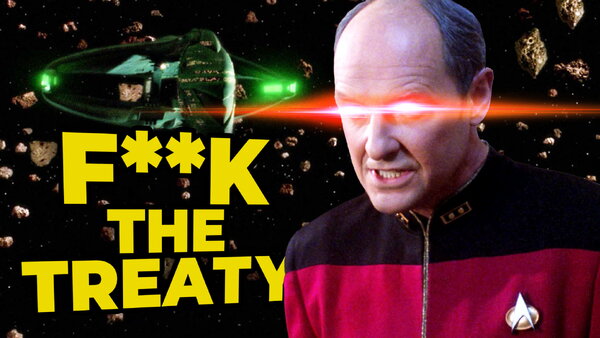
The Federation likes to think of itself as the good guy. And most of the time, we'd agree. But for an organisation that gets so much right, they sure do a good impression of the bad guy now and then...
Una Chin-Riley recently reminded us in A Case of Chiaroscuro that Starfleet isn't always right. And after centuries of adventures, that claim has some receipts. In fact, it's fair to say that on occasion, both Starfleet and the Federation get it very, very wrong indeed.
Considering the tome of directives, rules and protocols they have, it's remarkable how often we're left staring open-mouthed at the screen, wondering how many get-out-of-jail-free cards they have. Their slip-ups are even more baffling when you consider just how often Star Trek has tried to convince us that humanity has finally got its act together.
To be clear, this isn't a list of misguided solo campaigns. No, these are the decisions where Starfleet and the Federation as a whole really should have known better. From shady experiments to outright discrimination, these are ten times the Federation should have taken a long, hard look at itself in the mirror.
Are you ready to count how often it was all for the 'greater good'?
10. Abandoning Colonies To The Cardassians
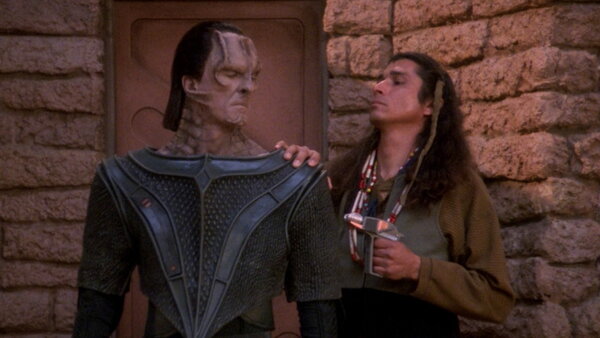
We thought we'd start with an entirely non-controversial entry...and then went with this instead.
The path to the Dominion War gets a little muddy, but it has roots as far back as The Next Generation. In Journey's End, negotiations with the Cardassians results in colonies from both sides ending up in each other's territory. Seemingly, the fact that everyone lost something made it a satisfactory solution...?
Picard is tasked with evacuating a colony of Native Americans who had searched far and wide for the right home to preserve their cultural identity. Admiral Nechayev doesn't seem thrilled at the prospect, but dutifully rattles off the usual disturbing dehumanising rhetoric; it's a reasonable price to pay, concessions had to be made, and it's for the greater good.
And it was just the start.
Enter the Maquis; reckless rebels or valiant resistance fighters (depending on your viewpoint). They joined together to defend the worlds abandoned by the Federation when colonists who wouldn't (or couldn't) evacuate were left at the mercy of the Cardassians. And as we learnt from Ro and Kira, the Cardassians could be a brutal occupying force.
Despite imploring the Federation to rethink its stance given the harm it was causing, it remained adamant that sacrifices were necessary to keep the peace. And while we do see some Starfleet officers question the decisions made, it's a wonder more didn't protest the obvious appeasement of an unacceptable regime. A position that didn't age well, given Cardassia's eventual alliance with the Dominion.
The Federation's actions not only have echoes of the forced displacement of Native Americans, but also the failed policies of appeasement towards militaristic powers throughout history. It seems the Federation failed to heed the warning from history, especially about what happens when people's lives and homes are reduced to numbers.
9. Violating The Treaty Of Algeron
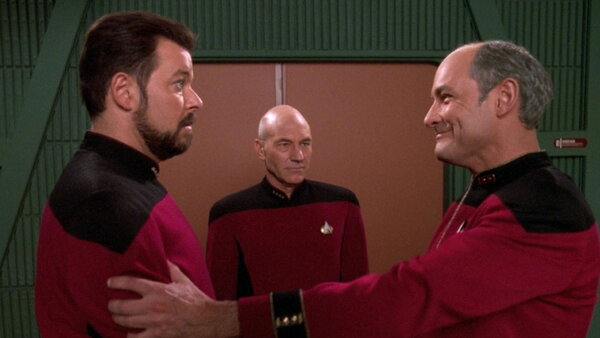
The look on Riker's face when he sees Admiral Pressman step off the transporter pad in The Pegasus tells us that things are going to get rough. And the way Pressman announces that their old lost ship, the USS Pegasus, may have been discovered by the Romulans...well, he may as well have added a nudge, nudge and a wink, wink.
Turns out the Pegasus had been testing an experimental phasing cloaking device, which is strictly forbidden by the Treaty of Algeron. When the experiment put the ship at risk, most of the crew mutinied, and a young Riker sided with his Captain, helping him escape just minutes before an explosion. If that weren't shady enough, a recommendation for a full investigation was ignored and the report was classified and quietly hidden away...the hallmark of a classic cover-up.
What's worse, Pressman intends to restart the project once the device is recovered, with the support of the Chief of Starfleet Security and a bunch of Starfleet Intelligence cronies. This is clearly not just a Badmiral solo gig.
Riker is ordered to keep the project secret, even from Picard, putting him in a terrible position. And when the Enterprise reaches the Pegasus and discovers it partially materialised in solid rock, Pressman insists on beaming aboard only with Riker to maintain the cover-up. The plan is only foiled when they're forced to use the device as a means of escape and Picard ensures justice is served.
It might not be the worst thing the Federation has ever done, but breaking a peace treaty, running a forbidden experiment, sparking a mutiny and then covering it all up are not exactly 'good guy' vibes.
8. The Fate Of Anisha Mir
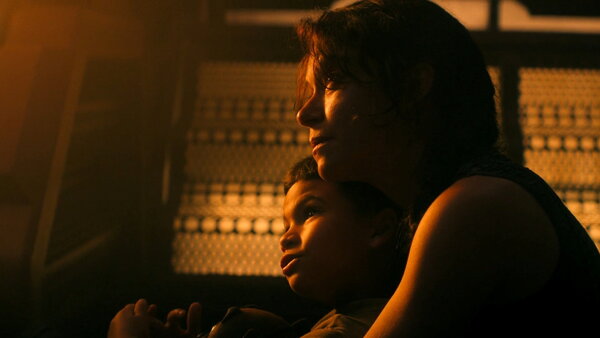
Starfleet Academy wasn't shy about exploring the fallout after The Burn. One such falling ember was the story of Caleb Mir and his mother, Anisha.
Stuck on an outpost with little more than each other, the mother and son would watch the stars and dream of the journey they might one day take. But in reality, Anisha wasn't even sure where their next meal was coming from. She made a deal with the devil...or more precisely, the unstable marauder, Braka...to get her hands on some food.
It led to an attack on a Federation supply ship, piloted by a kindly officer who was on his final run before retirement. Anyone who's ever watched an action movie knows where this is going. Yes, Braka killed the pilot, and both he and Anisha were arrested and tried.
Future Academy Chancellor Nahla Ake presided, sentencing Anisha to a rehabilitation camp...separating her from her young son (who, for some unfathomable reason, was present for the entire proceeding). Even as a kid, Caleb was too clever for his own good, and he was a ward of the Federation for about five minutes before he managed to run away, leading to a young life full of hardship.
Now, this is a tricky one, because there's no doubt that Anisha involved herself in a crime that went horribly wrong. On the other hand, separating a single mother from her son over a crime committed out of sheer desperation doesn't seem like a particularly enlightened approach.
This may have been a symptom of Starfleet under strain, but Nahla regretted her part in the story so much that she resigned. And when Admiral Vance assures her that she'd had no choice in the sentencing because Starfleet had made no exceptions, Nahla points out that separating children from their parents isn't exceptional...it's reprehensible.
7. The Ban On All Synthetic Life
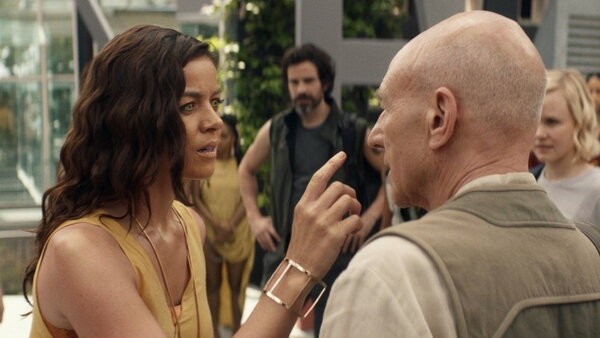
When synths destroyed the Utopia Planitia shipyards and set Mars alight, over 90,000 lives were lost.
Now, no one is saying that the events on Mars weren't a tragedy, but surely, the Federation's response of banning all synthetics, without question, without thorough investigation, without nuance, without exception, and seemingly without meaningful review for fourteen long years...well, it seems like the kind of response a Health and Safety department run by Kelpiens might make.
The attack was put down to a fatal code error, but surely the Federation would want to figure out exactly what caused that error? Surely?
Think about it, they banned an entire class of synthetic life, denying them the right to even exist, let alone create more of their kind. Any existing synths were dismantled, and we don't even want to think of the implications for more advanced intelligences that may well have existed...especially in a universe where such care had been taken to prove the 'measure of a man'. And the sad story of the death of Deanna and Will's son brought into focus the consequences it had in the field of medicine. Just how many lives were tragically changed or lost due to the ban?
If there had been absolutely no other solution, or even if the ban had been a temporary precaution, it would be more defensible. The Federation had an array of technological resources at its fingertips to research and implement a less radical solution...even if just to allow for life-saving medical procedures to resume.
And when it's discovered that the Zhat Vash (a secret Romulan faction, even more secret than the other secret Romulan faction) orchestrated the attack on Mars to incriminate the synths and trigger a ban, it becomes patently clear that the ban was completely unnecessary in the first place.
Raffi had been so close to the truth at the time of the attack...it's boggling to think that not one inquiring mind picked that thread up over the following years. And we don't buy the idea that a Romulan cabal being responsible for a false flag incident was somehow unthinkable...it's *exactly* the kind of sly tactic Romulan officers are famous for. It was simply the motive that was missing.
Fourteen years the Federation had to sort this mess out before Picard did it for them. Fourteen years...
6. Forsaking The Romulans
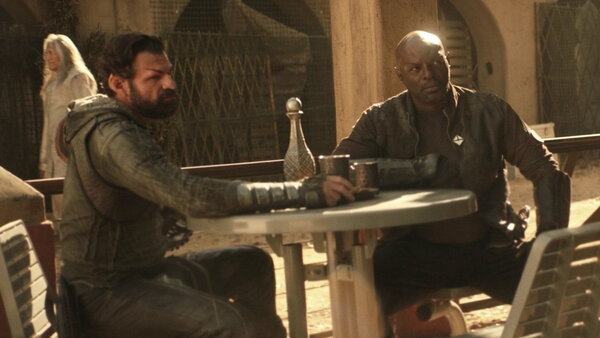
Unfortunately, the Federation's panicky response to the devastation of Mars didn't stop at the synth ban...
When the Romulan sun went supernova, it resulted in a catastrophic loss of life and the destruction of their homeworld. Starfleet had committed to a rescue operation to evacuate as many souls as possible and render aid to their people. But the loss of the fleet in the Mars attack scuppered their plans.
Picard and Raffi worked tirelessly to put together a new plan, utilising reserve officers and mothballed ships. It would by no means be the rescue they had originally hoped for, but it was something. But the Federation opted to abandon the Romulan rescue, instead focussing on protecting their own interests in the face of adversity. Even sadder is the implication from Picard that prejudice may well have played a part in the decision.
We're not entirely sure that Picard rage-quitting Starfleet was the answer. Yes, his threat to resign had been a gamble that didn't pay off, but it's always more valuable to have a man like Picard on the inside working for change rather than on the outside...making wine while the galaxy floundered, apparently. But we do agree with his assessment of the situation:
The decision to call off the rescue and to abandon those people we had sworn to save was not just dishonourable, it was downright criminal!
5. Trying To Disassemble Data
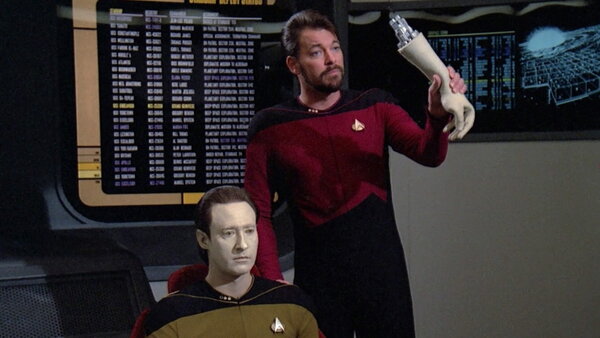
You just knew The Measure of a Man would be on the list somewhere. All these years later, and it's still hard to forgive Bruce Maddox.
Maddox arrives on the Enterprise and immediately starts watching Data like an alligator after its prey. Honestly, it's pretty creepy...he's been studying Data for years and can't wait to take him apart and examine his brain. His obsession wouldn't be entirely out of place in a horror film.
He has a dream to learn how to build androids...by destroying one. He plans to take Data apart to learn the secrets of Dr. Soong's work, and surprisingly, Data's initially intrigued by the idea. But when he realises that Maddox is woefully underqualified for the task, he refuses, and no one could blame him.
However, Maddox has come prepared with orders for Data to transfer to his project. In a bid to escape the disturbing experiment, Data resigns, but Federation law dictates that Data is in fact property...and property can't resign. After all Data has done for them in the line of duty, and that's the thanks he gets.
The result is an extraordinary courtroom drama in which Picard leads the charge to prove that Data is a person, not an automaton. A him, not an it. Picard builds his case around Data's intelligence, sentience and consciousness, but it's perhaps the judge that says it best...she doesn't know if Data has a soul, but he should have the freedom to explore that question himself. He should have the right to choose.
Even after all of that, Data encourages Maddox to continue his work. And that is the measure of a man.
4. The Prosecution Of Una Chin-Riley
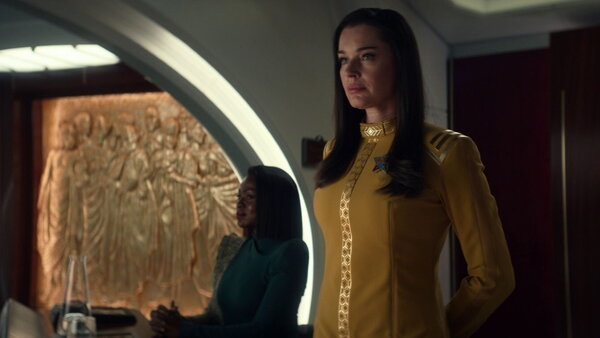
We're starting to think the Federation just likes an excuse to play JAG.
Ad Astra per Aspera follows the prosecution of Una for hiding the fact she's a genetically modified Illyrian. In the shadow of the Eugenics War, so-called 'augments' were banned from joining not only Starfleet, but also the Federation.
In an attempt to sweep Una's case under the carpet, she's offered a deal; plead guilty and receive a dishonourable discharge, but remain a Federation citizen. Una rejects the deal in favour of making a stand for Illyrians...and the prosecution responds by adding sedition to her current list of charges and seeking twenty years in a penal colony as a sentence.
To put that into perspective, Tom Paris received eighteen months when he was convicted of treason.
But the issue is much broader...how can it be ethical to make Federation citizenship conditional on people's genetically modified status? There were people so desperate to join that they died trying to revert their augmentations. For an organisation that prizes diversity, they sure do like their bans...
By the Strange New Worlds era, the Eugenic Wars were centuries in the past. And Una's trial apparently did little to soften their stance given the trouble that Julian Bashir faces when it's discovered he was modified as a child. A more nuanced rule around people actively augmenting their DNA as adults would be one thing, but to extend that to individuals who had no control over their augmentation seems excessive to the point of prejudice.
All people have the potential for good and bad, augmented or not. Tarring an entire group of people with the same brush and then excluding them seems, frankly, as anti-Federation as it comes.
3. The Hunt For The Fountain Of Youth
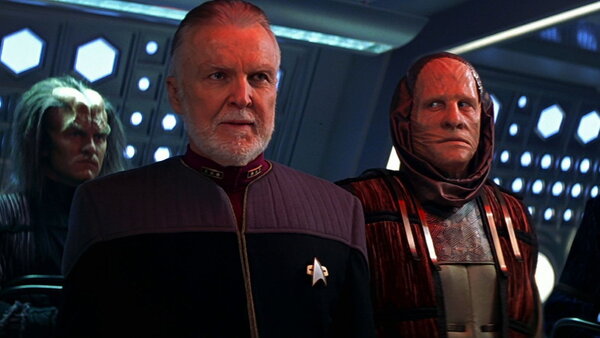
When Data's ethical programming makes him go completely berserk at the start of Star Trek: Insurrection, it's clear that someone, somewhere, has messed up big time.
The Federation Council knowingly approved the forced relocation of the Ba'ku, just so their shady new partners, the Son'a, can harvest metaphasic particles to create the health supplement of all health supplements.
That's about it. It's that simple. That shameful. That dishonourable.
Let's look at that again, shall we? They spied on the peaceful Ba'ku and roped Data into their studies, who inevitably stumbled onto the truth. Data was shot in an attempt to protect the conspiracy, triggering his ethical programming to take over and expose the whole rotten lot of them. They intended to wait until the Ba'ku were asleep, abduct them, and dump them on another planet without their knowledge or consent.
And even after the Ba'ku become aware of the plans to force them from their homes, and Picard promises to help them with their plight, Team Son'ation chases them into the mountains to hunt every last villager down...and sends ships after the Enterprise for good measure.
What were they thinking? Did they learn nothing from the Maquis? No matter the benefits of the metaphasic particles, and no matter how small the Ba'ku population is, it doesn't justify ripping a community away from their home without consent. The ends do not justify the means.
The only good thing to come from their plan is one of Picard's very best speeches:
How many people does it take, Admiral, before it becomes wrong? A thousand? Fifty thousand? A million? How many people does it take, Admiral?
2. The Existence Of Section 31

We don't even need to delve into the murky misdeeds of Section 31, although there's probably enough material for a list of its own. The very fact it exists at all is enough to make us raise an eyebrow at the Federation.
Section 31 is a covert and independent branch of intelligence that deals with all things sinister, so the Federation doesn't have to. That very premise is flawed from the start. The Federation can't plead purity and light on the one hand, while holding a vial of poison in the other.
Plausible deniability isn't a good enough defence for a Federation that prides itself on taking the high road. Allowing an organisation to do its dirty work, by any means necessary, is still ethically bankrupt. Even if they choose to turn a blind eye to it.
On the contrary, it's arguably worse, because without any real oversight, Section 31's actions are fully capable of spiralling into the realms of villainy. And, oh wait, that's exactly what happened. On more than one occasion.
Rules, directives and values go out of the airlock when you have a gang of operatives at your back to make the difficult problems disappear, no questions asked.
1. Resorting To Biological Warfare

Speaking of Section 31...they may have started this atrocity, but the Federation sure as heck finished it.
Things were, admittedly, looking grim towards the end of the Dominion War. While the crew of Deep Space Nine never wavered, the Federation were facing the very real possibility of defeat. But that is no excuse for making a decision that goes against all Federation values.
Section 31 used Odo's willingness to assist Starfleet Medical with their research as an opportunity to infect him with a deadly virus. Unknowingly, Odo became the carrier that would infect the Changelings with a biological weapon.
Our man Bashir managed to create a cure to save Odo, but in one of the darkest turns in Federation history, the Council decided not to give the cure to the dying Changelings.
To recap...the upstanding Federation chose to withhold a cure for a deadly biological weapon...that was created by a Starfleet Intelligence affiliated agency...and was slowly killing an entire species...to gain an advantage in war.
Odo cured the Changelings anyway, and it became a crucial factor in the Founders' surrender. Essentially, Odo offering the cure helped bring an end to the war...not the Federation's decision to withhold it.
And like many terrible decisions, it would echo down the years. In Star Trek: Picard, the Changeling Vadic cites it as a prime example of how solids ruin worlds. Worse still, she reveals the horrendous experiments she and others were subjected to whilst prisoners of war at Daystrom Station.
It's rare for a government to come out of war entirely unblemished, but this was surely one of the Federation's ugliest chapters.