10 Awesome Sci-Fi Series That Were Cancelled Too Soon

Networks don't know what they've got 'til it's gone.

Science fiction and fantasy fans have a long history of TV heartbreak. The genre, often invoking complex in-world mythologies and requiring an attention span that lasts longer than a single episode, often isn't suited for casual viewers who just want to sit in front of the tv and not think, or to television€™s serialized nature. This may be one of the secrets behind the success of shows put out exclusively through Netflix and Amazon, where viewers can watch several episodes without the danger of forgetting everything during the intervening weeks. Often, it feels like television networks air shows even when they don't have any real confidence in them, putting them out just to test the waters to see what's popular. The quality of these shows can vary dramatically in terms of everything from originality to casting to effects. And more often than not, a real gem of a show can end up being swept away with all the other riffraff simply because the network didn't realise it was a 'sleeper hit' before it was too late. While the show sometimes has enough notice that they'll be able to bring a show to a definite (if often unsatisfying) conclusion, more often than not the cancellation comes after the final cliffhanger episode airs. It is only once the network starts receiving complaints that they realise they've made a mistake, and by then it's often too late. Here are ten sci fi series that, for one reason or another, were cancelled before they had the time to reach their full potential.

10. Bionic Woman

Remakes can be tricky things. On the one hand, you already have an established fanbase that will watch the show from the start. On the other hand, keeping those fans happy is nearly impossible. Either the show follows the original too closely to be entertaining, or it differs in so many ways that it doesn't seem to respect the source material. Such was the challenge faced by the 2007 re-imagining of the Bionic Woman. In all honesty, the show was so concerned with walking that fine line that it couldn't help but fail. The series revolved followed former bartender Jaime Sommers after her life is saved by an operation that gives her a series of experimental medical implants. Jaime is subsequently recruited by the Berkut Group, a quasi-governmental private organization that performed her surgery. Despite a definitely shaky start, the Bionic Woman rapidly improved despite its diminishing audience. A string of guest appearances by Katee Sackhoff, the original bionic woman, helped to snag viewers' attention, and both cast and writers seemed to be finding their feet by the time the eighth episode aired. And then the 2008 Writer's Strike hit, and everything became a little confusing. Rather than officially cancelling the show, NBC just seemed to forget about it. Although there was eventually an announcement that the show's low viewing figures were to blame, many fans still attribute the Writer's Strike for Bionic Woman's cancellation.

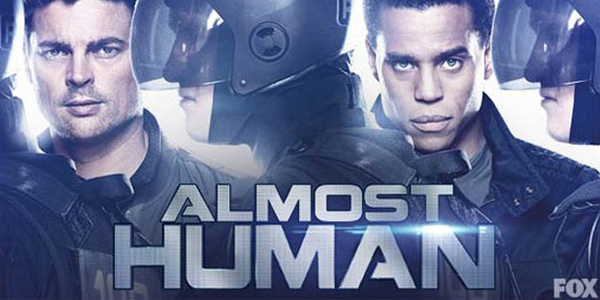
9. Almost Human

Creating robot characters that are both believably inhuman and emotionally compelling is a struggle that defeats most writers. Fox's short-lived Almost Human almost managed to do just that, creating a world where robots exist at the forefront of technology and, among other things, law enforcement. With technology evolving at a faster and faster rate, the over-stretched police force implements a new policy, pairing every human police officer with a robot partner. Admittedly, the first episode was a little heavy, but that wasn't too surprising considering the dense load of information and backstory they had to deliver. The largely self-contained episodes showed a lot of potential, however, as the central pair's professional relationship began to evolve. Predictably, the show tried to build on the well-established Odd Couple formula, pairing the largely humourless human detective John Kennex with the dry, sarcastic 'synthetic' Dorian. However, any TV producer will tell you that ratings are king, and Almost Human quite simply wasn't bringing in the figures to save itself.

8. Outcasts

Fleeing a nuclear disaster on Earth, Outcasts tells the story of a group of settlers on Carpathia, a fictional 'Goldilocks' planet. The story focuses on Richard Tate, the planet's new president, members of the colony's security team, and the explorers tasked with exploring the planet and retrieving resources. Starting with the arrival of what is assumed to be the last ship to Carpathia from Earth, the storylines revolve around the ongoing lives of the existing settlers and the introduction of new refugees from the dying planet. In many ways, Outcasts followed the traditional rules of sci-fi shows. There was advanced technology, including a mind-reading machine and genetically-engineered colonists, and the show gradually revealed the existence of intelligent life native to the planet. What set it apart, though, was that these elements tended to be pushed into the background as the show focused instead on the interpersonal relationships of a group of humans finding themselves in a hostile environment.

7. Birds of Prey

What would Gotham be like without Batman to protect it? While Gotham explores the city during Bruce Wayne's youth, Birds of Prey created a world set several year after the Dark Knight had hung up his cowl. The show was loosely based on the DC title of the same name, and centred around Helena Wayne, aka Huntress, and Barbara Gordon as they led an all-female team against Harley Quinn. While it had a lot of potential as a concept, the show seemed oddly embarrassed by its superhero origins and as a result ended up alienating the comic book fans that should have made up it's prime audience. However, while the show itself was something of a mess, there were enough high-quality episodes that the show could have evolved into something more if only it had been given the time to properly find its feet. And maybe some writers that had a little more respect for the source material.

6. Defying Gravity

First airing in 2009, Defying Gravity was a blink and you'll miss it show. While originally scheduled for a thirteen episode run, only eight made it onto the air before it was pulled. At the same time, there seems to have been almost no effort on the part of ABC to promote the show. At the end of the day, it felt like the network had given up on it before the show even began. But hidden in those eight episodes (and the remaining five that eventually surfaced on television and DVD), was the potential for an epic series exploring the first manned exploration of the solar system. A lot of effort clearly went in to the special effects, including the surprisingly realistic depictions of gravity-free weightlessness. The sets had a distinct 2001: A Space Odyssey feel, which was enough to at least catch fans' attention long enough that they were beginning to feel invested in the characters by the time the show was unceremoniously ended.

5. Dollhouse

Poor, poor, Joss Whedon. After the success of Buffy, everything seemed to go downhill with a string of barely-there sci-fi and fantasy series that never had the time to reach their potential. For a while it even felt like any show with his name on it is doomed to end before its time. While the writer has gone on to work on countless shows, and had success in everything from tv and film to comics and books, none of his television projects have ever quite reached the same level of success as Buffy. While it was never as popular as Firefly or Angel, Dollhouse managed 27 episodes between 2009 and 2010 before being cancelled, leaving the story of a beautiful brainwashed spy and her secret corporation unfinished. However, the show did end with an episode set in the future, exploring what the Dollhouse technology could become if used on a wider scale. A danger with many sci-fi shows is that they put too much faith in the draw of special effects. If nothing else, this often means that the programs age badly as the technology used becomes increasingly outdated. Dollhouse, however, was able to focus on character development without getting bogged down in CGI. At its peak Dollhouse earned over four million viewers, so its sudden cancellation never really made sense in the eyes of its fans.

4. Hitchhiker's Guide to the Galaxy

A show that trod the line between the sublime and the ridiculous, Hitchhiker's Guide to the Galaxy followed the improbable adventures of Arthur Dent, the last surviving human after Earth is destroyed to make room for a pan-galactic highway. Accompanied by his alien friend Ford Prefect, a former love interest, the two-headed Zaphod Beeblebrox, and a clinically depressed android, Arthur set out to uncover the 'ultimate question.' The answer, of course, is 42. We just don't know the question. One of the few great British sci-fi series around, Hitch-hiker's often went out of its way to poke fun at it's only real rival show; Dr Who. In fact, at one point filming of the Doctor's adventures were interrupted when the cast and crew discovered that Hitch-hiker's was also filming in their quarry. In spite of the incredible cast, the great characters, and the genuinely funny writing, the show never made it to a second series. However, writer Douglas Adams's story ideas were eventually used in the subsequent novel adaptations of the books. Even Adams' death wasn't enough to end the trilogy, which now extends to six books.

3. Awake

This intriguing drama followed detective Michael Britten when he discovers that he€™s living two parallel lives after a horrific car accident. The crash appears to have killed both his wife and their teenage son, yet his mind seems to have created an ingenious coping mechanism for dealing with the trauma. Britten now lives two separate lives; one where his wife survived and the other where his son did. Britten is able to use these two opposing realities to unravel a series of seemingly unsolvable crimes and mysteries, all while trying to work out which of his two lives is the real one. While the premise may have seemed too complex to follow, NBC apparently didn't realise that Awake had a cult following when they cancelled the series. Of course, the fact that the show was cancelled before reaching any kind of satisfactory conclusion has left fans combing over the episodes in search of clues and Easter eggs that would indicate which world was actually the real world and which existed only in Britten's traumatised psyche.

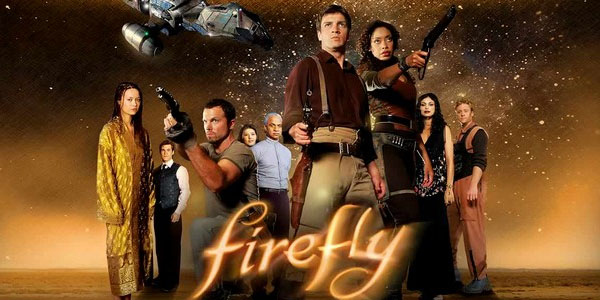
2. Firefly

No list of cancelled sci-fi shows could be complete with Joss Whedon's Firefly making an appearance. While fourteen episodes of Firefly were produced, only eleven of those actually aired before the show€™s cancellation towards the end of 2002. Unlike many of the shows on this list, it didn€™t take long before Fox realized they€™d made a huge mistake. In that short time the space western earned an army of devoted fans who were left angry and clamouring for more. In response, a film sequel, titled Serenity, was created the following year, and the universe of the show has been revisited in a number of comic book adaptations. Despite being cancelled over a decade ago, the show retains its loyal fans, and even the cast seem keen to reprise their roles should the opportunity arise. In 2011 star Nathan Fillion even hinted that if he would buy the rights to Firefly and make it on his own if he had the money to do so.

1. The Prisoner

The Prisoner was a darkly surreal series about a man identified only as Number Six trapped in a mysterious British village. Everyone in the village in identified by a number, with Number Two running the whole operation. Anyone who tries to leave is immediately captured by a sinister balloon named Rover. Number Six spent most of the series trying to escape the village and find out exactly what was going on while enduring everything from drugging to dream manipulation at the hands of his captors. It quickly became clear that Number Six was a former secret agent, and that Number Two has been tasked with finding out why he abruptly resigned from his job at the start of the series. As the show progresses, it gradually became clear that the village was a sort of prison for individuals deemed too dangerous to operate on their own, and where the residents were subjected to physical, emotional, and psychological torture. The Prisoner is best known for breaking just about every established rule of television storytelling. The plots were layered with the kind of mystery, symbolism, and enigma that, despite its comparatively short run of seventeen episodes, identify it as the original forerunner of countless surreal shows such as Twin Peaks and Lost. An American reboot of the show, created as a six-episode miniseries, aired in 2009. Predictably, it received a mixed response, to say the least. Who did we forget? There are so many great sci-fi shows out there that ended well before their time. Would you have rather seen Terra Nova on this list? V? Alphas? Let us know in the comment section below.

Contributor
Contributor

With a (nearly) useless degree in English literature and a personal trainer qualification he's never used, Freddie spends his times writing things that he hopes will somehow pay the rent. He's also a former professional singer, and plays the saxophone and ukulele. He's not really used to talking about himself in the third person, and would like to stop now, thanks.