10 Reasons To Greenlight Star Trek: Stargazer NOW
James McAvoy is here to tease us all with the chance to see a Star Trek from the past.
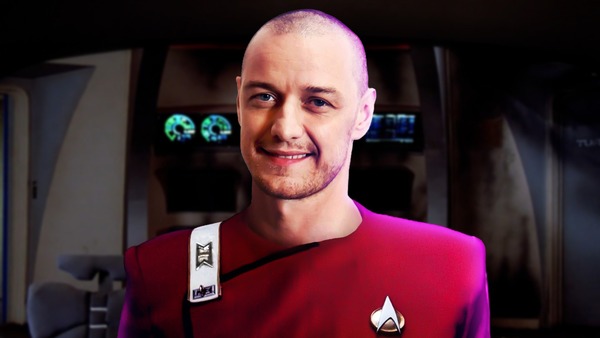
James McAvoy recently ignited a storm of discussion online, while join Josh Horowitz for an interview. In one segment, joking that he was destined to play a younger version of Patrick Stewart's characters forever, he dropped a quantum torpedo-sized explosion into the chat.
McAvoy revealed that a prequel series, set on the USS Stargazer, very nearly came into being at Paramount. It would be a limited series, depicting the events that led to a young Jean-Luc Picard taking command of the Constellation-class ship. The dreaded 'logistics' prevented the show from coming to life, yet to know that it got so close to existence is a tantalising thing.
McAvoy has already proved his chops at depicting a younger Stewart in the X-Men films and his star has risen quite high over the years. While the mystery that stopped Star Trek: Stargazer (or so we're calling it here) from being born remains aloof (we suspect money played a large part), the idea has already taken root in our minds.
Does Star Trek need another prequel series out there? Even here at TrekCulture, some argue that no, its time to move forward. However, were a show to focus on the Stargazer, then it would offer a glimpse into that great wilderness that is the Lost Era. That is just too great an opportunity to ignore.
So, beginning with that, we've compiled our thoughts as to why this series needs to happen, what it could bring to the show's past, and what it can offer for the franchise's future.
10. Getting Lost In The Lost Era
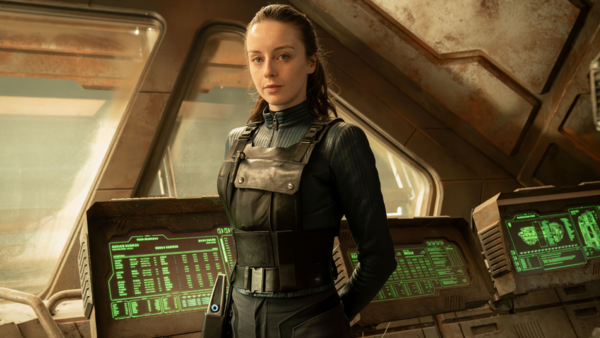
As we have frequently discussed on this channel, The Lost Era remains one of the most fertile grounds for storytelling in Star Trek's history. From roughly the 2290s to the 2350s, the action takes place in the pages of novels and comic books, with major events relegated to beta canon, or mere mentions in dialogue.
While Section 31 was set in the 2330s and featured then Lieutenant Rachel Garrett, the aesthetic and feel of the piece left a lot to be desired in terms of the Lost Era. While stories outside of the Starfleet norm are certainly welcome, there was nothing that suggested it took place in that time.
The Stargazer began her journey in 2326, several years before the events of Section 31. McAvoy teased that his Stargazer limited series would see Picard ascend to the captaincy. Thanks to established history in The Next Generation and Picard, we know that he served as captain for just over twenty years, culminating in the so-called Battle of Maxia in 2355.
This would place his promotion in the early 2330s, with the officer having already served for almost a decade. As there is nothing to suggest that the Stargazer limited series would be confined to a single event, the assumed-ten episode series could depict everything from the launch of the vessel to a flash-forward showing the loss. This would not only give the audience a view of life aboard an-early 24th Century vessel, but also offers the opportunity to visit huge historical moments through those forgotten decades.
9. Steering Star Trek Back To Star Gazing

Forgive the pun in the title here but the point stands: Star Trek has veered dangerously close to losing its way. This is not something that confined to the shows that have premiered on streaming, to be clear. While the number of shows that have appeared since 2017 has offered several different depictions of Star Trek, what the franchise truly needs is a refocus.
Star Trek: Picard may be the best example of this. Seasons one, two, and three may as well be three different iterations of Trek. That itself is not a negative as they each bring their own strengths to the franchise. The first season even teases characters from the Stargazer we had never heard of before, namely Dr Benayoun.
Audiences largely feel that the third season of Picard was a successful course correction, returning the show to an aesthetic more familiar for long-term viewers. Star Trek: Prodigy and Star Trek: Lower Decks both looked like spin-offs of Voyager and The Next Generation respectively, while Discovery, Strange New Worlds, and Starfleet Academy concentrated on a their own style.
However, creating a show set before these wild variations (after, in the case of Discovery and Strange New Worlds, though we'll discuss that in a moment) can easily help to establish some explanations for the variations. Star Trek has often contradicted itself with uniforms, ship designs, and even timelines through its six decade run. Again, Star Trek: Picard serves as an example here.
Star Trek: Stargazer, while telling a focused story about a smaller group of characters, offers a prime opportunity to set some groundwork for the messy years that followed.
8. It's Called Fashion, Darling. Look It Up.

The Stargazer sailed through the Alpha Quadrant for so long that she saw some serious changes to the crews' wardrobes. In 2326, the Monster Maroon uniform was still standard throughout Starfleet. However, by 2355, it had been phased out in preference of the jumpsuits seen in the first two seasons of The Next Generation.
Tapestry and Family both depict variations of the Monster Maroon uniform in service. Young Ensign Picard, while assigned to Starbase Earhart, wore this uniform during his fateful encounter with those naughty Nausicaans. This version of the uniform sports the usual jacket, shoulder strap, insignia and belt introduced in Star Trek II: The Wrath Of Khan.
This version started the phasing out of the high-necked undershirt. Picard sports a lower-necked white shirt, which in turn is phased out by the time the Enterprise-C encountered the Romulans in 2344. By that stage, the uniforms had lost the belt and shirt, though retained the insignia. By 2349 at the latest, Jack Crusher was recorded in an almost identical variant, though he now wore the combadge that remained in service through the 2360s.
The Monster Maroon, variants and all, is one of the most popular uniforms in Star Trek's history. Section 31 elected not to depict Garrett in one, which is something that Star Trek: Stargazer has the opportunity to address. The ship's missions were mostly standard operations, thus not requiring any covert appearances or clothing. This limited series could easily track the evolution of the uniform on screen.
One can just imagine, in the finale, McAvoy's Picard donning the Next Generation early jumpsuit, turning this way and that, muttering:
This is hell on my back.
If you know, you know.
7. Learning From The Future

When Star Trek: Picard was announced, audiences lost their collective minds as Patrick Stewart stood on stage, confirming his return. There began an extended period of theorising, hoping, worrying, and general speculation. What would Picard, twenty years older than his last appearance, look and act like?
The answer they received in Remembrance, and the seasons that followed, was a very mixed portrayal of the man. He was undeniably Picard, Stewart and all, yet he was a very different person. He had aged, he had been scarred, and he was not the captain that everyone remembered.
The debate around the success or failures of this depiction will doubtless continue for many years to come, yet it offers another opportunity for Star Trek: Stargazer.
The Next Generation gave us Picard in command, mostly comfortable in the big seat. Picard gave us an older, embittered, retired ex-Admiral, struggling to come to terms with his failures as he saw them. Through stories of years gone by, we know that the younger man was a headstrong, leap-before-looking type of officer. How does he become the diplomat, the friend to Romulans, and eventually the father we know him to be?
McAvoy's Picard, by the time he takes command of the Stargazer, had not ascended through the ranks in the traditional sense. He wasn't the first officer, nor was he a commander by rank. He was simply a daring man who stepped up during a battle. If the future is a little bleak for Picard, now may be the perfect time to look back to the past.
6. A Question Of Follicle Follies
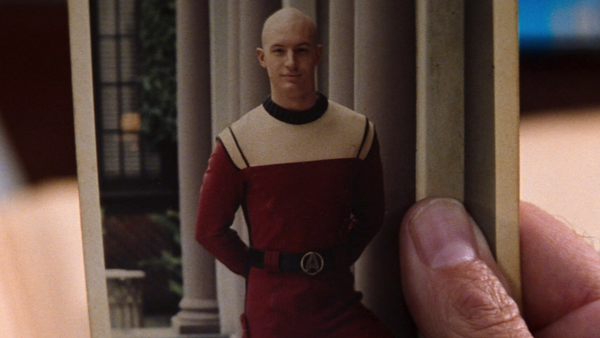
Far be it for us to suggest that Star Trek has been in any way inconsistent. Perish the thought. However, when a certain officer's head is considered, there's already been a few different options handed to the audience.
As we all know, Jean-Luc Picard first appeared to us with a tightly-cropped circlet of hair, proudly showing his bald pate for all to see. Then rumours began to circulate of an audition wherein Patrick Stewart wore a wig. It was quickly deemed a little silly, thus Bald Picard was born.
In Violations, Picard, via flashback, is shown accompanying Beverly Crusher as she views her husband's body. This version of Picard is still topped off with hair, albeit with a high hairline. In Tapestry, Ensign Picard is shown to have a full head of hair as he is stabbed through the heart, laughing while he drops to his knees.
Logic dictates that Picard began to lose his hair after graduating from the Academy, perhaps adopting the hairstyle he's most famous for by the 2350s. However, there is then the issue of Star Trek: Nemesis and a certain clone named Shinzon.
Tom Hardy's Shinzon is a younger version of Picard, though is totally bald from the moment we meet him. That is easily explained by his hard life in the Reman mines. Less easily explained is the photograph Picard views of himself as a cadet, also played by Hardy, also bald.
James McAvoy, after being cast as Charles Xavier in X-Men: First Class, shaved his head to match Stewart's version of the Professor, only to be told this younger version would sport a head of hair. Star Trek: Stargazer has the chance now to either commit to the joke - don't touch the hair! - or insert some logic to the follicle mystery.
Perhaps Picard, much like the Klingons of the 23rd Century, shaved his head in times of war?
5. Paramount, Skydance, Warner Brothers, And Worries

As of writing, Skydance, the corporation now made up of Paramount and Warner Brothers, is in rather a lot of debt. That itself is hardly unusual in Hollywood, though it comes at a time when there is more uncertainty about the future of the industry than ever. The rise of lazy Generation AI inclusion in movies and television is worrying for creatives, not to mention the continuation of mass layoffs.
Starfleet Academy was been cancelled, while Strange New Worlds is ending with its fifth season. A theatrical film is seemingly confirmed (a phrase we've both heard and spoken many, many times before) but until a trailer appears, one must consider that with a pinch of salt. Star Trek is, for all intents and purposes, on hiatus.
Now is the time to pick a project that will invite long-term viewers back, while also opening the door to newer viewers. Taking a story from Star Trek's past, then depicting it with an actor who is very much current and topical, seems like a golden opportunity for the franchise and the studio.
James McAvoy has gone from strength to strength in his career over the past two decades, scoring wins like his X-Men films, his disturbing performances in Split, and his theatre and directorial projects as well. In fact, had it not been for his own words on Horowitz's interview, we may have considered him too busy for such a project.
To be blunt, he is hot property, and he would be a draw in a time where viewing numbers are everything. Streaming figures determine which shows get to live and which are taken out back and shot. While stunt casting doesn't always work, having a performer who is part of the initial creation of the project makes a difference. Holly Hunter and Paul Giamatti both Oscar winners or nominees. Their appearances didn't lead to the millions of views that a show needs to survive in the current climate, despite their excellent work in Starfleet Academy.
McAvoy, starring and helping to develop this show, feels like a more natural draw to a new audience.
4. Faith Of The Heart
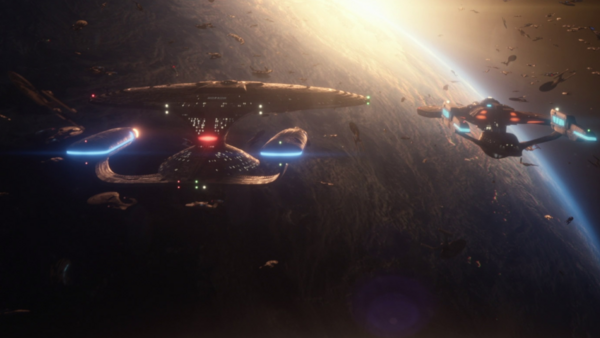
Almost every statement made by the new owners of Paramount and Warner Brothers have shared the same message: Star Trek is a priority. That message may be wonderful to read but, quite frankly, it's time to do something about it.
Merely saying that Star Trek is a priority does nothing to allay the worries of an audience who has watched the franchise go dormant before. With the cancellation of Star Trek: Enterprise, there followed four years of nothing on screen, before finally Star Trek was released in theatres in 2009. Those years felt bleak and it is beginning to feel like that once again.
Committing to Star Trek: Stargazer now makes sense from a business stand-point. Financially, there are no other Trek shows in production, that we know of. That means that any productions costs that, for example, Starfleet Academy and Strange New Worlds accrued could be consolidated and put toward this limited series.
James McAvoy is hot property now, though of course Hollywood is a fickle beast. Who knows where he will be in a few years time, or if his availability would allow for a series at all. The audience that is currently waiting in the dark for any news of upcoming Star Trek projects are receiving exactly nothing in terms of updates from the studio, which is not a pleasant feeling for anyone who has been with the franchise for decades, nor those who have recently joined, only to find the well running dry.
Green lighting this show would go a long way towards keeping the trust and hope from Trekkies worldwide.
3. It Doesn't Have To Break The Bank
As the world endures continuing cost of living crises, studios and production companies may naturally grow wary of green lighting any project, let alone one set in space. Strange New Worlds is an expensive show, and looks it, though the declining viewing figures almost certainly contributed to the shorter fifth and final season.
While we are not suggesting that any Trek show be made on the cheap, there is now another option for creating this series, one that combines practical and digital technology.
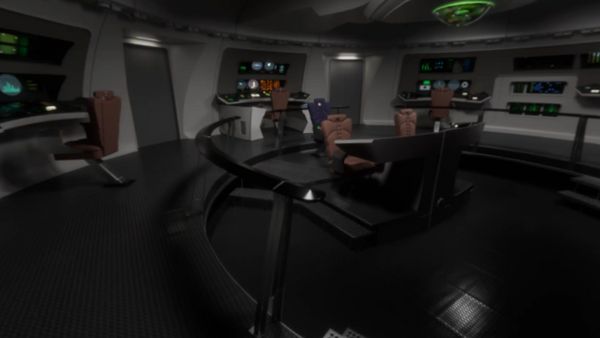
OTOY and the Roddenberry Archive have demonstrated their skills at recreating sets using their vast library of digitally stored assets. As the Stargazer bridge was a redress of the Enterprise's from The Motion Picture to The Search For Spock, it is already sitting there, ready for use.
There are those who might see this suggestion of recreating it digitally as sacrilege. Frankly, it wouldn't be this writer's first plan either. However, crafting a few chairs and a command console would cost a lot less than creating an entire bridge, particularly for a limited series such as this. Digital technology has arrived at the point that, with proper care, it can be almost indistinguishable from practical sets, leaving this option open to any future showrunners.
Under no circumstances are now, nor will we ever, suggest the use of Generative AI, to be clear. This is an entirely different method of creating a set for the show.
2. It's A Big Universe
Star Trek: United. Star Trek: Year One. Star Trek: Legacy. Star Trek: Stargazer.
All of these proposed shows have one or more things in common. They would all feature legacy characters appearing on screen, telling new or unseen stories, offering both familiarity and a bold step forward.
At the moment, none of the shows mentioned are in production. United would bring back Scott Bakula's Archer, while Year One would continue the stories of Paul Wesley's Kirk and Ethan Peck's Spock, among others. Legacy would have focused on Captain Seven Of Nine and the Enterprise-G. Between all three, there is nostalgia.
Nostalgia, when used correctly, can be a powerful tool for helping the audience accept a show. The name Picard may be enough for some, while the uniforms and overall aesthetics may be enough for others. But were Stargazer to receive the green light, and were it also to lock in to the era in which its set, it then opens the door to join the wider Star Trek universe.
Consider Star Trek: Khan, the audio drama that released in 2025. It managed to expand on an already-known story, connect it more deeply to the wider Trek universe, and also featured huge returns in the forms of George Takei and Tim Russ.
A show focused on Picard's ascension to captaincy seems tailor-made for featuring known Trek characters. Thanks to additional material, we know that Picard trained under Captain Uhura. Jack Crusher eventually became his first officer, and Picard once attended the wedding of 'Sarek's son.'
Anything is possible with a flashback and Jean-Luc Picard has long been established as a well-travelled man.
1. Baby Turn The Lights On
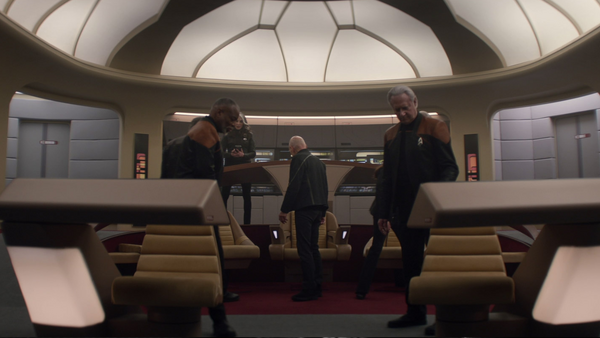
While the Stargazer bridge has, to date, only been depicted as a battered and shadowy place, Star Trek: Stargazer has the potential to bring the light back to Star Trek. We don't simply mean illumination, although that would be nice. We also mean helping the franchise course correct back to one of exploration.
Though McAvoy spoke about the series focusing on the event that saw Picard gain his promotion, something he described as a 'secret he kept buried for decades,' that need not be the single focus of the show. The USS Stargazer was categorically not designed as a warship. In fact, according to Picard in Relics, it was an underpowered, understaffed vessel that was always threatening to blow apart at the seams. And yet, despite commanding the Galaxy-class Enterprise-D, there were days he would give almost anything to get back there.
Star Trek: Stargazer has the chance to show the audience, both returning and new, just why someone might think that way. Star Trek is at its best when it is offering a hopeful, unified view of the future, one where humanity has managed to settle its differences and work together.
In 2026, that idea seems as far away as its ever been. When one considers the world into which The Original Series was released in 1966, it is not too dissimilar, albeit without social media fanning the flames of culture wars.
Star Trek exists to show people that a brighter future is possible. If Jean-Luc Picard, a lowly junior officer aboard a clunky, ramshackle ship, can find joy and passion there - then perhaps that show can help a jaded audience find the same.