10 Best Doctor Who Character Introductions
When you plan on exploring space and time, remember to make a good first impression.
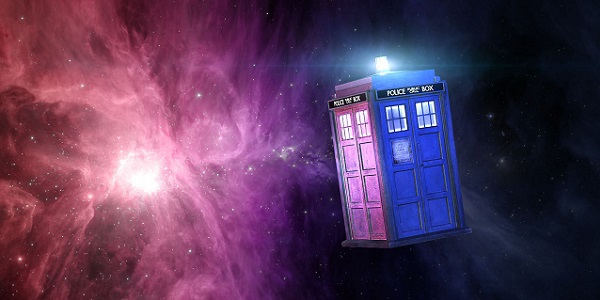 Doctor Who - BBCDoctor Who fandom tends to focus a lot on departure scenes. The last time that we see a particular companion receives endless amounts of discussion; which ones were good, which ones were bad, which ones just disappeared half way through The War Machines, etc. The way that characters are introduced, on the other hand, rarely gets a look in. Which is too bad really, as most of the time the way a character is introduced has been given significantly more time and care than the way they're written out. You only get one chance to make a first impression, as they say. And when you're long term plans include TARDIS travel on a weekly basis it's pretty important to get that first impression right. Over the last five and a bit decades Doctor Who has introduced more than a few characters; not always with as much success as they might have liked. Occasionally the introduction was rushed, occasionally it was just too perfunctory, and on one notable occasion they just forgot to have a scene introducing the character at all. On the whole, however, they've gotten it right more often than they've gotten it wrong. Here are ten of the best
10. Rose
 BBCLove Rose or hate her, the way she was introduced was important. While the opening sequence of the episode Rose is introducing the character of the same name, it's equally true to say that this sequence was also introducing the show as a whole to an entirely new audience. Therefore it was monumentally important to get it right. Which makes the way that they went about staging the sequence incredibly telling. We start with a panoramic view of space. Literally the entirety of space. Then we pan to Earth. Then we zoom to England. Then we zoom to Rose. This sequence is important because it essentially tells us how to watch the show. We're going to get the whole universe. It's all out there. But by narrowing the focus rapidly from everything in existence to one specific character we're been told that we're going to see everything out there from her eyes. The montage of Rose-Goes-About-Her-Day that follows this is just a quick sketch of the sort of person that she is so that we understand her perspective a bit better before things start happening, but the zoom in is what tells us that she's our eyes and ears for the flight. It's a very clever use of television as a medium and by focusing our attention of Rose's point of view it sets up...
9. The Ninth Doctor
 BBCIf one believes the discussion on the DVD commentary tracks (and there doesn't appear to be any particular reason not to do so) then the production team had quite a series of discussions on how exactly Christopher Eccleston's doctor should first appear. The obvious way to go would have been to go with a big dramatic reveal just as Rose is in her greatest peril. Cue the big dramatic music, the back-lighting, perhaps some smoke or explosions; All of which designed to announce - 'Here he is, the important character!' What we get instead is an inexplicable man who is just suddenly there. Suddenly Rose (who is our point of view, remember) is running with him for her life. It's deliberately presented to us to feel as bewildering and out-of-nowhere for us as it does for Rose. It was the perfect way to re-introduce The Doctor, since it works equally well for both new viewers and old ones. The Doctor isn't a big dramatic hero to be introduced with a fanfare. He's a whirlwind that shows up in your life out of nowhere. Presenting him that way for his first appearance in the new series was absolutely the right way to go.
8. Harry Sullivan
 BBCThe thing that's notable about Harry Sullivan's first appearance in the series is that, uniquely among companions, he's actually been mentioned a few times before he physically appears. Even more impressively, he's mentioned in the previous season. Sadly, the reason for this unique setup is exactly the same as the reason why he ultimately didn't work out as a companion, but that doesn't make the forethought that went into his introduction any less commendable. What happened was this - Jon Pertwee was leaving the show and they hadn't yet cast the fourth Doctor. The intention was that they were going to cast an older actor, more along the lines of William Hartnell. This led them to the conclusion that they were going to need a younger male companion to do all the action bits, much like the role of Ian had been previously. The logical thing, as the Doctor was currently associated with a nice paramilitary group, was that one of their stout lads would go with the new Doctor on adventures through time and space. Unfortunately, this led them into a case of what fans of Lost might refer to as 'Nikki and Paulo syndrome'. They needed a brand new character whom everyone would accept had been around with UNIT the whole time, honest, even if he had never been seen or mentioned previously (See also: Summers, Dawn for a different spin on this.) To help paper over this crack they had the Brigadier make a phone call to the previously never mentioned Lt. Sullivan (it occurs when the Third Doctor doesn't wake up from his 'psychic spider helmet' experience for anyone who'd like to review the tape). Bingo. Instant history. Sadly for Harry they then cast Tom Baker who was perfectly capable of doing his own action bits and the whole thing was a waste of time. Still nicely handled though.
7. The Second Doctor
 BBCIt can't be overstated enough - There is no rational explanation for why the show wasn't cancelled in 1966 when William Hartnell could no longer continue in the role. The decision to recast the part and carry on, from a television production perspective, is irrational to the point of insanity. If you were going to go that route - and that's a big if - you take the safe path, recast as closely as possible to the previous actor, and hope that the audience is indulgent enough to overlook it. (This is the route Bewitched chose to take under similar circumstances) Choosing instead to cast an entirely different type of actor was insanely risky. Having that actor play the character completely differently was just full on whackadoodle. Then they went for the hat trick and had the script make absolutely no effort to convince viewers that it was the same man. If you go back and read the script for Power of the Daleks (which is sadly all we can do for the moment unless the Omnirumour turns out to be true) you'll see the lengths to which the Second Doctor goes to not confirm or deny that he's the same character. He refers to 'The Doctor' in the third person many times. He steadfastly does not spend any time reassuring his companions that he's the same man. He just gets on with the adventure at hand and proves that he's still The Doctor through his actions instead of through words. It was courageous, insanely risky, and absolutely brilliant. And it's why we're still talking about the show fifty years later.
6. The Time Lords
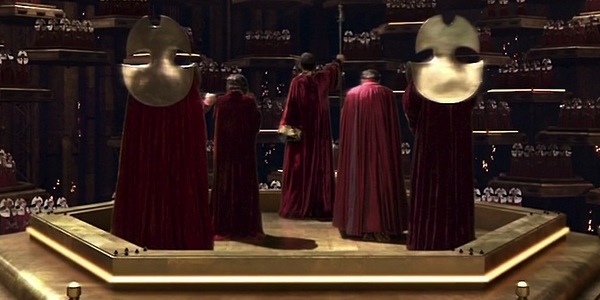 BBCTime and repeated visits have not done the Time Lords any favors. By the time we got to Arc of Infinity most of the viewers at home would have cheerfully blown up Gallifrey themselves, never mind the Daleks. When they began however they were rather more impressive. The thing is- the Time Lords only really make sense after you've seen The War Games. It's an interesting story, The War Games. Aside from its importance as the last story of the second Doctor and the first appearance of the Time Lords, it has an interesting and notable structure. In a strange mirror of the opening sequence of Rose that we discussed a moment ago, it starts very small and then zooms out. And never stops zooming. Beginning with a small battle in World War One it suddenly pans out to show aliens involved in the war. Then it pans out to show aliens in all the wars. Then it pans out again, and again, until it reaches a scale that the program has rarely achieved elsewhere. And at the end of it, when the problem had multiplied exponentially until it was completely beyond The Doctor's ability to deal with he had no choice but to call on the only people that were bigger. After 6 years we finally got our first mention of The Doctor's own people. They were enormous. And going by his reaction they were terrifying. They have never again been as impressive or as awe-inspiring as they were in those first few moments when all we could see of them was The Doctor's fear.
5. The War Doctor
 BBCWe thought we knew what The Name of the Doctor was about. Clearly it was about explaining the mystery of Clara Oswald, aka the impossible girl. So we got that explanation and it was, by and large, satisfactory, so we enjoyed the clips of previous Doctors and figured that that was pretty much all we were going to get. Then out of the blue in the last few seconds we suddenly were introduced to an entirely unknown incarnation of The Doctor as played by John Hurt, in exactly the way we weren't expecting. Introducing a character this important as a throwaway moment in the last few moments of a seemingly unrelated story and then leaving the viewers to wonder about it for months was a brilliant move and a riveting way to get the audience invested in finding out more about them.
4. Susan Foreman
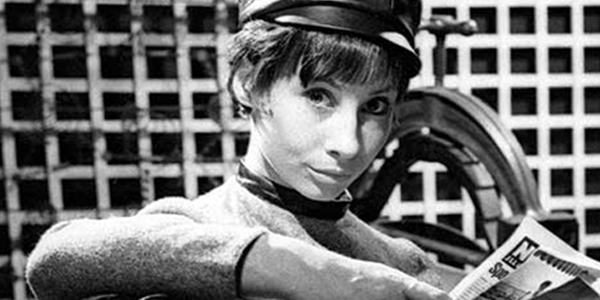 BBCIn many ways Susan's introduction is the opposite of Rose's. An Unearthly Child in every sense, Susan is entirely defined by how she's seen by others for that first episode. We're not being told that we're going to be seeing these adventures through her eyes, we're told that we're going to be seeing her through Ian and Barbara's eyes. The adventures that follow are merely incidental. Look at the scenes that we actually see her in during that first episode. We get one brief scene early on with her dancing all mysteriously and being coy with Ian and Barbara (so that we knew what she looked like) and then she's presented almost exclusively in flashbacks that we see through Ian and Barbara's point of view shots. It's entirely about how she's perceived by the other characters that matters and it's what drives her character from that point on.
3. The Daleks
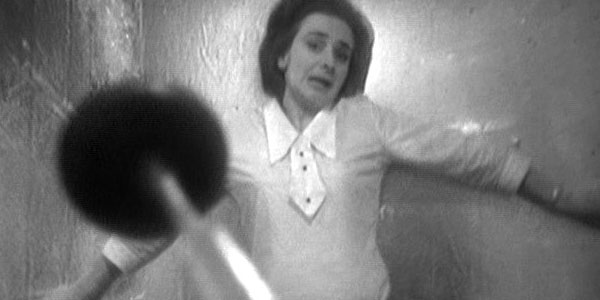 BBCCertainly the most influential and important character introduction in the entire history of the show, The Daleks' first appearance owes it success largely to unfortunate circumstances. Specifically, when it came time to film the cliffhanger for the end of The Dead Planet the Dalek props weren't ready. What was ready was a plunger. That was it. So in the grand television spirit of making do, they decided to use that one little bit of Dalek the best that they could and adjusted things so that it was a Dalek point of view shot with only the plunger arm visible ion screen. Which was about four billion times more interesting and compelling than any shot featuring an entire Dalek could possibly have been. It's the same principle that makes the shots of the alien in Alien so effective - the less you actually show and the more you hint at the better and scarier your monster is. CGI has sadly allowed a lot of directors to forget this principle, but it remains undeniably true. Your imagination has a much bigger budget than the production company does.
2. River Song
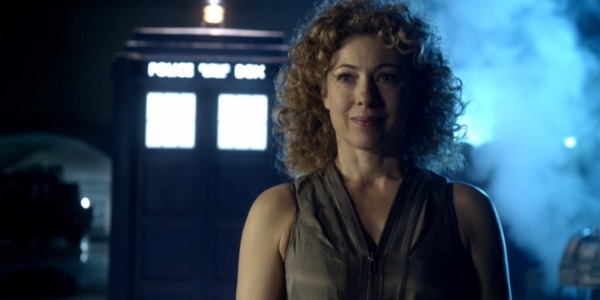 BBCHello, Sweetie. Much like Rose Tyler, fandom splits on the subject of River Song. Some love her, others think she's the worst thing to ever happen to the show. What isn't up for debate however is that having a character who's living their life in the reverse order from the regular characters is an incredibly difficult thing to pull off. Indeed, it's hard to think of another show that would even try. And yet Doctor Who not only attempted it in the character of River Song, it carried on pulling it off. It would have been forgivable, after Forest of the Dead, for viewers to assume that we just weren't ever going to mention Professor Song again. It would have simply been an interesting concept that the show had thrown out there and moved on from, not unlike Jenny, The Doctor's Daughter. But the show didn't move on from it (which is ironically what bothers a portion of fandom.) We came back to River time and again, and each time we saw clearly how the Doctor knew her more (just as we did) and she knew him less. By the time she confesses to Rory that she knows one day she'll look into The Doctor's eyes and he won't know who she is, we completely understand how that will feel to her. And then we remember that we've already seen that moment years earlier. The ultimate testament to how well River's introductory story works is how coherently her story hangs together if you watch all of the stories in the sequence River experiences them. If you haven't tried watching them in that order you should go do that right now. But not before reading about...
1. Clara Oswald
 BBCBack in 1982 it was impressive that the program managed to both bring back the Cybermen and kill off Adric (sorry... spoilers) without either event being leaked to the public in advance. That was before the internet, before camera phones, before Instagram and Twitter. By the time we got to 2012, with all of the aforementioned technology in place, keeping even the smallest detail of a television show unspoiled very nearly takes an act of God. Introducing a major character unannounced months ahead of schedule without anyone finding out is simply not possible. Introducing said major character months ahead of schedule and then killing heroff right away without anyone finding out...? Don't even think about it. Never going to happen. And yet they did it. Then they waited until Christmas and did it again, just for good measure. Impressive. Not least because it led most viewers to expect that she was just going to die horribly at the end of every single appearance from that point on, which made her living through The Bells of St. John a pleasant surprise. It's not every day that a program can make having a regular character not die a surprise twist. Did we miss your favorite character's intro? Disagree with any of the above?Comments gratefully accepted below