10 Best TV Shows Like Midnight Mass
Has Mike Flanagan gotten you all riled up with no place to go? Here are ten ways to get your fix.

One would be forgiven for assuming Mike Flanagan’s newest Netflix series is simply the latest entry in his string of haunted-house thrill rides. You would be wrong. What fills Midnight Mass’ run-time is instead a captivating battle between monsters and men, both literally and metaphorically. We're privy to a conflict that blurs the lines between moral authority and ethical responsibility. For those of you who have yet to watch this show, do so before reading any further.
Equal parts Jonestown and Dracula, this gothic character-study quickly sets itself apart from its predecessors, The Haunting of Hill House and The Haunting of Bly Manor. Maintaining Flanagan’s distinctive slow-burn style, Midnight Mass mulls over its themes in a decidedly lyrical fashion.
As such, the series crackles with considered, only occasionally self-indulgent dialogue which serves to ground its more horrifying subject matter. The result is seven unique and strikingly macabre episodes that are sure to enthral you from start to finish.
So what next? You’ve binged this series quicker than a sleeve of Oreos and have already seen Hill House, Bly Manor, and Hush? Don’t give in to despair just yet! Dive into this list and discover the litany of other shows at your disposal which is sure to thrill, shock, and intrigue in much the same way as Midnight Mass. If vampires, murder, and dubious priests are your thing, then strap in -- this is going to get messy.
10. Les Revenants

What this French TV series lacks in Leonardo DiCaprio, it makes up for in existential crises. In much the same way that Midnight Mass scrutinizes the idea of eternal life, Les Revenants unpacks a tight 16 episode mystery surrounding the revivification of the dead in a French hamlet. Victims of tragedy return to life, fully cognizant, and attempt to resume their normal lives to the best of their ability. This effort is, of course, hampered the cruelly nicknamed "rotters" own battles with disillusionment, not to mention slews of dubiety from the human community.
Midnight Mass indulges in similar thematic and philosophical debate extensively, a point of particular resonance with Les Revenants being found in the arcs of Father Pruitt and Mildred Gunning. Is the past better left in the past? Do we deserve second chances? Lucky for you, both of these shows debate the topic in real-time, leaving no stone unturned.
Les Revenants delivers a nuanced unpacking of the monkey’s paw parable - a character study on the real-world consequences of wish-fulfillment. Almost every viewer has experienced grief in some form and willed it to be undone; Les Revenants actualizes that cornerstone of the human experience to achieve confronting results.
If the idea of loved ones in a tight-knit community returning to life intrigues you, but the horror and viscera of Midnight Mass proves too much, Les Revenants is a capable alternative.
9. Constantine

Keanu Reeves need not apply.
This may come as somewhat of a divisive entry due by in large to Matt Ryan’s Constantine appearing in The CW’s Arrowverse. This identifies a key difference that may dissuade Flanagan fans from watching this show’s 13 episodes - Constantine is an “occult detective drama.” Where Midnight Mass simmers and gestates, this DC-based series sprints. The titular anti-hero, John Constantine, spends his one season solving paranormal crimes and hunting demons - quite a departure from the cloak-and-dagger of Crockett Island.
If a more forthcoming approach to the mystical is more your speed, however, Constantine has a great deal to offer. Naturally, the show submerges viewers in religious and occult iconography, satisfying a curiosity that Midnight Mass may have initially fostered. Moreover, the aesthetics of good and evil are continually pitted against one another, explored through individual character (or demon) choices as well as being imbued into the world itself.
At its core, Constantine is a story about a man struggling to reconcile the light and darkness within himself. The series explores whether good people can wade through an ocean of malice and come out unchanged, or if we are all simply waiting to be claimed by its tides. Echoing the inner turmoil of characters such as Father Pruitt and Riley Flynn, Constantine’s search for retribution unearths bounties of food for thought.
8. In The Flesh

The BBC supernatural drama series In The Flesh has, by all appearances, a relatively goofy premise. Set in a fictional village in Lancashire, In The Flesh follows a teenager who, like many, is attempting to return to normal life after being cured of the zombie virus. The problem these sufferers of “Partially Deceased Syndrome” face, however, is atoning for the atrocities they committed whilst afflicted.
In The Flesh, like Midnight Mass, unpacks its central thesis with utter sincerity, exploring the devastation that common horror scenarios would have on the real world and its inhabitants. Midnight Mass paints scenes of families and friends murdering each other, blinded by bloodlust, then stews in the consequences; In The Flesh holds up near-identical arcs for closer inspection. Furthermore, both shows contend with the idea of losing oneself - attempting to salvage personal humanity from the depths of barbarism. Fortunately, neither misses the mark.
A violent force of antagonism from In The Flesh comes in the form of widespread distrust in the “rotters”, not least of which comes from the church. Salvation, atonement, corruption - In The Flesh’s hour-long episodes swim in the same thematic pools as Midnight Mass. A wild, tactful, and heart-wrenching ride from episode one, In The Flesh stands on its own two feet but will certainly garner any Flanagan fan’s seal of approval.
7. Supernatural

Take this entry with a grain of salt. The long-running CW saga, Supernatural, may polarize some since its quality has a tendency to rise and fall over the seasons. With that said, several episodes and even entire seasons (particularly earlier ones) may yet entertain fans of Midnight Mass. Supernatural possesses a broader scope, but many of the core overtones are congruous.
If you liked the exploration of religion in Midnight Mass then you’re in luck. As well as plenty of vampire appearances, Supernatural goes so far as to spend whole seasons directly interacting with biblical figures. Though it may at times contort and reduce the source content, Supernatural's foray into religious horror is nothing if not extensive. While Flanagan used religious text and symbolism to add dimension to the terror of vampirism, Supernatural will literally take you to heaven, hell, and everywhere in-between.
A coincidental similarity between the two shows is also present in how both feature arcs centering around addiction. At one point in Supernatural, one of the show’s co-protagonists goes through a spat of addictively drinking demon blood. It doesn’t take a detective to see the parallels this draws with Riley Flynn’s character-arc in Midnight Mass. Though this is just a specific example, take it as a guarantee that watching Supernatural will yield rewards for the patient viewer.
Then again, with a whopping 15 seasons, you may want to just stick to the highlights.
6. Castle Rock

Stephen King is no stranger to the realm of blood, fangs, and murder, and Castle Rock weaves a tapestry of some of the writer's most revered works. Consequently, the Hulu series cultivates a sense of mystery, unearthing secrets from the most consistent source of horror - people. Both Midnight Mass and Castle Rock are typified by their secrets; skeletons in the cupboard that simmer just beneath the surface. As a viewer, you are tasked with unraveling these long-buried mysteries before they return to wreak havoc.
Castle Rock tasks itself with bringing the villains to the foreground that lay dormant inside of us all. Murder, violence, self-loathing - all ramifications for the most disturbing proclivities of the human psyche. Without spoiling the entire show, Castle Rock traces outlines of the kind of killers that work from nine to five. Even though the show deals less with the explicitly undead than Midnight Mass, it too cultivates a sense of dread, making you second guess how well you truly know your next-door neighbours.
Contrasting Midnight Mass, Castle Rock dips into discussions of morality whilst doing little preaching (pun fully intended). Supplementing this is a tidal wave of chills and thrills that will put your favourite true-crime podcast to shame. Worth the watch? Definitely.
5. The Strain

Guillermo del Toro’s vampire-horror TV series. Enough said.
If somehow, that isn’t enough to glue you to the couch for a 46 episode binge-watch, the FX series draws unmistakable parallels to Midnight Mass beyond the subject matter. The Strain begins with a plane landing in New York, everyone onboard is apparently dead; the cause of the phenomenon is revealed to be a viral outbreak that bears a salient resemblance to vampirism. The series protagonist, along with their co-workers at the CDC fight the burgeoning pandemic, trying to prevent vampires from spreading to infect the rest of the world.
Sounding a little familiar? Inside and out, Midnight Mass treads a lot of the same ground as The Strain but is by no means a copycat. Both series bring a uniquely scientific approach to classical vampirism, analyzing its mythology under a microscope. Approaching horror from this angle lends a palpable verisimilitude to the fantasy, even praying on newer pandemic-centric fears. The strain manipulates feelings of isolation, paranoia, and mistrust that the world now knows all too well.
The Strain, like Midnight Mass, toes the line between archetypal horror and authentic trepidation. For those hungry for a grounded and sparkle-free display of blood-sucking, one which begs the question of how the world would organically react to Dracula, The Strain may be what you’re looking for.
4. Preacher
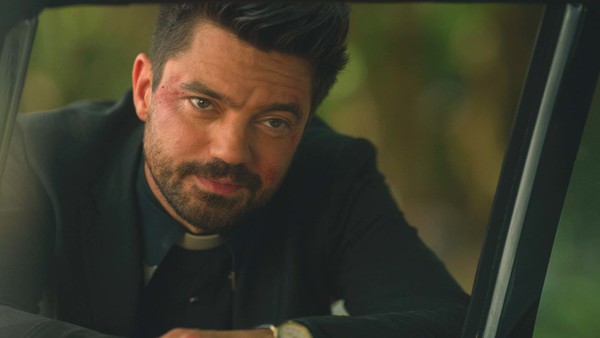
Based on a DC Vertigo comic series of the same name, AMC’s Preacher follows its eponymous anti-hero on his search for God… literally. Preacher Jesse Custer finds himself the recipient of a gift from the divine when he gains the ability to control other people’s minds through verbal command alone. Jesse’s journey is a far more satirical one, but with the addition of a vampire as the preacher’s ally, its resemblance to those found in Midnight Mass is unmistakable.
While tone is a significant point of divergence between these two shows, character-building is center-stage for both. Preacher begins in a small town, weaving together stories of its complicated residents, many of whom have sadistic streaks or dark pasts. The church is a communal highway for these different threads; Jesse attempts to help them with his supernatural abilities but finds himself impeded by bloodshed and malice. Gee, where've we heard that one before?
If you had wished for a more comedic take on the religious discussion, but one that also touches on veins of fantasy and horror, Preacher might just be for you. Another link between these two series is their juxtaposition of religious imagery with inhumane acts. These shows inject sadism into the excessively sanctimonious, elevating their respective moral discussions to dynamic heights.
3. The Exorcist

The Exorcist often goes unpraised, but the bold steps it takes to lift itself out of the shadow of its film counterpart can only be described as admirable. The Exorcist has three priests tackle instances of demonic possession, struggling to keep themselves safe from those insidious forces at the same time. In case you couldn’t guess, religious iconography and horror are the bread and butter of The Exorcist, just like another show we both know and love…
Midnight Mass ebbs and flows from quiet discussions mired in high-minded rhetoric to sickening acts of savagery, often blurring the lines between them. Pious individuals have crises of faith as their doctrine is contorted and maltreated by others before their very eyes. By the same token, The Exorcist uses catholicism as a lens through which to scrutinize the most sinister demons of all - our own.
The Exorcist and Midnight Mass strive to pervert religious themes, taking them to their absolute antithesis. To what end, you might ask? Dread. The Exorcist will set you on the edge of your seat, then push you off with some horrifically disturbing moments. These shows will take years off your life, but in the horror business, that’s all you can hope for.
2. Outcast
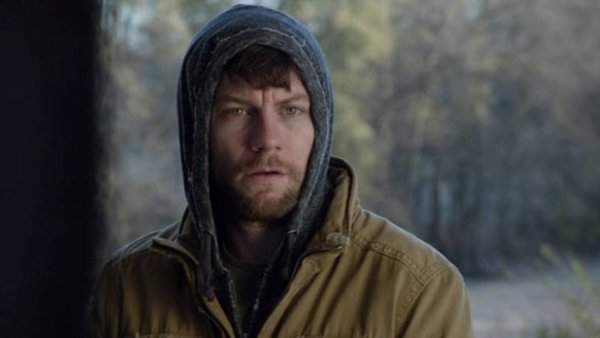
Another graphic-novel adaptation. Created by Robert Kirman, of The Walking Dead fame, Outcast pulls no punches in its portrayal of a man perpetually plagued by demonic possession. Series protagonist, Kyle Barnes, is ostracized from the inhabitants of his West Virginian hometown; they suspect him of abusing his daughter and wife. The truth? For his entire life, many of those closest to him have fallen victim to an inexplicable possession, forcing Barnes into seclusion for the safety of those he cares about.
Bearing witness to the violent corruption of innocent townsfolk, seeing wicked forces even turn parent against child strikes a particularly disturbing chord of evil. The effect this produces is supremely reminiscent of Midnight Mass' eery viewing experience. Outcast inches you along a spectrum of despair bit by bit, steadily eroding any notion of your typical happy ending. Midnight Mass viewers are uniquely situated to appreciate the onslaught, but even still, prepare for a rollercoaster.
Demonic Possession, like vampirism, can be a tricky business - where does personal accountability begin and end? For individuals who define themselves by their piety, this question becomes even more dubious. Both Flanagan and Kirkman use this ethical dilemma as a vehicle through which to tell deeply tragic and grounded stories, thus breathing life into a genre mired in clichés.
1. Evil
A forensic psychologist, a Catholic priest-in-training, and a contractor all team up to solve religious mysteries; miracles, possessions, and other supposedly divine phenomena become the target of their scrutiny. As if on Crocket Island, Evil provokes consistent discord from its main characters. The AA meetings of Riley Flynn and Father Pruitt, filled with friction from the characters' opposing philosophical views, are but a stone’s throw away from the internal conflict of Evil’s central cast.
Evil contributes immensely to the conversations that may have been introduced to you in Midnight Mass. The personification of religion and its counterparts are at the heart of both of these shows, despite their different avenues of execution. As such, Evil and Midnight Mass dramatize cogent and insightful debates on the same topics without treading on each other’s toes. In essence, if you can forgive the lack of vampires, Evil is a shoo-in for your next binge-watch.
Let’s say all of that intrigue is of little interest to you. Even still, Evil will work its way under your skin via a tight cross-section of character-driven drama and horror-laden crime. Both Midnight Mass and Evil seek to expose the cracks in humanity’s placid exterior; they dare to ask if the monsters under our beds have ever been real, or rather just the dark reflections of those looking. What do they find? You’ll have to wait and see...
Quiz: How Well Do You Remember Netflix's The Haunting Of Hill House?
