10 Biggest Feuds In Star Trek History
All families fight and the Star Trek family is no different.

Star Trek has always been a beacon for a brighter, hopeful future. Well, most of the time, anyway. So, it is always a little heartbreaking to think of people behind the scenes not getting along. However, the fact that Star Trek has more than fifty years of history to draw on means that, like it or not, there is bound to be a little grief from time to time.
Some of these arguments and fall-outs heal over time. There are stories of actors not getting along on-set, or writers struggling to work alongside each other, that thankfully seem to resolve with a bit of time and distance. There are other stories then that, due to one or more parties passing away, were never able to be resolved - no matter how much the surviving person wants.
Then, there are the OTHER feuds. There are those that start in a pool of hate and remain as bitter today as they were when they began. They are rare, with more stories of great friendships than any other. But they are there and the time has come for us to address it. With the hope that not too many childhoods will be ruined, let's begin.
10. William Shatner And Leonard Nimoy

In the early days of Star Trek, there was an actor called William Shatner. He was the new guy on the set, because his co-star Leonard Nimoy had been around for almost a full year prior to this, appearing in the original pilot - The Cage. The show had been rejected by the network and re-written. Captain Kirk would be the dashing hero, replacing the more cerebral Captain Pike. Commander Spock was the coldly logical Vulcan first officer.
It seemed that it was designed for Kirk to be the most popular character but, to Shatner's surprise, it was Spock who quickly became the iconic character. This led to tensions on the set. Shatner had been sold a lead role, then quickly found that his character was becoming number two. He demanded that scenes be re-blocked so that he would fill more of the frame, and that scripts be re-written so that lines were transferred from Spock to Kirk.
The tensions between Shatner and Nimoy mellowed a bit as they began appearing in the movies together. In fact, they mellowed to the point where Shatner describes Nimoy in his memoir as 'the only real friend I ever had'.
However, by the time that Nimoy died in 2015, he had stopped speaking to Shatner. Shatner, for his part, believes this was down to a miscommunication over a film that he was making, that Nimoy refused to appear in. Then, before they could resolve anything, Nimoy passed away.
While the two men may never get their closure, Shatner believes that he has found something of a peace in the fact that he has stayed in touch with Nimoy's family, helping his son Adam to make a documentary about his father.
9. Jeri Ryan And Kate Mulgrew

It is little secret these days that Jeri Ryan's introduction to Star Trek was not the smoothest entry for a new cast member. She was written into the show at the cost of Jennifer Lien, although Lien's fate had been decided in advance. The character of Seven of Nine was introduced to boost ratings, which certainly did work, but it came with another issue.
Star Trek: Voyager has rightly been lauded for being one of the biggest steps that the franchise took in showcasing gender equality. This was the first series to be led by a woman, with Kate Mulgrew playing Captain Janeway. The writers and producers struggled a little in the early series to strike the right tone with the character but, by the end of the third season, things had settled into place.
Janeway was not a sex symbol, and by this we mean that she was not characterised in revealing costume, nor did she ever fall to 'damsel in distress depiction.' She was an excellent female role model, with Mulgrew delighted at this. The introduction of Seven of Nine, who most certainly was created as a sex symbol, upset Mulgrew as she felt it could undo some of the great strides that the show had made.
Unfortunately, Mulgrew directed her ire toward Jeri Ryan. Tensions were very high on set and, despite the two actors sharing many scenes together, they barely spoke for the duration of their time together.
However, this has a slightly happier ending. In recent years, Mulgrew has owned and apologised for what she recognised as unfair behaviour toward Ryan. Based on recent convention appearances, it seems that the two have buried the hatchet.
8. Maurice Hurley And Gates McFadden

Maurice Hurley was the executive producer on Star Trek: The Next Generation for its first two years. He was both a tough character, but he also brought several fantastic additions to the franchise - with The Borg being one of them. To say that he has had a lasting impact on Star Trek is an understatement and so it is a bit of a shame for him to be included on this list.
The issue between Hurley and Gates McFadden stemmed, from her point of view, from the way that her relationship with Wesley was being written. In the first season, Dr. Crusher was written as a strong, proud, capable and sexual woman. However, whenever Wesley needed any sort of advice or guidance, he was usually to be found speaking to one of the male characters.
McFadden and Hurley began to argue about this quite a bit, but this led to McFadden being fired at the end of the first season. That was a shock to the rest of the cast, as they were also coming to terms with the departure of Denise Crosby.
McFadden reflected in later years that despite some strong character traits that were on show with some of the female cast, there was little actual display of strong, feminine roles until much later in the show. Hurley departed at the end of the second season, leading to McFadden's immediate return and a general upswing in quality of writing.
7. Leonard Nimoy And Paramount Pictures

When Paramount Pictures began ramping up to get Star Trek: The Motion Picture made, there was a particularly large snag in the plan: they were being sued by Leonard Nimoy, over their use of his likeness in merchandising and advertisements, without his consent.
The case had dragged on for a couple of years and, initially, showed no sign of stopping. Coupled with this issue was that Nimoy was no fan of Roddenberry's, who was deeply involved with the film as well. It fell on producer Jeffery Katzenberg to smooth things out.
He flew to New York, where Nimoy was appearing in a production of Equus. After the show, he begged Nimoy to be in the film, and that he would do his best to make things work with Paramount. However, Nimoy politely refused, stating that he couldn't get involved while the litigation was ongoing. However, he had second thoughts about this.
He began to realize that if he turned the film down, and was the only original actor not to return, he would forever be fielding questions about it for the rest of his career. Thankfully, Katzenberg made good on his promise to help with the studio, helping to get Nimoy the money he felt he deserved.
There followed an immensely brief turnaround time, and Nimoy signed on to the film.
The rest, as they say, is history.
6. Gene Roddenberry And Nicholas Meyer

Star Trek VI: The Undiscovered Country often rivals the Wrath of Khan for the greatest of the Star Trek films, with both of these movies being directed by Nicholas Meyer. He had introduced the more militarisitc approach to Starfleet in the earlier film, with more overt nods to military style discipline and conduct. While Roddenberry had not pushed too hard on that film, they came to loggerheads on Star Trek VI.
After the critical failure that Star Trek V had been, Leonard Nimoy and the studio wanted the original crew's final film to go out with a bang. The backdrop of the Chernobyl incident and the fall of the Berlin Wall were used to build the story.
Meyer wrote into the script the difficulties that the Federation personnel and the Klingons would have with each other. Specifically, he included openly racist things that the Federation characters spoke. Roddenberry hated this as he had, for his tenure, always envisiaged a future free of such conflicts.
He and Meyer met during the production of the film, though they were not alone. The two men were joined by flanks of their supporters and, per Meyer, there followed an incident in which Meyer, for his part, acted in a way that he truly regretted.
Roddenberry had gradually grown sicker and died not long after, ensuring there was no resolution to this particular feud.
5. Diana Muldaur And The TNG Cast

Diana Muldaur was brought into Star Trek: The Next Generation to replace Gates McFadden, who had been fired on the insistence of Maurice Hurley. Gene Roddenberry had previously worked with her on two episodes of the Original Series, along with a television pilot in 1974. Muldaur was very pleasantly surprised to receive the call, noting that she knew from the beginning that she was to play something of a female Dr. McCoy.
She was written to be a colder, more removed character than Dr. Crusher had been. She was unafraid to bite back at Picard and treated Data with disrespect, assuming him to be nothing more than a computer terminal.
Unfortunately, this led to the fans not taking to the character. Behind the scenes, there were more issues. Muldaur said that she believed the cast were not welcoming and that people were simply out for themselves. This seems to be at odds with the way the rest of the cast remember their time on the show, so it is very possible that there was simply a clash of personalities.
It all resulted in her contract not being renewed for another season, though this then opened the door for Gates McFadden to return.
4. Leonard Maizlish And Everyone

Leonard Maizlish was Gene Roddenberry's lawyer and to say that he was not well liked by almost everyone who cared to comment would be underselling it to the extreme. He has been called both 'evil' and a 'scumbag' for the way that he acted during the first two years of Star Trek: The Next Generation, with plenty of examples as to why.
David Gerrold has been the longest serving public critic of Maizlish's. He has recounted many stories of how Maizlish would edit and redact scripts, violating Writer's Guild of America laws, often done in the dead of night. Maizlish, Gerrold claims, would sneak into offices and rifle through papers while making his 'notes.'
Robert Justman corroborated some of these claims, also speaking about a casting session in which Maizlish was present - asleep, and snoring loudly (leading to the only true fight that Justman and Roddenberry had.)
Rick Berman spoke about being handed a script covered in notes that Maizlish claimed had been Roddenberry's, though Berman was certain the handwriting was different.
Maizlish was eventually banned from the production lot, though he continued to appear for some time afterward. Gerrold later spoke about a much nastier clash after the attempted submission of his 'Blood and Fire' script, which had direct allegories to the AIDS crisis. Maizlish, according to Gerrold, called him a 'Fa**ot', which lead to a threatened lawsuit between the two.
For further details, we thoroughly recommened the documentary Chaos On The Bridge!
3. Ronald D. Moore And Brannon Braga
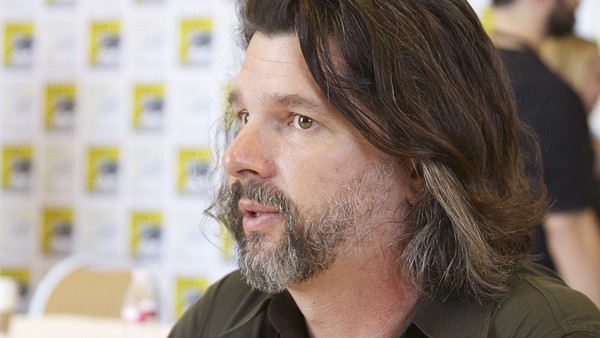
Ronald D. Moore had joined Star Trek: The Next Generation with his script for The Bonding, which he pitched as a freelancer. He was hired and quickly established himself as the authority on the Klingon Empire behind the scenes. He also struck up a strong working relationship with fellow writer, Brannon Braga.
Together, they worked on many scripts. While Moore went to work on Star Trek: Deep Space Nine, Braga remained solely on The Next Generation during its run. They collaborated on All Good Things, which is generally regarded to be in the top episodes of the entire franchise.
Once The Next Generation wrapped, Braga would end up on Star Trek: Voyager. Moore had remained with Deep Space Nine, and went to work on Voyager, believing that he would enjoy the same relationship with Braga that they had shared on The Next Generation. That, however, was not to be the case.
Despite the success of their shared stories, Moore was quickly frustrated with the atmosphere in the writers' room for Voyager. He ended up only writing two episodes before leaving.
A long period of silence followed this departure, but the two men have reconciled in the intervening years. They came together to record a commentary on their film, Star Trek: Generations, settling the fallout once and for all.
2. Harlan Ellison And Star Trek

Harlan Ellison was responsible for the genesis of what would become one of Star Trek's greatest episodes - The City On The Edge Of Forever. He wrote an original story that was vastly different from the finished draft. In his version of the story, McCoy didn't feature at all. Instead, a crew-member was dealing drugs among the crew and was about to be turned in, but murders the would-be confessor.
He escapes down to the planet, travels through a portal (the Guardians were an alien race), landing in 1930. From there, the story-beats are similar, though Kirk freezes at the end - leaving Spock to be the one to ensure Keeler's death.
Roddenberry had several issues with the story, with the fact that drug problems still exising in the future being one of them. There was also a line written that suggested Kirk should 'leave Spock to be lynched by the mob', which was deemed too far out of character. The script went through several rewrites. Ellison himself conducted the first one, then Gene L. Coon had a go.
The final version of the script was largely penned by D.C. Fontana. Ellison was very unhappy with what had been done to his script, though he didn't blame Fontana at all. He laid the blame strictly at Roddenberry's feet, then attempted to use 'Cordwainer Bird' as the pseudonym under which the episode should be published.
Roddenberry was faced with an issue. Ellison had used this name before and always on scripts and shows that had, in his opinion treated the writers badly. He pushed back, fearing Star Trek would become a pariah for science fiction writers. Ellison claimed that Roddenberry threatened him but, whatever the final truth, Roddenberry won out - and Ellison is credited, by name, for the episode.
1. William Shatner And George Takei

And here he is again! In what must be the most famous feud that has ever occurred within Star Trek circles, the long-running feud between George Takei and William Shatner is both as fascinating as it is infamous. From Shatner's point of view, the feud seems to be more than one-sided.
There have been many claims through the years as to what started the falling out. It seems to be a consistant fact that Shatner had been difficult to work with on the set of Star Trek. While Shatner maintains that he never saw much of Takei, Takei spoke of Shatner trying to rewrite and re-block scenes to get more screen time.
After the end of the show, the feud continued into the films and into later life, with Shatner not attending Takei's wedding to husband Brad Altman. Their stories differ - Shatner says he wasn't invited, Takei said he simply didn't show up.
Takei spoke in 2020 about Shatner's rage over other characters on the show being more popular than Captain Kirk, to which Shatner rebutted on Twitter that Takei only did one day's work a week and didn't have a clue what he was on about.
It seems that, at this stage, this is a feud that has no signs of stopping. At least it makes for periodically entertaining Twitter-fare!
Watch Next
The ULTIMATE Star Trek 'Who Said It' Quiz
