10 Classic Doctor Who Absurdities New Fans Won’t Believe

Doctor Strange.

With Peter Capaldi€™s eyebrows looming on the horizon, and the rest of him due to step into the Doctor€™s newly-polished shoes less than a month from now, the fans are lapping up promises from the producers that the show is going €œback to basics€. Words like €œgravity€ and €œraw€ are being bandied around to describe a tonal shift in the show €“ one that that the audience seems to have been clamouring for some time now. But shifting from what? Who fans are a vocal lot, and opinions since the show€™s 2005 return vary wildly. Nevertheless, there€™s a common thread through complaints that stretches all the way back to Eccleston€™s debut €“ a lot of fans don€™t like it when the show does something they perceive as €œsilly€, whether that€™s the Doctor€™s latest victory over a trillion Daleks or Mickey being eaten by a wheelie-bin. Silly covers a wide range of sins, from characters acting abnormally for the sake of a joke (the Doctor planting an unwanted smooch on Jenny Flint comes to mind) or conceits that just don€™t work, like a gigantic Weeping Angel moving around New York without anyone spotting it. Legitimate complaints, perhaps, but the classic series was just as guilty of dropping plot threads, weaving overly-contrived storylines and putting the boot into its own mythos in ways that make Nu-Who seem positively tame by comparison. Wooden Cybermen attacking Christmas? That€™s hardcore sci-fi compared to some of the weird and occasionally stupid decisions of the past fifty years:

10. The (Wrong) End Of Time

When examining the First Doctor€™s adventures, it€™s tempting to point all the way back to the pilot and his apparent desire to stave a troublesome caveman€™s head in with a rock. But had more episodes not been commissioned, the Hartnell era might well have ended with an intense, surreal episode set entirely inside the TARDIS. (More on the caveman later.) €œThe Edge of Destruction€, as it€™s generally referred to, was a two-parter designed to round out the season with a minimal budget. It gives us our first good look at the TARDIS interior, showing eating and rest areas €“ it also happens to be a trippy, nightmarish event with our characters becoming increasingly weird and irrational. People lose their memories, paranoia sets in at the perceived threat of some invasive alien force and the TARDIS€™s doors open and close with seemingly deliberate malice. The most chilling performance comes from Carole Ann Ford; having damseled her way through the past dozen weeks by screaming and falling over a lot, she spends much of the episode stalking the crew, dream-like, with a pair of scissors. By the time all the clocks on board start melting, the audience of 1963 must€™ve been glancing suspiciously at their beef dripping. Eventually the source of the strangeness is revealed €“ the TARDIS€™s fast return switch has become stuck, sending it hurtling endlessly backwards through time, and the strange occurrences were the ship€™s own attempt to draw attention to the problem. Small wonder the Doctor installed a holographic interface in later year. Half a century later, this remains one of the show€™s most unnerving adventures, and there€™s not a single monster in sight.

9. The Land Of Fiction

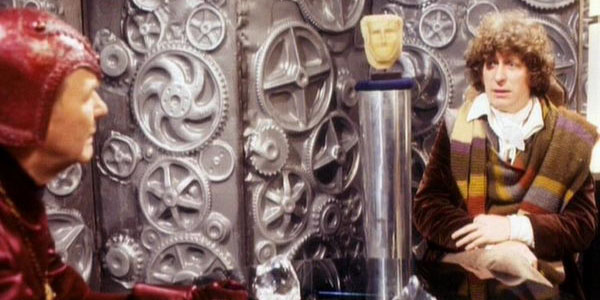
While much of the second Doctor€™s whimsy would be spent defending bases under siege and dealing with maverick Time Lords, the serial €œThe Mind Robber€ would see him shunting the TARDIS outside of space and time to escape a volcanic eruption. An emergency temporal shift, as it were. What follows is largely a fantasy romp, one that begins with the characters winding their way through a gigantic labyrinth of prose before meeting characters like Rapunzel, Medusa and Gulliver. When William Hartnell was on holiday scripts would be hastily rewritten to accommodate his absence €“ but when Frazer Hines was taken ill, the producers decided to make use of the €œimagination comes to life€ premise instead. The result was a cardboard cut-out of Jamie, minus his face, which the Doctor had to reassemble using Mr. Potato Head-style parts. Unfortunately, he makes such a hash of it that poor Jamie spends the rest of the episode being played by an entirely different actor before the same puzzle is used to restore him. The source of all this public-domain menace is ultimately revealed to be an elderly teacher hooked up to a computer called The Master Brain. Eventually, they€™re able to trick the machine€™s sentinel robots into firing on the computer and destroying it, returning everything to normal as opposed to, say, killing them because no-one€™s imagining any oxygen. In retrospect, what happens in the Land of Fiction is no more or less surreal than a holodeck episode or 2012€™s €œThe God Complex€ €“ in fact, both feature minotaur monsters. Here, though, it€™s the scatter-brained nature of the plot, the idea that you can be metaphorically trapped in a book by physically being crushed to death in its pages, and of course the Draw-A-Face contest that make this such a memorably crazy serial.

8. The Whomobile

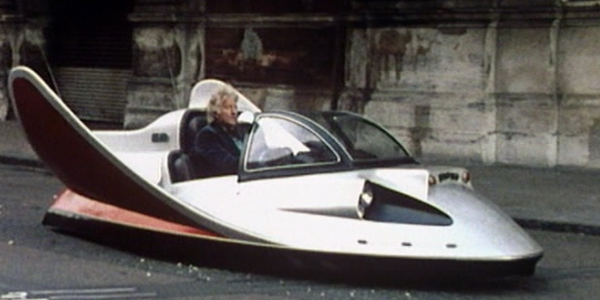
Mention the Whomobile to anyone who grew up with Jon Pertwee as their Doctor, and there€™s a good chance they€™ll describe his Edwardian roadster Bessie instead. It€™s the yellow motor that captured the public€™s imagination, tricked out as it was with plenty of James Bond-style gadgets €“ including a force-field that trapped anyone trying to steal her €“ and it helped to cement Pertwee as the Bond-style €œaction Doctor€. The Whomobile, in fact, was a shoe-shaped, dual-finned car that resembled a hovercraft, and €“ within the show, at least €“ could fly via some rather dodgy green-screen effects. Yet the Whomobile was never intended to appear at all; it replaced a motorcycle after Jon Pertwee, who had a passion for cars, had it personally commissioned and registered as a roadworthy vehicle. As a result, the Whomobile dominated Pertwee€™s final appearances; one episode of Planet of the Spiders is almost entirely a chase sequence involving the craft and a helicopter, amongst other things. Pertwee toured in-character with the car and kept it in working order, presenting it on TV and in documentaries. Although Bessie would return for The Five Doctors, the Whomobile retired with Pertwee, presumably to the relief of all the kids who wanted to see monsters rather than mopeds. While it€™s not unusual for actors to bring ideas and traits to the role they€™re inhabiting, it€™s hard to imagine producers so gleefully writing in an entire car nowadays. Peter Capaldi might have insisted on a no-flirting rule, but hopefully he€™ll stop short of renting a two-bedroom flatshare in Kettering and demanding it be used as the Doctor€™s house.

7. A Huge Chunk Of The Universe Is Destroyed

Recent seasons of Doctor Who have seen the entirety of reality under threat as part of the final episodes, whether it€™s Davros and his reality bomb or the stars winking out as The Great Intelligence unbinds the Doctor€™s life. Events as staggering as these always seem to come with a reset button; some deus ex machina to undo all the damage. So it might come as a surprise for newer fans to learn that in Logopolis, the serial that both rounded out a season and bade goodbye to Tom Baker, a fair chunk of the universe does actually get turned to dust €“ including Traken, homeworld of companion Nyssa €“ and there€™s nobody left to put it back together again. Logopolis is a strange and rather meandering escapade €“ two of its fourpart are spent with the Doctor trying to measure a real police box that turns out to be the Master€™s own TARDIS, while the Master lurks around laughing at nothing and then running away. Eventually, the Master tries to hold Logopolis to ransom and accidentally unleashes the apocalyptic wave of entropy it was controlling - wiping out trillions of alien civilisations. Even he looks a bit nonplussed. As insane as the episode€™s death count is, there€™s a lovely bit of bonus silliness €“ in one scene, technical limitations wouldn€™t let the Tom Baker and Anthony Ainley appear together, so the Master is literally a cardboard standee in the background. It€™s easier to spot on a modern TV, but it€™s baffling how the producers thought no-one would notice. Perhaps it€™s one Ainley had made himself?

6. The Doctor Becomes President Of Gallifrey€ Twice

Even before the Time War, the Doctor€™s relationship with his own people was unstable at best. Throughout his first four regenerations he€™d been hounded, stripped of his companions and his freedom and dumped unceremoniously on Skaro to sort out the Daleks. So when he€™s lured back to Gallifrey as part of a convoluted plan (The Master€™s, naturally) it€™s not surprising that nobody€™s happy to see him. Implicated in an assassination attempt, the Doctor delays his execution by announcing that he€™s going to stand for election, which apparently grants him his freedom. It seems like a throwaway line that gets lost against the greater plot, which makes it all the more surprising when in next year€™s serial The Invasion Of Time, the Doctor suddenly returns to Gallifrey and announces that, actually, he€™ll take the job after all. Things get increasingly strange, with the Doctor colluding with invading aliens only to double-cross them at the last minute by sealing their entire planet in a time loop. And while that€™d make for a pretty tidy end to episode four, the Sontarans have no respect for the TV Times printing schedule and barge into the Panopticon, having tricked the Doctor into lowering the planet€™s shields and setting the stage for two more episodes. Mark Gatiss once noted that the more you knew about the Time Lords, the less interesting they became. Even in these early serials, it€™s remarkable how musty and impotent the Doctor€™s people are - a far cry from Timothy €œSpitting Distance€ Dalton and friends. It€™s no surprise they practically beg him to take the Presidency at the end of The Five Doctors, presumably in case they accidentally elect The Chuckle Brothers instead.

5. The Deadly Companion

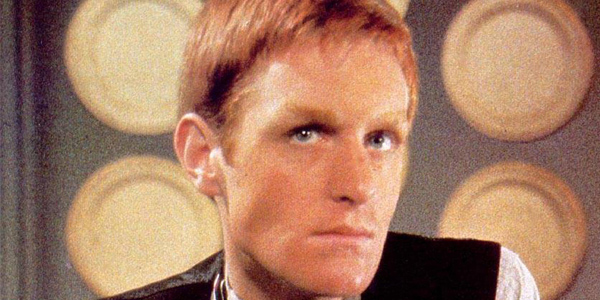
Where to start with the oddness that is Vislor Turlough? When we first see him, he€™s sporting a straw boater and an undersized school uniform, despite actor Mark Strickson being in his mid 20s at the time €“ a piece of casting Dawson€™s Creek would have been proud of. While Turlough does eventually get to wear some proper clothes he spends a good few weeks racing around an alien spacecraft dressed as a sixth-former, which doesn€™t lend his evil schemes a great deal of gravitas even when his counterparts are an airhostess, a noblewoman and a man who wears vegetables. And Turlough€™s schemes are evil indeed! He€™s plotting to sabotage the TARDIS and kill the Doctor under the influence of The Black Guardian, a universal force with a grudge against our heroes ever since TV collectathon €œThe Key To Time€. The problem is, it€™s all a bit of a stalemate. Turlough€™s a cowardly, self-serving cynic and while this makes him an excellent foil to the weary-but-optimistic Fifth Doctor, it does make him a rather useless murderer. The Black Guardian apparently agrees, frequently turning up to threaten and berate Turlough while he cowers in the corner and whimpers like Oliver Hardy. The encounters are silly and lack any real threat, with the Guardian all bluster and Turlough too much of a wimp to unfollow him on Space-twitter. The idea of an intelligent, amoral companion has a lot of mileage, and it€™s rather a shame that Turlough only really gets fleshed out in his final serial. Strickson returned for several Big Finish audio dramas that serve to round out his character and make better use of his cunning. They€™re well worth a listen €“ and even better, you don€™t have to look at that dreadful schoolboy costume.

4. Kamelion

K9 was gone, but producer Jonathan Nathan-Turner wanted a robotic replacement to join the Fifth Doctor€™s ever-growing gang of companions. His hunt resulted in the creation of Kamelion, a shape-changing machine whose true form resembled the androids from the movie I, Robot. Unusually, this was an actual robot €“ operated remotely, rather limited in its movements and not created by the BBC props department. Quite why the production team elected to use a robot for something that was basically humanoid isn€™t clear, given its obvious limitations and frequent malfunctions. After Kamelion€™s first serial €“ wherein the Master was using him to impersonate King John and prevent the signing of the Magna Carta €“ the robot was already proving too impractical to work with. Sadly, Kamelion€™s creator had passed away and left behind hardly any notes on how to work the robot€™s controls, which meant just getting it to appear in scenes was difficult. The character was dumped without explanation immediately having been brought aboard the TARDIS, appearing just once more in Planet of Fire before being killed off (with some off-camera relish) by Peter Davison€™s Doctor. It€™s difficult to see how Kamelion could have worked as a companion €“ it€™s easy for the Doctor to get out of trouble when he€™s got a telepathic shapeshifter as his BFF, and this was an era where even the sonic screwdriver had been dumped as the writers considered it lazy storytelling. Still, Kamelion retains the dubious honour of being the only companion to have their life ended at the Doctor€™s hands €“ an award we all wish had gone to Adric instead.

3. The Hand Of Omega

Looking back to the caveman incident, it€™s easy to see a Doctor who hasn€™t yet been softened by his interactions with humans; if today€™s Doctor would have given his life to save Za, that€™s only because of the moral compass Ian, Barbara and the rest of his companions provide him with. By the time Sylvester McCoy took the role, the producers were concerned that the Doctor€™s past and people had been so fully explored, there was little mystery left to the character. They decided to retroactively alter the Doctor€™s history, from his origins to the true relationship with his grand-daughter, Susan. And so in Remembrance of the Daleks, the Doctor returned to Totter€™s Lane to collect The Hand of Omega. The episode made out that the Doctor had taken the Hand, a powerful superweapon, prior to leaving Gallifrey and had come to Earth deliberately to keep it hidden away. While the Doctor claimed the time had come to relocate the device, he was actually setting the device as a booby-trap for when it fell into the clutches of Davros. Thanks to the Doctor, Skaro€™s sun goes supernova, wiping out the planet and another Dalek army. What€™s odd about this story is how poorly it reconciles with past and future episodes. The new series has shown us how the Doctor treats wiping out the Daleks as unforgivable genocide; here, he€™s practically the aggressor €“ he even refers to himself as President Elect while winding up Davros. Perhaps it was no coincidence that the TARDIS€™s next stop after Totter€™s Lane was Skaro itself, but it€™s hard to stomach the notion that the Doctor already had a superweapon stashed away when he started weighing up that rock.

2. The Doctor Fought Bertie Bassett

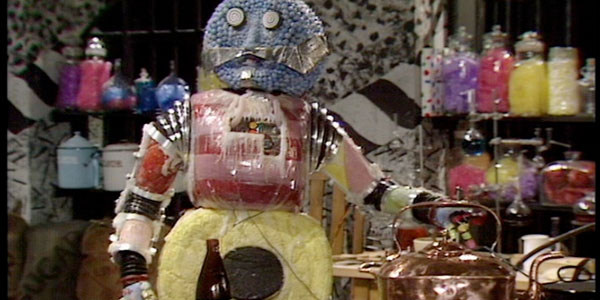
Well, legally he didn€™t, but the physical origins of the Kandyman €“ the robotic henchman of The Happiness Patrol €“ do bear a certain similarity to that particular confectionary mascot. The Kandyman was the sanctioned executioner in a society where cheeriness was mandatory and a secret police existed to track down anyone who dared to be miserable €“ apparently this was meant to be a parody of Thatcherism, although it€™s hard to remember anyone being particularly happy in the eighties unless Knightmare was on. Despite his appearances, the Kandyman was a psychotic killer who enjoyed killing people in sweet-related ways, like drowning them in fondant or force-feeding them candy so delicious it€™d overload their senses and kill them, like some sort of confectionary-obsessed Joker. Fortunately for the Doctor, the Kandyman€™s creator had included one major design flaw €“ the robot didn€™t just resemble sweets, his casing was actually made of them, and the Doctor was able to stick him to the floor with a regular bottle of lemonade. (And you thought vinegar stopping a Slitheen was contrived.) While the serial isn€™t remembered fondly, and footage of the Kandyman is often used when discussing the show€™s decline and cancellation, it received high praise from critics at the time, particular Shiela Hancock€™s portrayal of the planet€™s Thatcher-like ruler. Still, it€™s hard to take a totalitarian regime too seriously when its enforcers can€™t go outside in the rain, and the message of the satire has faded over the years, making it hard to take the episode seriously nowadays.

1. Dimensions In Time

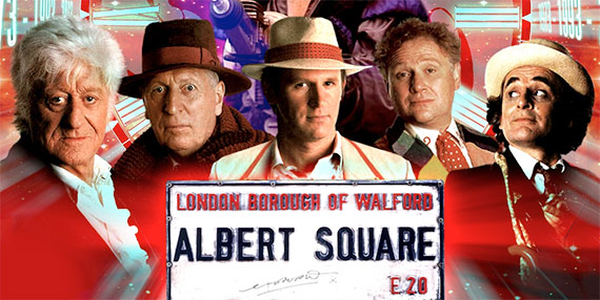
Doctor Who was dead. The show had been cancelled, so marketing department BBC Enterprises were somewhat surprised when Tom Baker turned up and explained he€™d like to play the Doctor again. He outlined an idea for a straight-to-video special in which an alteration to history prevented the fourth Doctor€™s death at Logopolis, reducing the other Doctors to cameo appearances and radically redesigning the Daleks and Cybermen. While the film was eventually scuppered by a tide of legal and logistical problems, it did pave the way for all surviving Doctors to appear in a charity special for the show€™s anniversary. The result was Dimensions In Time, a two-parter screened as part of Children In Need that threw every fad and idea into the mix. As well as seeing the return of multiple companions and monsters, the show was also an Eastenders crossover, hopping about between multiple periods of Albert Square€™s history. Viewers could influence the story with a telephone vote (helping to raise charity funds in the process), low-rent 3D graphics were used to provide special effects (Tom Baker opens proceedings surrounded by swirling cubes and cones while talking into a radio microphone) and just to top it off, the whole thing was filmed in 3D. The plot is largely incomprehensible, with Doctors and companions alike swapping around at random and phrases like €œTime Brain€ being bandied around €“ small wonder Amy worried her baby might grow up with a Time Head. While the special reached viewing figures comparable to today€™s Christmas Specials, it€™s hard to call it a success €“ it was no more a celebration of Doctor Who than projectile vomit is a celebration of food. It may have been declared posthumously non-canonical, but this was the classic production team€™s last hoorah€ and the single most absurd thing they€™ve ever done.

In this post: 
Doctor Who
 
Posted On: 
Contributor
Contributor

Chris has over a decade's experience as a game designer and writer in the video game industry. He's currently battling Unity in a fight to the death.