10 Dark Doctor Who Facts That Are Never Spoken About
For every light and fluffy moment in Doctor Who, there's a dark secret hiding in plain sight...

Doctor Who is, by and large, a family show. Its weekend teatime slot means that it tends to favour fun storylines with happy resolutions over full-on tragedy, as most people would prefer not to be reminded how bleak the universe really is while tucking into their egg and chips.
However, on top of having its fair share of dark moments (and dark episodes) over the years, there are also plenty of unspoken, horrific truths within the Whoniverse – if you dig a little deeper to find them.
For the most part, these revelations were not the original goal of the writers and showrunners. Instead, most are implied, combining with pre-existing bits of lore to create unintended horrors that will leave you wondering why the BBC even commissioned this traumatic show in the first place.
Ok, maybe that's a bit far, but still.
From the fates of beloved characters to details about the Whoniverse that should never have been revealed – or even the horrendous actions of the Doctor themselves – these ten details will paint certain parts of Doctor Who in a much different, darker light...
10. Video Game Characters Can Feel Their Deaths

Gaming is one of the most popular hobbies in the world. The Doctor has played a little bit themselves in the past, memorably enjoying a spot of Wii tennis while investigating the Shakri cubes in The Power of Three.
Wii tennis aside, most video games involve blasting away wave after wave of virtual enemies. However, it turns out that the people you're mowing down aren't just pixels on a screen.
Series 10's Extremis finds the Twelfth Doctor dealing with a book called the Veritas, which causes anyone who reads it to commit suicide.
This ends up with everyone realising they're in a simulation, and as the Doctor attempts to explain this to Bill, he talks about how they can still feel real even while living inside a computer. He tells her, "Those pretend people you shoot at in computer games... they think they're real. They feel it."
The Doctor often says unusual things in jest, but this is such a serious moment that there's no doubt he's telling the truth. It means that every Goomba stomped in Mario, every soldier gunned down in Call of Duty, every ghost eaten in Pac-Man... they felt every single bit of it.
It'll certainly make you think twice while playing through a Doctor Who video game yourself.
9. Gridlock's Forgotten Families

Gridlock is the ultimate advert for walking. It features a giant motorway that keeps its passengers trapped in their cars for decades, with giant crab monsters lurking at the bottom that crush any vehicles that get too close.
The motorway was actually used to keep the inhabitants of New New York safe from Bliss, a mutated "mood drug" that killed the vast majority of the population.
Mood drugs are set up earlier in the episode, when a young woman buys one called "Forget" in order to erase her memories of her family, who went on to the motorway and never came back.
There's just one problem with that – they do come back.
The Tenth Doctor opens the motorway at the end of the episode, freeing those trapped inside and allowing them to return to their old lives. But what about their relatives not on the motorway, who were so consumed with grief that they bought a drug to forget them? What happens when the woman from the start of the episode is reunited with her parents, but has no idea who they are?
It's going to make for a complicated Sunday dinner, that's for sure.
8. Why The Eighth Doctor Doesn't Wear Robes

One of the best parts of The Power of the Doctor was the lineup of familiar faces portraying the Guardians of the Edge.
Cue appearances from Peter Davison, Colin Baker, Sylvester McCoy, David Bradley, and even Paul McGann.
McGann, who played the Eighth Doctor in the 1996 TV movie, makes his first appearance in a regular episode of Doctor Who here. But even then, there's something different about him, as he's the only one of these former Doctors not wearing traditional Gallifreyan robes.

The episode takes the time to point this out, as the Thirteenth Doctor questions Eight's unique wardrobe. It's an understated yet important detail, and that's because of the inferred reason why Eight differs from his fellow Doctors.
Eight was the Doctor who was present at the start of the Time War, the one who saw his people do terrible things. The one who watched many Gallifreyan citizens die. Chances are that the robes remind him of those days, which is why he doesn't want to wear them.
Interestingly, the episode's script even gave the Eighth Doctor his own body, while the other Doctors shared a body that was dressed in robes. Eight clearly wants to distance himself from the trauma of the Time War as much as possible, and it seems the original intent was to hammer home that burden even further.
7. The Earth Is A Silent Graveyard

The Silents are easily the coolest suit-wearing, electricity-controlling, no-mouthed aliens in Doctor Who history.
It's a short list, but hey, a win is a win.
These religious zealots have the ability to make people forget them as soon as they leave their eyeline, making them almost impossible to defeat. However, this is Doctor Who, so obviously there's a workaround.
The Doctor embeds footage of a Silent saying "You should kill us all on sight" into the 1969 moon landing broadcast, meaning that every human on the planet becomes aware of the creatures, and the inhabitants of Earth begin to fight back.

A nice solution, but one that comes with a hefty price tag - the bodies.
If humanity has been killing Silents since 1969 without even realising, then there must be corpses littered all over the place. Presumably, people aren't thinking about waste disposal when they're murdering the aliens, so the bodies are just left to pile high without anyone noticing!
Hopefully, the whole "forget when you look away" thing also applies to the smell of rotting corpses.
6. Time Lord Soldiers' Deaths Are Sent To Their Families

50th anniversary minisode The Last Day is shot from the point-of-view of a Time Lord soldier on Gallifrey during the Time War. The soldier is wearing a headcam, which records images directly from his brain, as he gets shown the ropes by his superiors on his first day on the job.
Unfortunately, as the title of this episode forewarns, he doesn't last long.
The soldier and the rest of his troops are killed when Daleks breach Arcadia's defences, ending the episode on a grim note. But what's even more grim is the fact that this poor guy's family has front row tickets to his demise.
As explained earlier in the minisode, the headcam captures everything, including the wearer's death. It then sends this footage to the soldier's "family drive", presumably so their nearest and dearest can gather round the small screen and watch uncle Bill get murdered again and again and again.
Time Lord society can be cold and ruthless at times, but this is extreme even by their standards. No wonder Eight wanted nothing to do with them.
5. ACTUAL Zombies Exist
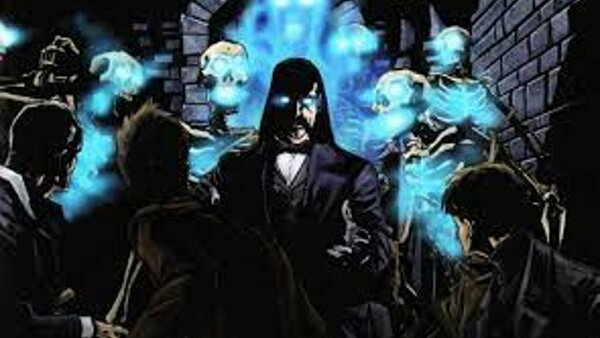
There have been werewolves and vampires in Doctor Who, so it makes sense that another classic monster would be present too.
The Doctor has encountered plenty of zombie-like creatures in their time – the Gelth for example, or the water zombies in The Waters of Mars.
They're not zombies though, at least in the traditional brain-munching sense. But fear not! Those are very real in the Whoniverse, as alluded to by the Fourth Doctor in Destiny of the Daleks.
Here, Romana mentions the living dead while she and the Doctor are investigating, and the Doctor responds, "You can always tell a genuine zombie... skin is cold to the touch."
Excuse me... a "genuine" zombie?!
If flesh-eating reanimated corpses are indeed real in the Whoniverse, it certainly opens up a whole can of worms. Is there some alien explanation behind this phenomenon? Why hasn't the Doctor encountered a real zombie yet? Or, since the Fourth Doctor seems familiar with them, has that encounter already taken place, offscreen?
We've yet to see zombies in their purest form as the villains of an episode, but surely it's only a matter of time.
4. Jackie Doesn't Know Why Pete Died

The brilliant Series 1 episode Father's Day is bookended by Jackie Tyler telling a young Rose the story of her dad's death.
Originally, Jackie recounts how Pete was knocked down in a hit-and-run accident on the day of a friend's wedding. However, come the episode's end, things are much different, and somehow, a lot more sad.
Due to Rose's ill-conceived plan to witness her dad's demise, Pete is forced to kill himself to reset the timeline and fend off the gigantic Reapers that descended on the scene. He manages to put things right, but at a cost – now, in the new timeline, his death was a suicide, not an accident.
Spare a moment for poor Jackie in all of this. Rose knows why her father killed himself, but his widow doesn't, not until Rose tells her decades later. This means that, for years, she had to wrestle with the fact that her husband stepped out in front of a car for seemingly no reason at all.
Father's Day is already an emotional punch, but this takes it to a whole new level.
3. Amy And Rory Became Cybermen

The departure of Amy and Rory Pond was enough to make any hard-hearted miser reach for the tissue box.
After escaping the Weeping Angels in 1930s New York, the Ponds get sent back in time by the stone assassins with the Eleventh Doctor unable to go back and rescue them. The only comfort he can take is that they both lived long, full lives, eventually passing away in their '80s.
But even in death, the universe wasn't done with them.
After Eleven becomes Twelve, he deals with Missy, the newest form of the Master. Her grand plan is revealed at the end of Series 8, where she brings back all of the corpses in Earth's graveyards as Cybermen.
You can probably see where this is going.

With Amy and Rory both six feet under, this means that they also ended up inside Cyber-suits, along with every other dead companion who was buried on Earth at the time.
The Brigadier, Joan Redfern, Jamie McCrimmon. Even poor old Canton, if he'd died by that point. They all got "upgraded".
It's strange that the Doctor doesn't even mention this possibility, though he was rather busy at the time.
2. The Thirteenth Doctor Kills A TARDIS
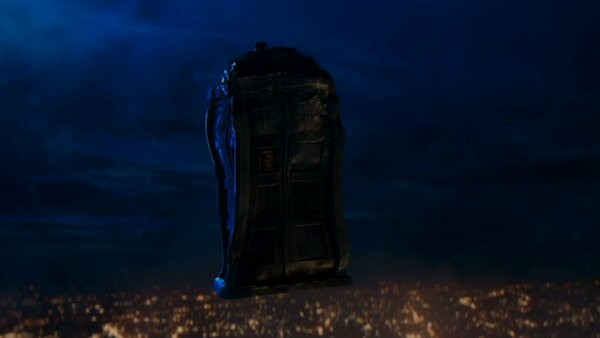
The thing that sets the TARDIS apart from any other time machine in fiction is the fact that the iconic blue box is alive. It has a personality, it has thoughts and feelings, and it's even taken physical form before.
The TARDIS is more than just a vehicle – it's a character in the show.
This is why it was rather odd when the Thirteenth Doctor killed one without a second thought at the end of Revolution of the Daleks, after luring a fleet of Daleks into the ship and forcing it to collapse in on itself.
This is the same Doctor who met and spoke to their TARDIS in The Doctor's Wife, gaining a deeper understanding of their travel buddy in the process. Upon visiting a TARDIS graveyard in that episode, the Doctor's TARDIS states, "All of my sisters are dead, and we are looking at their corpses" – the implication being that all TARDISes are sentient to some extent.
On other occasions, the show has gone out of its way to explain that these time-travelling vessels are living organisms. They're grown, not built, and they don't break – they die.
Saving the day is all well and good, but the Thirteenth Doctor nonetheless committed an act of murder here. Wonder what her TARDIS thought about that.
1. The Doctor Knows When Certain Friends Will Die

For a being with so many allies, the Doctor often lives a lonely life.
They have the double-whammy of essentially being immortal and knowing the outcome of major events, making it quite difficult to bond with people over a pint down the local boozer.
With access to all of time and space, it makes sense that the Doctor should know about the final days of some of their nearest and dearest, a grisly fact that was confirmed by the Seventh Doctor during one of his final serials, 1989's Battlefield.
During a fight with a powerful demon known as the Destroyer, the Doctor's long-term friend Brigadier Lethbridge-Stewart nearly gets blown to kingdom come. Believing his friend to be dead, the Doctor cradles his body in his arms and says, "You stupid, stubborn, pig-headed numbskull. You were supposed to die in bed!"

If the Doctor knows when the Brigadier is meant to die, then how many other people have they known the fates of?
We know the Doctor can be manipulative, that they're sometimes comfortable ignoring the laws of time, and that they like keeping their cards close to their chest. It wouldn't be surprising if they secretly use the TARDIS to discover how much time they have left with the people they love the most.