10 Other Times Star Trek Used The Vasquez Rocks
A look back at Star Trek's frequent use of The Vasquez Rocks as the "planet of the week".
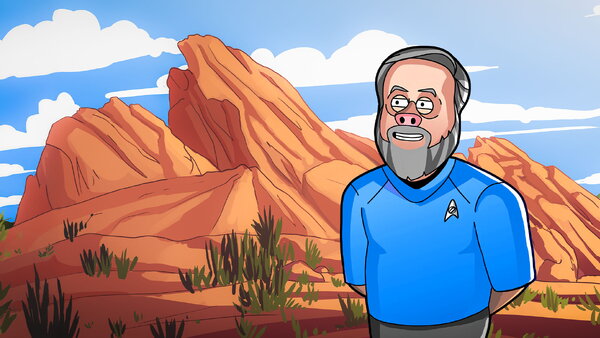
(Hi, it’s Dr. Trek, Larry Nemecek — and yes, I *AM* on TrekCulture! And so glad to be with you now for a visit here every so often! )
Whether it was Bob Justman’s planet tank cyclorama drop of shifting planet sky colors in the 1960s, or the AR wall of the modern Toronto Treks on the 2020s, the physical and filmable OFF-ship “strange new worlds” of Star Trek over the decades have tended to all be ingenious use of designed sets on stages.
Which is why Star Trek taking cast and crew to shoot “on location” has tended to be so memorable. For all the years I’ve led Trek fan tourists around Greater LA to Trek film sites, whether on the multi-day Geek Nation Tours edition or my own Trekland Treks day tours, THE most requested location site is the iconic Vasquez Rocks, a natural formation and county park in Los Angeles County. Why?
GORN FIGHT!
But first — what are the Vasquez Rocks?
Geologists would tell you they are the result of “sedimentary layering exposed by later seismic uplift and erosion,” thanks to offshoots of the San Andreas Fault, 25 million years ago during the late Oligocene Epoch and even more so during the Lower Miocene Epoch, up to 20 million years later. Whew.
Historians would tell you they’re named for the 19th-century bandito Tiburcio Vaquez, who used the giant exposed formations northeast of LA as a stash and a hideout...40 years into California’s era as a fully American state. The invention of the automobile, a generation late,r would end their reclusiveness, while the movie camera made them a scene-stealing star. Best of all for the studio bean-counters, they presented a bleak and wild landscape only 25 miles from downtown L.A.
Who knows how many silent movies were shot there, but since film office records began in 1928, over 200 films and TV episodes have used the Vasquez Rocks. And just like so many of The Original Series’ human stars, they also appeared in Bonanza and Gunsmoke, Maverick, The Wild Wild West, and later, even Kung Fu.
Now occupying close to 932 acres, Vasquez Rocks has been a Los Angeles County park since the original 40 acres were donated in 1971, meaning that all The Original Series shoots occurred when it was in private hands.
But did you know? The initial location scenes of Arena we see of the Cestus III outpost under attack... were also filmed at Vasquez — the camera turned 180 degrees in the opposite direction, and using an abandoned fortress set from a one-season wonder, Tales of the Bengal Lancers, to Star Trek’s tightly-budgeted lucky gain!
10. Shore Leave - Star Trek: The Original Series
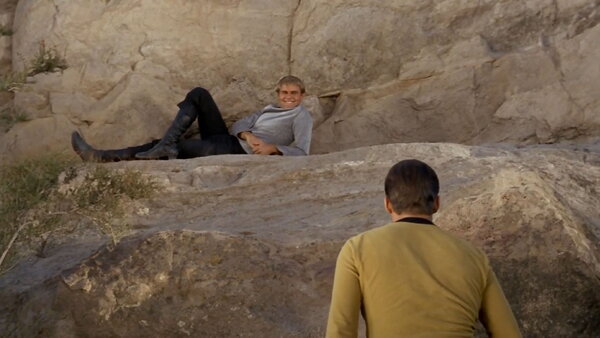
Yes, you Trekademics, you know: the scenes where Kirk fights with Finnegan, reminisces with Ruth, plus the samurai, tiger, Don Juan and strafing fighter plane ...were shot not at Africa USA alongside the glade meadow, as common talk has already told you ... but over most of two days at Vasquez Rocks, about 3 miles to the north. On the backside of the famous Gorn-battle rocks, so they don’t steal the show.
Or, actually, who didn’t steal from whom? It’s actually the Metrons who must have wanted fresh looks, as Arena was filmed two weeks after Shore Leave, which makes that Star Trek’s first visit to the classic landscape. It would not be the last, thanks, in part, to the variety of landscapes the place offered.
At the time, it was still within Hollywood’s so-called “Thirty-Mile Zone” radius, negotiated to allow cheaper location shooting without the studio covering the costs of meals, transport, or even mandated overnight travel stays. After two days of filming those scenes here, first-run US audiences originally saw the Vasquez site on Dec. 29, 1966